
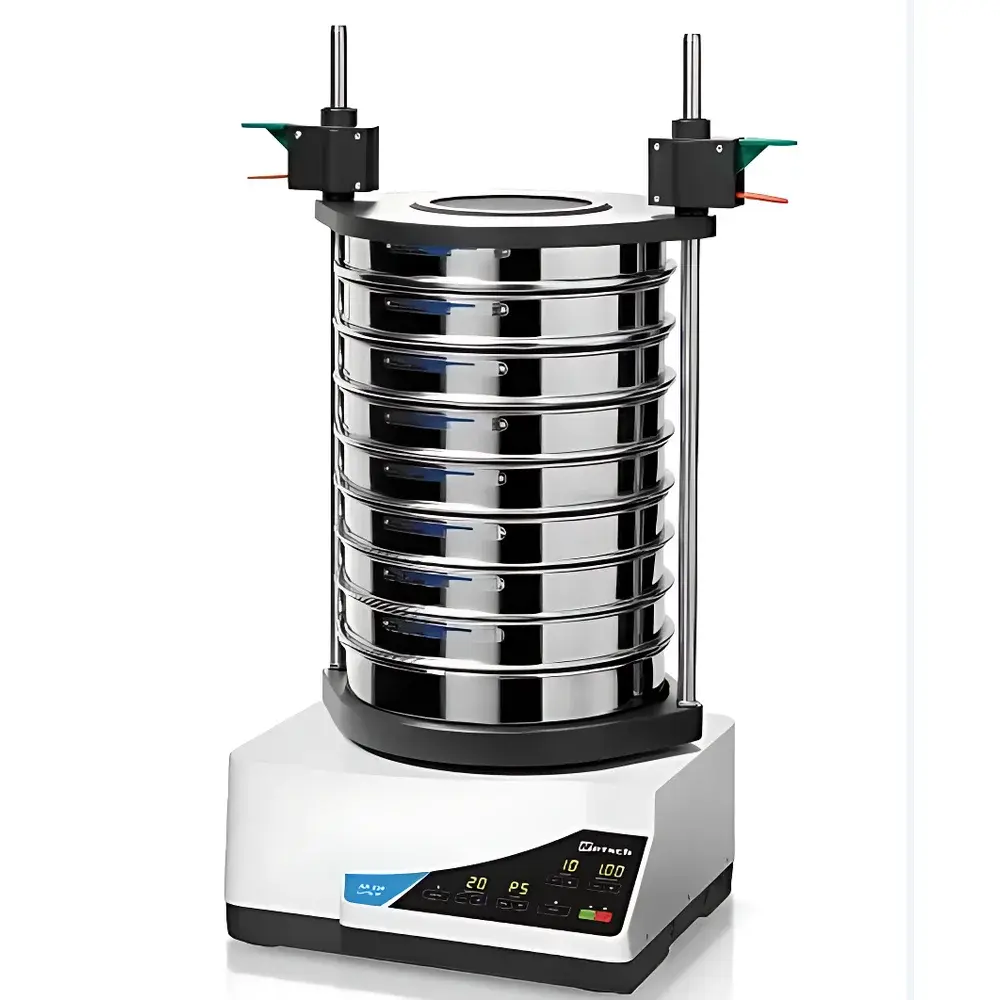
Retsch AS300 Control Sieve Shaker
| Brand | Retsch |
|---|---|
| Origin | Germany |
| Model | AS300 Control |
| Operating Principle | Electromagnetic 3D throw motion |
| Max. Sample Load | 6 kg |
| Max. Sieve Stack Mass | 10 kg |
| Sieve Diameter Options | 100 / 150 / 200 / 203 / 305 / 315 mm |
| Measurement Range | 36 µm – 40 mm |
| Amplitude Adjustment | 0.2–>2 mm (digital) |
| Acceleration | 1.0–>10.0 g |
| Timing Range | 1–99 min (digital) |
| Intermittent Mode | 1–99 s |
| Max. Sieve Layers | 9 (standard) / 17 (with extension kit) |
| Programmable Methods | Up to 9 stored protocols |
| Motion Type | Rotational throw with momentum |
| Dry & Wet Sieving | Yes |
| Calibration & Verification Support | Yes |
| Interface | Parallel port |
| Dimensions (W×H×D) | 400 × 235 × 400 mm |
| Net Weight | ~35 kg |
| Compliance | CE-marked, designed per ISO 2591-1, ISO 9276-2, ASTM E11, USP <786> |
Overview
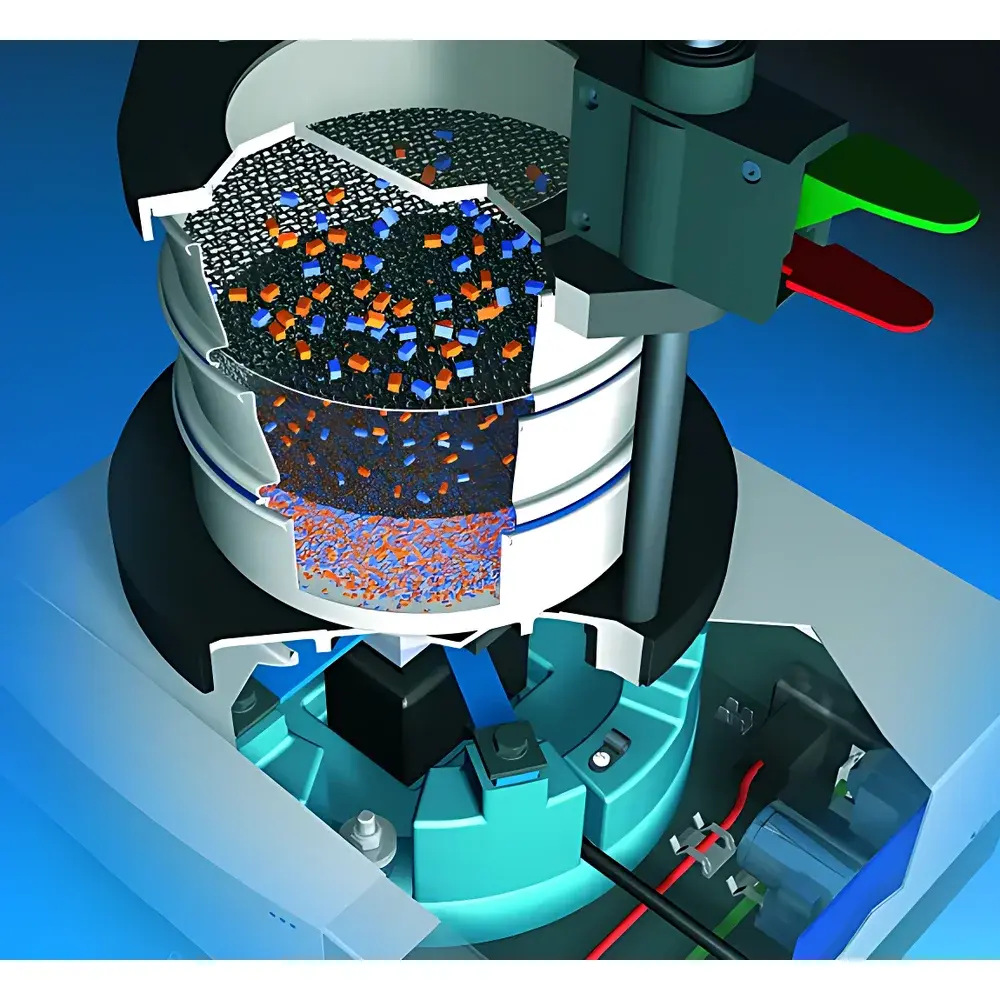
The Retsch AS300 Control is a high-precision electromagnetic sieve shaker engineered for reproducible, standardized particle size analysis across research laboratories, quality control departments, and industrial production environments. Unlike conventional mechanical or rotary shakers, the AS300 Control employs Retsch’s patented electromagnetic drive technology (EP 0642844), generating a controlled three-dimensional throw motion that imparts both vertical lift and rotational momentum to the sample. This motion ensures uniform distribution of particles across the full active sieving surface—maximizing contact probability with mesh openings and minimizing segregation or blinding effects. The result is accelerated separation kinetics, improved resolution in fine- and coarse-fraction discrimination, and exceptional repeatability between runs—even for challenging materials such as agglomerated powders, irregular granules, or moisture-sensitive samples. Its microprocessor-controlled measurement and timing unit decouples operation from mains frequency fluctuations, guaranteeing consistent acceleration profiles regardless of regional power grid stability.
Key Features
- Electromagnetic 3D throw motion with adjustable amplitude (0.2–>2 mm) and acceleration (1.0–>10.0 g), enabling optimization for diverse material rheologies
- Digital time control (1–99 minutes) with programmable intermittent mode (1–99 seconds) for sensitive or cohesive samples
- Storage capacity for up to nine fully configurable sieve protocols—including amplitude, duration, rest intervals, and motion profile
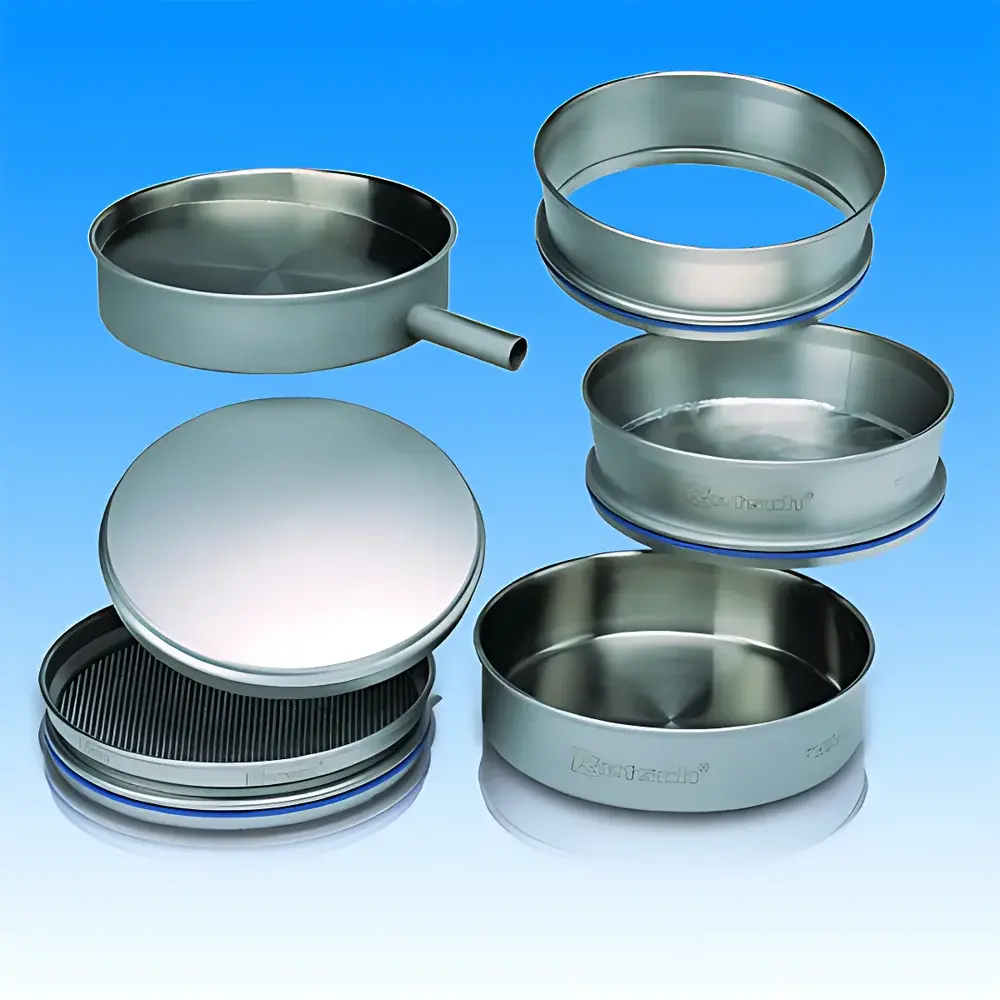
- Support for multiple standard sieve diameters: 100 mm, 150 mm, 200 mm, 203 mm (8″), 305 mm (12″), and 315 mm—ensuring compatibility with ISO, ASTM, and USP-compliant test sieves
- Robust aluminum housing and vibration-damped base; operates at sound pressure levels <65 dB(A), suitable for open-lab environments
- Integrated parallel interface for direct connection to laboratory PCs; supports automated data logging and method transfer
- Designed for both dry and wet sieving applications—compatible with optional liquid-tight sieve frames and drainage modules
- CE-certified and built to meet essential requirements of the EU Machinery Directive 2006/42/EC; compliant with ISO 2591-1 (determination of particle size distribution by sieving), ISO 9276-2 (representation of results), ASTM E11 (specification for wire cloth and sieves), and USP (particle size determination)
Sample Compatibility & Compliance
The AS300 Control accommodates a broad spectrum of particulate materials—from free-flowing mineral sands and metal powders to fragile organic granules (e.g., coffee, seeds, pharmaceutical excipients) and cohesive industrial feedstocks (e.g., fertilizers, coal fines, construction aggregates). Its 6 kg maximum sample load and 10 kg max. sieve stack mass support high-throughput batch analysis without compromising resolution. The instrument’s validated motion profile ensures adherence to GLP and GMP documentation standards when paired with calibrated reference sieves and traceable verification procedures. Optional calibration kits and factory-issued verification reports are available to satisfy internal audit requirements and regulatory submissions under FDA 21 CFR Part 11 (when used with compliant software).
Software & Data Management
While the AS300 Control operates as a standalone unit with intuitive front-panel controls, its parallel interface enables seamless integration with Retsch’s optional evaluation software (e.g., RETSCH Evaluation Software or third-party LIMS platforms). Method parameters—including amplitude, time, pause intervals, and motion type—are exported in ASCII format for traceability. All stored protocols retain timestamps and user IDs when synchronized with networked systems. Audit trails, electronic signatures, and change logs can be implemented via external software solutions meeting 21 CFR Part 11 criteria—facilitating compliance in regulated pharmaceutical, food, and chemical manufacturing settings.
Applications
- Quality assurance of raw materials (e.g., silica sand for foundry molds, sodium carbonate for detergent formulations)
- Particle size distribution validation in pharmaceutical granulation and tablet coating processes
- Classification of recycled construction aggregates and soil fractions in geotechnical testing
- R&D screening of novel battery electrode powders and additive manufacturing feedstocks
- Compliance testing against ISO 13320 (laser diffraction) and ISO 2591-1 (sieving) for comparative method validation
- Process optimization in ceramics, catalysts, and pigment manufacturing where narrow PSD control is critical
FAQ
What sieve diameters are supported by the AS300 Control?
The instrument accepts standard sieve diameters of 100 mm, 150 mm, 200 mm, 203 mm (8″), 305 mm (12″), and 315 mm—fully compatible with ISO, ASTM, and USP test sieve specifications.
Can the AS300 Control perform wet sieving?
Yes—when equipped with optional liquid-tight sieve frames and a compatible drainage tray, it supports standardized wet sieving per ISO 2591-1 Annex B and ASTM C136/C136M.
Is calibration documentation available?
Retsch provides optional factory calibration certificates and on-site verification services traceable to national metrology institutes; users may also implement in-house calibration using certified reference standards.
How many sieve layers can be stacked simultaneously?
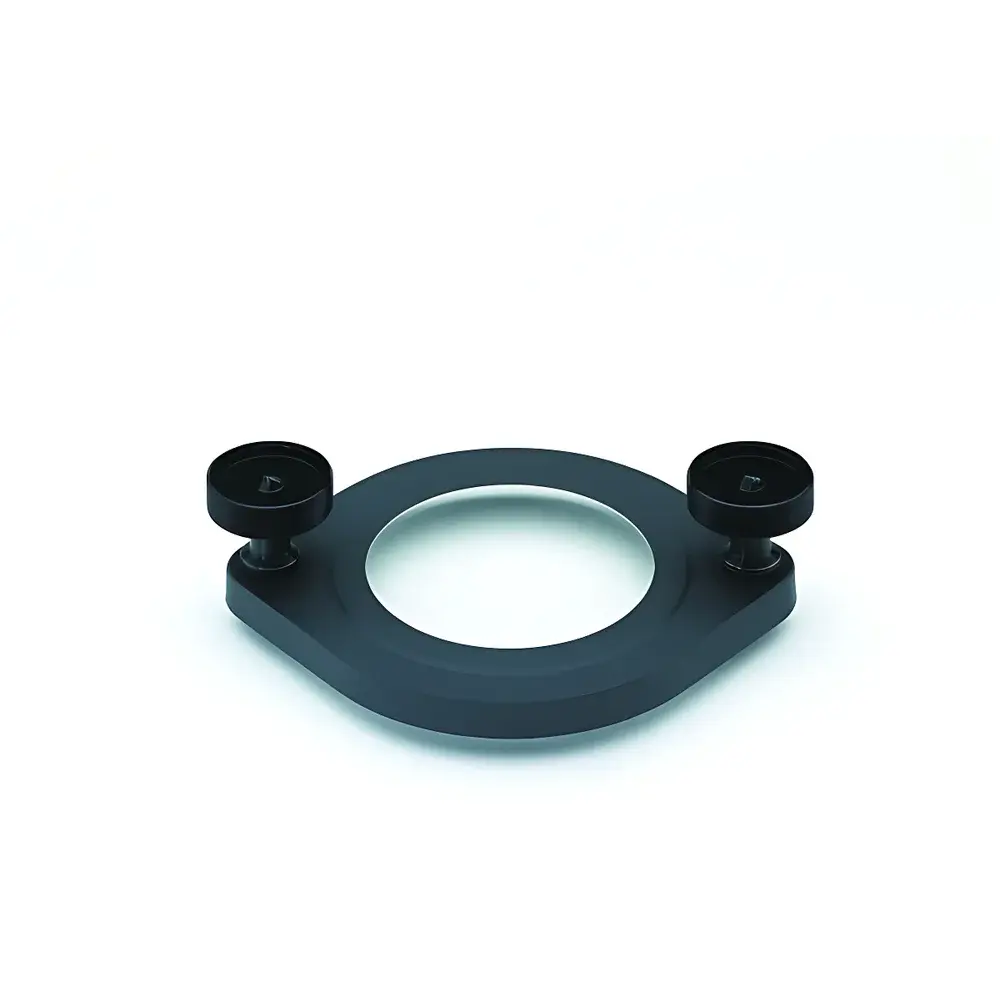
Up to 9 layers using the standard holder; with the optional extended-height adapter kit, stacking capacity increases to 17 layers for multi-fractional analysis.
Does the instrument require routine maintenance?
No scheduled maintenance is required—the electromagnetic drive contains no brushes, belts, or lubricated bearings, ensuring long-term operational stability with only periodic visual inspection and cleaning recommended.
Related Products



