
Retsch DM200 Disc Mill
| Brand | Retsch |
|---|---|
| Origin | Germany |
| Model | DM200 |
| Instrument Type | Disc Mill |
| Sample Hardness | up to Mohs 8 |
| Max Feed Size | <20 mm |
| Final Particle Size | down to 100 µm |
| Adjustable Grinding Gap | 0.1–5.0 mm |
| Throughput | up to 150 kg/h |
| Grinding Disc Speed | 440 rpm (50 Hz) / 528 rpm (60 Hz) |
| Motor Power | 1850 W |
| Chamber Volume | 2.5 L |
| Dimensions (W×H×D) | 440 × 400 × 870 mm |
| Net Weight | ~140 kg |
| Compliance | CE certified, TÜV-tested |
Overview
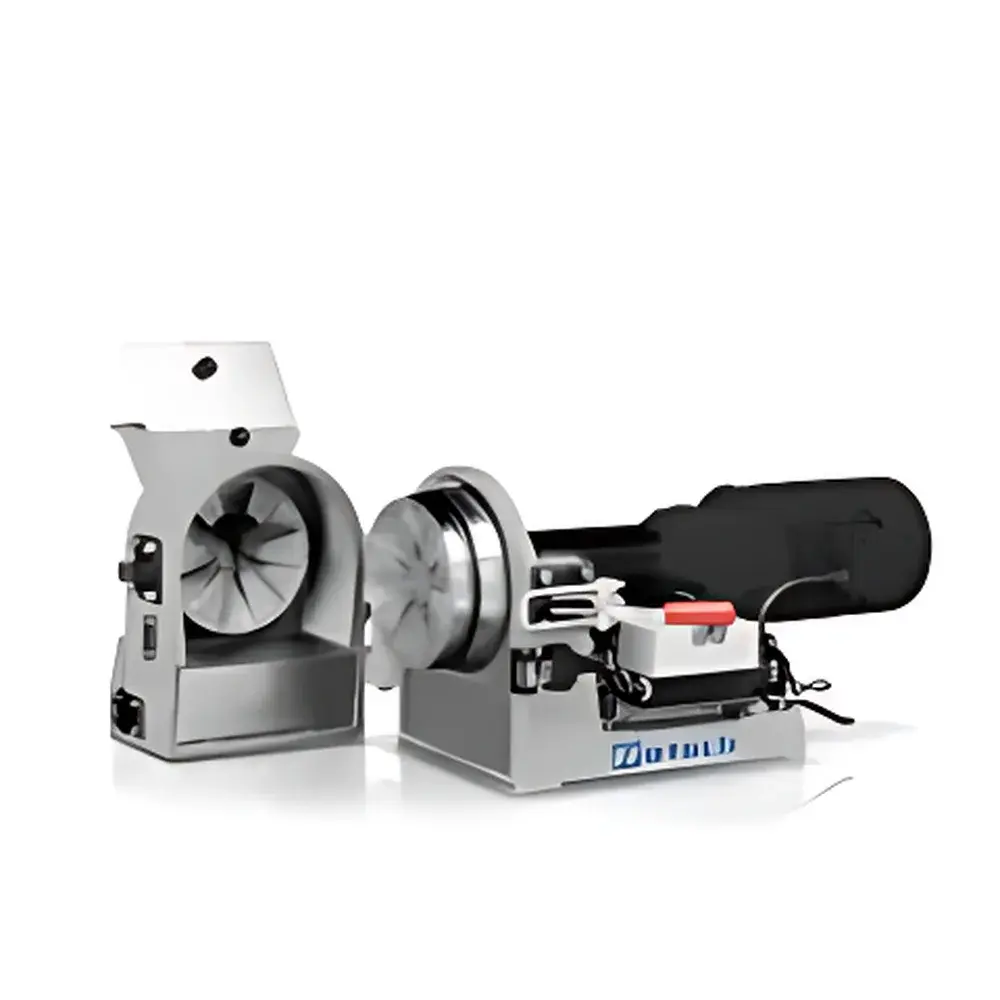
The Retsch DM200 Disc Mill is a high-performance, industrial-grade disc grinding instrument engineered for reproducible pre-crushing and fine comminution of medium-hard to hard-brittle solid materials. Based on the principle of controlled compression and shear between two vertically aligned, counter-rotating (one rotating, one fixed) grinding discs, the DM200 delivers precise particle size reduction through progressive mechanical stress—first coarse fragmentation near the disc center, followed by fine grinding at the periphery under centrifugal force. This dual-stage comminution mechanism enables single-step processing from feed particles ≤20 mm directly to a median output size of approximately 100 µm, with tight distribution control achievable via continuous, calibrated gap adjustment (0.1–5.0 mm). Designed for laboratory and pilot-scale applications requiring high throughput (up to 150 kg/h), the DM200 maintains operational integrity under sustained duty cycles while meeting stringent safety and hygiene standards—including full CE marking and independent TÜV certification.
Key Features
- Precision-adjustable grinding gap (0.1–5.0 mm) with integrated scale and real-time visual monitoring through an optical inspection window
- Robust gearmotor drive (1850 W, three-phase AC) delivering consistent rotational speed (440 rpm at 50 Hz; 528 rpm at 60 Hz) without maintenance requirements
- Openable grinding chamber with ergonomic access for rapid cleaning and residue-free sample recovery
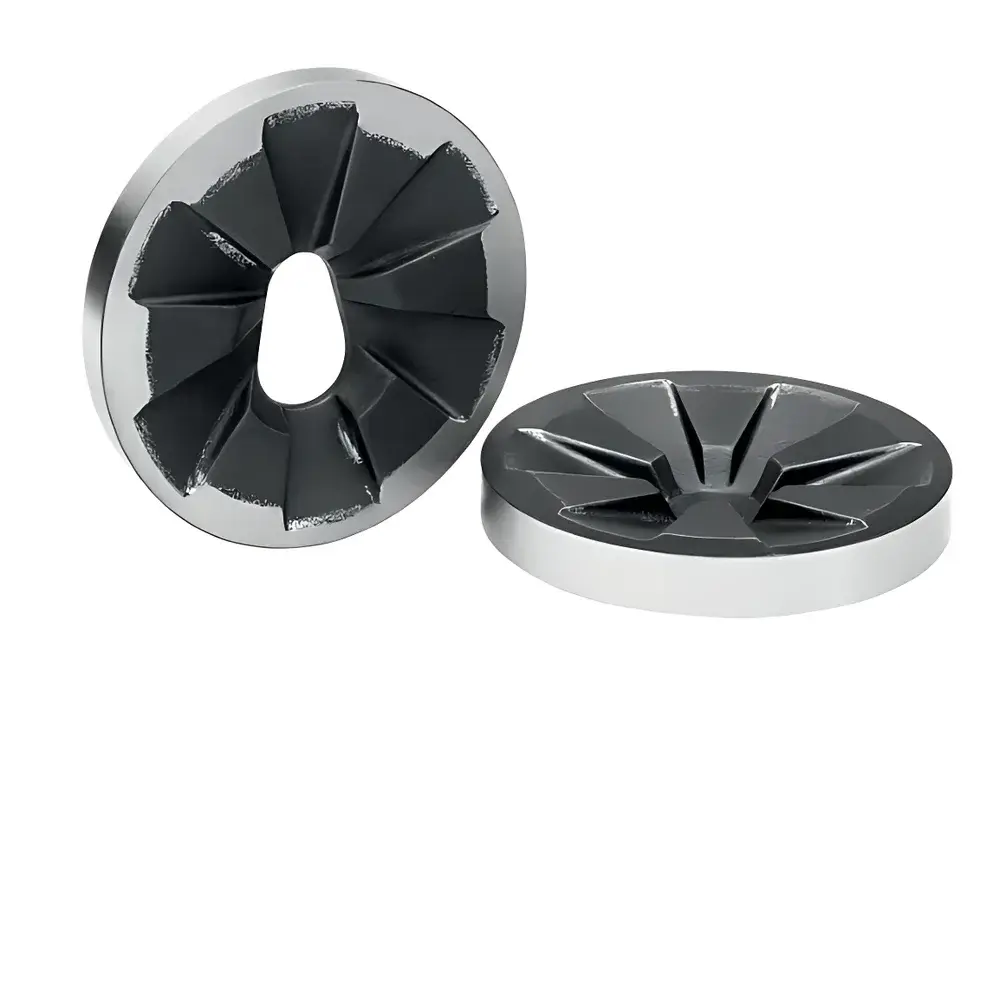
- Four interchangeable grinding disc material options—including hardened steel, tungsten carbide, stainless steel, and ceramic—to eliminate cross-contamination in sensitive analytical workflows
- Dust-tight grinding chamber design compliant with ISO 13320 and ASTM D6913 for controlled particulate generation and operator safety
- High-durability disc geometry optimized for extended service life and minimal wear-induced dimensional drift
- Compact footprint (440 × 400 × 870 mm) and modular construction facilitating integration into regulated lab environments
Sample Compatibility & Compliance
The DM200 accommodates a broad spectrum of inorganic and brittle organic solids with Mohs hardness ≤8, including metallurgical ores (e.g., iron, copper, bauxite), coal and coke, refractory ceramics (sintered alumina, technical porcelain), geological specimens (quartz, slag, chalk, gypsum), construction materials (cement clinker, glass frit), and environmental samples (dried soils, sediment cores, drill cuttings). Its closed-loop grinding architecture meets ISO 14644-1 Class 8 cleanroom compatibility for low-particulate handling and supports GLP-compliant sample preparation protocols. All electrical and mechanical subsystems conform to IEC 61000-6-2/6-4 EMC standards and EN 60204-1 safety directives. The unit is fully CE-marked and TÜV-certified for use in EU-based QA/QC laboratories operating under ISO/IEC 17025 or FDA 21 CFR Part 11–aligned documentation systems.
Software & Data Management
While the DM200 operates as a standalone mechanical instrument without embedded digital control, its design integrates seamlessly with laboratory informatics infrastructure. The adjustable gap setting (calibrated to ±0.05 mm accuracy), combined with standardized feed rate and dwell time parameters, enables full traceability when logged manually or via external LIMS interfaces. Users may document operational settings—including disc material, gap width, runtime, and batch ID—in accordance with ALCOA+ principles (Attributable, Legible, Contemporaneous, Original, Accurate, Complete, Consistent, Enduring, Available). Optional accessories include vibration-dampened mounting plates and exhaust adapters compatible with central dust extraction systems meeting OSHA PEL and EU Directive 2004/37/EC exposure limits.
Applications
The DM200 serves critical roles across multiple analytical workflows: homogenization of heterogeneous mineralogical samples prior to XRF or XRD analysis; size reduction of ceramic raw materials for rheological slurry testing; preparation of coal and coke fractions for proximate and ultimate analysis (ASTM D3172–D3176); comminution of geological core segments for geochemical assay; and pre-processing of environmental solid matrices prior to acid digestion (EPA Method 3050B/3052). Its ability to deliver sub-100 µm particles without thermal degradation or amorphization makes it particularly suited for applications where crystallinity preservation is essential—such as phase identification in polymorphic pharmaceutical excipients or catalyst support characterization.
FAQ
What types of materials are suitable for processing in the DM200?
Materials with Mohs hardness ≤8, including ores, ceramics, coal, slag, soils, and brittle polymers—provided they exhibit fracture-dominated rather than ductile deformation behavior.
Can the final particle size be precisely controlled?
Yes—final particle size distribution is primarily governed by the adjustable grinding gap (0.1–5.0 mm), feed rate, and disc material selection; typical D50 values range from 50 µm to 500 µm depending on configuration.
Is the DM200 compliant with regulatory requirements for GMP or GLP labs?
It meets mechanical and electrical safety requirements for regulated environments (CE, TÜV) and supports audit-ready operation when used with documented SOPs and manual parameter logging.
How often do grinding discs require replacement?
Under normal operation with medium-hard materials, tungsten carbide discs typically exceed 2,000 operating hours before measurable wear affects gap calibration or particle size reproducibility.
Does the instrument generate significant heat during operation?
No—its mechanical compression/shear mechanism avoids frictional heating common in rotor mills; temperature rise in the grinding chamber remains within ±3 °C of ambient during continuous 60-minute runs.



