
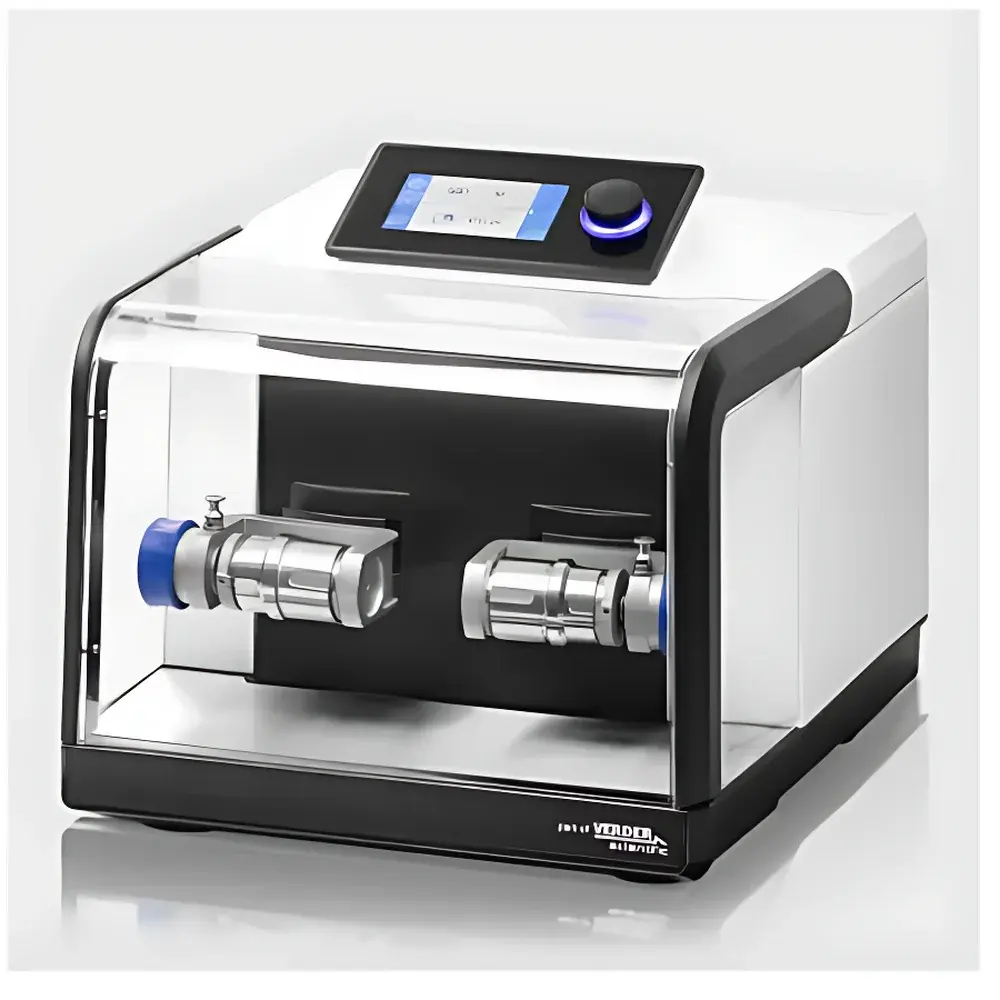
Retsch MM400 Cryogenic Mixer Mill
| Brand | Retsch |
|---|---|
| Origin | Germany |
| Model | MM400 |
| Instrument Type | High-Energy Ball Mill |
| Sample Compatibility | Cryogenic, Dry, Wet, and Biological Samples |
| Max. Feed Size | ≤ 8 mm |
| Final Particle Size | < 5 µm |
| Batch Capacity | 2 × 20 mL |
| Vibration Frequency Range | 3–30 Hz (180–1800 min⁻¹) |
| Grinding Time Setting | Digital, 10 s – 8 h |
| Max. Grinding Duration | 99 h |
| Grinding Platforms | 2 |
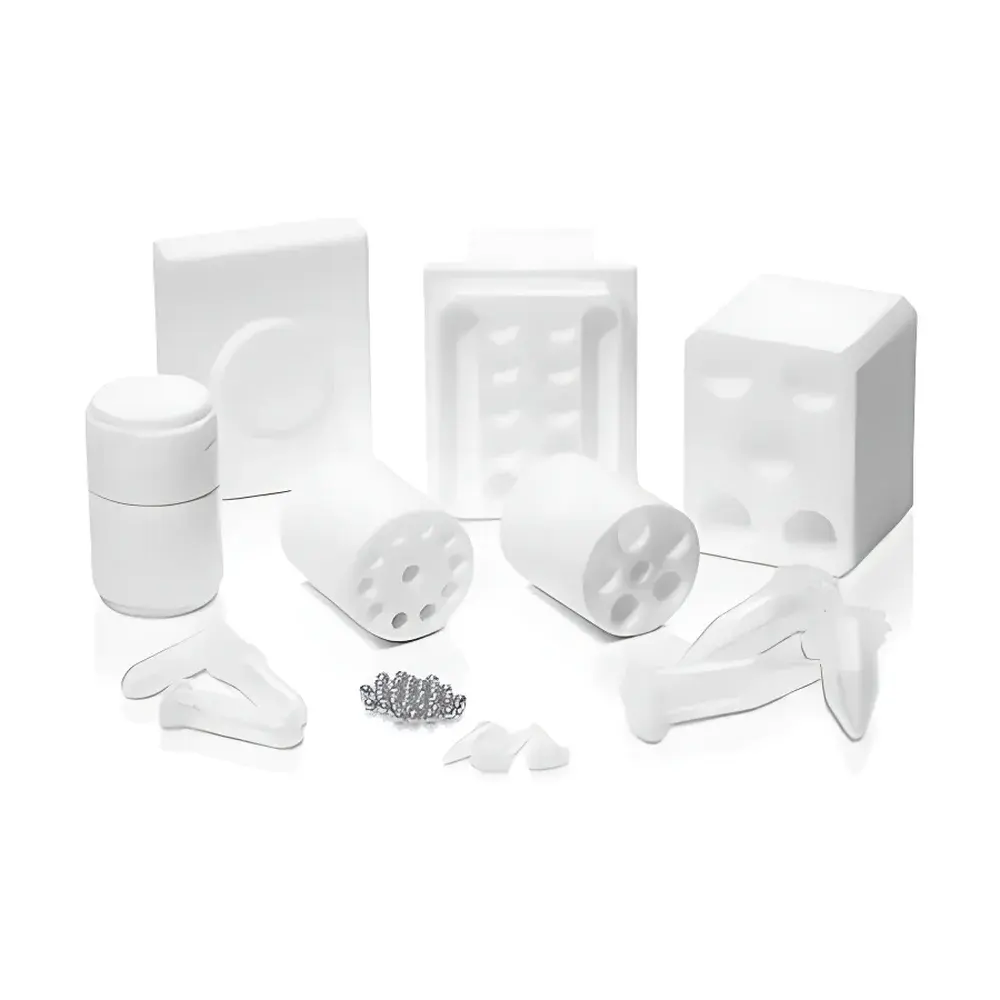
| Adapter for Cell Disruption | Yes (up to 20 × 2.0 mL tubes) |
| Drive Power | 165 W |
| Dimensions (W×H×D) | 385 × 350 × 470 mm |
| Net Weight | ~27.5 kg |
| Protection Class | IP 30 |
| Compliance | CE-marked |
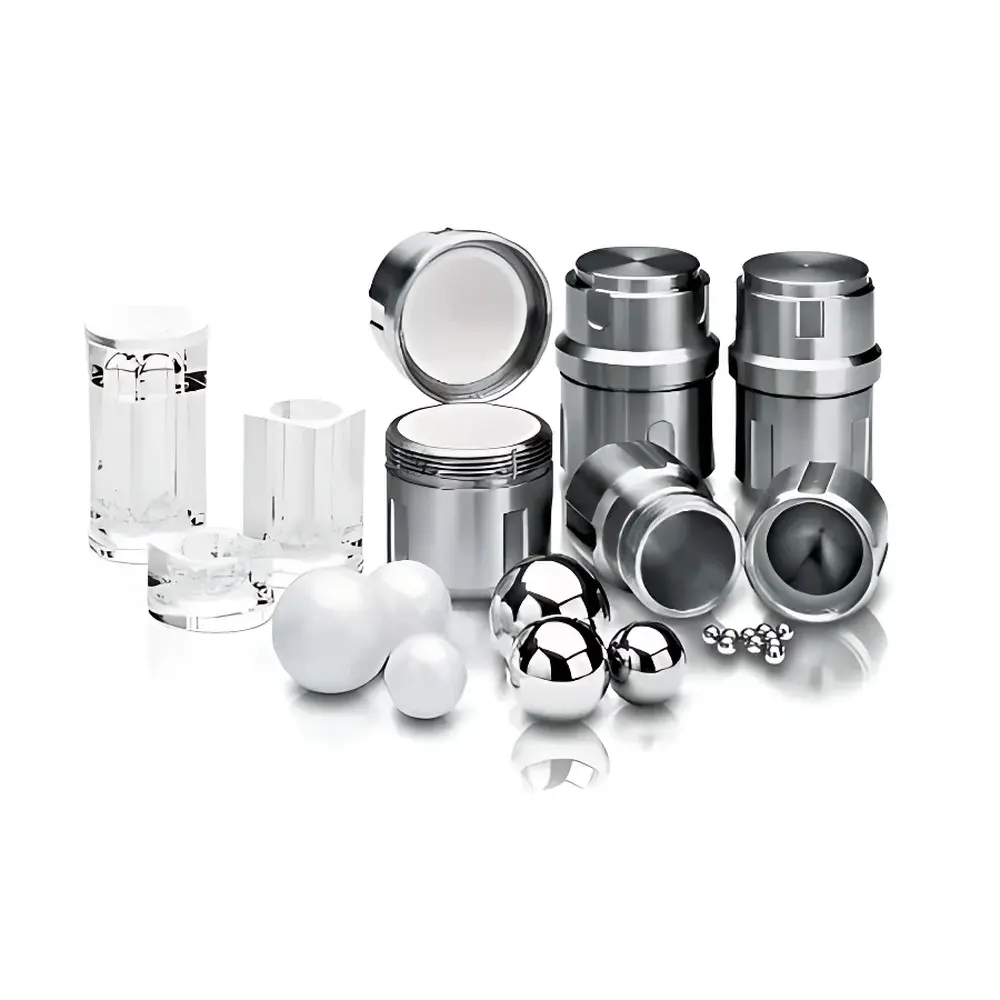
| Grinding Jar Materials | Stainless Steel, Tungsten Carbide, Agate, Zirconia, PTFE, PMMA, Hardened Steel |
Overview
The Retsch MM400 Cryogenic Mixer Mill is a high-energy, dual-vial benchtop mill engineered for reproducible size reduction, homogenization, mechanical alloying, and cryogenic grinding of small-volume samples. It operates on the principle of radial oscillation—where two grinding jars mounted on a horizontal platform undergo controlled, high-frequency vibrational motion (3–30 Hz). This induces inertial impact forces between grinding balls and sample material, enabling efficient comminution via combined impact, shear, and friction mechanisms. Unlike planetary or centrifugal mills, the MM400’s oscillatory architecture delivers uniform energy input without rotational torque, minimizing thermal load and ensuring compatibility with temperature-sensitive matrices—including frozen tissues, polymers, pharmaceuticals, and reactive inorganic precursors. Its design conforms to ISO 13320 (laser diffraction particle sizing) sample preparation requirements and supports GLP-compliant workflows through traceable parameter logging and repeatable protocol execution.
Key Features
- Dual-jar configuration with independent clamping and automatic centering—enabling simultaneous processing of two 20 mL vials or up to twenty 2.0 mL microtubes using optional adapters;
- Cryogenic operation capability: compatible with liquid nitrogen cooling jackets and pre-chilled jars for sub-zero grinding of thermolabile biomolecules, elastomers, and waxy organics;
- Precise digital time control (10 s–8 h per cycle) and programmable multi-step sequences (up to 6 stored cycling protocols, 12 total user-defined modes);
- Wide selection of jar and ball materials—including stainless steel, tungsten carbide, agate, zirconia, PTFE, and PMMA—to prevent cross-contamination and accommodate abrasive, corrosive, or ultra-pure applications;
- Robust cast-aluminum housing with IP 30 ingress protection; CE-certified electrical safety and electromagnetic compatibility (EMC Directive 2014/30/EU);
- Energy-efficient 165 W drive system with low-noise operation (<70 dB(A)) suitable for shared laboratory environments.
Sample Compatibility & Compliance
The MM400 accommodates heterogeneous sample types across hardness spectra—from soft biological tissues and polymers to hard ceramics, alloys, and geological specimens. Its validated performance covers ASTM D297 (rubber testing), ISO 6427 (ceramic powder fineness), and USP (disintegration testing support). For biopharmaceutical labs, it fulfills critical cell disruption needs under controlled conditions: lysis efficiency is optimized using 0.1–0.5 mm glass beads at −196 °C, yielding >95% nucleic acid recovery while preserving RNA integrity (RIN >8.5) as verified by Bioanalyzer assays. All grinding parameters—including frequency, duration, jar fill level, and ball-to-sample mass ratio—are fully documented to satisfy FDA 21 CFR Part 11 audit trail requirements when integrated with compliant LIMS or ELN platforms.
Software & Data Management
While the MM400 operates via an intuitive front-panel interface, its parameter sets are exportable via USB for integration into centralized instrument management systems. Time-stamped run logs include vibration frequency, elapsed time, pause intervals, and error codes—supporting root-cause analysis during method validation. When paired with Retsch’s optional software suite (e.g., RETSCH Control), users gain access to remote monitoring, SOP-driven operation templates, and electronic signature functionality aligned with GMP Annex 11 and ISO/IEC 17025 documentation standards. No proprietary cloud services or mandatory subscriptions are required; data remains under institutional control at all times.
Applications
- Mechanochemical synthesis: Solvent-free co-crystallization of APIs, metal–organic framework (MOF) precursor activation, and solid-state catalytic screening;
- Biomolecular extraction: High-yield DNA/RNA/protein isolation from plant roots, microbial pellets, and frozen animal tissues;
- Materials science: Nanoparticle dispersion in polymer matrices, phase transformation studies in metastable alloys, and amorphization of crystalline APIs;
- Environmental analysis: Homogenization of soil, sediment, and biochar samples prior to heavy metal extraction (EPA Method 3050B);
- Quality control: Particle size distribution standardization for reference materials used in laser diffraction or SEM calibration.
FAQ
Can the MM400 be used for wet grinding?
Yes—the MM400 supports wet grinding with solvents including ethanol, acetone, and aqueous buffers. Compatible jar materials (e.g., PTFE, zirconia) ensure chemical resistance, and sealed vials prevent evaporation during extended cycles.
Is cryogenic grinding limited to liquid nitrogen?
No—while liquid nitrogen is most common, dry ice/acetone baths and refrigerated jar holders (−40 °C) are viable alternatives depending on thermal stability requirements.
How does the MM400 compare to planetary ball mills for nanomaterial synthesis?
The MM400 provides lower peak temperatures and higher impact consistency per unit time due to its linear oscillation path, making it preferable for heat-sensitive mechanochemical reactions where phase purity must be preserved.
Are grinding jars autoclavable?
Stainless steel and PTFE jars are autoclavable (121 °C, 20 min); agate and zirconia require dry-heat sterilization only.
Does Retsch provide validation documentation for GxP environments?
Yes—IQ/OQ documentation packages, including calibration certificates traceable to NIST standards and performance qualification protocols for cell disruption efficiency, are available upon request.



