
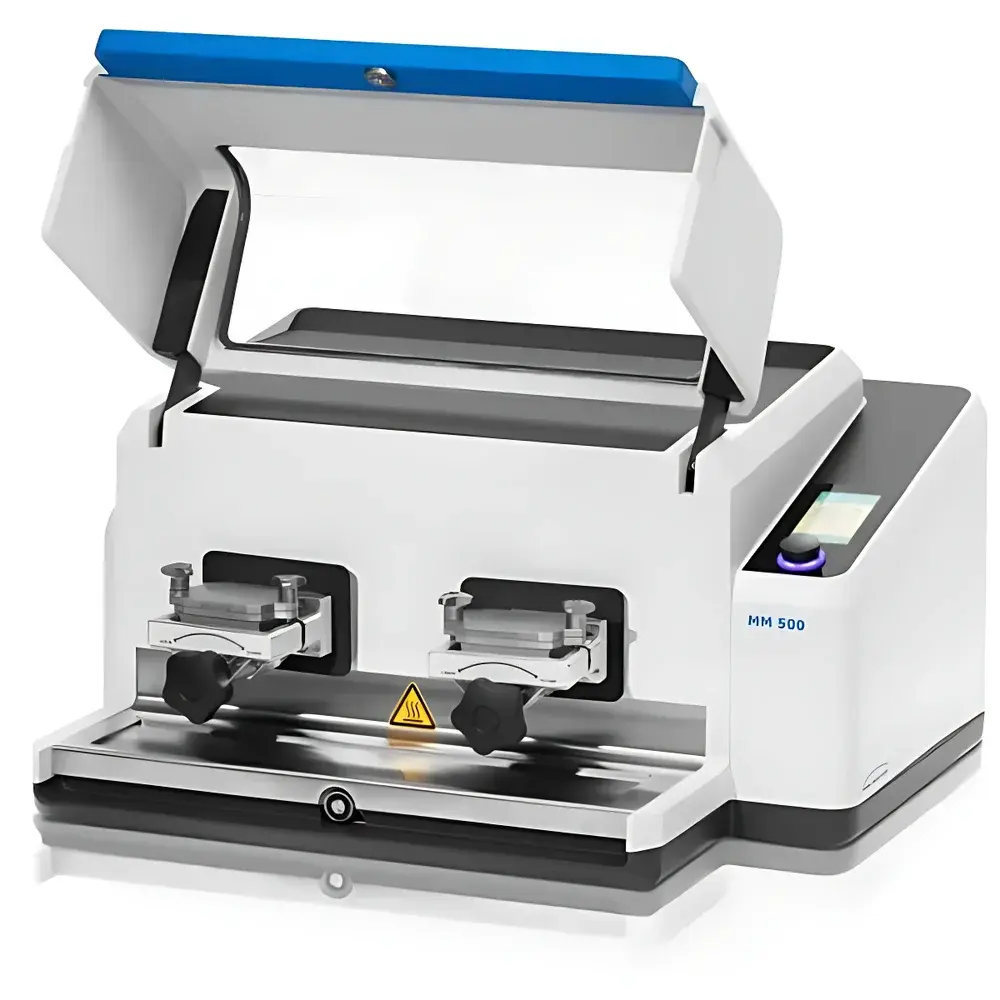
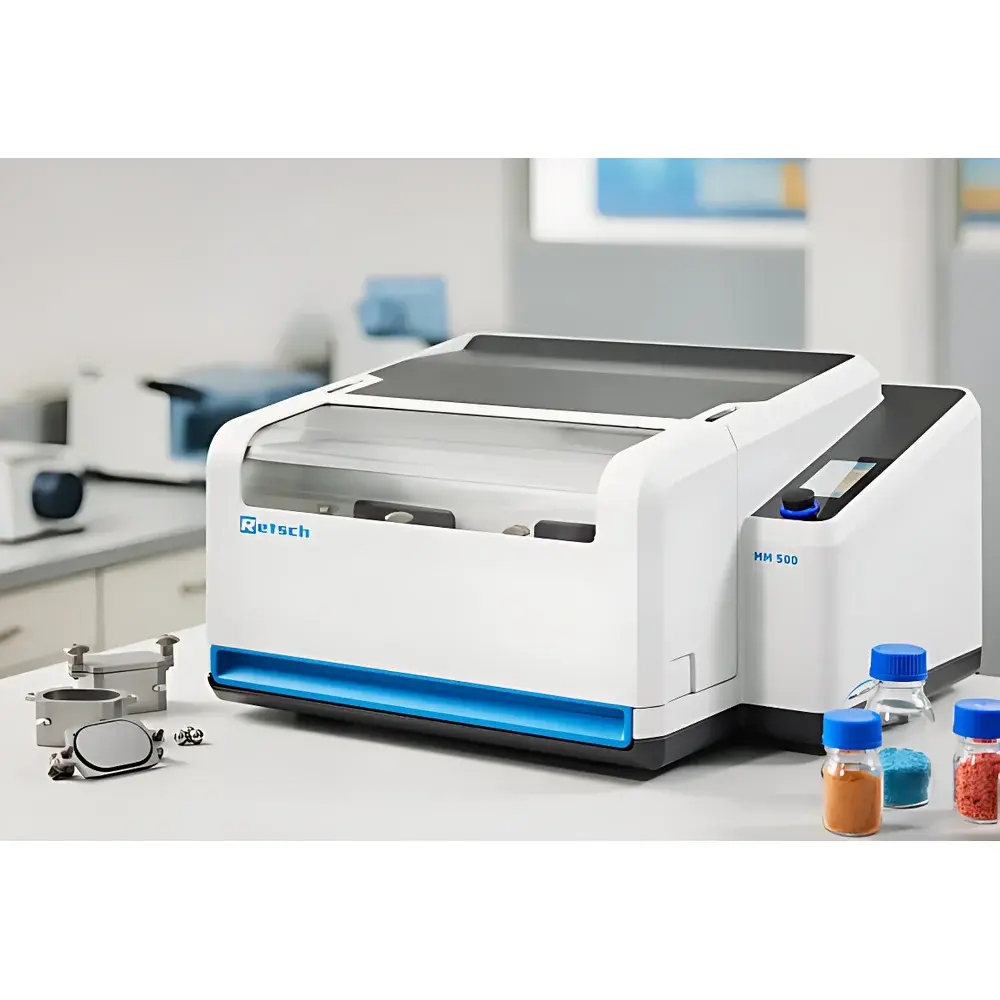
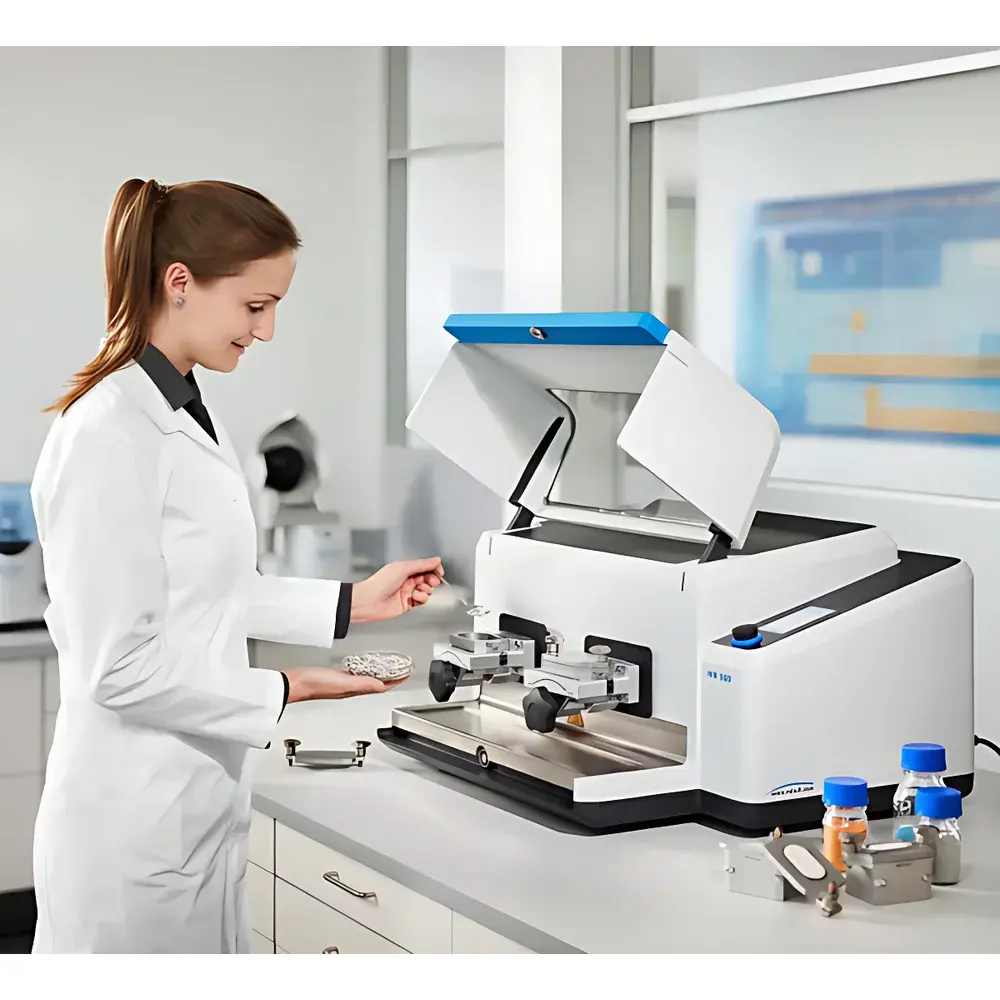
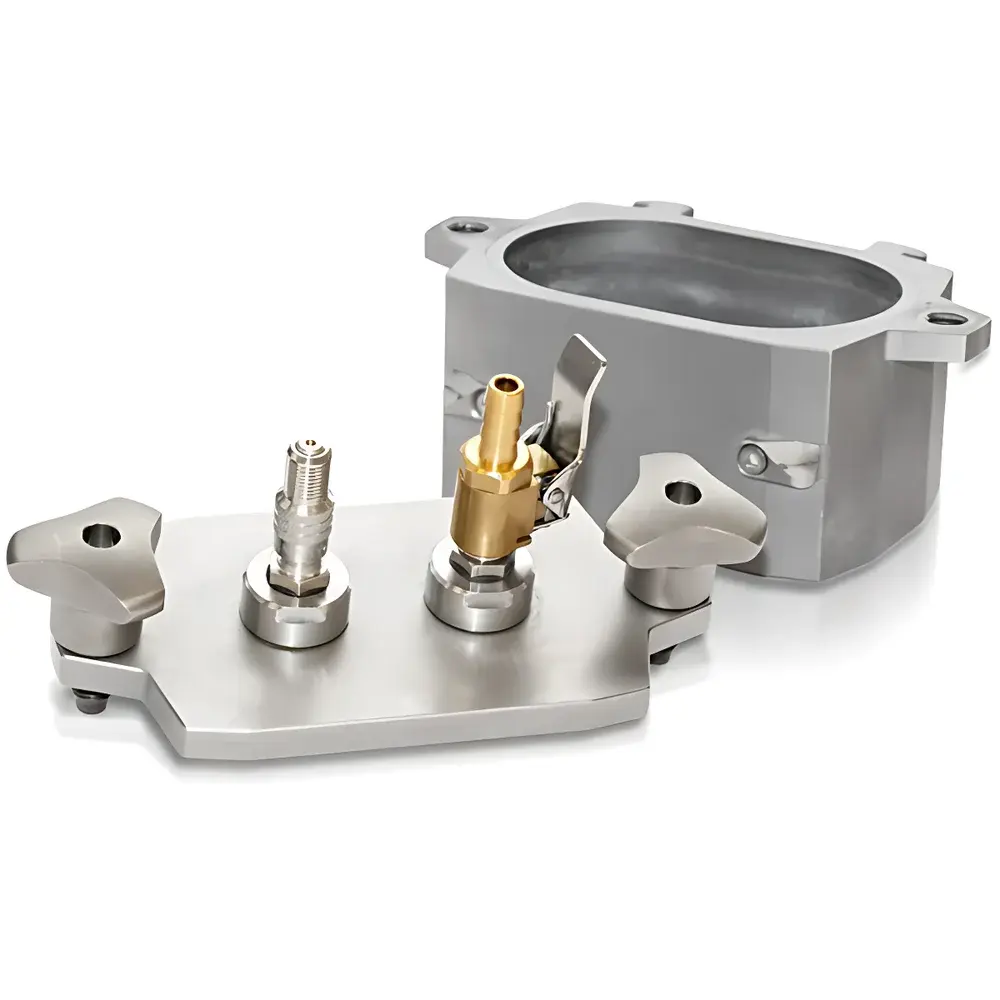
Retsch MM500 High-Energy Oscillatory Impact Ball Mill
| Brand | Retsch |
|---|---|
| Origin | Germany |
| Model | MM500 |
| Instrument Type | Ball Mill |
| Sample Suitability | Hard, Medium-Hard, Brittle, Fibrous, Elastic & Soft Materials |
| Feed Size | ≤ 10 mm |
| Final Particle Size | < 100 nm |
| Batch Capacity | 2 × 45 mL |
| Operating Frequency | 3–35 Hz (180–2100 min⁻¹) |
| Grinding Modes | Dry, Wet & Cryogenic Grinding |
| Sealing Pressure | Up to 5 bar |
| Programmable SOPs | 12 |
| Linked Programs | 4 (each up to 99 cycles) |
Overview
The Retsch MM500 is a high-energy oscillatory impact ball mill engineered for reproducible, scalable nanoscale comminution and mechanochemical synthesis. Unlike planetary ball mills that rely on vector-balanced centrifugal forces, the MM500 employs a patented oscillatory arm mechanism generating direct, unidirectional impact energy—superimposing high-frequency lateral acceleration onto grinding media motion. This results in intensified collision kinetics, superior energy transfer efficiency, and accelerated particle size reduction down to sub-100 nm. Designed for benchtop deployment in regulated research and quality control laboratories, the MM500 supports dry, wet, and cryogenic grinding protocols under inert gas atmospheres (up to 5 bar), making it suitable for air-sensitive reactions, amorphous phase formation, solid-state alloying, and mechanochemical catalysis.
Key Features
- High-frequency oscillation drive (3–35 Hz, digitally adjustable) delivering peak impact energy at 35 Hz—exceeding conventional planetary systems in specific energy input per cycle.
- Dual-sample chamber configuration (2 × 45 mL capacity) enabling parallel processing with independent parameter control per station.
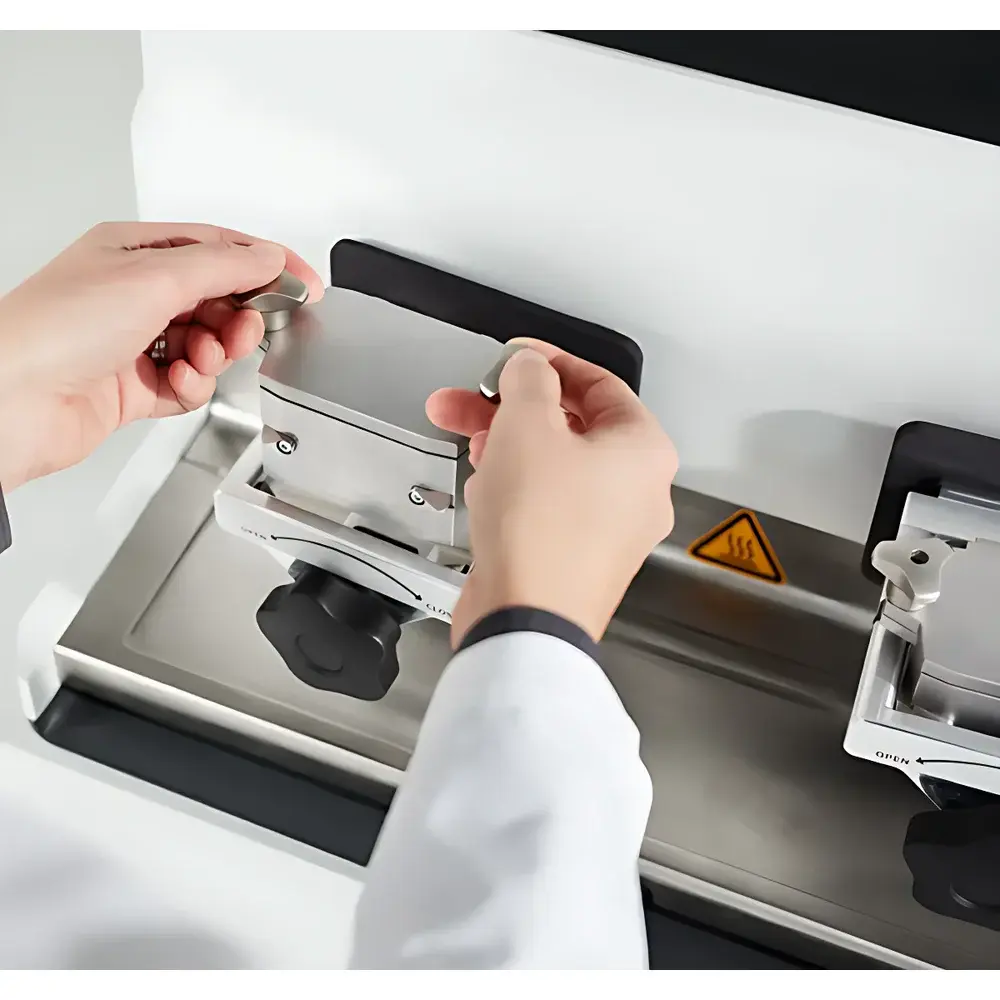
- Modular grinding jar system with standardized volumes (50 mL, 80 mL, 125 mL) and material options including hardened steel, stainless steel, tungsten carbide, and zirconium oxide—ensuring chemical compatibility across diverse sample matrices.
- Integrated sealing interface supporting pressurized operation under N₂ or Ar (up to 5 bar), critical for preventing oxidation during mechanical alloying or reactive milling.
- Intuitive digital interface with 12 programmable SOPs and 4 linked program sequences—each configurable for multi-step ramping, dwell, and reversal logic; repeatable up to 99 cycles per sequence.
- Optional Wi-Fi-enabled RetschApp integration for remote monitoring, method execution, and secure data export—compatible with iOS and Android platforms and compliant with laboratory IT security policies.
Sample Compatibility & Compliance
The MM500 accommodates heterogeneous sample types—including hard metals, brittle ceramics, polymeric composites, biological tissues, and fibrous plant materials—without requiring pre-crushing beyond 10 mm feed size. Its cryogenic grinding capability (using liquid nitrogen-cooled jars) enables embrittlement of thermolabile or elastic samples prior to milling. The instrument meets CE marking requirements and conforms to IEC 61000-6-2 (EMC immunity) and IEC 61000-6-4 (EMC emission) standards. For GxP environments, audit-trail-capable operation is achievable when paired with RetschApp’s timestamped method logging—supporting alignment with GLP and FDA 21 CFR Part 11 principles where electronic records are validated.
Software & Data Management
RetschApp provides a secure, browser-free interface for configuring, launching, and documenting grinding protocols. Users can store and retrieve SOPs locally or via cloud-synced repositories, share validated methods across instrument fleets, and generate PDF reports containing time-stamped parameters, sensor logs (vibration amplitude, temperature if equipped), and operator metadata. All data exports comply with ISO/IEC 17025 documentation traceability requirements. Remote diagnostics and firmware updates are facilitated through encrypted TLS communication channels, minimizing downtime and supporting preventive maintenance scheduling.
Applications
The MM500 serves as a foundational tool in advanced materials development, particularly in mechanochemistry, where it facilitates solvent-free synthesis of metal–organic frameworks (MOFs), co-crystals, and metastable polymorphs. In metallurgy and powder metallurgy, it enables homogeneous dispersion of nano-reinforcements (e.g., SiC, graphene) into aluminum or magnesium matrices. Environmental labs utilize its cryo-grinding mode for homogenizing soil, sediment, or biofilm samples prior to elemental analysis (ICP-MS, XRF). Pharmaceutical researchers apply it for amorphization of APIs, improving dissolution kinetics without thermal degradation. Additional use cases span cementitious material optimization, battery electrode precursor synthesis, and genomic DNA extraction from tough microbial cell walls.
FAQ
What distinguishes the MM500’s oscillatory impact principle from planetary ball milling?
The MM500 applies unidirectional oscillatory acceleration directly to the grinding jar, maximizing kinetic energy transfer via head-on collisions—whereas planetary mills distribute force across rotating vectors, resulting in lower effective impact intensity per unit time.
Can the MM500 be used for FDA-regulated pharmaceutical process development?
Yes—when operated with RetschApp and configured with user access controls, electronic signatures, and audit trails, it supports compliance with 21 CFR Part 11 for electronic records and signatures in drug substance manufacturing.
Is cryogenic grinding supported without external modifications?
Yes—the MM500 accepts commercially available cryo-jars and standard liquid nitrogen dewars; no hardware retrofitting is required for sub-ambient operation.
How is cross-contamination prevented between sequential runs?
The system supports automated cleaning cycles using solvent-compatible jar liners and ultrasonic post-run decontamination protocols; all grinding media and jar components are autoclavable or chemically resistant.
Does the MM500 meet ISO 13320 laser diffraction sample preparation guidelines?
Yes—its ability to achieve consistent sub-100 nm particle distributions with low agglomeration makes it widely adopted for preparing representative suspensions prior to laser diffraction or TEM analysis.



