
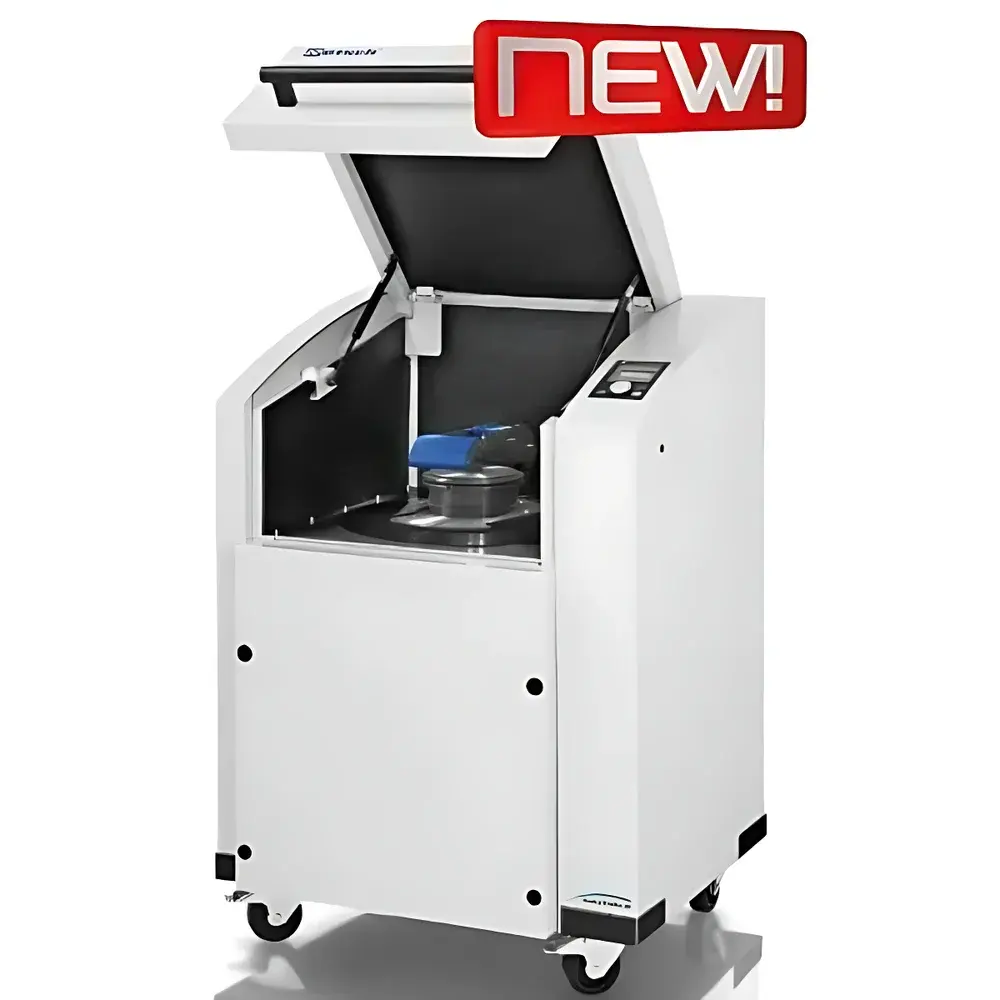
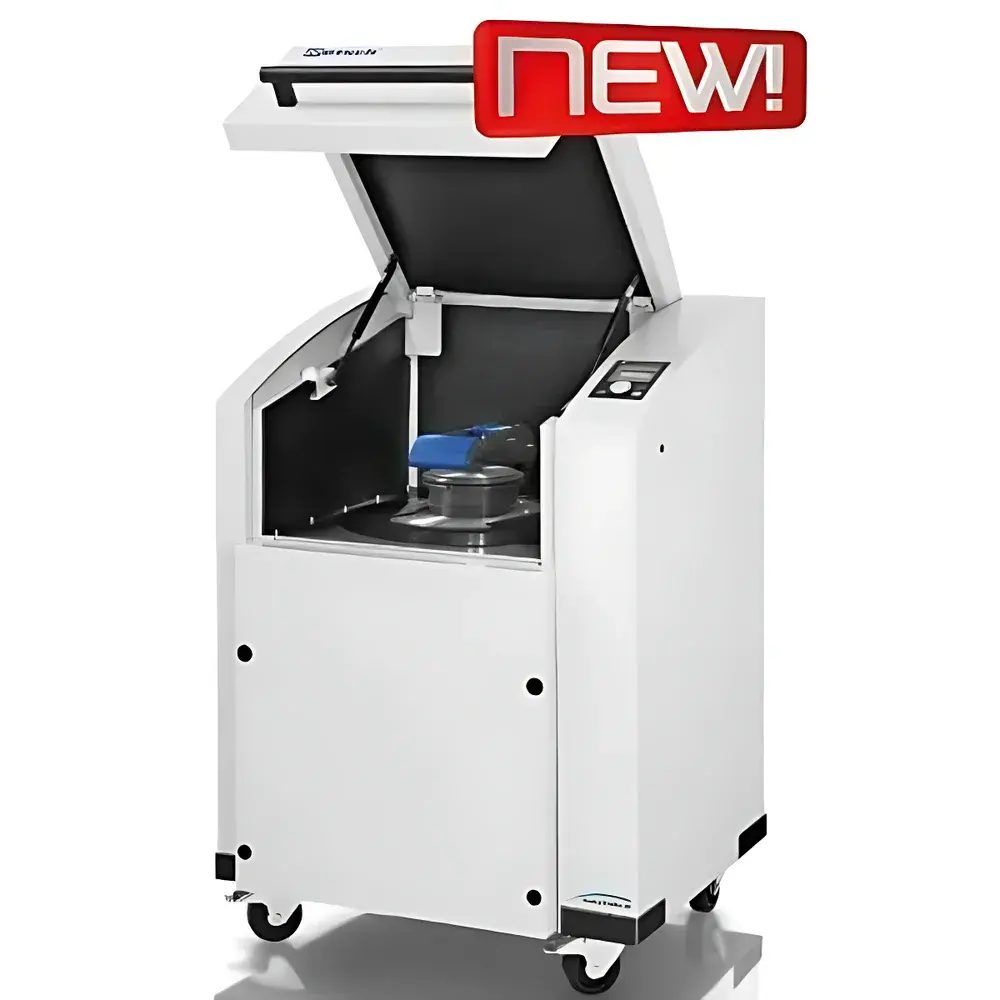
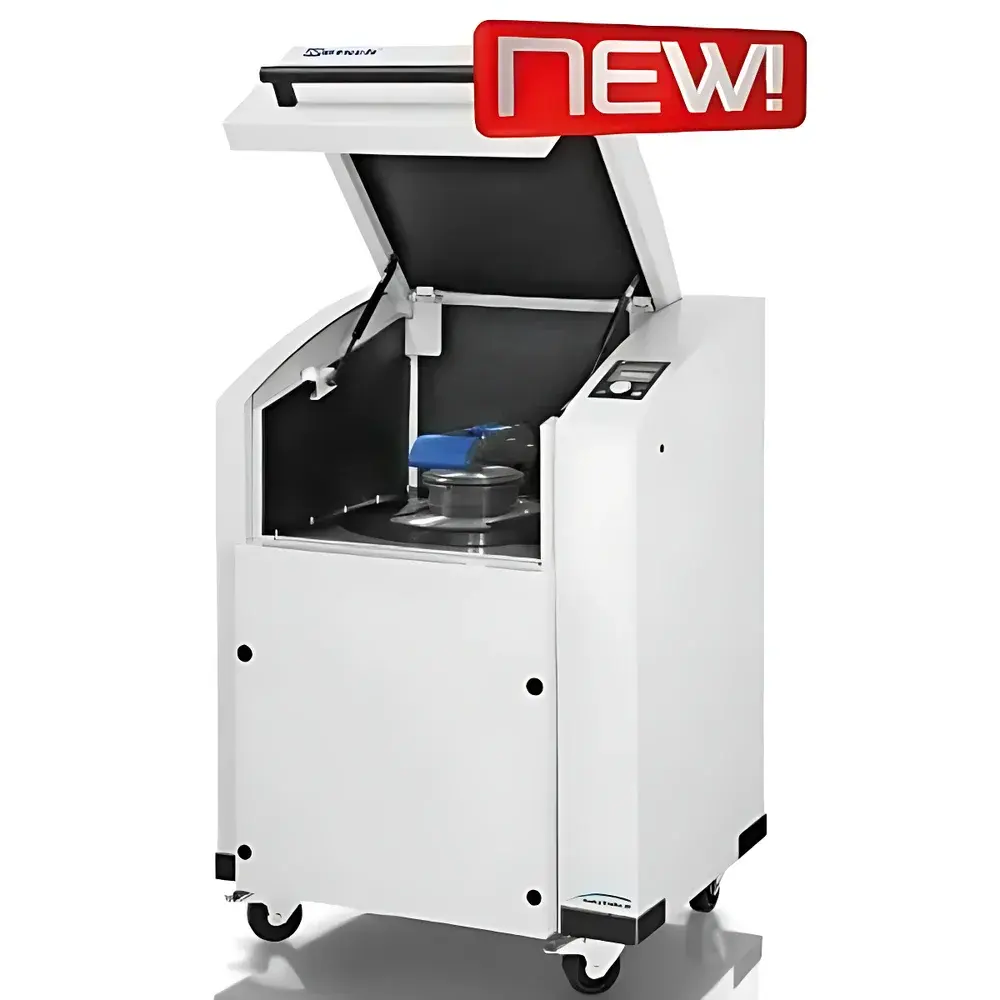
Retsch PM 400 Planetary Ball Mill
| Brand | Retsch |
|---|---|
| Origin | Germany |
| Model | PM 400 |
| Instrument Type | Planetary Ball Mill |
| Sample Suitability | Hard, brittle, fibrous, soft to extremely hard materials |
| Feed Size | < 10 mm |
| Final Particle Size | < 0.1 µm (colloidal grinding) |
| Batch Volume | up to 4 × 220 mL or 8 × 20 mL |
| Grinding Platforms | 4 (standard), optional 2-platform configuration for mechanical alloying |
| Sun Wheel Diameter | 300 mm |
| Sun Wheel Speed | 30–400 rpm |
| Speed Ratio Options | 1:−2, 1:−2.5, 1:−3 |
| Drive Power | 1.5 kW |
| Net Weight | ~290 kg |
| Dimensions (W×H×D) | 836 × 1220 (1900) × 780 mm |
| Protection Class | IP 30 |
| Sound Pressure Level | LpAeq < 85 dB(A) |
| Compliance | CE certified |
| Grinding Jar Materials | Hardened steel, stainless steel, tungsten carbide, agate, sintered corundum, zirconium oxide |
| Jar Volumes | 12–500 mL |
| Programmable Parameters | 10 stored methods |
| Interface | RS 232 / RS 485 |
| Energy Input Measurement | Yes |
| Cooling | Automatic grinding chamber ventilation system |
Overview
The Retsch PM 400 is a high-energy planetary ball mill engineered for precision comminution, homogenization, and mechanical alloying of diverse solid materials—from soft organic tissues and plant matter to extremely hard ceramics, minerals, alloys, and electronic waste. Its operational principle relies on the superposition of two rotational movements: the grinding jars rotate about their own axes while simultaneously revolving in the opposite direction around a central sun wheel. This dual-motion geometry generates intense Coriolis forces and centrifugal acceleration, resulting in highly efficient impact and shear energy transfer to the sample. The large-diameter sun wheel (300 mm) and variable speed range (30–400 rpm) enable precise control over kinetic energy input, facilitating reproducible sub-micron and colloidal grinding outcomes—down to < 0.1 µm—within minutes. Designed for laboratory environments demanding robustness and long-term stability, the PM 400 features a rigid cast-iron frame, vibration-damped base, and IP 30-rated enclosure suitable for standard analytical laboratories.
Key Features
- Four independent grinding stations enabling parallel processing of up to eight samples (using stacked jars), significantly improving throughput for routine QA/QC or multi-condition screening.
- Three selectable speed ratios (1:−2, 1:−2.5, 1:−3) to optimize energy transfer for specific material classes—e.g., higher ratios for mechanical alloying of intermetallic compounds.
- Integrated energy input measurement system allows quantitative correlation between operational parameters and particle size reduction kinetics—critical for method development and regulatory documentation.
- Programmable digital timer with resolution down to 1 second, supporting complex sequences including intermittent operation with user-defined grinding/pause cycles and automatic reversal to minimize thermal buildup and jar wear.
- Automatic grinding chamber ventilation system actively cools jars during extended runs, maintaining thermal stability for temperature-sensitive samples such as polymers or pharmaceutical actives.
- Ten programmable method slots store full parameter sets—including speed, time, pause intervals, direction reversal logic, and safety lock settings—ensuring operator-independent repeatability across shifts and users.
- Comprehensive safety architecture: mechanical jar locking mechanisms, emergency stop circuitry, overload protection, and uninterruptible power backup for parameter retention during grid failure.
Sample Compatibility & Compliance
The PM 400 accommodates a broad spectrum of sample types across academic, industrial, and regulatory testing domains. It is routinely employed for sample preparation prior to XRD, SEM-EDS, ICP-MS, and elemental analysis in environmental (soil, sludge, fly ash), geological (quartz, limestone, ores), metallurgical (alloys, scrap metals), and pharmaceutical (APIs, excipients) applications. Compatible jar materials—including zirconium oxide for ultra-low contamination, agate for acid-resistant mineral digestion, and hardened steel for high-energy alloying—allow strict adherence to ISO 13320 (particle size analysis), ASTM E11 (test sieves), and USP (particulate matter in injections). The instrument meets CE marking requirements per Directive 2006/42/EC (machinery) and 2014/30/EU (EMC), and supports GLP/GMP workflows through audit-trail-capable parameter logging when interfaced with validated LIMS systems.
Software & Data Management
While the PM 400 operates via an intuitive front-panel interface with graphical LCD display and one-touch execution, its RS 232 and RS 485 serial ports enable integration into automated laboratory networks. Third-party software solutions—including Retsch’s optional control suite—support remote monitoring, batch reporting, and export of timestamped energy profiles and cycle logs compliant with FDA 21 CFR Part 11 requirements (when deployed with appropriate electronic signature and audit trail configurations). All parameter changes are logged with date/time stamps, and method recall history is retained in non-volatile memory—facilitating traceability during internal audits or regulatory inspections.
Applications
- Mechanical alloying of Ni–Al, Fe–Si, or Ti–B systems under inert atmosphere (with optional aeration lids).
- Preparation of nanoscale catalyst precursors from metal oxides or layered double hydroxides.
- Homogenization of heterogeneous environmental matrices (e.g., sewage sludge, contaminated soils) prior to heavy metal extraction.
- Cell disruption and DNA/RNA stabilization in botanical and forensic samples using cryo-grinding protocols.
- Production of ultrafine ceramic powders for sintering studies or additive manufacturing feedstock qualification.
- Reduction of brittle electronic waste (PCBs, solder residues) for leaching efficiency optimization in urban mining processes.
FAQ
What is the maximum recommended feed size for optimal performance?
Feed particles should be ≤ 10 mm in diameter to ensure uniform loading and prevent jar imbalance or premature media fracture.
Can the PM 400 perform wet grinding?
Yes—compatible with solvent-based grinding using sealed jars equipped with PTFE or elastomer gaskets; recommended for heat-sensitive or oxidation-prone materials.
Is the instrument suitable for GMP-regulated environments?
When operated with documented SOPs, calibrated jars, and connected to validated data acquisition software, the PM 400 supports 21 CFR Part 11–compliant workflows.
How is temperature rise controlled during prolonged grinding?
The integrated ventilation system draws ambient air across the grinding chamber; for extreme thermal management, cryo-grinding adapters or liquid nitrogen cooling jackets may be used.
What jar materials are recommended for trace-metal analysis?
Zirconium oxide or agate jars are preferred for minimizing elemental contamination; stainless steel jars require rigorous cleaning validation before low-level ICP-MS use.



