
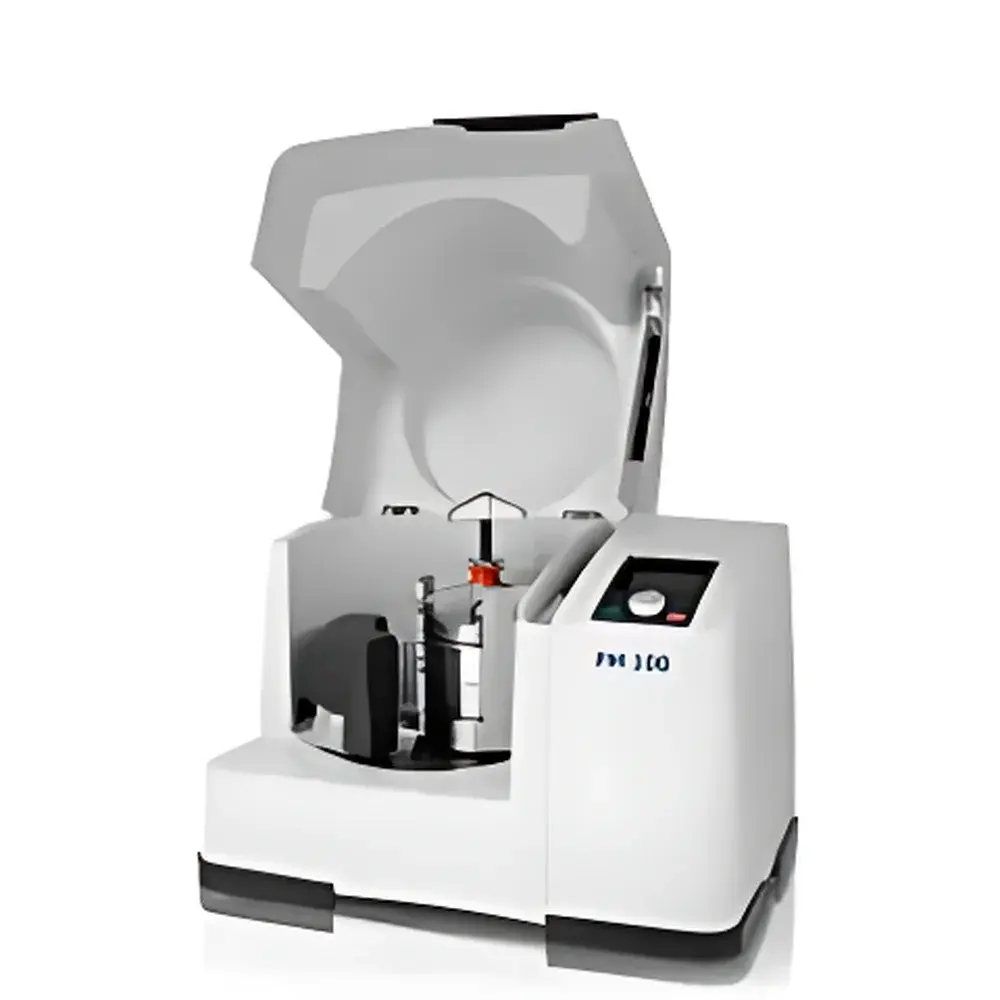
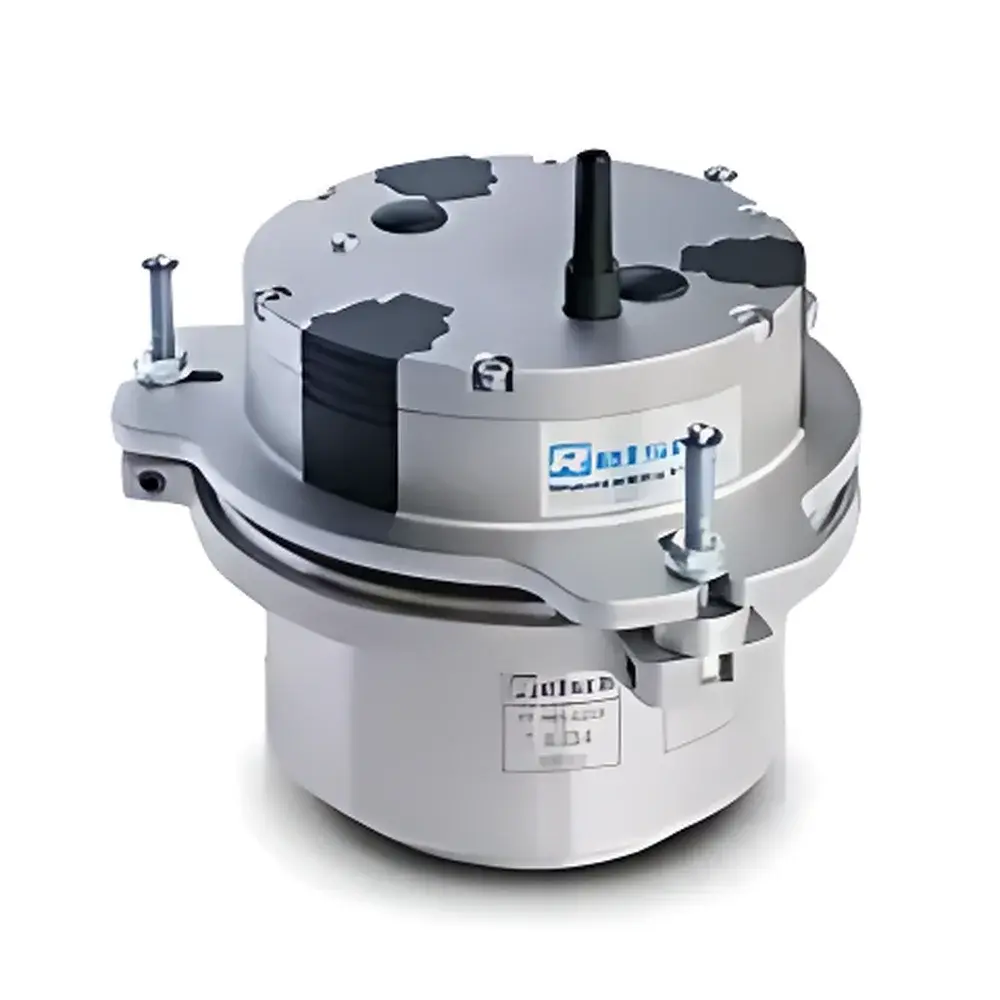
Retsch PM100 Planetary Ball Mill
| Brand | Retsch |
|---|---|
| Origin | Germany |
| Model | PM100 |
| Instrument Type | Planetary Ball Mill |
| Sample Suitability | Hard, brittle, and medium-hard materials |
| Feed Size | < 10 mm |
| Final Particle Size | < 1 µm |
| Maximum Batch Volume | 1 × 220 mL (or 2 × 50 mL stacked) |
| Sun Wheel Speed | 100–650 rpm |
| Effective Sun Wheel Diameter | 141 mm |
| Drive Power | 750 W |
| Dimensions (W × H × D) | 630 × 468 × 415 mm |
| Net Weight | ~80 kg |
| Safety Certification | CE compliant |
| Compliance | Designed to meet ISO 17025-relevant operational requirements for sample preparation in accredited laboratories |
Overview
The Retsch PM100 Planetary Ball Mill is a high-energy, single-station laboratory mill engineered for reproducible, fine comminution of hard, brittle, and medium-hard materials. Operating on the principle of planetary motion, the instrument rotates grinding jars around their own axis while simultaneously revolving in the opposite direction around a central sun wheel — generating intense Coriolis and centrifugal forces. This dual rotational motion accelerates grinding balls to high velocities, resulting in repeated high-energy impacts against both the jar wall and the sample material. The combination of impact, shear, and friction forces enables efficient particle size reduction down to sub-micron levels (< 1 µm), making the PM100 suitable for applications requiring precise control over particle morphology, crystallinity, and homogeneity — including mechanochemical synthesis, phase transformation studies, and preparation of reference standards for XRD, SEM-EDS, or elemental analysis.
Key Features
- Single-grinding-station design with robust cast-aluminum housing and precision-balanced drive mechanism for stable long-term operation
- Adjustable sun wheel speed (100–650 rpm) with digital speed control and real-time RPM display for method optimization and process repeatability
- Large-diameter sun wheel (141 mm) enhancing kinetic energy transfer and improving grinding efficiency across diverse material classes
- Intuitive large-format LCD interface with multilingual menu support (English, German, French, Spanish, Chinese) and one-touch start/stop functionality
- Patented jar clamping system ensuring secure, vibration-dampened fixation during high-speed operation — certified to EN 61000-6-2/6-4 electromagnetic compatibility standards
- Optional accessories including gas-tight lids for inert-atmosphere milling, temperature/pressure monitoring modules (PMGC), and cryo-milling adapters
- Compliant with CE marking requirements; designed for integration into GLP/GMP environments where audit-ready documentation and traceable operating parameters are essential
Sample Compatibility & Compliance
The PM100 accommodates a wide range of sample types — including minerals, metal alloys, ceramics, oxides, pharmaceutical actives, plant tissues, soils, and industrial waste matrices. Its versatility extends to applications governed by ASTM C1107 (for cementitious grouts), ISO 13320 (laser diffraction particle sizing sample prep), and USP <725> (mechanical activation of APIs). Grinding vessels are available in multiple volumes (12–500 mL) and chemically resistant materials: stainless steel (1.4404), tungsten carbide, zirconium oxide, agate, and sintered corundum — enabling contamination-free processing for trace-metal analysis or catalytic studies. All jars feature precision-machined sealing surfaces and are rated for pressures up to 5 bar when used with optional gas-tight lids.
Software & Data Management
While the PM100 operates via standalone hardware controls, its programmable parameters — including speed, time, pause intervals, and directional reversal sequences — are fully documented in internal memory with timestamped logs. For laboratories implementing electronic record-keeping under FDA 21 CFR Part 11 or ISO/IEC 17025, Retsch provides optional connectivity solutions (via RS232 or USB) to export operational metadata to LIMS or ELN platforms. The instrument supports user-defined method storage (up to 99 protocols), automatic shutdown upon cycle completion, and error-code diagnostics for preventive maintenance scheduling.
Applications
- Mechanochemical synthesis of intermetallics, solid-state electrolytes, and MOFs
- Homogenization of heterogeneous geological or environmental samples prior to ICP-MS or XRF analysis
- Crystallinity modification of pharmaceutical compounds to enhance dissolution kinetics
- Preparation of nanoscale catalyst precursors and battery electrode materials
- Reduction of coarse slag or fly ash fractions for leaching and toxicity characteristic testing (TCLP)
- Grinding of brittle polymers and composites for thermal analysis (DSC/TGA) or rheological characterization
FAQ
What is the maximum recommended continuous operating time for the PM100?
The PM100 is rated for unattended operation up to 99 hours and 59 minutes per cycle; however, optimal thermal management is achieved with intermittent cycles (e.g., 30 min on / 10 min cooling) when processing heat-sensitive or reactive materials.
Can the PM100 be used for cryogenic milling?
Yes — when equipped with liquid nitrogen-compatible jars and insulating sleeves, the PM100 supports cryo-milling down to –196 °C, preserving thermolabile structures and inhibiting amorphization in organic crystals.
Is remote monitoring or network integration supported?
Standard PM100 units do not include Ethernet or Wi-Fi; however, Retsch offers OEM-ready RS232/USB interfaces and protocol documentation for third-party SCADA or lab automation system integration.
How does the PM100 ensure operator safety during high-speed operation?
The instrument features dual-interlock lid sensors, automatic motor cutoff if jar misalignment is detected, and an emergency stop button compliant with IEC 60204-1; all mechanical components are enclosed within a reinforced polycarbonate safety shield meeting EN 61000-6-2 immunity requirements.
What calibration or verification procedures are recommended?
Retsch recommends annual verification using certified speed calibrators and traceable torque meters; users should maintain logbooks documenting speed accuracy, jar seal integrity, and vibration amplitude per ISO/IEC 17025 Clause 6.4.3.



