
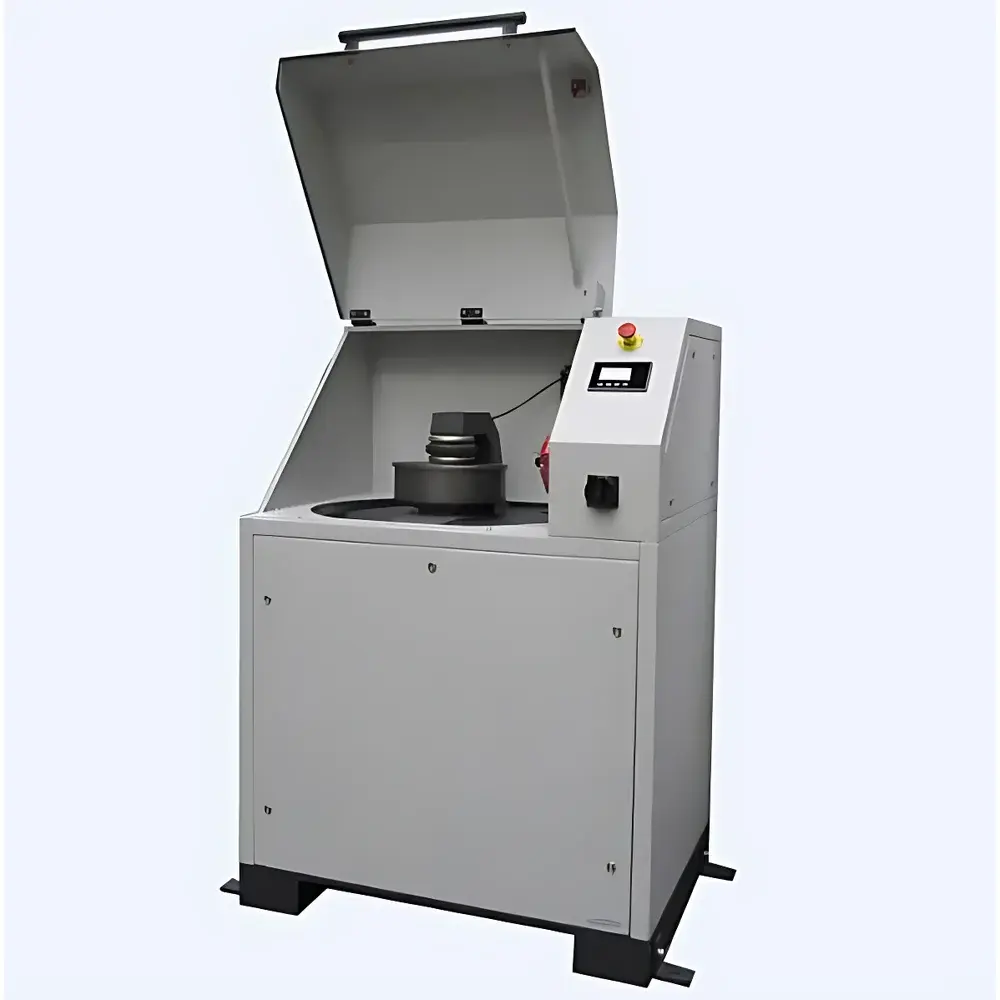
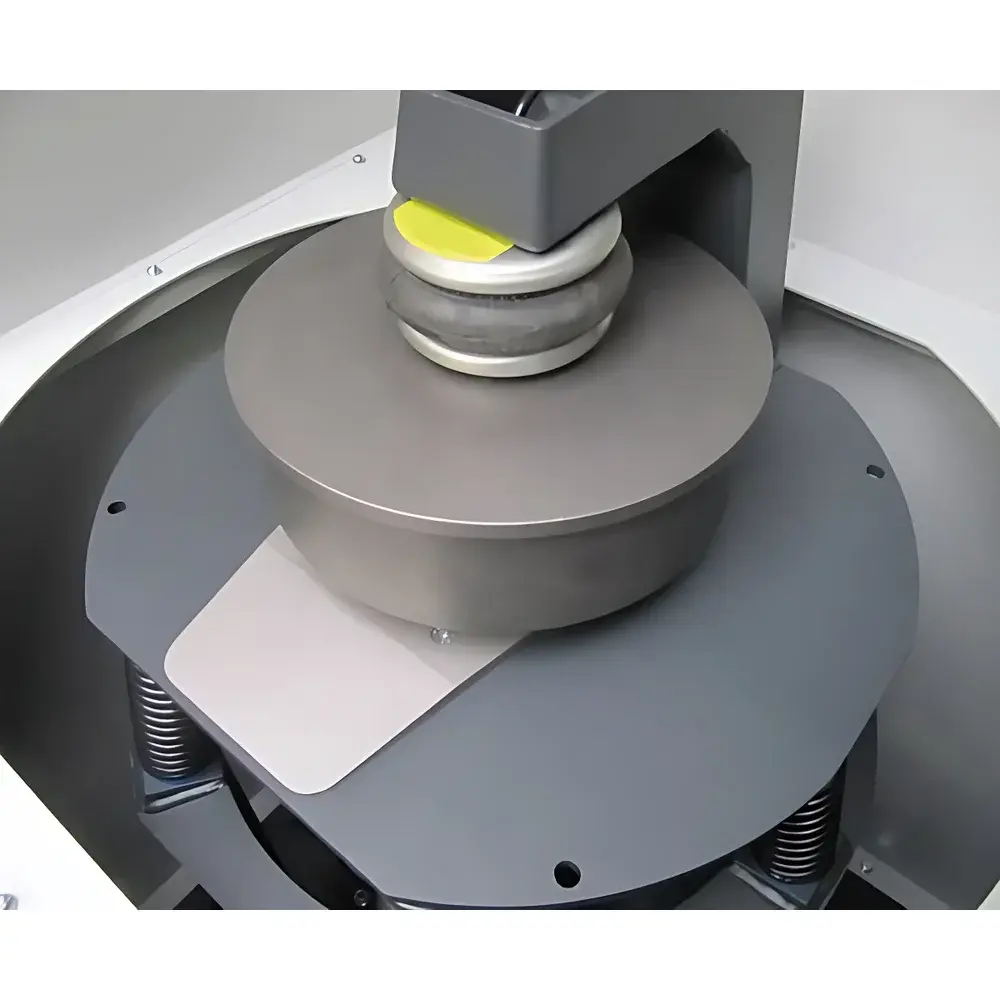
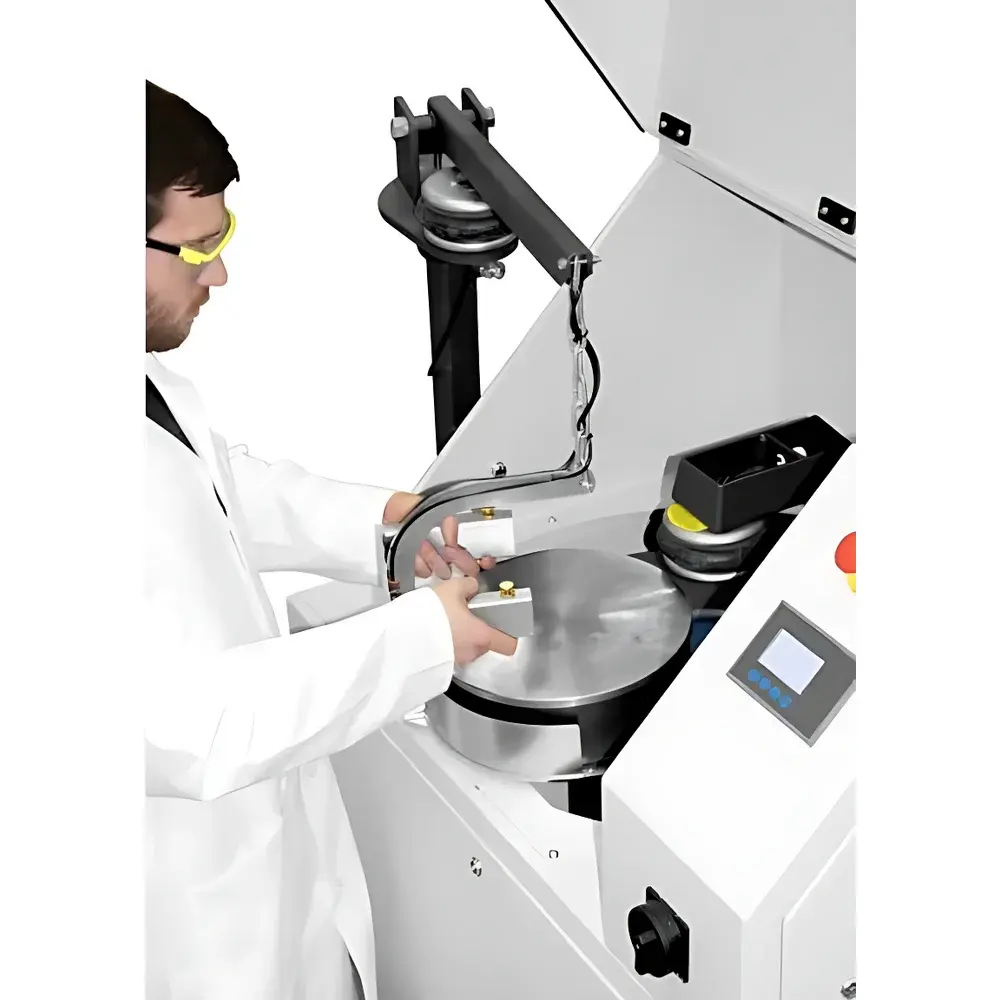
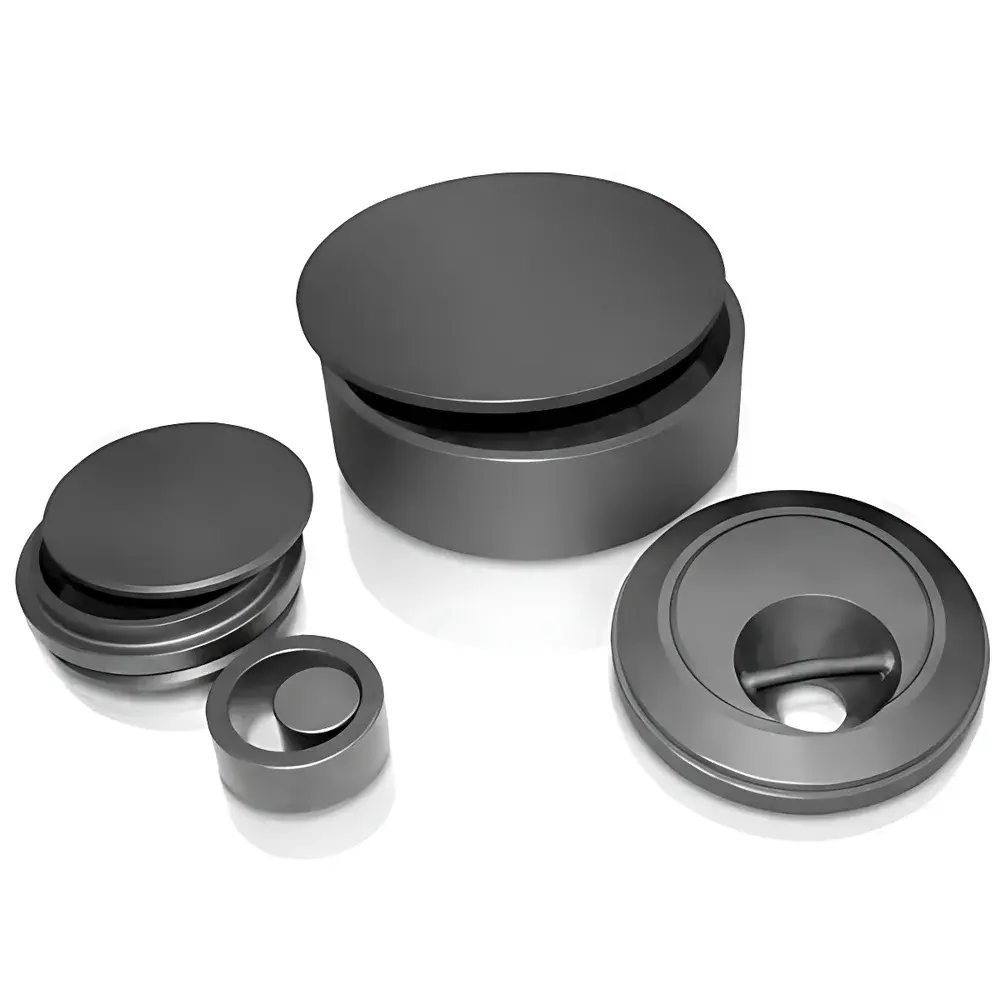
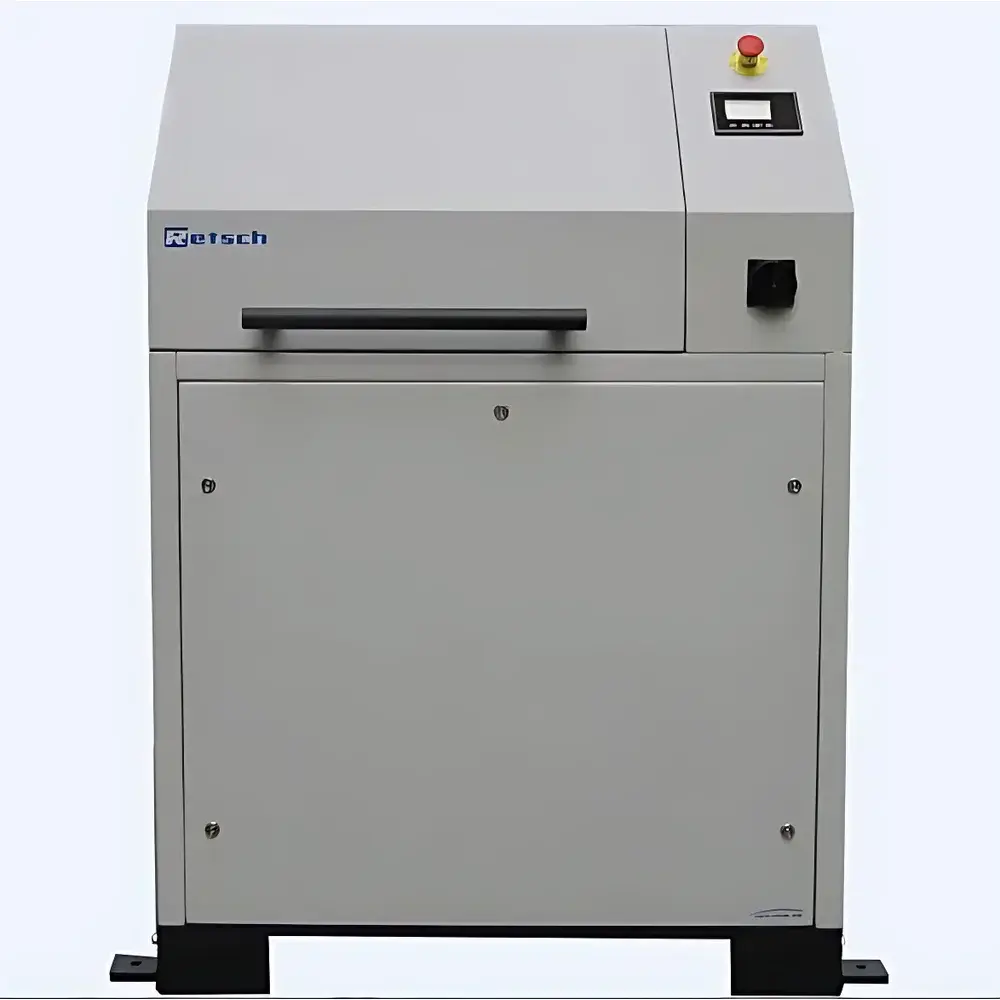
Retsch RS300 Planetary Vibratory Disc Mill
| Brand | Retsch |
|---|---|
| Origin | Germany |
| Model | RS300 |
| Instrument Type | Disc Vibratory Mill |
| Sample Type | Hard, brittle, fibrous materials |
| Feed Size | < 20 mm |
| Final Particle Size (d90) | < 75 µm |
| Batch Volume | 35–2000 mL |
| Speed | 912 rpm |
| Power | 2200 W |
| Dimensions (off) | 1150 × 1400 × 810 mm (W × H × D) |
| Dimensions (operational) | 1150 × 2100 × 810 mm (W × H × D) |
| Net Weight | ~415 kg |
| Grinding Principle | Combined impact and shear forces via 3D orbital vibration |
Overview
The Retsch RS300 Planetary Vibratory Disc Mill is an industrial-grade laboratory grinding system engineered for high-throughput, reproducible size reduction of hard, brittle, and fibrous materials. Unlike conventional jaw crushers or rotor mills, the RS300 employs a patented 3D vibratory motion generated by a universal joint drive shaft—transferring kinetic energy from the base plate to the grinding chamber in three orthogonal axes. This motion subjects samples to simultaneous high-frequency impact, compression, and shear forces between the rotating grinding disc and stationary grinding ring, achieving d90 particle sizes below 75 µm without thermal degradation or cross-contamination. Designed for compliance with ISO 13320 (laser diffraction), ASTM C114 (cement analysis), and USP <429> (particle size distribution for pharmaceutical excipients), the RS300 serves as a critical preprocessing tool prior to XRF, XRD, ICP-OES/MS, and SEM-EDS analysis.
Key Features
- Universal joint-driven 3D vibratory motion ensures uniform energy distribution and exceptional repeatability (RSD < 2% across replicate batches)
- Automated pneumatic clamping system secures grinding vessels up to 2000 mL; activation only permitted after pressure stabilization (safety interlock per EN 61000-6-2)
- Digital timer with programmable intermittent operation (start/pause cycles) and bidirectional rotation reversal (clockwise/counterclockwise) to prevent sample stratification
- Ergonomic automatic lifting mechanism for safe handling of heavy grinding assemblies (max. total mass: 30 kg including vessel and media)
- Modular grinding kit selection: five material options (stainless steel, tungsten carbide, hardened steel, agate, PTFE-coated steel) and four vessel volumes (100, 800, 1000, 2000 mL) to meet trace-metal-free, inert, or wear-resistant requirements
- Integrated safety monitoring: real-time pressure verification, overtemperature cutoff, emergency stop, and door-position sensing per IEC 60204-1
Sample Compatibility & Compliance
The RS300 accommodates feed particles up to 20 mm in diameter—including cement clinkers, basalt cores, coal lumps, sintered ceramics, ferroalloys, and soil aggregates—without pre-crushing. Its closed-system architecture prevents aerosol release and maintains sample integrity under GLP and GMP conditions. Vessel configurations support both dry and wet grinding protocols compliant with ISO 17025-accredited laboratories. All stainless-steel components conform to FDA 21 CFR Part 11–ready documentation standards when paired with Retsch’s TruControl software, enabling full audit trails for regulatory submissions (e.g., EPA Method 6010D, ISO 14687 for fuel ash analysis).
Software & Data Management
When operated with Retsch TruControl v3.x, the RS300 supports fully traceable method management, electronic signatures, and automated report generation in PDF/A format. Each grinding cycle logs timestamp, vessel ID, rotational direction sequence, pause intervals, total runtime, and ambient temperature—structured for seamless integration into LIMS platforms via OPC UA or CSV export. Data encryption, user role-based access control (admin/operator/auditor), and electronic record retention align with 21 CFR Part 11 Subpart B requirements for regulated environments including cement QA/QC labs and mineral exploration centers.
Applications
- Geochemical laboratories: preparation of rock, ore, and slag samples for multi-element ICP analysis
- Cement and construction materials testing: homogenization of Portland cement, fly ash, and blast-furnace slag per ASTM C670 and EN 196-3
- Power generation sector: pulverization of coal, biomass pellets, and boiler ash for calorific value and elemental profiling
- Environmental monitoring: size reduction of contaminated soils and sediments prior to TCLP extraction (EPA Method 1311)
- Ceramics & advanced materials R&D: dispersion of alumina, zirconia, and silicon carbide powders for sintering studies
- Academic research: reproducible comminution of geological reference materials (e.g., NIST SRM 278, GBW07105) for method validation
FAQ
What types of samples are incompatible with the RS300?
Highly elastic polymers, rubber compounds, and viscous pastes are not recommended due to insufficient fragmentation under impact-shear dynamics. Samples with moisture content >15% require pre-drying to avoid caking on grinding surfaces.
Can the RS300 be used for cryogenic grinding?
No—the RS300 is not equipped for liquid nitrogen cooling. For cryo-applications, Retsch’s MM 500 or CryoMill systems are specified.
Is method transfer from RS200 to RS300 straightforward?
Yes. The RS300 maintains identical kinematic parameters and grinding mechanics as the RS200; scaling is linear with vessel volume. Validation protocols (e.g., ASTM E2925) confirm equivalent d90 reproducibility across both platforms.
How often does the universal joint require maintenance?
Under standard operating conditions (≤8 hrs/day), lubrication and torque verification are required every 1,500 operating hours. A diagnostic mode in TruControl monitors bearing vibration amplitude to predict service intervals.
Does the RS300 support remote monitoring?
Yes—via optional Ethernet interface and Retsch Cloud Connect, enabling real-time status alerts, predictive maintenance scheduling, and firmware updates without on-site technician intervention.



