
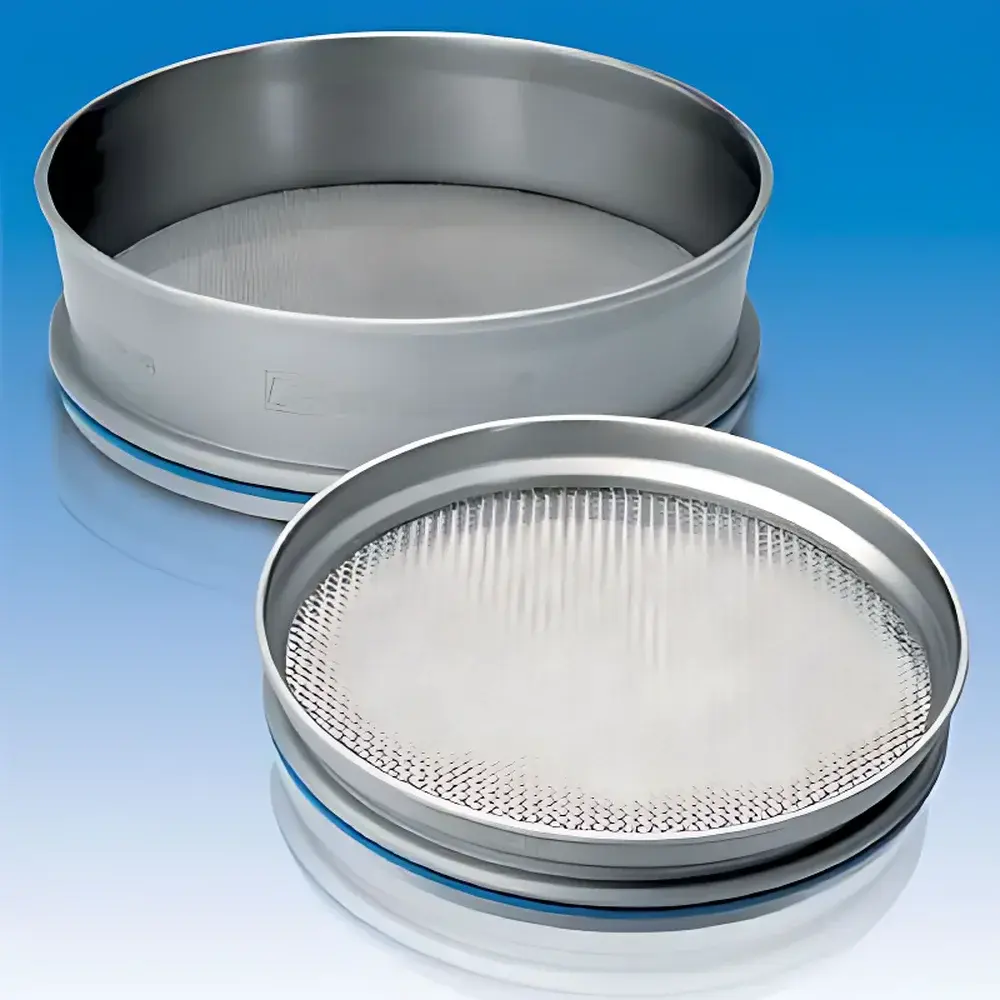
Retsch AS Series Analytical Sieve Set
| Brand | Retsch |
|---|---|
| Origin | Germany |
| Model | AS |
| Dimensions | 200 × 50 mm, 200 × 25 mm, 203 × 50 mm (8" × 2") |
| Material | ASTM F899 Grade 316L Stainless Steel (1.4435) |
| Compliance | ISO 3310-1, ASTM E11, USP <786> |
| Certification Options | Traceable Calibration Certificate (ISO/IEC 17025 accredited), QC Test Report with Graphical & Tabular Data |
| Weight Reduction | ~15% vs. Conventional Sieves |
| Sieve Frame | Monolithic Deep-Drawn Construction |
| Mesh Bonding | Resistance Welding |
| Sealing Integrity | Optimized Stack Interlock Design |
| Surface Finish | Electropolished (Ra ≤ 0.4 µm) |
Overview
The Retsch AS Series Analytical Sieve Set is a precision-engineered solution for standardized dry and wet particle size distribution analysis in compliance with international sieve classification standards—including ISO 3310-1, ASTM E11, and USP . Designed and manufactured in Haan, Germany, the AS series employs a monolithic deep-drawn stainless steel frame (ASTM F899 Grade 316L / EN 1.4435) to eliminate weld seams, machining grooves, or recessed transitions that could retain sample residue or compromise cleaning validation. Its measurement principle relies on mechanical sieving under controlled vibratory energy—typically integrated with Retsch’s AS 200 or AS 450 digital sieve shakers—to separate particulate material into discrete size fractions based on aperture geometry and mesh integrity. The system supports both single-sieve and stacked-sieve configurations, enabling reproducible quantification of cumulative oversize/undersize mass percentages across up to 12 nested sieve levels per stack.
Key Features
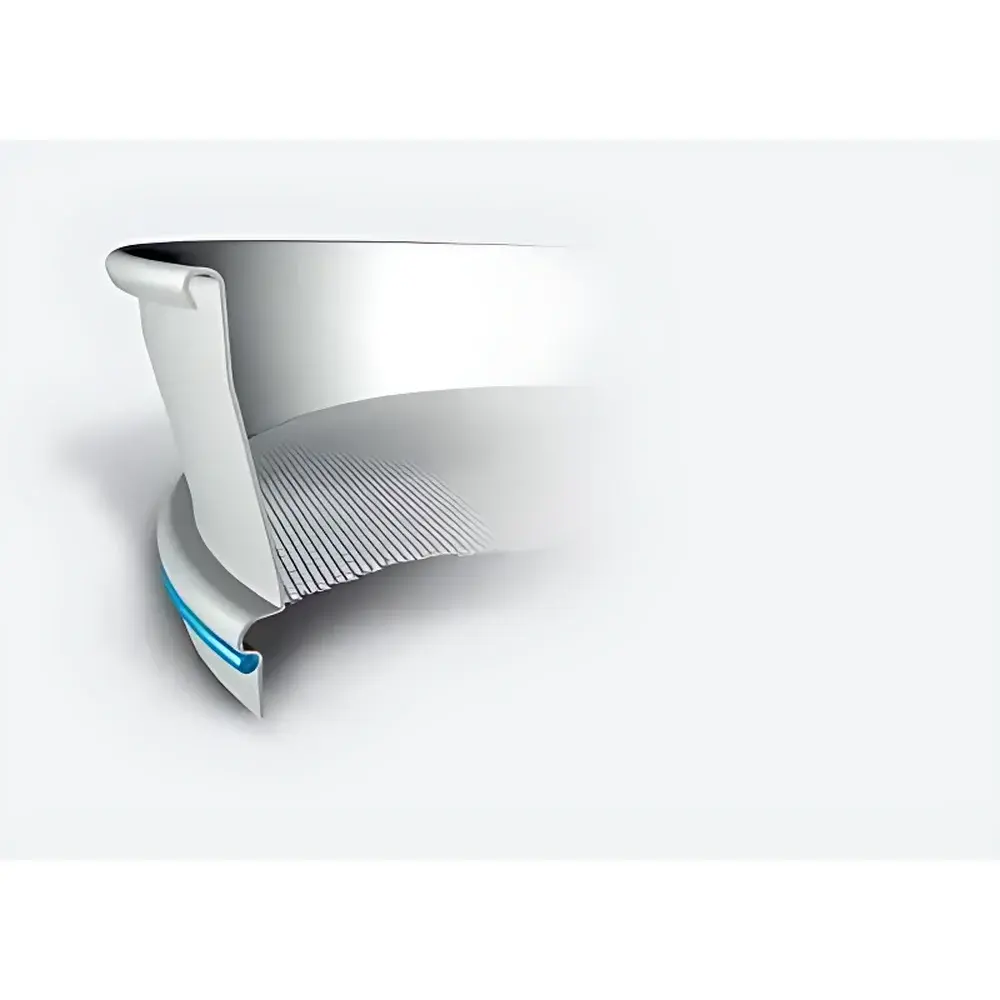
- Monolithic deep-drawn frame construction ensures zero weld lines, no slot transitions, and full traceability of raw material lot numbers via laser-etched identifiers.
- Electropolished surface finish (Ra ≤ 0.4 µm) enhances cleanability and minimizes particle adhesion—critical for GMP-compliant pharmaceutical or high-purity chemical applications.
- Resistance-welded mesh mounting maintains long-term tension stability without frame distortion, even after repeated thermal cycling or high-amplitude vibration.
- 15% weight reduction versus conventional sieves improves handling ergonomics and reduces inertial load during high-frequency shaking protocols.
- Optimized interlocking stack geometry provides leak-tight sealing between adjacent sieves, preventing cross-contamination and ensuring accurate mass balance in multi-stage fractionation.
- Standardized aperture tolerances conform to ISO 3310-1 Class A specifications, with certified mesh calibration available through Retsch’s ISO/IEC 17025-accredited metrology laboratory.
Sample Compatibility & Compliance
The AS series accommodates a broad spectrum of free-flowing and moderately cohesive powders, granules, and agglomerates—including foundry sands, detergent powders, roasted coffee grounds, metallurgical powders, agricultural seeds, mineral ores, coal fines, construction aggregates, flour, soil fractions, synthetic fertilizers, and active pharmaceutical ingredients (APIs). It meets regulatory requirements for analytical method validation under ICH Q5A and USP , supporting audit-ready documentation for GLP and GMP environments. All calibration certificates include uncertainty budgets, reference standard traceability to NIST or PTB, and full statistical reporting per ISO/IEC 17025 Clause 7.7.
Software & Data Management
When used with Retsch’s AS 200 or AS 450 digital sieve shakers, the AS series integrates seamlessly with the optional RETSCH Evaluation Software (v3.x). This platform enables automated data capture of sieve residue masses, calculation of D10/D50/D90 values, graphical representation of cumulative undersize curves, and export of CSV/PDF reports compliant with FDA 21 CFR Part 11 requirements—including electronic signatures, audit trails, and user-access controls. Raw measurement logs are timestamped, version-controlled, and stored with metadata linking each result to specific sieve serial numbers, calibration status, and operator IDs.
Applications
- Quality control of bulk pharmaceutical excipients and final dosage forms per USP and Ph. Eur. 2.9.30.
- Particle size specification verification for metal additive manufacturing feedstocks (e.g., Ti-6Al-4V, Inconel 718).
- Aggregate gradation testing in civil engineering laboratories according to ASTM C136/C136M.
- Process optimization of detergent formulation by monitoring sodium tripolyphosphate (STPP) particle distribution.
- Environmental soil texture analysis (sand/silt/clay separation) aligned with USDA NRCS methodology.
- Research-grade powder characterization in academic materials science labs requiring ISO 3310-1 traceability.
FAQ
Are AS series sieves compatible with non-Retsch sieve shakers?
Yes—AS sieves conform to universal DIN/ISO mounting dimensions and can be used with any shaker supporting standard 200 mm diameter sieve frames, though optimal amplitude control and timing synchronization require Retsch’s AS-series controllers.
Can I request calibration for non-standard aperture sizes?
Retsch offers custom mesh fabrication and certification for apertures outside ISO 3310-1 nominal ranges (e.g., 10 µm, 125 µm, 1.5 mm), subject to minimum order quantities and extended lead time.
What documentation accompanies each sieve set?
Every AS sieve includes a permanent laser-engraved serial number, material certificate (EN 10204 3.1), and optional ISO/IEC 17025 calibration certificate with uncertainty budget and traceability statement.
Is electropolishing mandatory for pharmaceutical use?
While not mandated by regulation, electropolishing is strongly recommended—and often required by internal SOPs—for API and sterile product testing to ensure residue-free cleaning validation per EU GMP Annex 15 and FDA Guidance for Industry.
How often should re-calibration be performed?
Annual re-calibration is advised for routine QC use; however, frequency must be justified by risk assessment per ICH Q9 and documented in your laboratory’s instrument qualification protocol.



