
Retsch SK300 Cross Beater Mill
| Brand | Retsch |
|---|---|
| Origin | Germany |
| Model | SK300 |
| Instrument Type | Beater Mill |
| Sample Type | Hard, Brittle Materials |
| Max. Feed Size | <25 mm |
| Final Particle Size | ≤100 µm |
| Throughput | up to 80 kg/h |
| Sieve Aperture Range | 0.12–10 mm |
| Speed Range | 2000–4000 rpm |
| Motor Power | 1.1 kW |
| Dimensions (W×H×D) | 500 × 400 × 510 mm |
| Net Weight | ~45 kg |
| Compliance | CE certified |
| Drive | Direct-drive motor (maintenance-free) |
| Receiving Vessel Options | 5 L or 30 L |
Overview
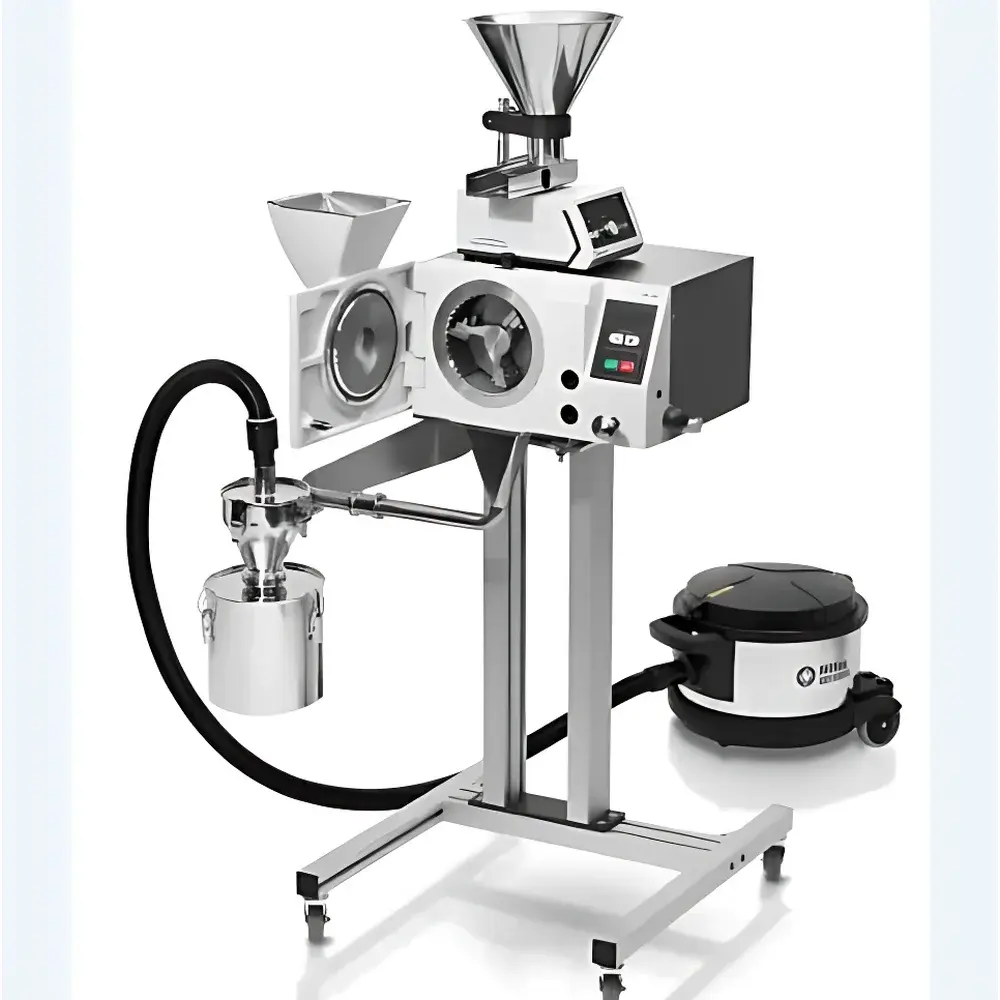
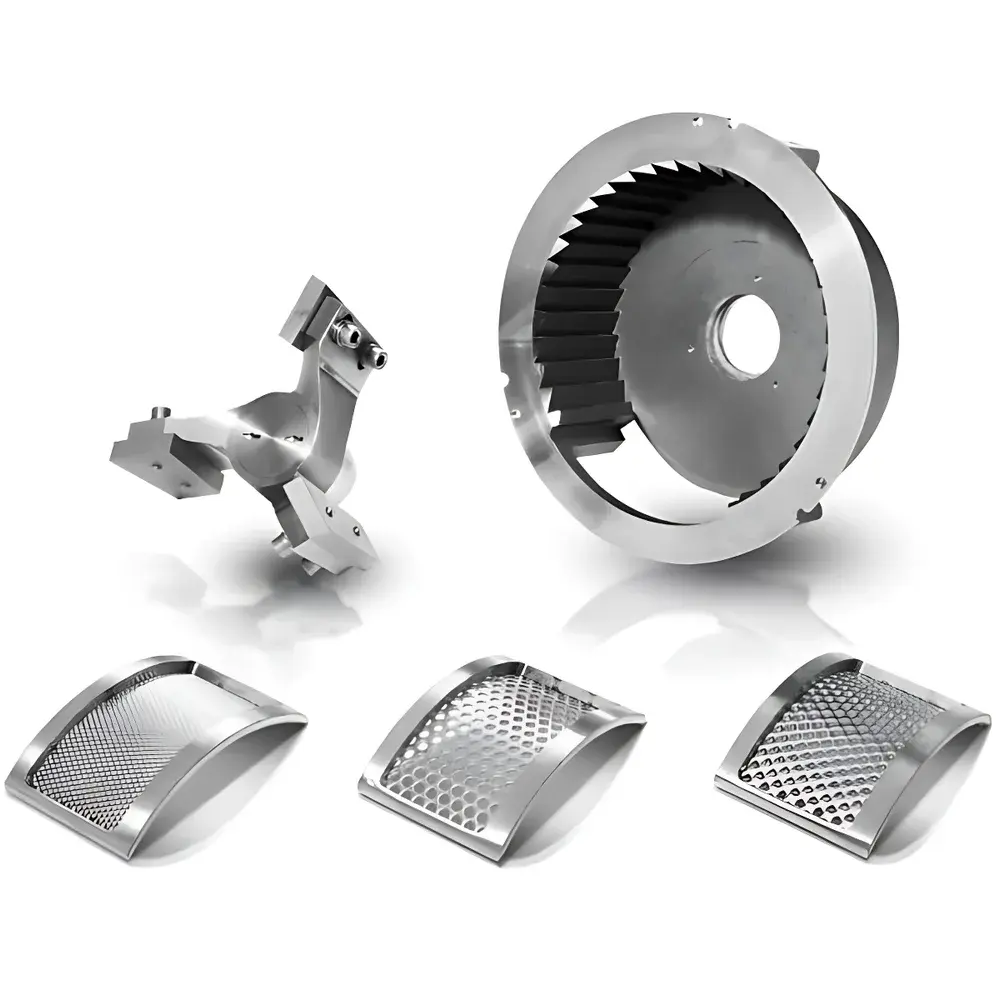
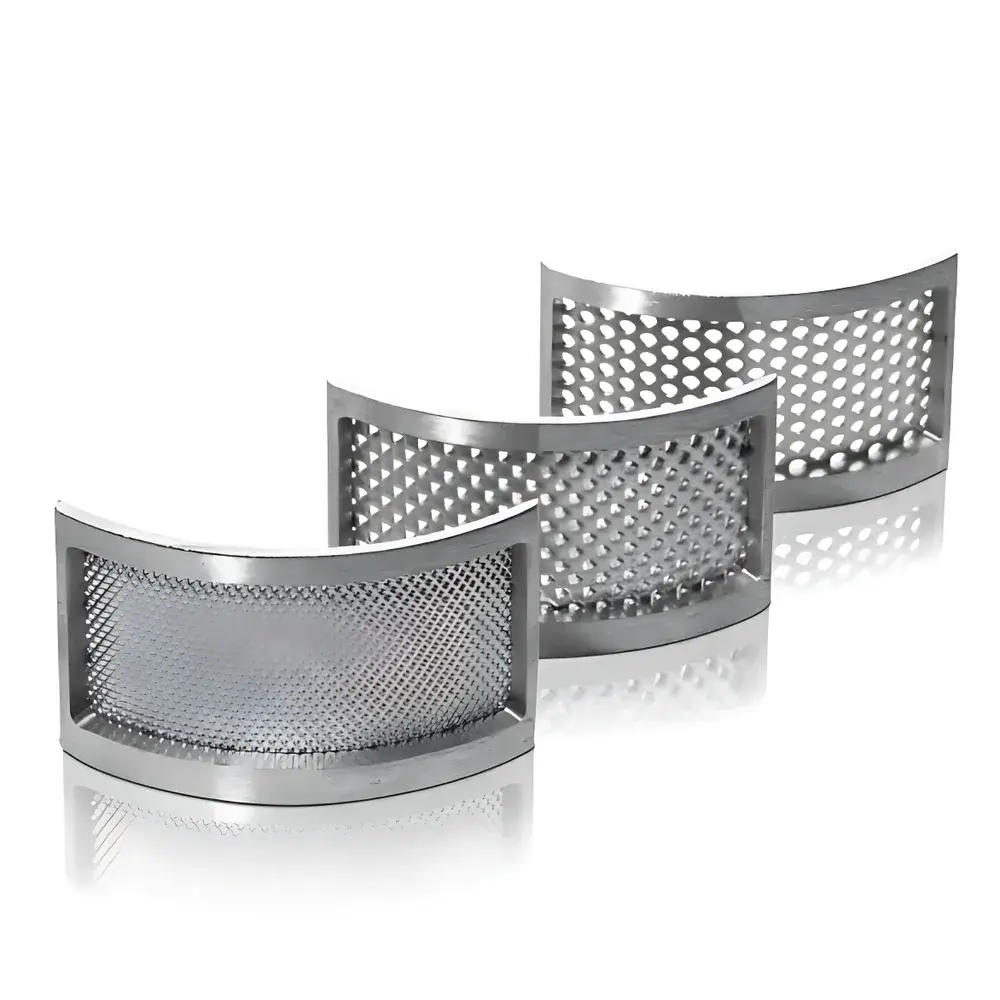
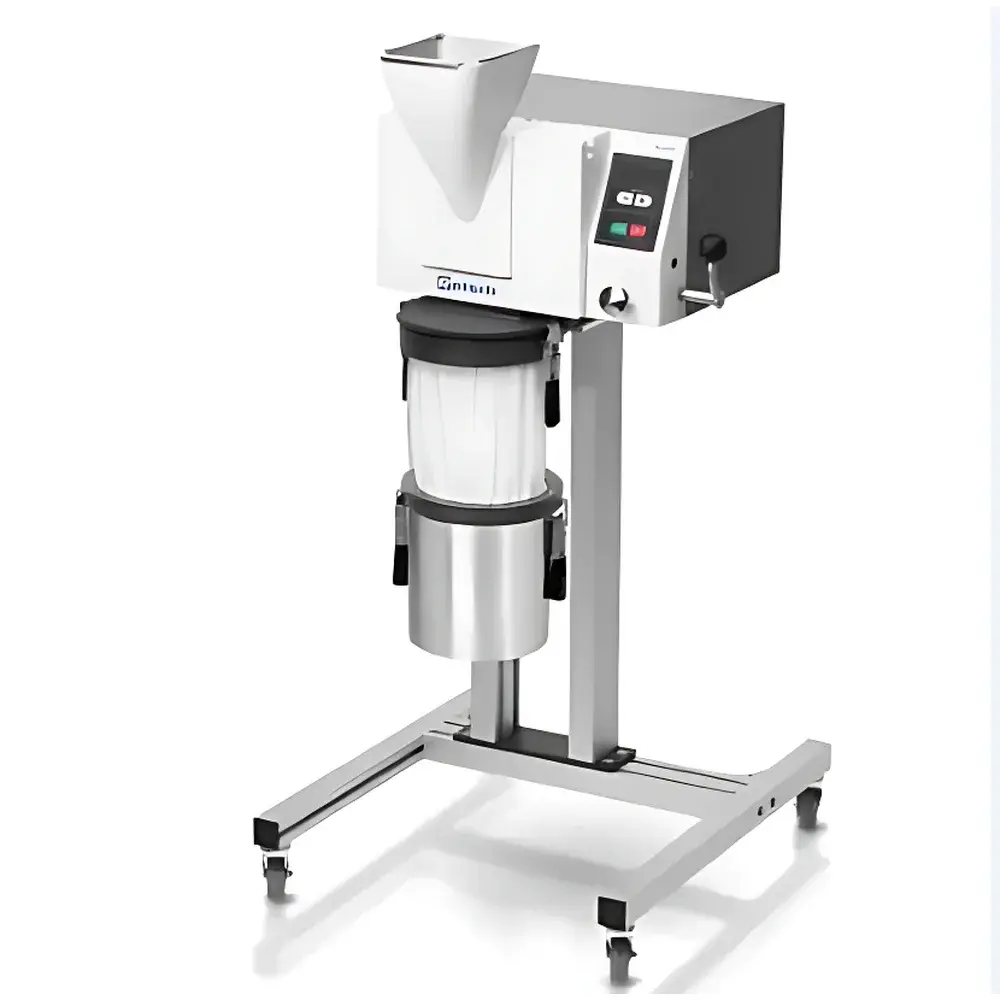
The Retsch SK300 Cross Beater Mill is a high-throughput, industrial-grade laboratory mill engineered for rapid size reduction of hard and brittle materials via mechanical impact, shearing, and attrition. Operating on the principle of cross-beater comminution, the instrument utilizes a horizontally mounted, high-speed rotor equipped with opposing beater arms that rotate at up to 4000 rpm. Feed material enters centrally through the hopper and is immediately accelerated into the grinding chamber, where it undergoes repeated collisions between the rotating beaters, fixed impact plates, and serrated liner elements. Particle size reduction occurs progressively until fragments pass through a replaceable perforated bottom sieve—available in apertures from 0.12 mm to 10 mm—into the collection vessel. Integrated air aspiration generated by the rotor’s axial flow draws ground particles out of the chamber, significantly enhancing discharge efficiency and minimizing heat buildup. This design enables single-step comminution from feed sizes up to 25 mm down to a final particle size ≤100 µm, making the SK300 suitable for both R&D-scale preparation and pilot-line throughput requirements.
Key Features
- Direct-drive, maintenance-free asynchronous motor delivering consistent torque across the full speed range (2000–4000 rpm)
- Robust stainless-steel housing and wear-resistant grinding components engineered for long-term operational stability
- Quick-lock hinged door mechanism enabling tool-free access to the grinding chamber and sieve assembly
- Interchangeable bottom sieves (0.12–10 mm aperture) for precise control over final particle size distribution
- Four material-specific housing variants—including stainless steel, tungsten carbide, ceramic, and PTFE-lined options—to eliminate metallic contamination during processing of sensitive samples
- Integrated air aspiration system coupled with optional downstream cyclone or filter unit for efficient dust capture and operator safety
- CE-compliant design meeting EN 61000-6-2 (EMC immunity) and EN 61000-6-4 (EMC emission) standards
- Compact footprint (500 × 400 × 510 mm) optimized for integration into controlled laboratory environments or QA/QC workflows
Sample Compatibility & Compliance
The SK300 is validated for use with medium-hard to hard, brittle materials including but not limited to soils, metallurgical ores, slag, cement clinker, glass cullet, coal, ceramics, oxides, and mineral aggregates. It is unsuitable for fibrous, elastic, or highly ductile substances. All configurations comply with EU Machinery Directive 2006/42/EC and carry CE marking. When operated with appropriate personal protective equipment (PPE) and local exhaust ventilation, the system meets OSHA 29 CFR 1910.94 and ISO 8502-3 requirements for airborne particulate exposure control. Optional documentation packages support GLP-compliant operation, including factory calibration certificates traceable to NIST standards and user-accessible audit logs for critical parameters (speed, runtime, sieve ID).
Software & Data Management
While the SK300 operates as a standalone electromechanical instrument without embedded microprocessor control, its operational parameters are fully compatible with external laboratory data management systems. Digital tachometers and time-based timers may be integrated via analog outputs (0–10 V / 4–20 mA) for centralized logging in LIMS or MES platforms. Retsch provides detailed SOP templates aligned with ISO/IEC 17025 and ASTM D2974 (for soil grinding) to facilitate method validation, equipment qualification (IQ/OQ), and routine performance verification. The absence of firmware eliminates cybersecurity vulnerabilities associated with networked instruments while preserving full regulatory traceability through manual logbooks or electronic batch records.
Applications
The SK300 serves as a primary sample preparation tool in geochemical laboratories (e.g., homogenization of rock cores prior to XRF or ICP-MS analysis), cement quality control labs (grinding of clinker and additives per ASTM C114), environmental testing facilities (soil and sediment milling per EPA Method 6010D), and metallurgical research centers (comminution of sintered alloys for SEM-EDS characterization). Its high throughput (up to 80 kg/h) supports batch-to-batch reproducibility in production lot sampling, while its fine-grind capability ensures representative sub-sampling for trace-element analysis. In pharmaceutical excipient development, it is employed for preliminary size reduction of insoluble inorganic carriers prior to micronization by jet milling.
FAQ
What types of materials are incompatible with the SK300?
Materials exhibiting high elasticity (e.g., rubber, polymers), toughness (e.g., certain steels), or moisture content >10% w/w are not recommended due to clogging risk and inefficient energy transfer.
Is the SK300 suitable for GMP-regulated environments?
Yes—when used with documented SOPs, calibrated timers/tachometers, and maintained logbooks, the SK300 fulfills equipment qualification requirements under EU GMP Annex 15 and FDA guidance for non-automated lab instrumentation.
Can the final particle size be verified independently?
Yes—Retsch recommends post-milling analysis using laser diffraction (ISO 13320) or sieve cascade (ISO 9276-1) to confirm d90 ≤100 µm; the instrument itself does not include real-time particle sizing.
How often does the bottom sieve require replacement?
Under typical operation with silica-rich samples, sieve lifespan exceeds 500 operating hours; wear rate increases significantly with abrasive feedstocks such as magnetite or alumina.
Does the SK300 support remote monitoring or IoT integration?
No native connectivity exists, but analog signal outputs allow third-party SCADA or PLC integration for runtime tracking and preventive maintenance scheduling.



