
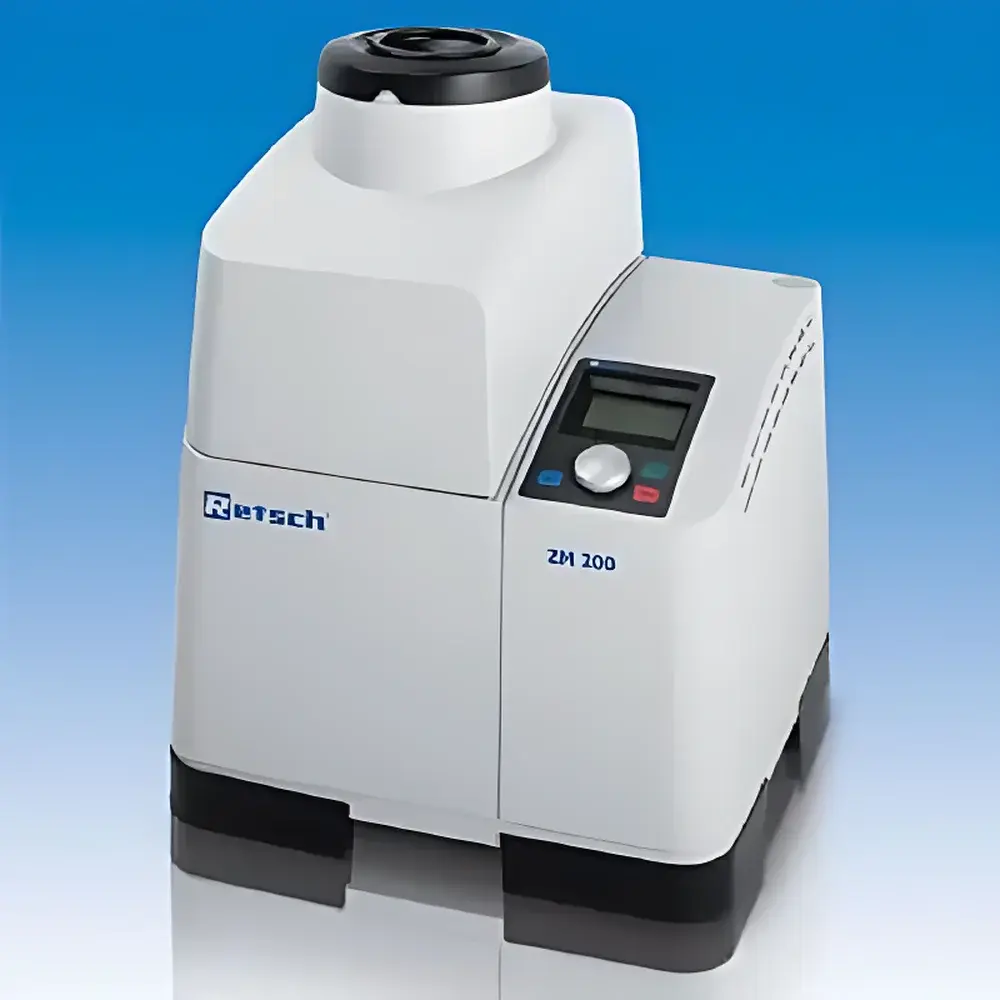
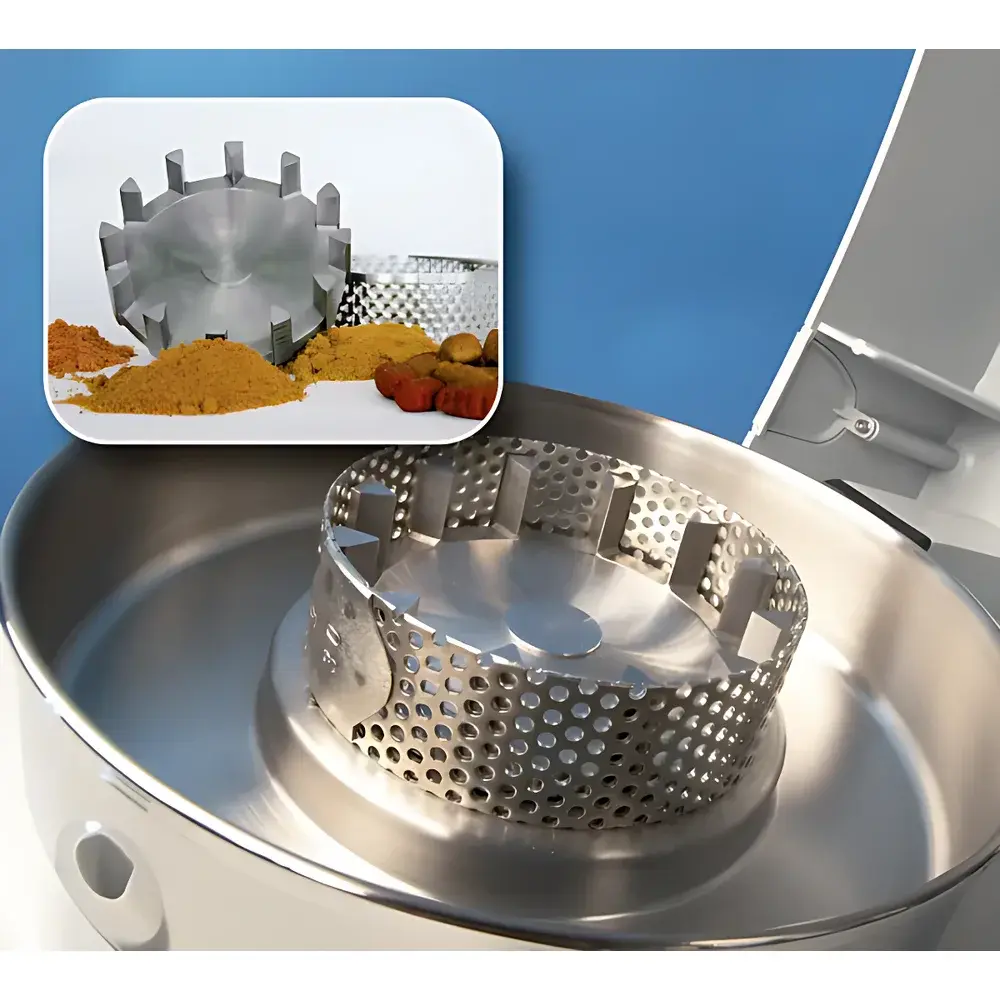
Retsch ZM200 Ultra-Centrifugal Grinder
| Brand | Retsch |
|---|---|
| Origin | Germany |
| Model | ZM200 |
| Sample Type | Hard, brittle, fibrous, and medium-hard materials |
| Feed Size | < 10 mm |
| Final Particle Size | ≤ 40 µm |
| Sieve Cut-Off Range | 0.01–0.5 mm |
| Batch Capacity | 900 mL |
| Rotational Speed | 6,000–18,000 rpm |
| Peripheral Tip Speed | 30.9–92.8 m/s |
| Dimensions (W×H×D) | 410 × 515 × 365 mm |
| Net Weight | ~38 kg |
| Compliance | CE, RoHS-compliant design, dust-protected electronics, integrated electronic safety lock |
Overview
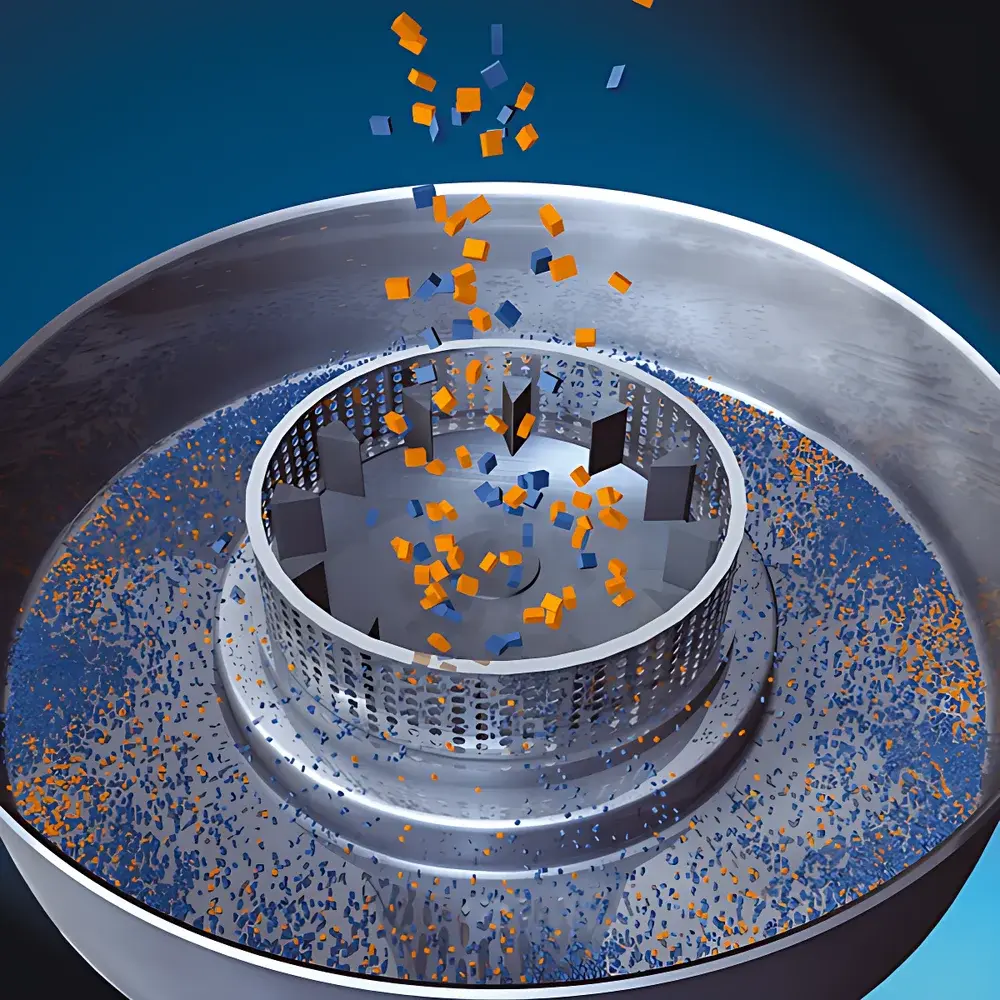
The Retsch ZM200 Ultra-Centrifugal Grinder is a high-precision, laboratory-scale comminution instrument engineered for reproducible, rapid size reduction of heterogeneous solid samples. It operates on the principle of ultra-centrifugal impact and shear comminution: feed material is introduced via a splash-proof hopper onto a high-speed rotating rotor. Under centrifugal acceleration, particles are propelled radially outward toward the periphery of the rotor, where wedge-shaped rotor teeth—rotating at tip speeds up to 92.8 m/s—impact the sample against a fixed concentric ring sieve. This dual-stage mechanism—first coarse impact fragmentation, then fine shearing between rotor teeth and sieve apertures—ensures efficient particle size reduction while minimizing thermal load and mechanical degradation. The ZM200 is explicitly designed for applications requiring strict adherence to regulatory sample preparation protocols, including RoHS compliance testing, pharmaceutical raw material homogenization, and environmental matrix standardization.
Key Features
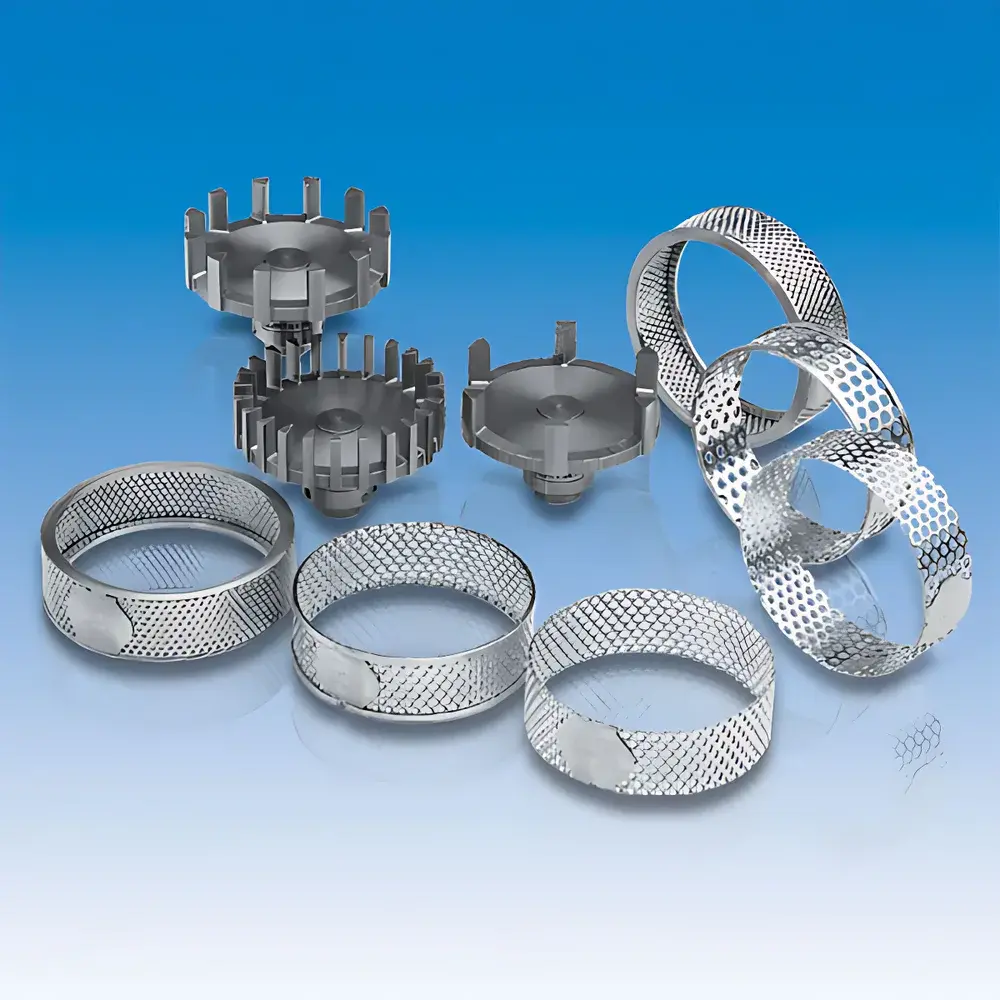
- Two-stage comminution architecture: impact fragmentation followed by precision shear grinding against interchangeable ring sieves (aperture range: 0.01–0.5 mm)
- Adjustable rotational speed (6,000–18,000 rpm) with digital control via intuitive LCD interface and dedicated one-touch function keys
- Integrated electronic safety lock and auto-latching lid mechanism compliant with EN 61000-6-2/61000-6-4 EMC standards
- Dust-protected motor compartment and electronics housing—designed for continuous operation in ISO Class 7 (10,000) cleanroom-adjacent lab environments
- Thermally stable grinding chamber compatible with cryogenic operation using liquid nitrogen-cooled adapters (optional)
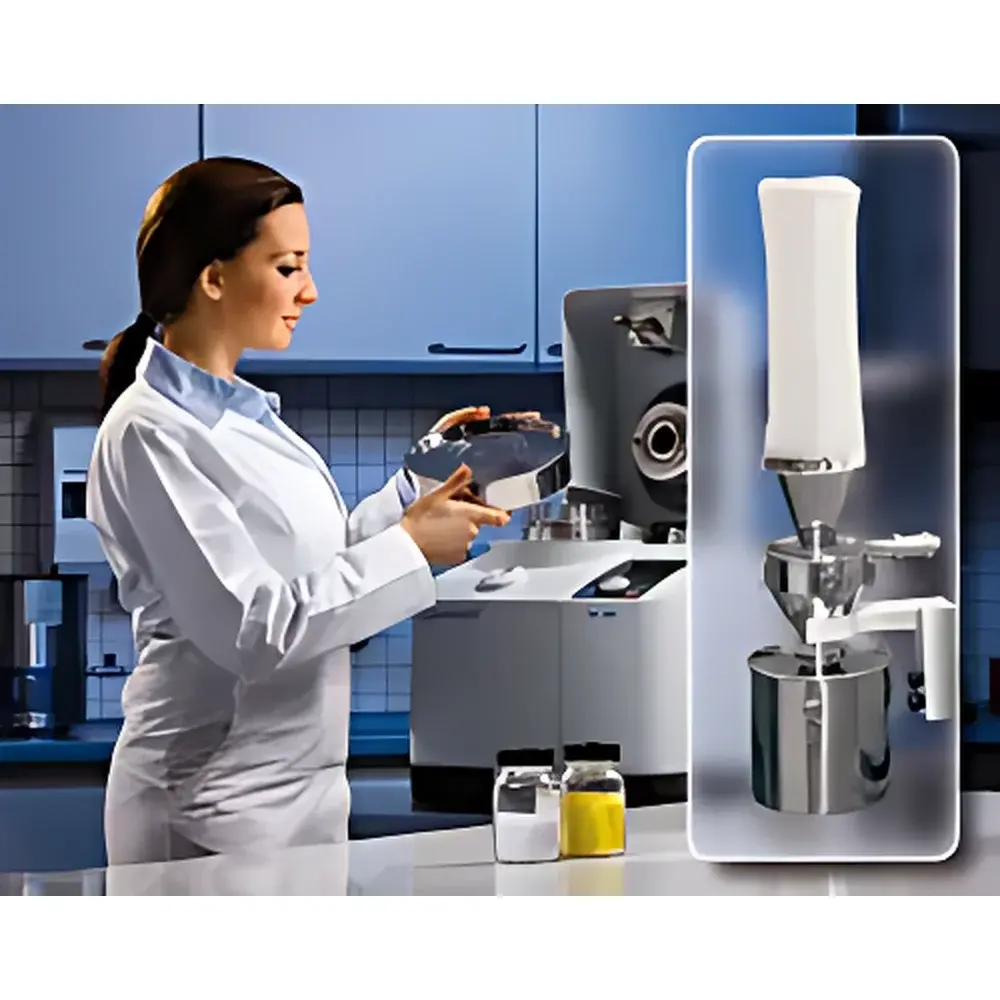
- Modular collection system: standard 900 mL circular collection pan; optional 50 mL mini-pan or 3,000/5,000 mL cyclone separator with filter bag integration
- CE-marked and RoHS-compliant construction; all plastics meet EU Directive 2011/65/EU material restrictions
Sample Compatibility & Compliance
The ZM200 accepts feed particles up to 10 mm in maximum dimension and delivers final particle sizes consistently ≤ 40 µm when equipped with a 40 µm ring sieve. It is validated for use with hard, brittle, fibrous, and medium-hard materials—including polymers, coal, pharmaceutical tablets, herbal matrices, fertilizers, foodstuffs, and electronic waste fractions subject to EU Directive 2011/65/EU (RoHS 2) screening. All grinding components—including rotor, sieve, and collection pans—are manufactured from stainless steel (AISI 304) or certified food-grade polymer, ensuring trace-metal-free processing. The instrument meets mechanical safety requirements per EN 61000-1-2 and supports GLP-aligned documentation through optional audit-trail-enabled software modules.
Software & Data Management
While the ZM200 operates via embedded firmware without external PC dependency, its parameter configuration—including speed setpoint, run time, and sieve identification—is fully traceable via internal event logging. Optional connectivity kits enable integration into LIMS environments via RS-232 or USB-to-serial interfaces. When paired with Retsch’s optional “RETSCH Control” software suite (v3.2+), users gain access to electronic batch records, operator ID authentication, and 21 CFR Part 11–compliant electronic signatures for regulated QC/QA workflows. All grinding parameters are stored with timestamps and can be exported as CSV or PDF reports for internal audit or regulatory submission.
Applications
- RoHS-compliant sample preparation for Pb, Cd, Hg, Cr(VI), and PBDE analysis per IEC 62321-3-1
- Homogenization of pharmaceutical active ingredients and excipients prior to dissolution or content uniformity testing (USP <701>)
- Particle size standardization of coal and mineral ores for ASTM D3174 ash analysis
- Preparation of composite polymer blends for FTIR and DSC characterization
- Grinding of botanicals and spices for pesticide residue analysis (EN 15662)
- Reduction of electronic scrap fractions for heavy metal leaching studies (EPA Method 1311)
FAQ
What sieve sizes are available for the ZM200, and how do they affect final particle size?
Standard ring sieves range from 0.01 mm to 0.5 mm aperture; the final particle size distribution is primarily determined by the sieve cut-off, with ≥90% of output material retained above the nominal aperture size under optimized speed and feed conditions.
Can the ZM200 be used for cryogenic grinding?
Yes—when fitted with the optional LN₂ adapter kit (Order No. 20.720.0010), the instrument supports sub-ambient grinding of thermolabile polymers and biological tissues without compromising structural integrity.
Is the ZM200 suitable for GMP-regulated environments?
It meets core mechanical and electrical safety requirements for GMP labs; full 21 CFR Part 11 compliance requires integration with RETSCH Control software and validated SOPs for parameter locking, user access control, and electronic record retention.
How often does the rotor require recalibration or maintenance?
The rotor is dynamically balanced at factory and requires no periodic recalibration; routine maintenance includes visual inspection of sieve integrity, cleaning of dust filters every 50 operating hours, and annual verification of electronic lock functionality per manufacturer’s service protocol.
Does the ZM200 support automated feed systems?
No—feed is manually dosed via the gravity-fed hopper to ensure operator control over feed rate and prevent overloading; however, optional vibratory feed modules (e.g., Retsch VF 1000) can be integrated for semi-automated batch processing.



