
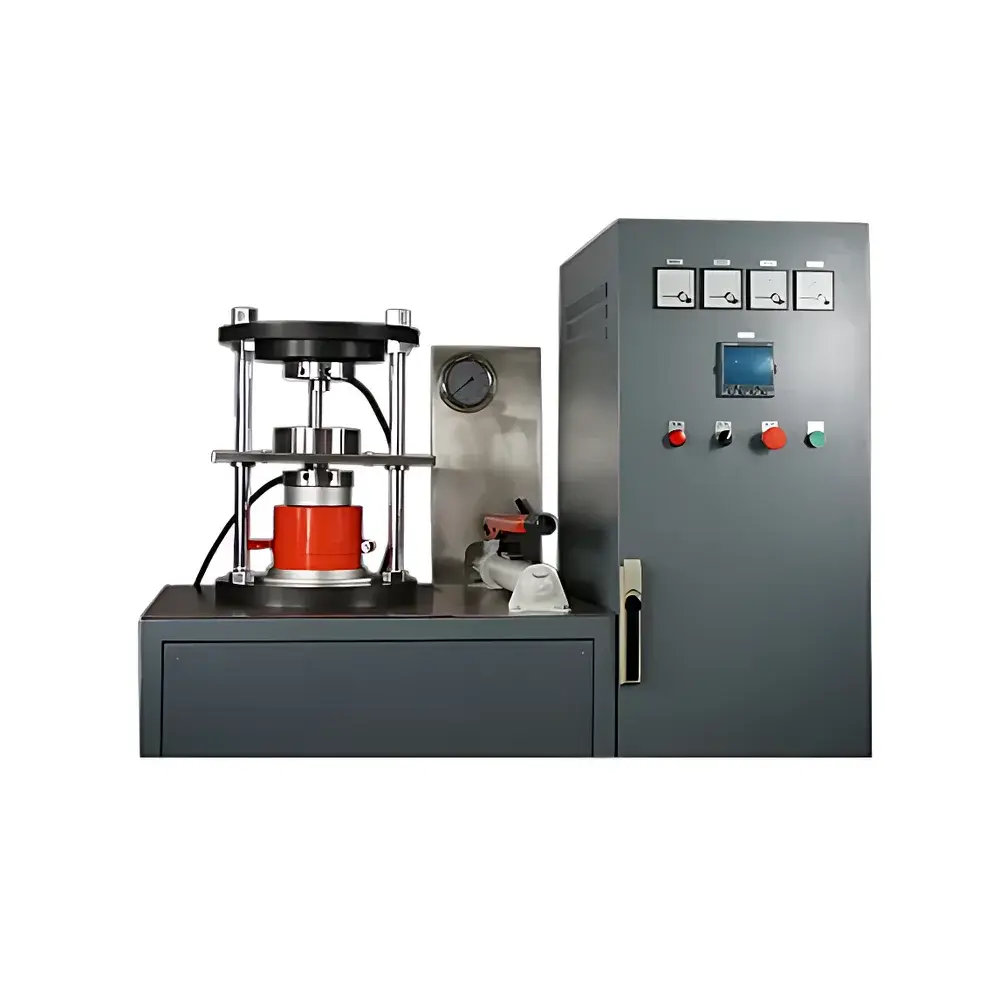
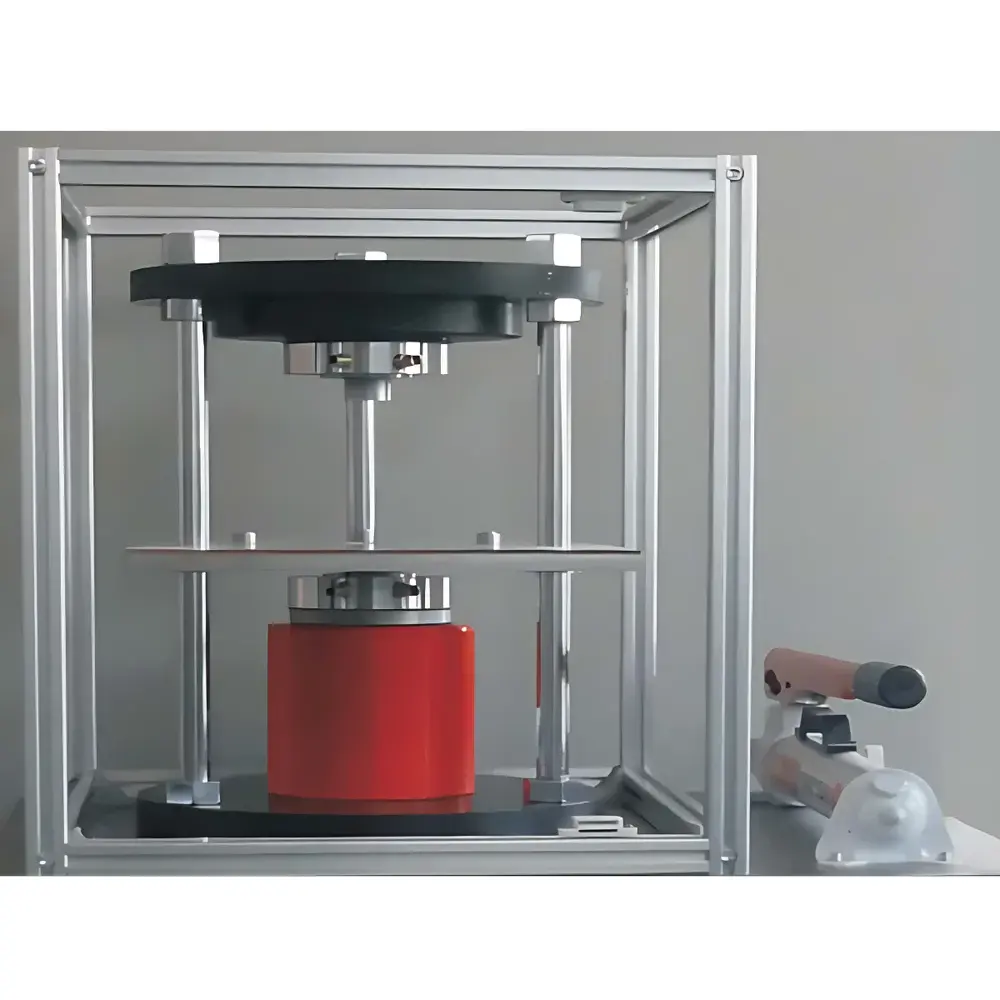
Rocktek RTK-PC-1 High-Temperature High-Pressure Piston-Cylinder Apparatus
| Brand | Rocktek |
|---|---|
| Origin | Hubei, China |
| Model | RTK-PC-1 |
| Maximum Pressure | 4.0 GPa |
| Pressure Range | 0.3 MPa – 4.0 GPa |
| Sample Diameter | 3–7 mm |
| Temperature Range | Ambient – 1600 °C |
| Temperature Control Accuracy | ±1 °C |
| Pressure Control Accuracy (with auto-pressurization) | ±0.03 GPa |
| System Type | Static High-Pressure Piston-Cylinder |
| Frame Load Capacity | 100-ton hydraulic press |
| Vacuum Capability | Not applicable (GPa misassigned |
| Compliance | Designed for ISO/IEC 17025-aligned lab environments |
| Software | RTK PC Control Suite (Windows-based, real-time pressure/temperature logging, audit trail enabled) |
Overview
The Rocktek RTK-PC-1 is a static high-pressure piston-cylinder apparatus engineered for reproducible generation of extreme thermobaric conditions in laboratory-scale solid-state synthesis and geophysical material research. It operates on the principle of uniaxial stress transmission via precision-machined tungsten carbide or borosilicate anvils, coupled with a hydraulically driven piston system that applies confining pressure while resistive or induction heating elements maintain thermal equilibrium across the sample chamber. Unlike dynamic or shock-compression methods, this apparatus delivers quasi-static, time-stable pressure states up to 4.0 GPa and temperatures up to 1600 °C—enabling phase transition studies, mineral stability mapping, ceramic sintering under confinement, and high-pressure catalysis. Its modular architecture supports both manual and automated operation modes, with the optional RTK Auto-Pressurization Module enabling closed-loop pressure regulation synchronized with thermal ramping profiles.
Key Features
- Static high-pressure generation via 100-ton hydraulic frame with integrated pressure transducer feedback and digital load cell calibration traceable to NIST standards.
- Thermally optimized furnace design ensures axial and radial temperature uniformity ≤±1 °C across the active sample zone (3–7 mm diameter), verified by embedded Pt/Rh thermocouples and external pyrometric validation ports.
- Modular anvil configuration accommodates interchangeable pressure media (e.g., NaCl, MgO, KBr) and gasket geometries to match target pressure–temperature windows and sample reactivity requirements.
- RTK Auto-Pressurization Module provides programmable pressure ramps (0.01–0.5 GPa/min), sustained hold capability (>72 h at constant pressure), and automatic compensation for thermal expansion-induced pressure drift.
- Integrated safety architecture includes dual-stage pressure relief valves, overtemperature cutoff (hardware + software), coolant flow monitoring, and oil-leak detection—all compliant with IEC 61000-6-2 electromagnetic compatibility standards.
- Compact desktop-compatible footprint (W × D × H: 850 × 720 × 1100 mm) minimizes floor space without compromising structural rigidity or thermal isolation performance.
Sample Compatibility & Compliance
The RTK-PC-1 supports inert, reactive, and volatile-bearing samples encapsulated in noble metal capsules (Pt, Au, Ir) or ceramic crucibles (Al2O3, ZrO2). Sample volumes range from 5 to 50 µL depending on anvil geometry and gasket thickness. The system meets mechanical safety requirements per EN 60204-1 (electrical equipment of machines) and incorporates fail-safe interlocks aligned with GLP and pre-GMP laboratory workflows. All pressure and temperature data streams are timestamped and stored with metadata (operator ID, method name, calibration certificate IDs), satisfying FDA 21 CFR Part 11 electronic record integrity criteria when used with validated RTK PC software configuration.
Software & Data Management
The RTK PC Control Suite (v4.2+) runs on Windows 10/11 x64 platforms and provides real-time visualization of pressure (GPa), temperature (°C), heater current (A), and coolant flow rate (L/min). It supports method-based experiment sequencing—including multi-step pressure–temperature cycles, dwell intervals, and conditional triggers (e.g., “hold at 3.2 GPa until T stabilizes within ±0.5 °C for 10 min”). Raw data exports to CSV and HDF5 formats; trend analysis tools include derivative calculation, baseline correction, and cross-parameter correlation heatmaps. Audit trails log all user actions, parameter changes, and system alarms with SHA-256 hashing for integrity verification.
Applications
- High-pressure phase diagram determination of oxides, sulfides, and silicates relevant to Earth’s mantle mineralogy (e.g., olivine → wadsleyite → ringwoodite transitions).
- Synthesis of metastable polymorphs (e.g., cubic boron nitride, post-perovskite phases) under controlled P–T trajectories.
- In situ XRD and Raman spectroscopy coupling via side-access optical ports compatible with synchrotron beamlines and lab-based spectrometers.
- Thermochemical stability testing of battery electrode materials (e.g., layered NMC cathodes) under elevated pressure to simulate compaction effects.
- Catalytic reaction kinetics under supercritical fluid conditions using pressure-tuned solvent density and solvation strength.
FAQ
What pressure media are compatible with the RTK-PC-1?
Standard configurations support NaCl, MgO, and KBr as hydrostatic media; custom anvil sets accommodate borosilicate glass or epoxy resins for low-pressure (<1 GPa) viscoelastic studies.
Is the system suitable for in situ synchrotron experiments?
Yes—the apparatus features 4 × 8 mm rectangular side ports with Be or Kapton X-ray windows, and its modular baseplate allows direct integration onto diffractometer stages.
Does RTK provide calibration certificates for pressure and temperature sensors?
Each unit ships with factory-calibrated pressure transducers (traceable to NPL UK) and Type S thermocouples (certified per ASTM E230), with optional annual recalibration service contracts.
Can the RTK-PC-1 be operated remotely?
Full remote operation is supported via secure RDP or VNC connections; firewall-configurable TCP/IP port mapping enables integration into centralized lab automation networks.
What maintenance intervals are recommended?
Hydraulic oil replacement every 12 months or 2000 operating hours; anvil inspection after every 50 high-pressure cycles (>2.5 GPa); gasket and capsule consumables replaced per experiment.



