
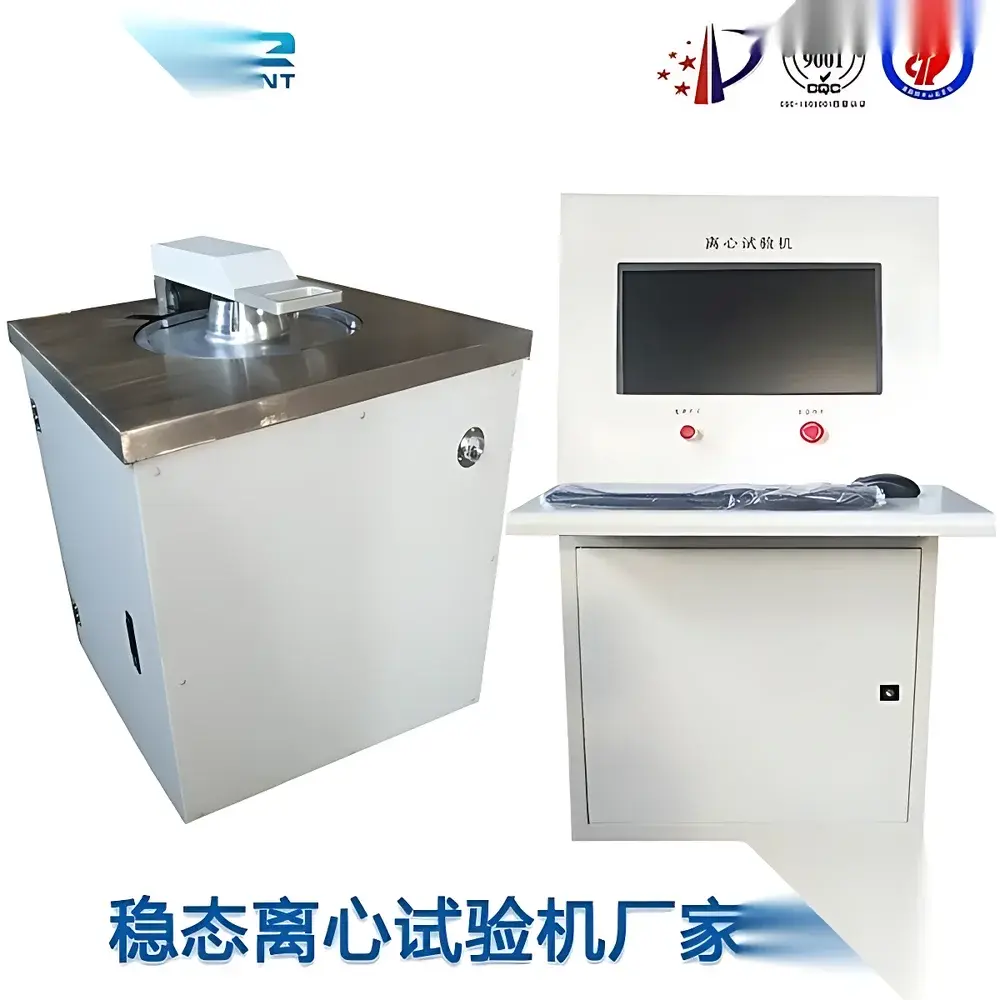
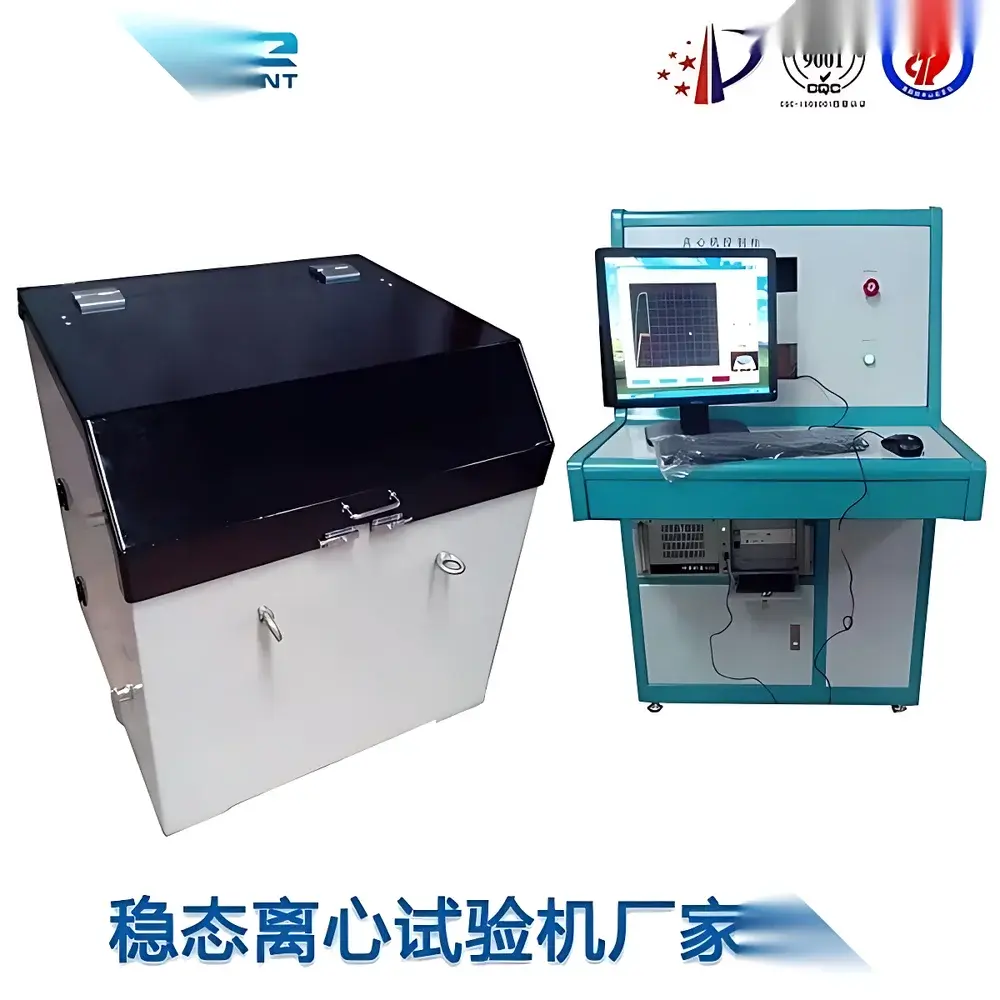
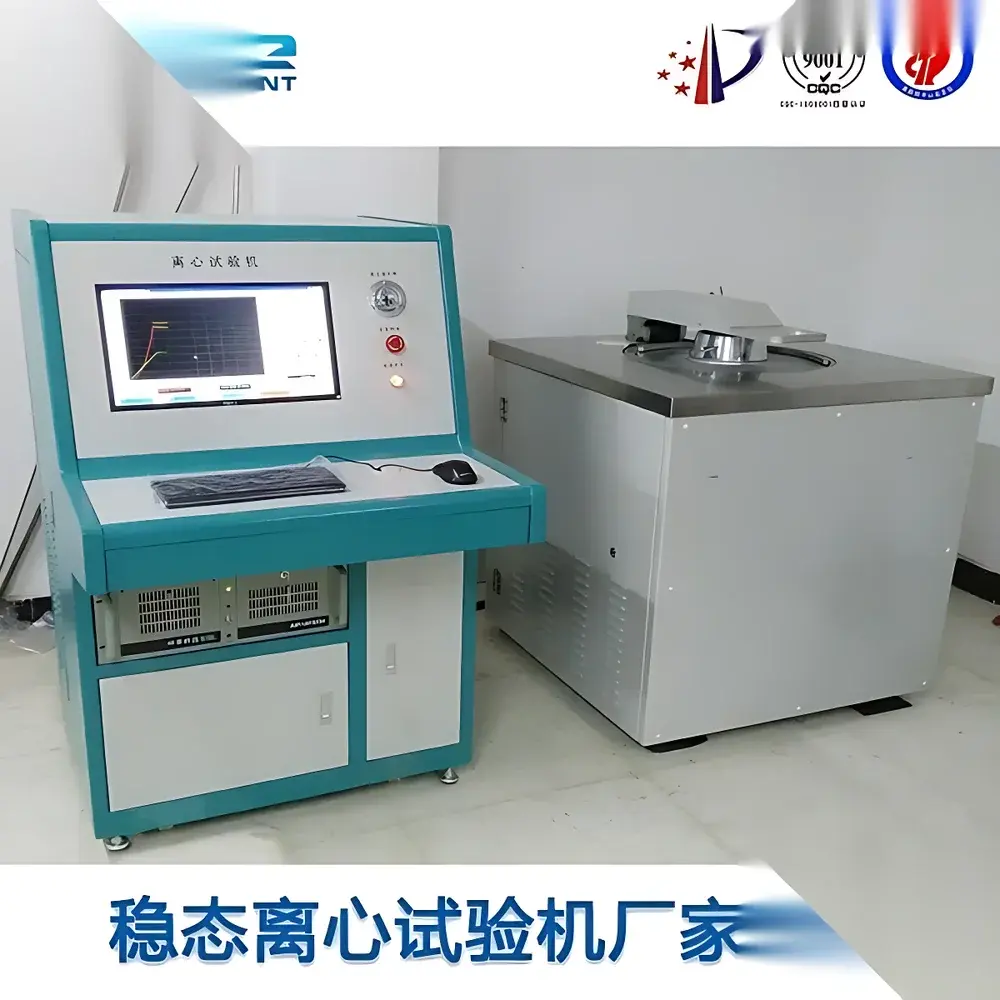
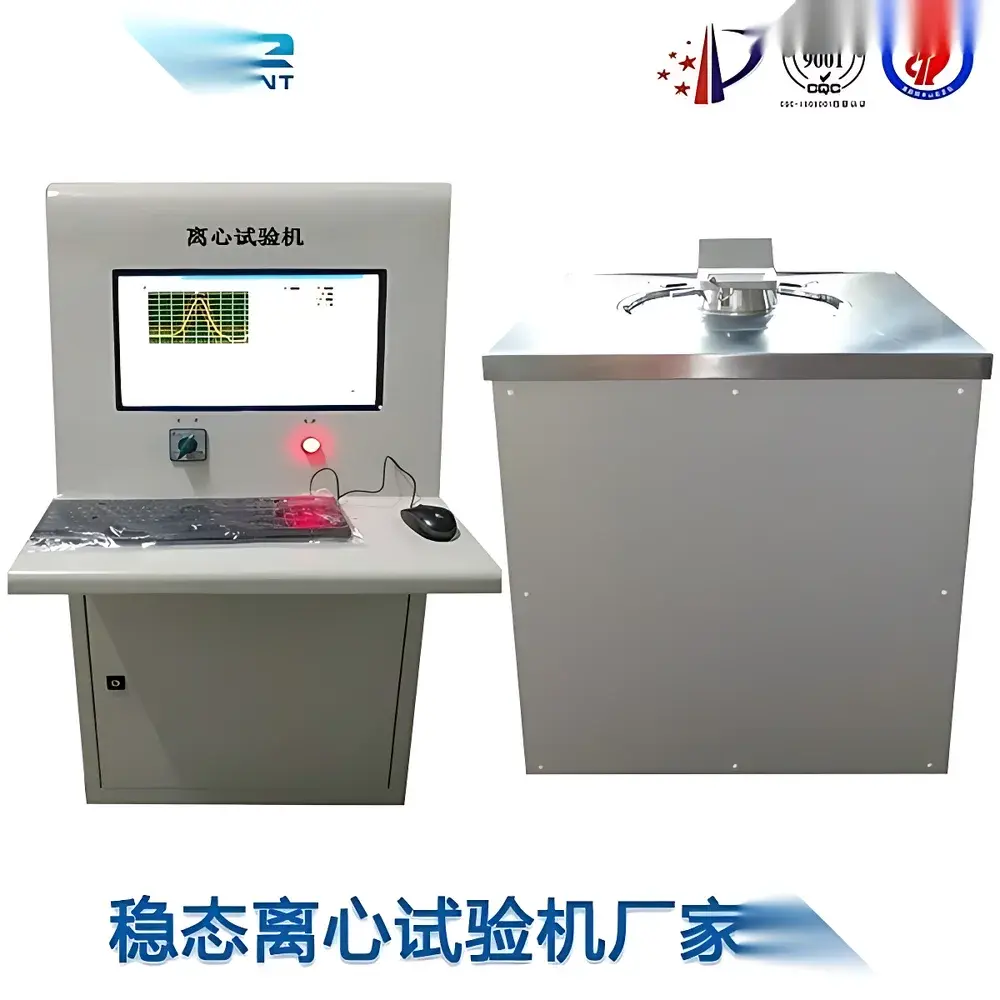
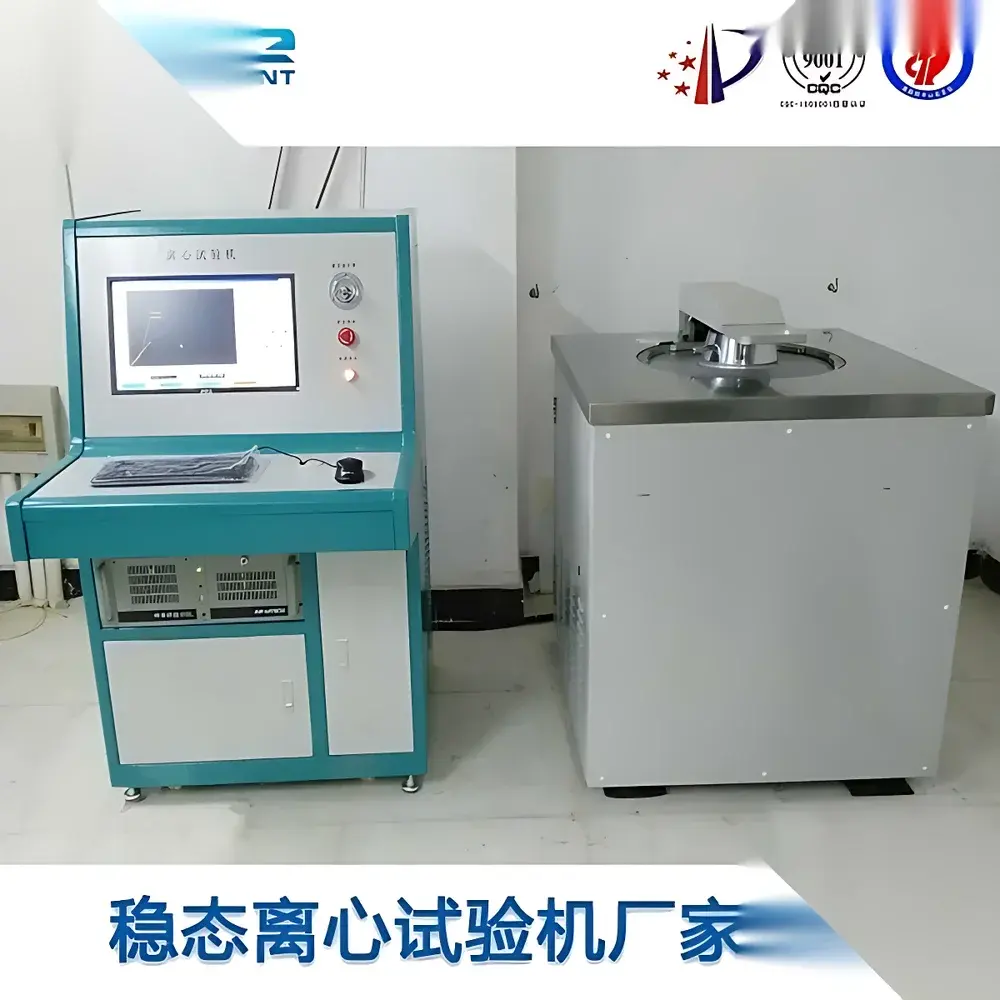
Rotary-Arm Steady-State Acceleration Test System
| Brand | Custom OEM |
|---|---|
| Model | LXJ-Series |
| Type | Rotary-Arm Centrifugal Acceleration Testing System |
| [Capacity Options | 3–20 kg |
| Max Acceleration Range | 30–400,000 m/s² (≈3–40,800 g) |
| Test Axes | X, Y, Z orthogonal directions |
| Specimen Mounting Radius | 100–500 mm |
| Max Specimen Height | 200–300 mm |
| Workstations | 4–10 independent positions |
| Start Time | ≤3–5 min |
| Continuous Operation | 5–60 min |
| Power Supply | AC 380 V, 1.5–6.5 kVA |
| Slip Ring | 15-channel, 500 V / 5 A |
| Compliance | MIL-STD-810F, MIL-STD-202F, MIL-STD-883C, GJB150A, GJB360B, GB/T 2423, IEC 60068-2-27] |
Overview
The Rotary-Arm Steady-State Acceleration Test System (LXJ-Series) is an electromechanical centrifugal testing platform engineered to subject electronic components, microelectromechanical systems (MEMS), avionics subassemblies, and small-scale industrial devices to precisely controlled, sustained inertial acceleration loads—excluding gravitational acceleration. Unlike transient shock or vibration test methods, this system applies steady-state radial acceleration via high-speed rotational motion, generating reproducible centripetal forces in accordance with Newtonian mechanics (F = m·a). The acceleration magnitude is determined by angular velocity (ω) and radial mounting distance (r): a = ω²·r. This principle enables deterministic, traceable, and repeatable stress application critical for structural integrity validation, solder joint fatigue assessment, and mechanical resonance screening under operational overload conditions.
Key Features
- Real-time industrial PC-based control architecture with deterministic loop timing and closed-loop speed regulation
- Multi-stage acceleration profiling capability—including ramp-hold-ramp sequences and stepwise g-level transitions—to simulate complex mission profiles
- Integrated safety interlock suite: over-acceleration cutoff, overspeed shutdown, open-circuit detection, and thermal monitoring of motor windings and bearing assemblies
- Dual-mode operation: fully automated test sequencing with programmable dwell times, or manual override with incremental jog controls for setup verification
- Modular slip-ring assembly supporting up to 15 independent electrical channels (500 V / 5 A per channel), enabling real-time telemetry (e.g., strain, temperature, voltage) from rotating specimens without signal degradation
- Configurable multi-station turntable design accommodating 4–10 concurrent test positions, each with independent fixture adaptability for varying DUT geometries and center-of-gravity constraints
Sample Compatibility & Compliance
The LXJ-Series accommodates specimens ranging from surface-mount passive components (0402–2512 packages) to compact PCBAs (≤300 mm height, ≤20 kg mass) and miniature electro-optical modules. Mounting configurations support triaxial testing—X, Y, and Z axes are evaluated sequentially via reorientation of the specimen carrier relative to the rotation vector. All configurations maintain strict adherence to specimen center-of-gravity alignment within ±0.5 mm tolerance at designated radii (100–500 mm). The system meets full requirements of military and aerospace environmental test standards including MIL-STD-810F Method 513.6 (Acceleration), MIL-STD-202F Method 213 (Centrifugal Acceleration), MIL-STD-883C Method 2001 (Steady-State Acceleration), GJB150A-2009, GJB360B-2009, GB/T 2423.15–2008, and IEC 60068-2-27. Calibration documentation includes NIST-traceable accelerometer verification reports and rotational speed metrology certificates.
Software & Data Management
Control and analysis are executed via a Windows-based deterministic real-time OS environment with deterministic sampling intervals (1 ms resolution). The proprietary test executive software supports ISO/IEC 17025-compliant data acquisition workflows, including automatic timestamping, digital signature logging, and audit-trail generation per FDA 21 CFR Part 11 requirements. All test curves—acceleration vs. time, speed vs. time, and tolerance band envelopes—are rendered in real time with configurable alarm thresholds. Export formats include CSV, XML, and PDF report templates compliant with internal quality management systems (QMS) and external certification bodies (e.g., SAE AS9100, ISO 9001:2015). Raw binary data archives are stored with SHA-256 checksums to ensure long-term integrity and forensic traceability.
Applications
- Qualification testing of inertial sensors (gyroscopes, accelerometers) under sustained g-loading
- Evaluation of wire bond integrity and die attach reliability in semiconductor packages
- Structural validation of MEMS actuators and resonant structures prior to flight deployment
- Screening of conformal coating adhesion and potting compound delamination susceptibility
- Verification of mechanical latch retention force margins in launch vehicle payload interfaces
- Accelerated life testing of battery module interconnects subjected to repeated high-g cycling
FAQ
What acceleration range is achievable across different LXJ model variants?
The LXJ-Series spans 30–400,000 m/s² (3–40,800 g), with specific ranges dependent on configured arm radius and maximum rotational speed—e.g., 1000–200,000 m/s² at 100 mm radius; 5000–400,000 m/s² at 500 mm radius.
Can the system perform simultaneous multi-axis acceleration testing?
No. Steady-state centrifugal acceleration is inherently uniaxial (radial). Triaxial evaluation requires sequential reorientation of the specimen mount between X, Y, and Z orientations relative to the rotation axis.
Is the system compatible with GLP/GMP-regulated laboratories?
Yes. Full 21 CFR Part 11 compliance is supported via electronic signatures, role-based access control, and immutable audit trails—all validated per IQ/OQ protocols.
What maintenance intervals are recommended for long-term operational stability?
Primary bearings require lubrication every 500 operational hours; slip-ring contact surfaces should be inspected and cleaned every 200 hours; annual calibration of tachometer and reference accelerometer is mandatory per ISO/IEC 17025.
Does the system support custom fixture design and integration?
Yes. Mechanical interface drawings (STEP/AP203), load path FEA reports, and torque/moment envelope specifications are provided to facilitate customer-designed fixtures meeting static and dynamic balance criteria.



