
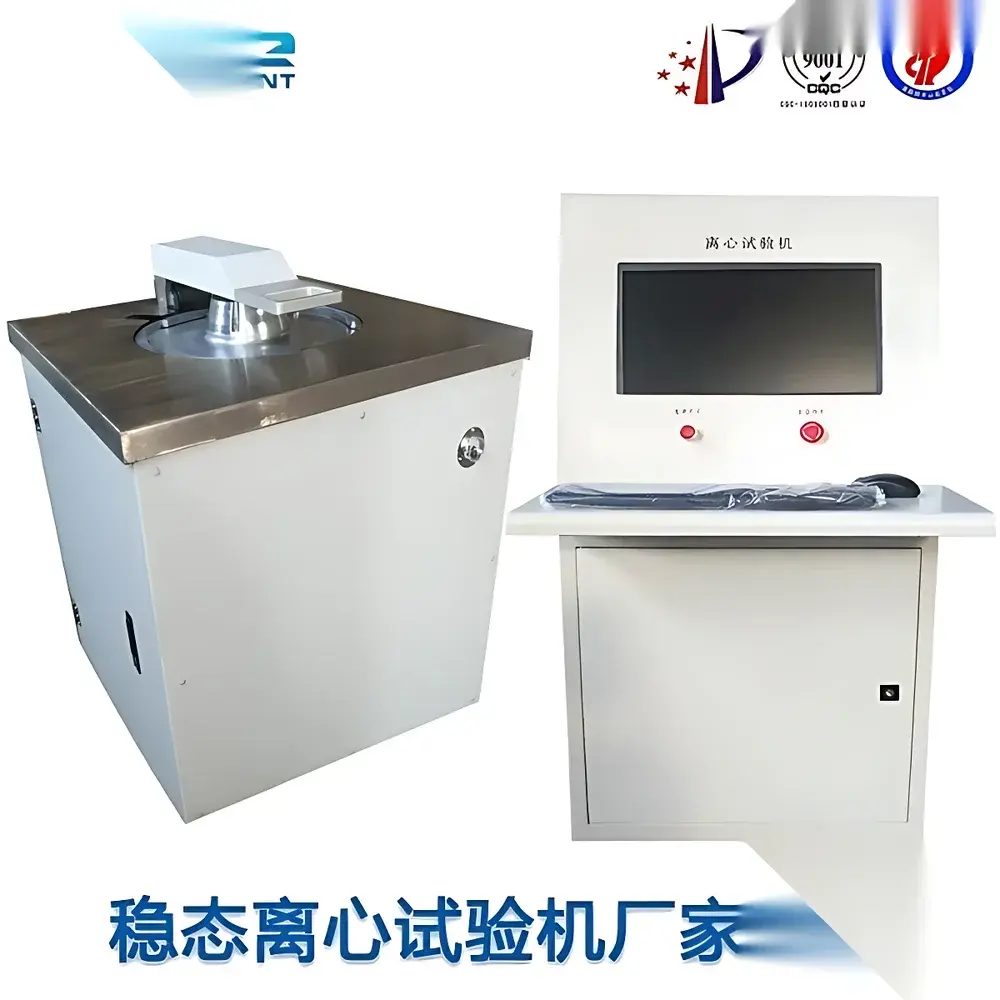
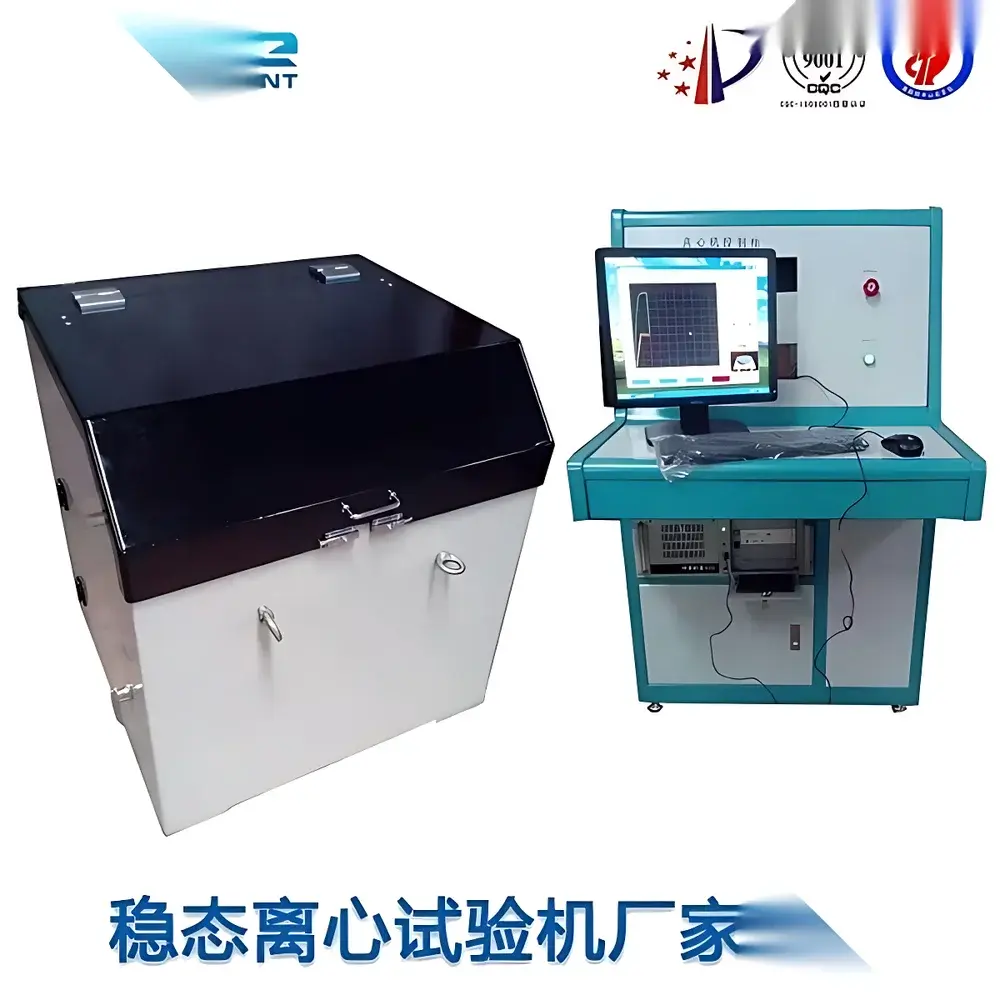
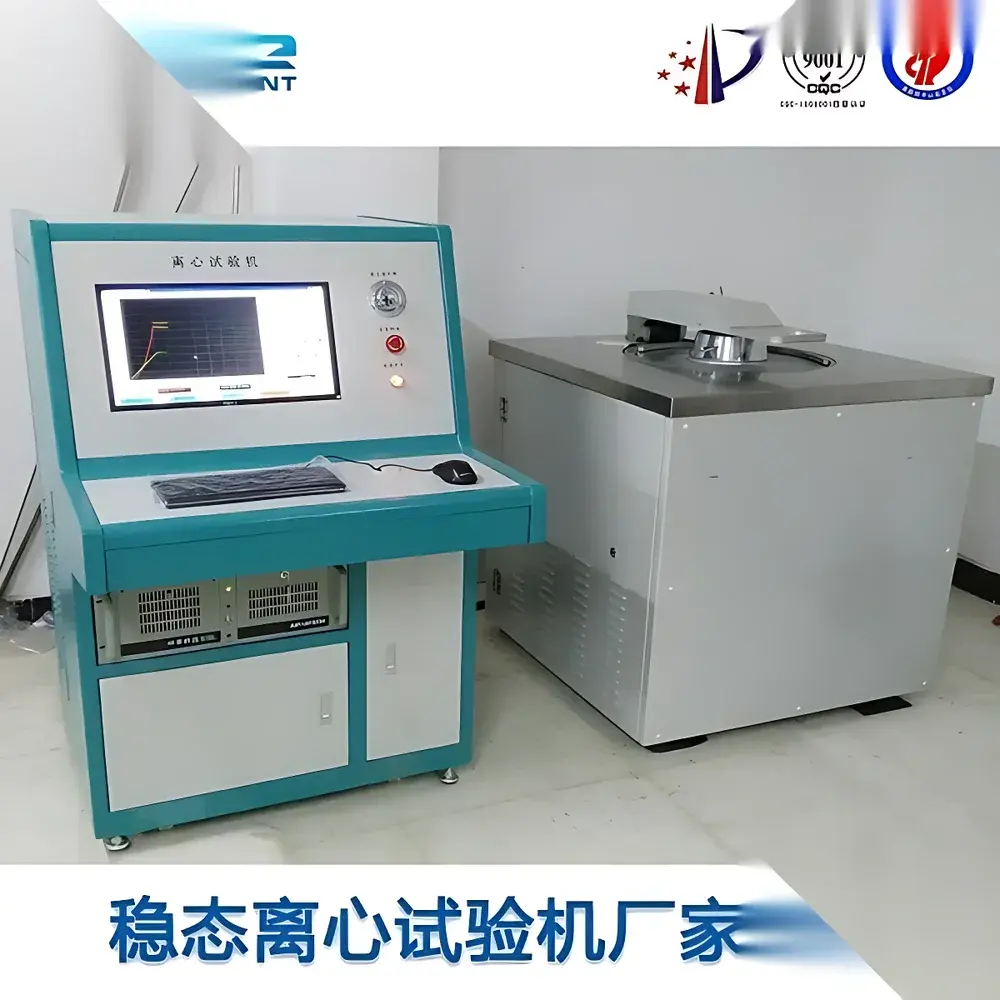
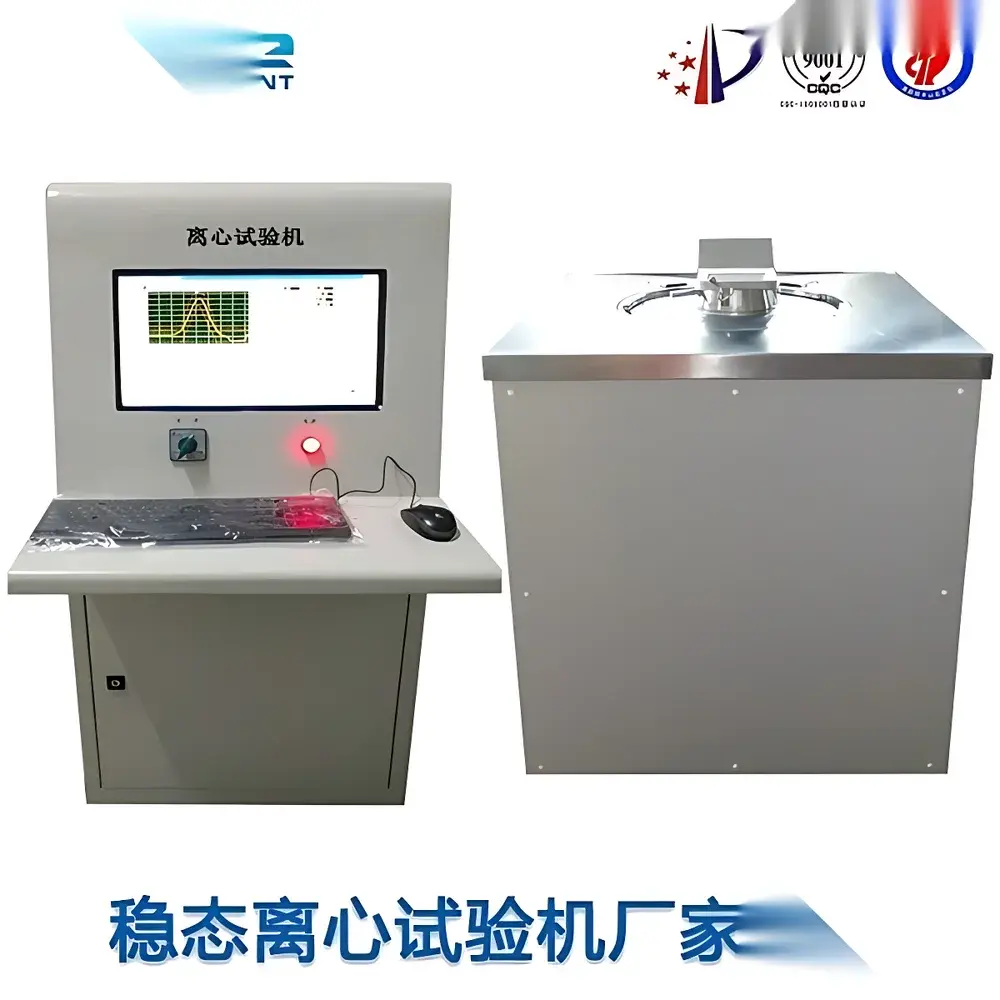
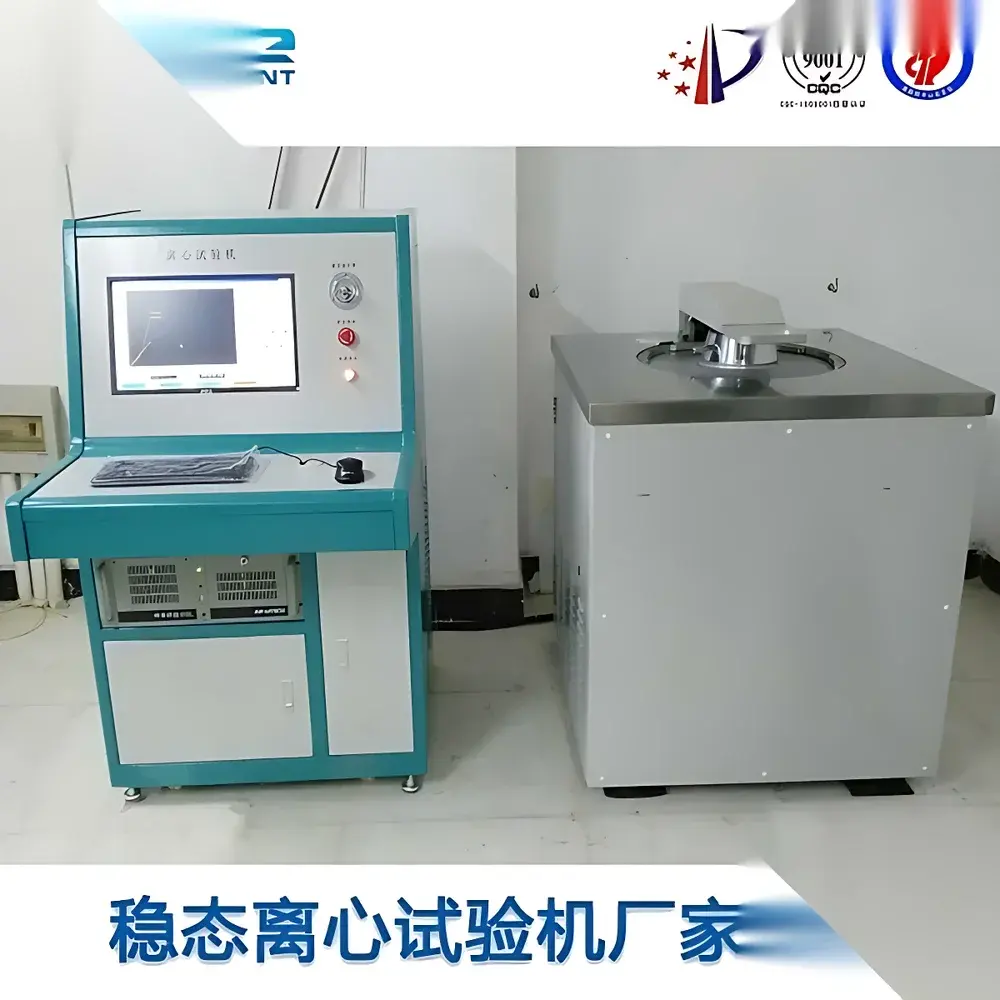
Rotational Steady-State Acceleration Test System
| Brand | Custom OEM |
|---|---|
| Origin | Imported |
| Manufacturer Type | Authorized Distributor |
| Price | USD 28,000 (FOB) |
| [Key | Value] |
| Acceleration Range | 30–200,000 g (selectable by model) |
| Sample Mounting Radius | 200–1000 mm |
| Max Payload Capacity | 5–200 kg (model-dependent) |
| Sample Height Limit | 200–300 mm |
| Test Axes | X, Y, Z orthogonal directions (sequential or independent) |
| Control System | Industrial PC with real-time PID loop |
| Power Supply | AC 380 V, 1.5–6.5 kVA |
| Continuous Run Time | 30–60 min (thermal-limited) |
| Compliance Standards | MIL-STD-810F, MIL-STD-883C, MIL-STD-202F, GJB 150A, GJB 360B, GB/T 2423.15, IEC 60068-2-27 |
| Safety Protections | Over-speed cutoff, over-acceleration limit, open-circuit detection, thermal shutdown |
| Slip Ring Configuration | Up to 15 channels, 500 V / 5 A per channel |
| Dimensions (L×W×H) | 924×910×1242 mm to 1953×470×993 mm (model-specific) |
| Weight | 1000–2300 kg |
Overview
The Rotational Steady-State Acceleration Test System is a precision-engineered centrifugal acceleration platform designed for structural integrity evaluation and functional reliability verification of electronic components, micro-electromechanical systems (MEMS), avionics modules, and miniature electromechanical assemblies under sustained high-g mechanical stress. Unlike transient shock or vibration testing, this system applies controlled, time-invariant radial acceleration fields—generated via high-stiffness rotating armatures—to simulate gravitational overload conditions encountered during launch, re-entry, high-G maneuvering, or centrifugal separation processes. The core measurement principle relies on Newtonian centripetal force equivalence: F = m·ω²·r, where angular velocity (ω) and radius (r) are precisely regulated to deliver calibrated acceleration magnitudes (g-force) within ±1.5% accuracy across the operational range. All models integrate direct-drive servo-motor actuation, dynamic balancing compensation, and real-time closed-loop feedback control to ensure waveform fidelity and repeatability—critical for qualification testing under defense, aerospace, and industrial certification protocols.
Key Features
- Real-time industrial PC-based control architecture with deterministic sampling (≥1 kHz) and embedded PID regulation for acceleration setpoint tracking
- Multi-step programmable acceleration profiles—including ramp-hold-ramp sequences—with user-defined dwell times and tolerance bands
- Dual-mode operation: fully automated test execution with preloaded test plans or manual jog/override for setup validation
- Integrated safety interlock suite: hardware-enforced overspeed cutoff (ωmax), acceleration limit override, slip ring continuity monitoring, and thermal sensor-triggered shutdown
- Modular slip ring assembly supporting up to 15 independent current channels (500 V / 5 A rating), configurable for power delivery, signal acquisition, or telemetry interfaces
- Three-axis sequential testing capability: programmable sample orientation fixtures enable discrete X-, Y-, and Z-direction acceleration application without manual repositioning
- Automated report generation compliant with MIL-STD-810F Annex G requirements—including raw acceleration vs. time traces, pass/fail status flags, environmental metadata, and digital signature fields
Sample Compatibility & Compliance
This system accommodates specimens up to 200 mm in height and 200 kg in mass, with mounting radii adjustable from 200 mm to 1000 mm to optimize g-level resolution and mechanical coupling efficiency. Fixturing solutions include threaded base plates, vacuum chucks, and custom kinematic mounts—designed to minimize parasitic resonances and maintain center-of-gravity alignment. All configurations conform to internationally recognized qualification standards: MIL-STD-810F Method 513.6 (acceleration), MIL-STD-883C Method 2001 (microcircuit mechanical shock), GJB 150.15A (China military standard for steady-state acceleration), and IEC 60068-2-27 (basic environmental testing procedures). Test records support GLP/GMP audit trails, including timestamped operator ID, calibration certificate references, and revision-controlled firmware logs.
Software & Data Management
The embedded control software (v4.2+) provides ISO/IEC 17025-aligned data handling: all acceleration waveforms, motor currents, temperature readings, and safety event logs are stored in HDF5 format with embedded metadata tags. Export options include CSV (for statistical process control), PDF (certified test reports), and XML (for integration into LIMS or PLM platforms). Audit trail functionality satisfies FDA 21 CFR Part 11 requirements—featuring electronic signatures, role-based access control, and immutable record archiving. Remote monitoring is supported via secure TLS 1.2 REST API, enabling centralized fleet management across multi-site laboratories.
Applications
- Qualification of inertial sensors (gyroscopes, accelerometers) under sustained g-loading
- Structural validation of MEMS packaging integrity and die attach reliability
- Functional endurance testing of satellite subsystems prior to orbital insertion
- Failure mode analysis of solder joint fatigue in high-reliability PCBAs
- Verification of battery cell mechanical stability under launch-phase acceleration spectra
- Material creep behavior assessment in polymer-based encapsulants and adhesives
FAQ
What acceleration accuracy can be achieved across the full range?
Typical linearity error is ≤±1.5% of full scale, verified per ISO 16063-21 using traceable laser interferometry calibration.
Is the system compatible with third-party data acquisition hardware?
Yes—digital I/O ports (TTL/RS-422) and analog voltage outputs (±10 V) provide synchronized trigger and analog monitoring signals for external DAQ integration.
How is thermal management handled during extended runs?
Active forced-air cooling with dual-zone temperature monitoring ensures rotor bearing and motor winding temperatures remain within Class H insulation limits (≤180°C).
Can the system perform combined acceleration + temperature stress testing?
Not natively; however, optional environmental chamber integration kits (with feedthrough-rated slip rings) are available for concurrent thermal-acceleration profiling.
What documentation is supplied with shipment?
Calibration certificate (NIST-traceable), installation & commissioning checklist, safety compliance dossier (CE/UKCA declaration), and full maintenance manual with torque specifications and spare parts list.



