
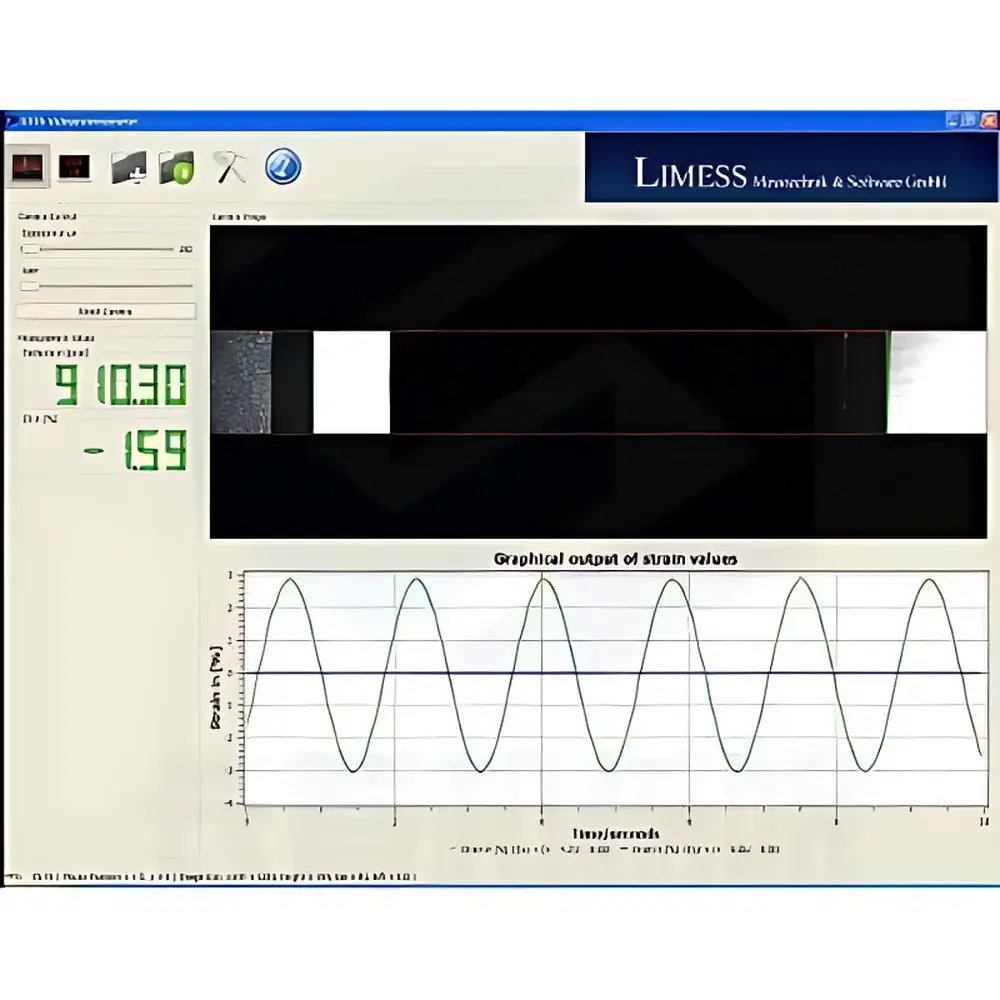
RTSS High-Resolution / High-Speed Video Extensometer
| Brand | RTSS |
|---|---|
| Origin | Germany |
| Model | RTSS_HR / RTSS_HS |
| Measurement Principle | Digital Image Correlation (DIC) based non-contact optical strain measurement |
| Sampling Rate | 50 Hz (HR) / 4000 Hz (HS) |
| Strain Range | 20 µε to 1000% |
| Accuracy | ±0.002% strain (HR) / ±0.02% strain (HS) |
| Spatial Resolution | 1 µm @ 100 mm FOV (HR) / 10 µm @ 100 mm FOV (HS) |
| Analog Output | ±10 V, 16-bit |
| Camera | 2.0 MP VGA |
Overview
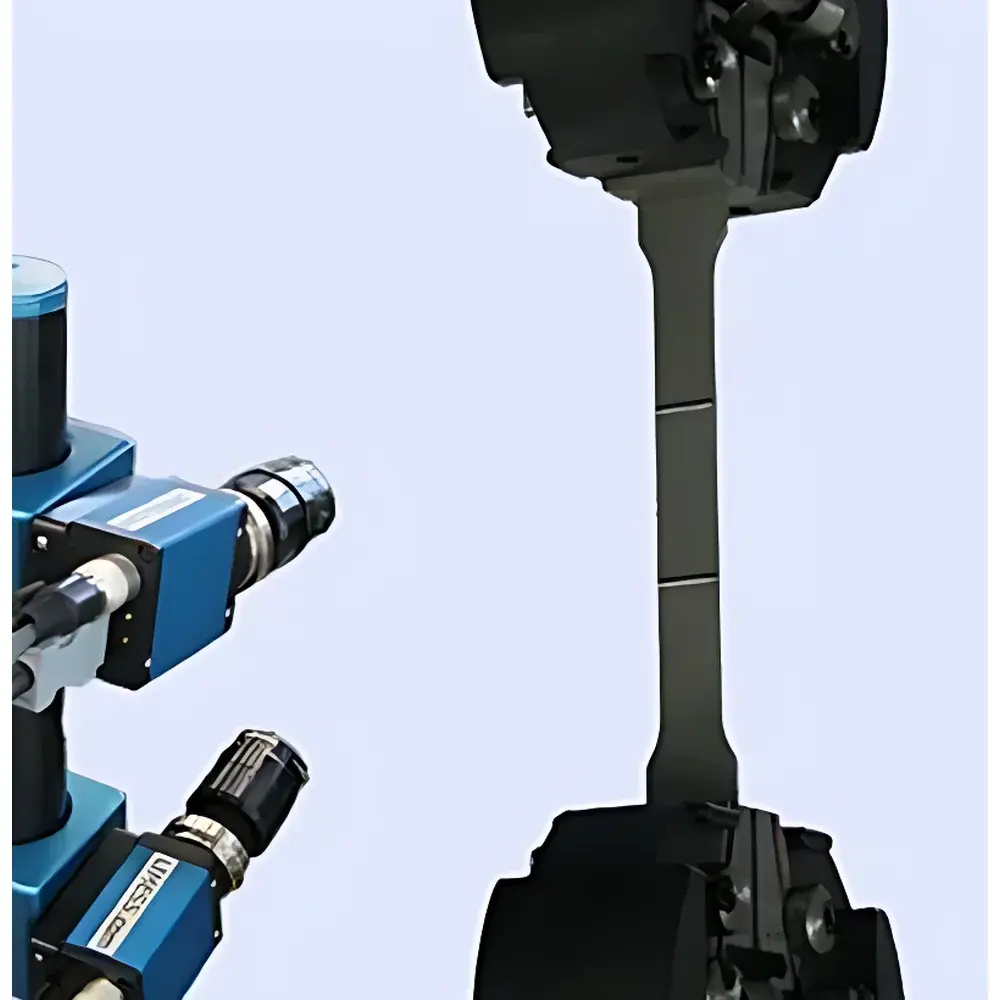
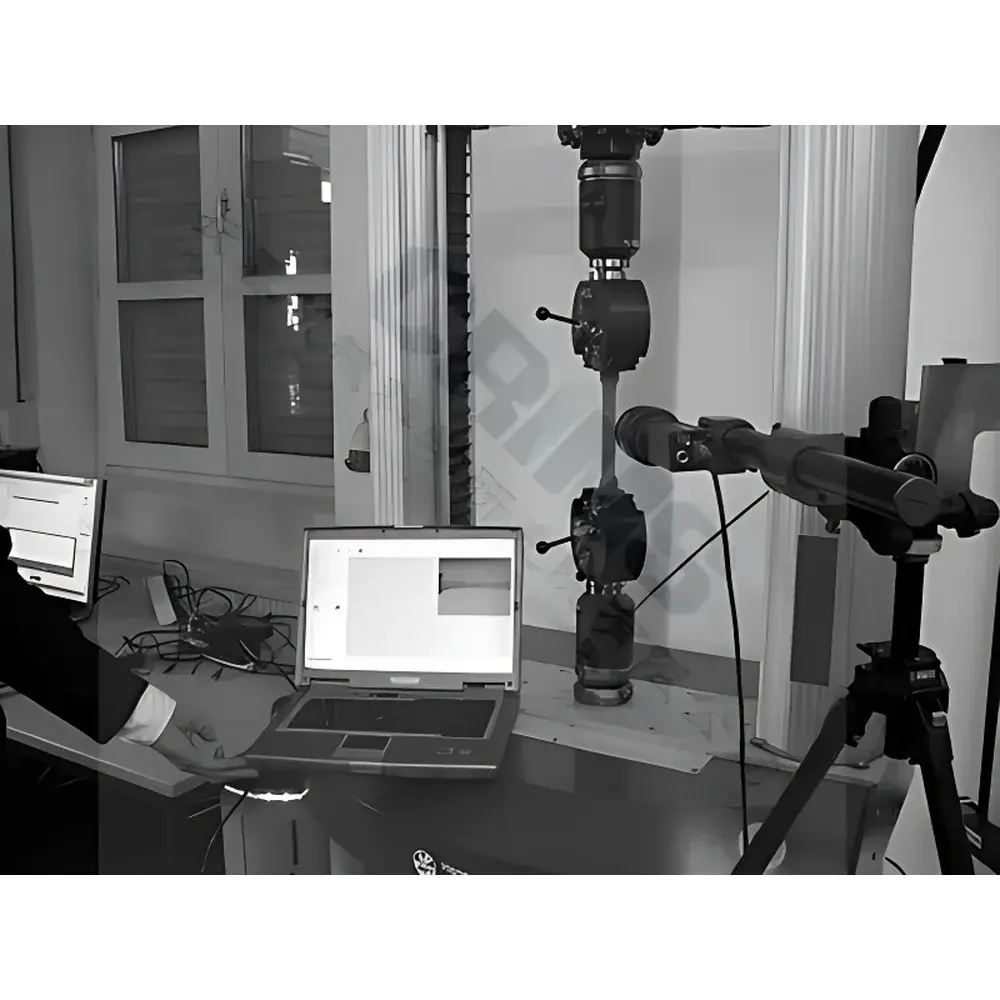
The RTSS High-Resolution and High-Speed Video Extensometer is a non-contact, vision-based deformation measurement system engineered for precision mechanical testing in research laboratories and industrial quality control environments. Developed in Germany and distributed globally by RTSS, this extensometer employs advanced digital image correlation (DIC) methodology—capturing high-fidelity sequential images of specimen surface markers or natural texture—and computing sub-pixel displacement fields in real time. Unlike traditional clip-on or knife-edge contact extensometers, the RTSS eliminates mechanical loading artifacts, inertia-induced lag, and specimen interference, enabling true representation of local strain behavior under static, quasi-static, dynamic, and high-frequency loading conditions. Its dual-platform architecture—RTSS_HR for ultra-precise quasi-static tensile/compression tests and RTSS_HS for transient mechanical events such as impact, vibration, or hydraulic pulse testing—ensures adaptability across ASTM E8, ISO 6892-1, ASTM D638, and ISO 527 test protocols.
Key Features
- True non-contact operation: No physical attachment required; eliminates slippage, bending moments, and mass-loading effects on specimens during testing
- Dual configuration flexibility: RTSS_HR delivers metrological-grade strain resolution down to ±0.002% (20 µε), while RTSS_HS supports temporal resolution up to 4000 Hz for capturing rapid deformation transients
- Simultaneous axial and radial strain measurement: Single-camera setup with calibrated optical path enables concurrent longitudinal and lateral strain field acquisition within the same field of view
- Traceable calibration: Supplied with NIST-traceable high-precision calibration plates; full system calibration achievable in under 90 seconds without specialized tools
- Universal controller integration: Analog ±10 V output (16-bit) compatible with all major servo-hydraulic and electromechanical testing machines—including Instron, Zwick/Roell, MTS, Shimadzu, and Tinius Olsen—enabling closed-loop strain control and real-time feedback
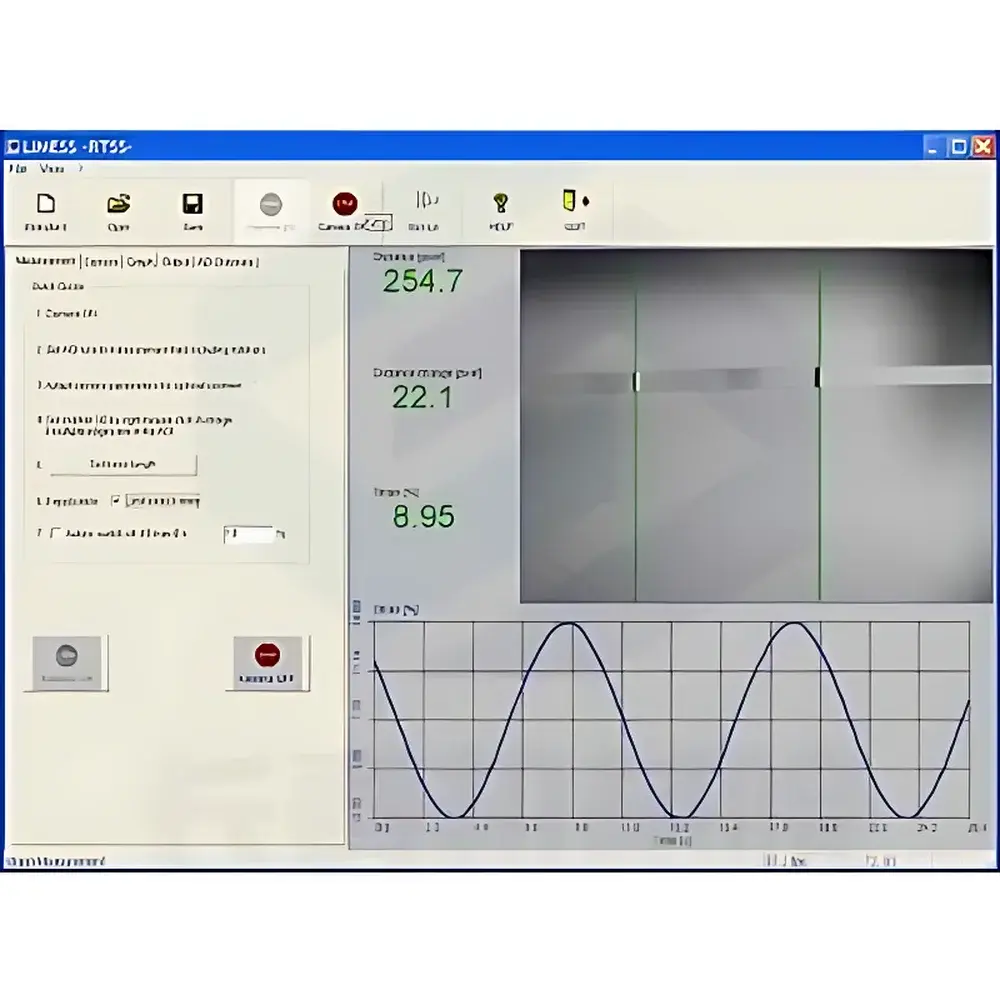
- Intuitive software interface: Browser-based configuration and live visualization; supports multi-language UI, customizable ROI selection, and on-the-fly filtering of noise or outliers
Sample Compatibility & Compliance
The RTSS accommodates specimens ranging from miniature coupons (≥5 mm gauge length) to full-scale structural components, independent of material class—metals, polymers, composites, elastomers, ceramics, and biological tissues—all without surface preparation beyond standard speckle patterning. Its optical design avoids UV/IR exposure risks, making it suitable for temperature-controlled chambers (−70 °C to +300 °C) and environmental enclosures. The system complies with ISO/IEC 17025 requirements for measurement traceability and meets data integrity criteria outlined in FDA 21 CFR Part 11 when deployed with audit-trail-enabled software configurations. It supports GLP/GMP-aligned workflows through timestamped raw image archiving, operator ID logging, and version-controlled calibration records.
Software & Data Management
The RTSS operates via embedded Linux-based firmware and interfaces with host PCs using TCP/IP or USB 3.0. The proprietary RTSS Control Suite provides synchronized acquisition of video streams, analog sensor inputs (e.g., load cell, crosshead position), and external triggers (TTL, encoder pulses). All strain data are stored in HDF5 format—supporting metadata embedding per ASTM E1434—ensuring long-term readability and interoperability with MATLAB, Python (h5py), and commercial CAE platforms. Export options include CSV, XML, and direct API access for integration into LIMS or MES systems. Optional modules enable automated pass/fail evaluation against user-defined strain thresholds and statistical process control (SPC) chart generation per ISO 7870.
Applications
- High-fidelity strain-controlled tensile testing per ASTM E8/E21 and ISO 6892-1, especially for yield point detection in low-carbon steels and strain hardening analysis in aluminum alloys
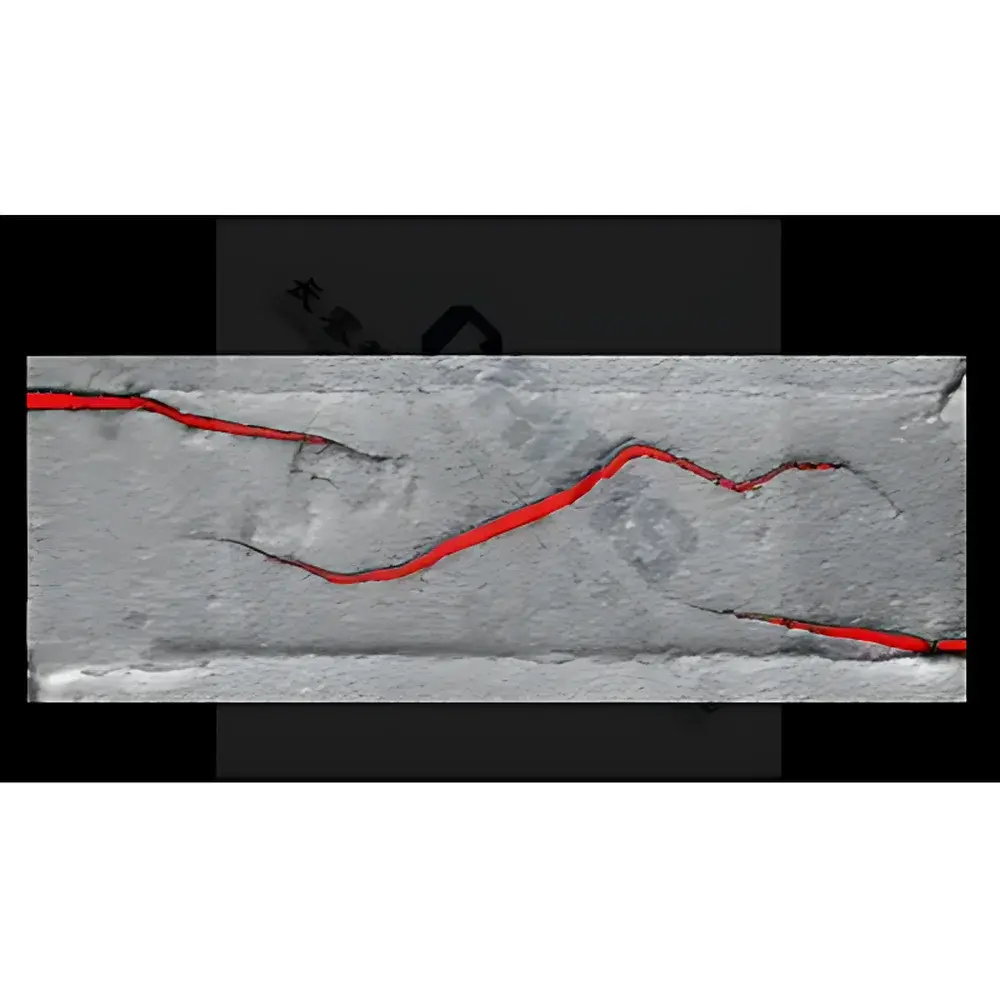
- Dynamic fracture mechanics: Crack tip opening displacement (CTOD) tracking and J-integral evaluation during slow-stable crack growth
- Vibration modal analysis: Full-field strain mapping during resonant frequency sweeps to identify stress concentration zones
- Composite material characterization: Interlaminar shear strain assessment under off-axis loading and fatigue cycling
- Biomechanics: Soft tissue deformation quantification under cyclic loading, including tendon–bone interface strain transfer studies
- Process validation: In-line monitoring of forming operations such as hydroforming or warm stamping where thermal gradients preclude contact sensors
FAQ
Does the RTSS require reflective markers or surface treatment on the specimen?
No. While high-contrast random speckle patterns improve DIC accuracy, the RTSS can operate on naturally textured surfaces—including mill scale, machined finishes, or printed patterns—without adhesive markers.
Can the RTSS be used inside environmental chambers?
Yes. With optional quartz viewport-compatible lens mounts and thermal-stable calibration plates, the system functions reliably in temperature- and humidity-controlled chambers, provided optical access is maintained.
Is the analog output signal compatible with closed-loop strain control?
Yes. The ±10 V, 16-bit analog output is fully synchronized with image capture and supports real-time PID-based strain regulation on compliant testing machine controllers.
How is measurement uncertainty validated?
Uncertainty budgets follow GUM (JCGM 100:2008) methodology and are documented per calibration certificate; typical combined standard uncertainty is ≤0.0015% strain for RTSS_HR at 23 °C ambient.
What camera resolution options are available beyond the standard 2.0 MP VGA sensor?
Custom configurations with 5 MP global shutter CMOS sensors are available upon request for extended field-of-view applications requiring higher spatial fidelity at reduced frame rates.



