
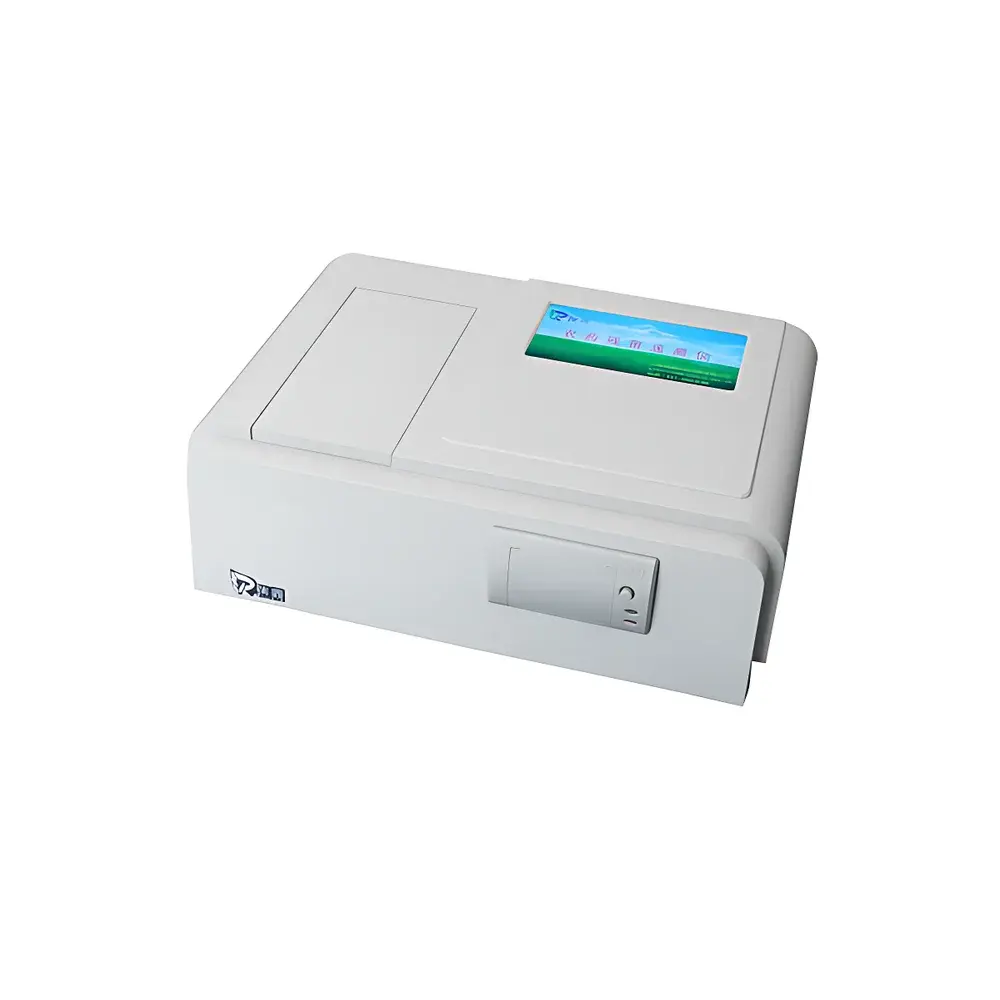
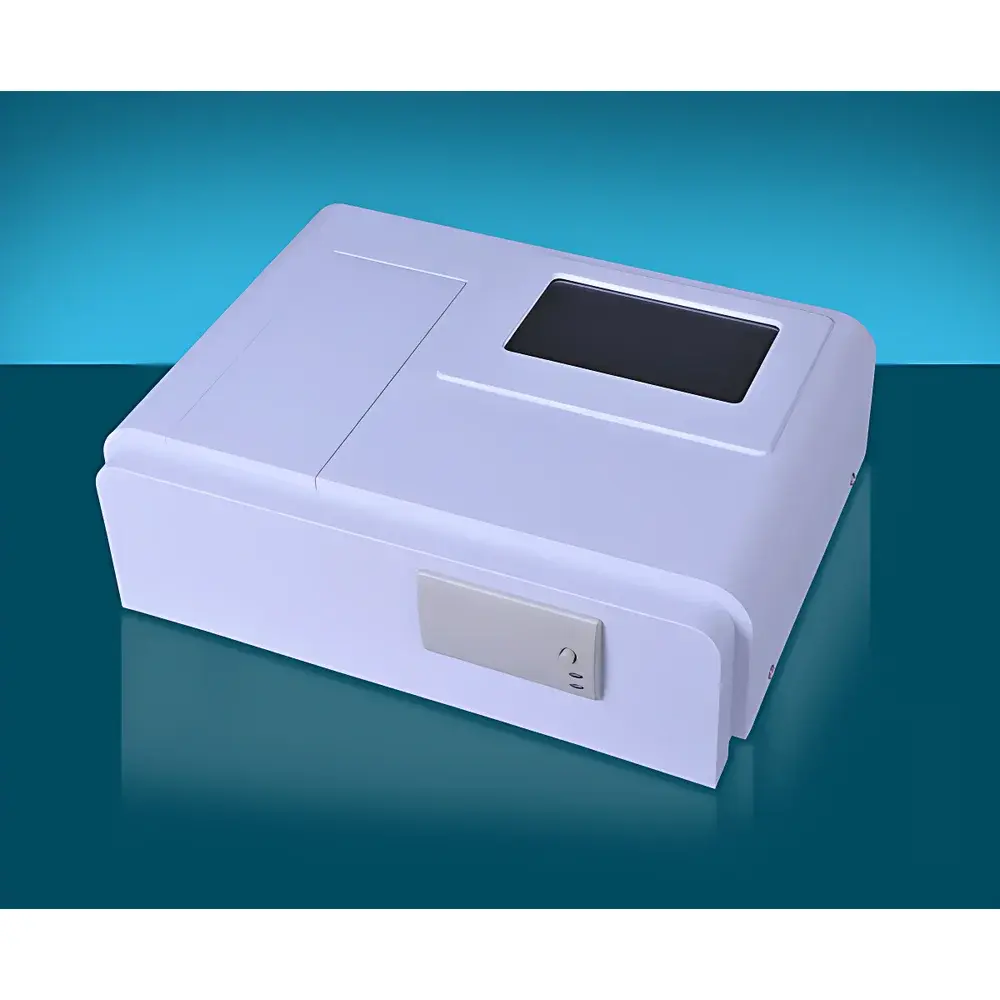

Ruixin CNY-817C Pesticide Residue Rapid Tester
| Brand | Ruixin |
|---|---|
| Origin | Shanghai, China |
| Manufacturer Type | Authorized Distributor |
| Country of Manufacture | China |
| Model | CNY-817C |
| Price | USD 1,350 (FOB Shanghai) |
| Detection Method | Enzyme Inhibition Assay |
| Measurement Range | 0–100% inhibition rate |
| Number of Channels | 8 |
| Measurement Error | ≤ ±10% |
| Limit of Detection (LOD) | 0.3 ppm (for common organophosphates and carbamates) |
| Wavelength | 410 nm |
| Absorbance Range | 0.000–4.000 |
| Transmittance Range | 0.00–100.00% |
| Transmittance Resolution | 0.01% |
| Absorbance Resolution | 0.001 |
| Photometric Accuracy (Transmittance) | ≤ ±2.0% |
| Photometric Repeatability (Transmittance) | ≤ ±0.2% |
| Photocurrent Drift | ≤ ±0.2% (within 3 min) |
| Inhibition Rate Display & Measurement Range | 0–100% |
| Inhibition Rate Accuracy | ±10% |
| Inhibition Rate Repeatability | ≤ ±5% |
| Internal Data Storage Capacity | 10,000 test records |
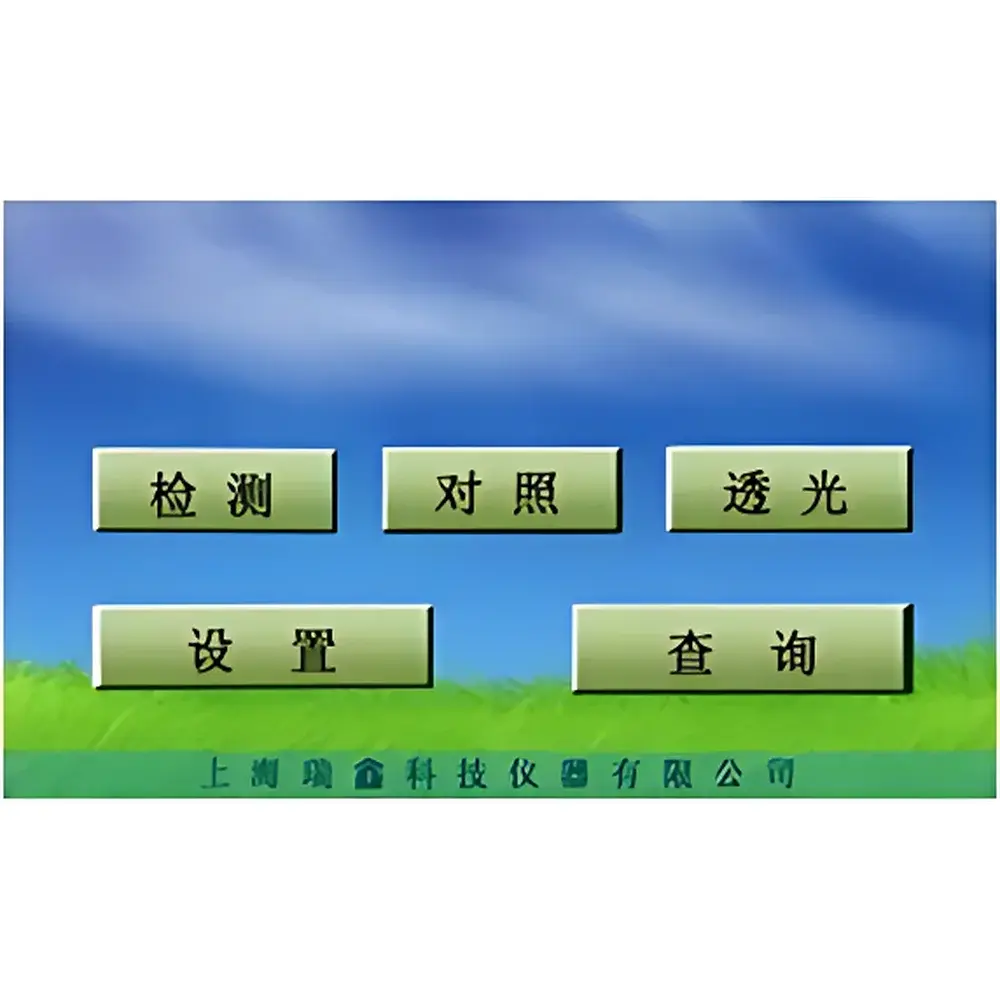
| Display | 7.0-inch color TFT-LCD touchscreen (800 × 480 resolution) |
| Communication Interfaces | RS-232, USB 2.0 |
| Power Supply | AC 220 V ±10%, 50/60 Hz |
| Dimensions (W × D × H) | 410 × 290 × 150 mm |
| Weight | 4.2 kg |
Overview
The Ruixin CNY-817C Pesticide Residue Rapid Tester is a benchtop photometric analyzer engineered for the quantitative determination of organophosphate and carbamate pesticide residues in fresh fruits and vegetables using the standardized enzyme inhibition assay principle. Based on the biochemical interaction between acetylcholinesterase (AChE) or butyrylcholinesterase (BChE) and target pesticides, the instrument measures the degree of enzymatic activity suppression—expressed as inhibition rate (%)—which correlates with residual concentration. Designed in strict compliance with GB 5009.199–2016 (replacing GB 5009.199–2003) and NY/T 448–2021 (replacing NY/T 448–2001), the CNY-817C delivers field-deployable laboratory-grade performance for decentralized food safety screening. Its dual-enzyme compatibility (AChE and BChE), eight independent optical channels, and built-in 410 nm LED light source ensure high reproducibility across heterogeneous sample matrices without requiring external calibration standards for routine operation.
Key Features
- 7.0-inch high-resolution color TFT-LCD touchscreen with intuitive Chinese–English bilingual UI and stylus-enabled input for direct annotation and record labeling.
- Preloaded database of 72 commonly tested fruits and vegetables; editable via on-screen interface or bulk import through PC software.
- Integrated thermal printer for immediate hardcopy reporting—supporting customizable report templates compliant with internal QA documentation requirements.
- Self-calibrating optical path system: automatic zero and 100% transmittance alignment at power-on eliminates manual photometric calibration steps.
- Configurable reaction timing (1–15 min) and inhibition threshold settings (e.g., ≥50% for non-compliant classification), enabling method adaptation per local regulatory thresholds.
- Onboard storage for up to 10,000 test records with timestamp, sample ID, operator ID, inhibition rate, and raw absorbance values—accessible via scrollable history or searchable by date/sample name.
- Low operational cost: typical reagent consumption per test is < USD 0.05, based on standard AChE substrate kits certified to ISO/IEC 17025 reference methods.
- Robust mechanical architecture with EMI-shielded optics and temperature-stabilized LED source ensures stable photometric output under ambient lab or market inspection conditions (10–35 °C).
Sample Compatibility & Compliance
The CNY-817C is validated for homogenized extracts from leafy greens (e.g., spinach, lettuce), solanaceous crops (tomato, pepper), pome and stone fruits (apple, peach), and root vegetables (carrot, radish). Sample preparation follows AOAC Official Method 2007.01 and GB/T 5009.199–2016 protocols, including acetone extraction, centrifugation, and dilution to maintain matrix interference below ±3% RSD. All hardware and firmware comply with IEC 61010-1:2010 safety standards for electrical equipment used in laboratory environments. Data integrity features—including immutable audit trails, user-level access control (admin/operator modes), and exportable CSV/Excel logs—support adherence to GLP principles and facilitate traceability during third-party audits.
Software & Data Management
The included Ruixin Pesticide Data Manager v3.2 (Windows 10/11 compatible) enables centralized data aggregation, statistical analysis (mean inhibition %, CV%, pass/fail trending), and batch report generation. Raw absorbance and transmittance values are stored with metadata (date/time, operator ID, instrument serial number) in encrypted local SQLite databases. USB and RS-232 interfaces support both real-time streaming to LIMS and offline batch transfer. Software exports meet FDA 21 CFR Part 11 requirements for electronic records when paired with institutional digital signature policies and controlled user authentication workflows.
Applications
- Routine surveillance testing at municipal food safety monitoring centers and provincial agricultural commodity inspection stations.
- Pre-market screening in wholesale markets, supermarket quality control labs, and farm-to-retail traceability systems.
- On-site verification during GMP-certified produce processing audits and HACCP plan validation.
- Educational use in food science laboratories for teaching enzymatic inhibition kinetics and rapid screening methodology.
- Field deployment with optional portable power bank (12 V DC input supported) for mobile inspection units and rural extension services.
FAQ
What pesticides does the CNY-817C detect?
It quantifies organophosphates (e.g., chlorpyrifos, malathion, dimethoate) and carbamates (e.g., carbaryl, methomyl, carbofuran) based on their inhibitory effect on cholinesterase activity.
Is method validation documentation available?
Yes—certified validation reports per GB/T 5009.199–2016, including LOD/LOQ, linearity (R² ≥ 0.995), precision (intra-day CV ≤ 4.8%), and recovery (85–115%) are provided with each unit.
Can the instrument be integrated into an existing LIMS?
Yes—CSV-formatted data exports include all required fields for seamless ingestion into common LIMS platforms (e.g., LabWare, STARLIMS) via configurable mapping templates.
Does it support multi-language UI beyond Chinese and English?
Currently supports only Simplified Chinese and English; firmware updates for Spanish and Vietnamese are scheduled for Q4 2025.
What maintenance is required?
No routine optical alignment or lamp replacement needed—the 410 nm LED has a rated lifetime of >50,000 hours; only periodic cleaning of cuvette holders and verification with NIST-traceable neutral density filters every 6 months is recommended.





