
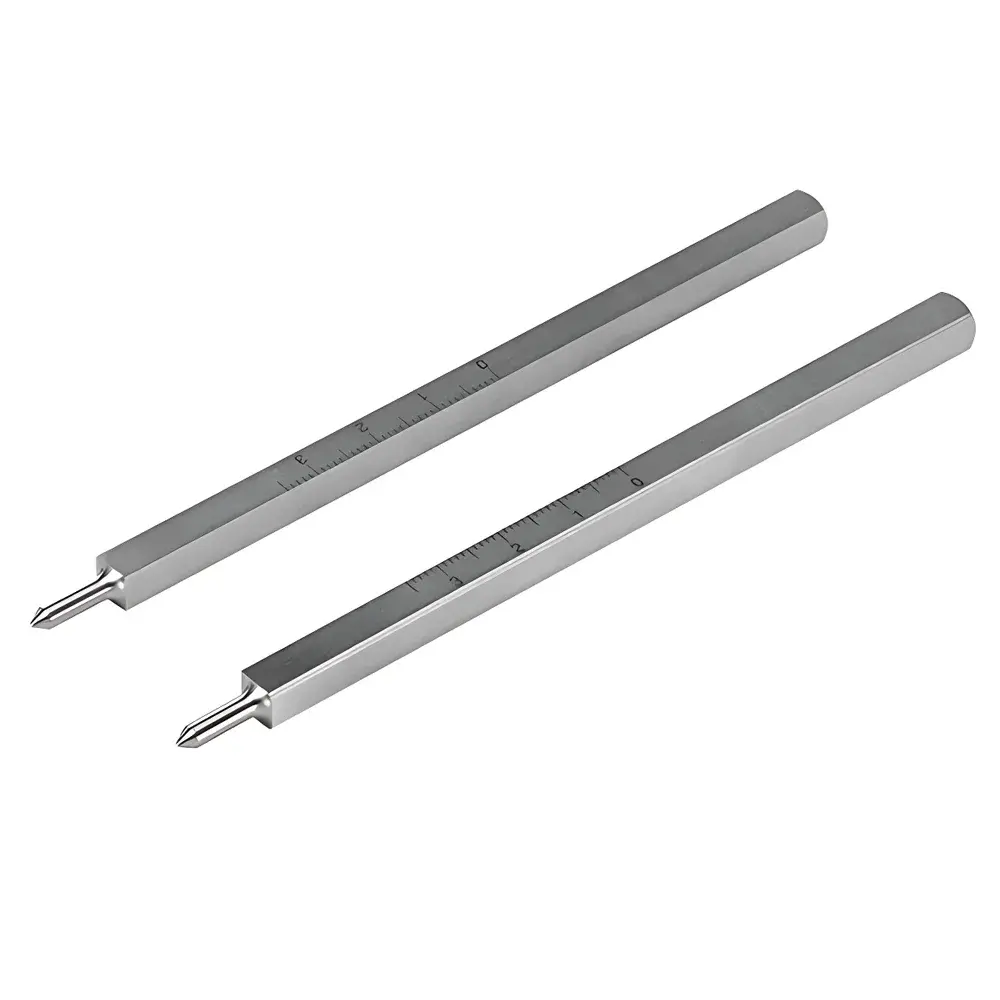
RWD 68306 Mouse 60° Auditory Ear Bar
| Brand | RWD |
|---|---|
| Origin | Shenzhen, China |
| Manufacturer Type | Direct Manufacturer |
| Country of Origin | China |
| Model | 68306 |
| Pricing | Available Upon Request |
| Front Tip Angle | 60° |
| Front Aperture Diameter | 1.0 mm |
| Rear Aperture Diameter | 3.0 mm |
| Application | Acoustic Stimulation in Murine Auditory Research |
Overview
The RWD 68306 Mouse 60° Auditory Ear Bar is a precision-engineered stereotaxic accessory designed specifically for controlled sound delivery in rodent auditory neuroscience experiments. Unlike conventional ear bars that rely on mechanical coupling or external speakers, this device integrates a coaxial acoustic pathway aligned with the external auditory meatus—enabling direct, low-attenuation transmission of calibrated auditory stimuli from an external transducer (e.g., electrodynamic speaker or piezoelectric driver) to the tympanic membrane. Its 60° angular orientation relative to the longitudinal axis of the ear bar ensures optimal alignment with the natural curvature of the murine external ear canal when the animal is secured in standard stereotaxic frames (e.g., David Kopf or Stoelting models). The tapered lumen—1.0 mm at the distal tip and 3.0 mm at the proximal base—minimizes acoustic impedance mismatch while maintaining structural rigidity during head fixation. Constructed from medical-grade stainless steel (AISI 316L), the ear bar is fully autoclavable (121 °C, 20 min, saturated steam), supporting compliance with GLP-compliant surgical preparation protocols.
Key Features
- 60° fixed angular offset between the ear bar shaft and the acoustic delivery axis—optimized for anatomical alignment with C57BL/6, BALB/c, and other common mouse strains under stereotaxic restraint
- Tapered internal lumen: 1.0 mm diameter at the distal tip (insertion end) for precise coupling to the ear canal; 3.0 mm diameter at the proximal connector end for secure attachment to standard 1/4″ or 3.5 mm audio transducers
- Non-invasive tip geometry—rounded distal edge and smooth internal surface finish prevent tympanic membrane contact or pressure-induced artifact during insertion and stabilization
- Machined from passivated AISI 316L stainless steel—resistant to corrosion from repeated sterilization cycles and compatible with ethanol, hydrogen peroxide vapor, and gamma irradiation
- Integrated mounting interface compatible with RWD 68300-series stereotaxic adapters and third-party baseplates featuring M4 threaded holes (pitch: 0.7 mm)
Sample Compatibility & Compliance
The RWD 68306 is validated for use with adult mice (20–30 g) and juvenile mice (12–18 g) across multiple auditory paradigms, including tone-burst evoked potentials (ABR), optogenetic-assisted sound mapping, and two-photon calcium imaging during acoustic stimulation. Its dimensions conform to ISO 10993-5 (cytotoxicity) and ISO 10993-10 (irritation/sensitization) biocompatibility requirements for short-term (<24 h) implantable contact devices. While not intended for chronic implantation, the ear bar supports acute terminal or survival preparations compliant with NIH Guide for the Care and Use of Laboratory Animals and EU Directive 2010/63/EU. Documentation includes material traceability certificates and RoHS/REACH declarations.
Software & Data Management
As a hardware-only stimulus delivery interface, the RWD 68306 does not incorporate embedded firmware or digital control. It functions as a passive acoustic waveguide within closed-loop experimental systems utilizing third-party stimulus generation platforms—including Tucker-Davis Technologies (TDT) System III, National Instruments PXIe-based DAQ, or Cambridge Electronic Design (CED) Power1401. When integrated into FDA-regulated preclinical auditory safety studies, the ear bar’s consistent geometric specifications support audit-ready documentation under 21 CFR Part 11 when paired with electronic lab notebooks (ELNs) that enforce metadata capture (e.g., animal ID, stimulus parameters, calibration date, operator signature).
Applications
- Acoustic brainstem response (ABR) threshold determination with sub-millisecond timing fidelity
- In vivo electrophysiology (e.g., single-unit recordings in inferior colliculus or auditory cortex) requiring minimal acoustic crosstalk
- Optogenetic modulation of auditory pathways using temporally precise sound-triggered opsin activation
- Calibration of intracochlear pressure transfer functions in cochlear mechanics studies
- Validation of computational models of sound propagation through the murine outer/middle ear
FAQ
Is the RWD 68306 compatible with rat stereotaxic procedures?
No—it is dimensionally optimized for mouse anatomy. Rat applications require the RWD 68307 (75° variant) or custom-bore alternatives.
Can the ear bar be used with bone-conduction transducers?
Not directly—the design assumes air-conduction coupling via the external ear canal. Bone conduction requires separate mastoid-mounted fixtures.
What is the maximum recommended sound pressure level (SPL) for safe use?
When paired with calibrated transducers and attenuators, the system supports SPLs up to 120 dB re: 20 µPa without nonlinear distortion—subject to transducer specifications and signal conditioning.
Does RWD provide acoustic calibration data for this ear bar?
Yes—upon request, RWD supplies frequency-response characterization reports (200 Hz–100 kHz) measured in an IEC 60651-compliant acoustic coupler using GRAS 46AE microphones.
How should the ear bar be cleaned between animals?
Wipe with 70% isopropyl alcohol, rinse with sterile saline, and autoclave at 121 °C for 20 minutes. Avoid ultrasonic cleaning to preserve surface passivation integrity.





