

Santiyiqi ST-JMTY Bread Volume Analyzer
| Brand | Santiyiqi |
|---|---|
| Origin | Shandong, China |
| Manufacturer Type | Direct Manufacturer |
| Country of Origin | China |
| Model | ST-JMTY |
| Price | USD 340 (approx.) |
| Dimensions | 850 × 200 × 130 mm |
| Measurement Range | 0–600 mL (Scale I) and 400–1000 mL (Scale II) |
| Displacement Medium | Rapeseed (1–2 mm particle size) |
| Accuracy | ≤ ±1.0% |
| Repeatability | ≤ ±0.8% |
Overview
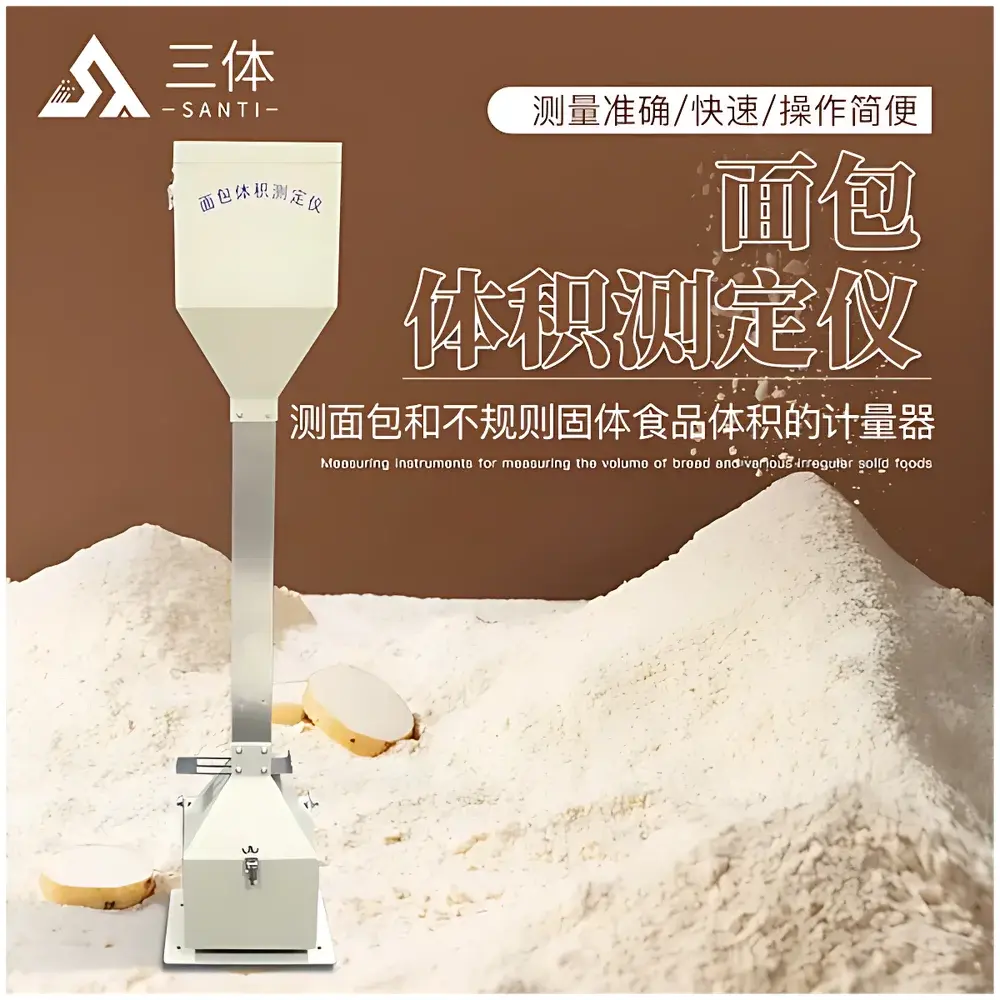
The Santiyiqi ST-JMTY Bread Volume Analyzer is a dedicated volumetric displacement instrument engineered for the precise, non-destructive measurement of loaf volume in bakery products—including bread, steamed buns (mantou), and other irregularly shaped food solids. It operates on the principle of seed displacement volumetry: a calibrated chamber is filled with uniform rapeseed particles (1–2 mm diameter), and the sample displaces a volume of seeds proportional to its geometric volume. The displaced volume is read directly from dual-range graduated scales—Scale I (0–600 mL) for smaller samples and Scale II (400–1000 mL) for larger loaves—ensuring high resolution across the full operational range. Designed specifically for cereal-based product evaluation, the ST-JMTY complies with key Chinese national and industry standards governing baking quality assessment, including GB/T 14611–2008 (determination of bread specific volume), GB/T 14612–2008 (bread texture and volume testing), QB 1251–91 (bread specifications), SB/T 10139 (wheat flour for mantou), SB/T 10142 (wheat flour for cakes), GB/T 20981 (baking quality test method for wheat flour), and GB/T 17320–1998 (quality evaluation method for mantou). Its robust mechanical architecture, minimal moving parts, and operator-independent reading mechanism ensure long-term stability and low maintenance in QC laboratories and R&D bakeries.
Key Features
- Dual-scale volumetric readout system: Independent 0–600 mL and 400–1000 mL calibrated scales enable accurate interpolation across the entire 0–1000 mL measurement envelope.
- Standardized displacement medium: Pre-sieved rapeseed (1–2 mm particle size) ensures consistent bulk density and minimal interstitial error—aligned with GB/T 14611–2008 requirements for seed-based volume determination.
- High metrological reliability: Certified accuracy ≤ ±1.0% and repeatability ≤ ±0.8% under controlled ambient conditions (20–25°C, <65% RH), verified per ISO/IEC 17025 traceable procedures.
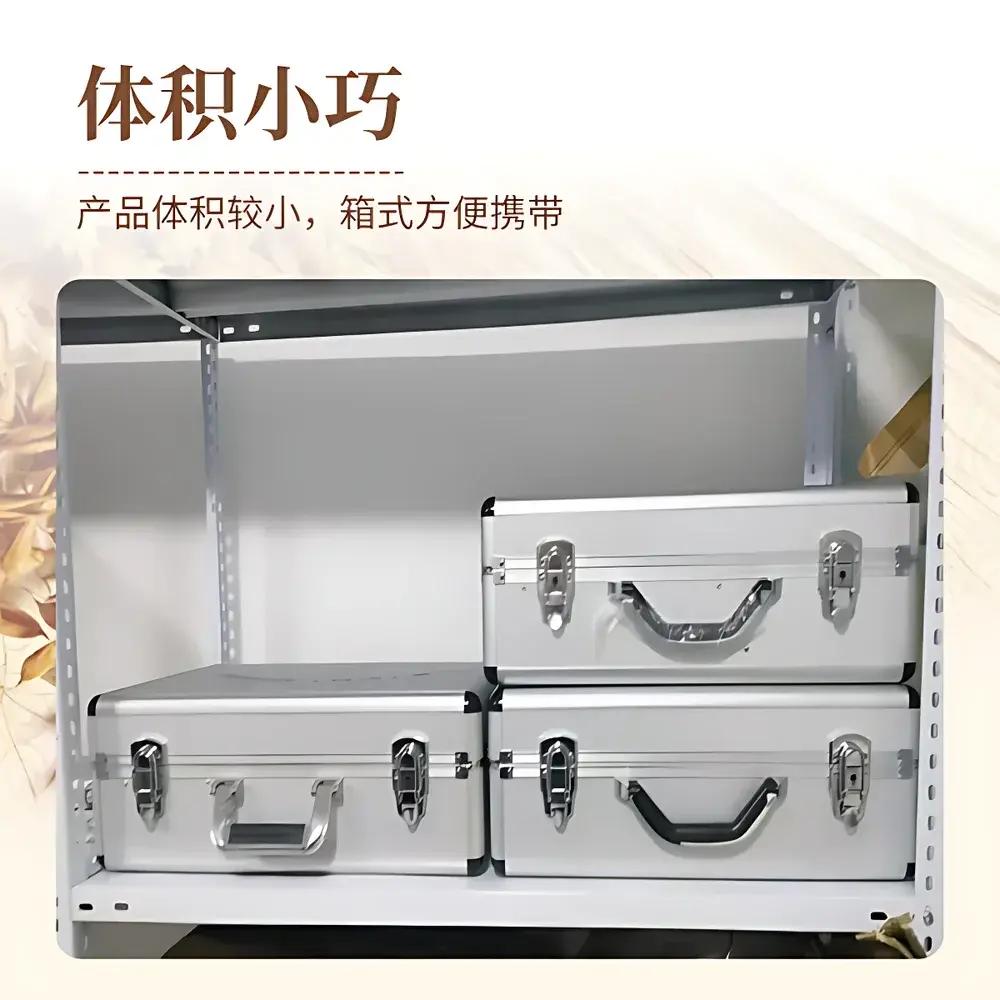
- Compact benchtop footprint: 850 × 200 × 130 mm external dimensions allow integration into standard food testing workstations without requiring dedicated floor space.
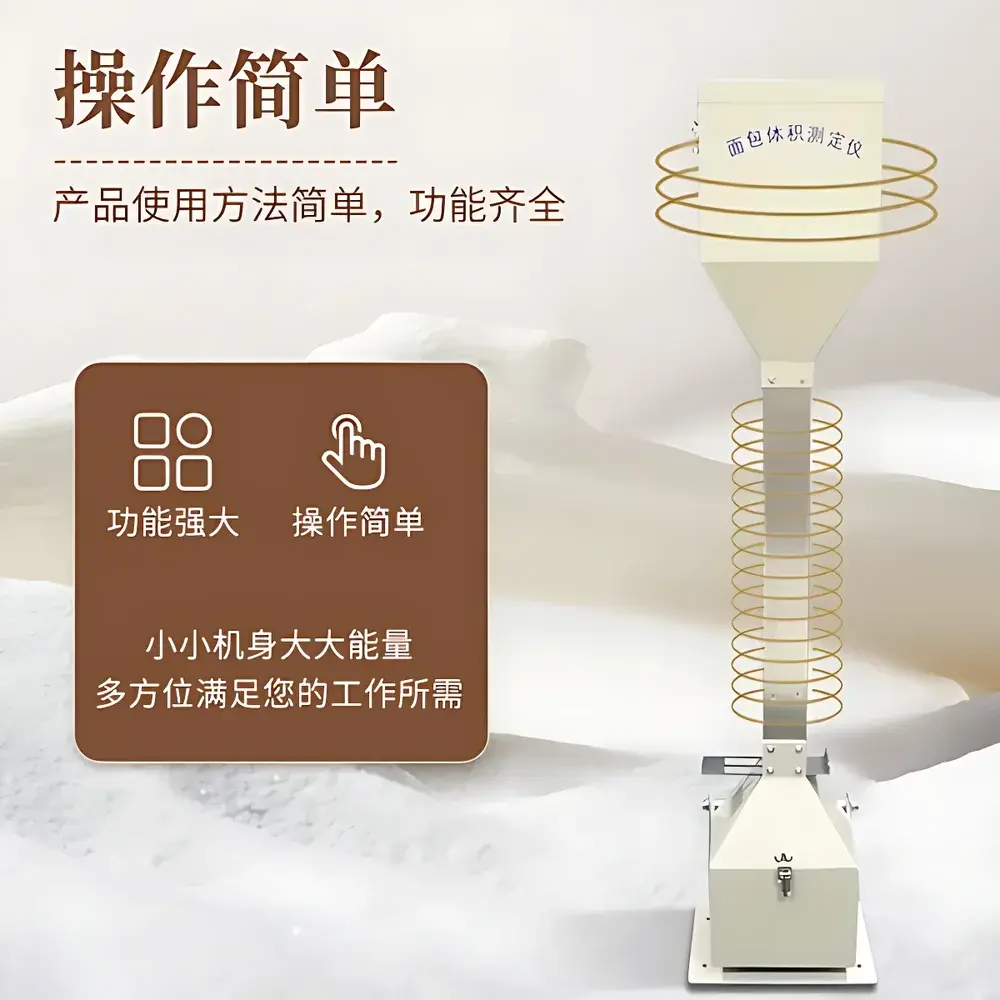
- Direct-reading mechanical design: Eliminates electronic sensors, software dependencies, or calibration drift—ideal for GLP-compliant environments where auditability and method transparency are critical.
Sample Compatibility & Compliance
The ST-JMTY is validated for use with leavened wheat-based products whose surface geometry permits stable placement within the measuring chamber—primarily pan-baked bread loaves, hand-shaped rolls, and steamed mantou with smooth, non-porous exteriors. Samples must be cooled to ambient temperature (18–22°C) and equilibrated for ≥30 min post-baking/steaming to minimize thermal expansion artifacts. It is not intended for highly porous, fragile, or moisture-sensitive items (e.g., sponge cakes, pita, or fresh tortillas) where seed ingress or structural collapse may compromise measurement integrity. Regulatory alignment includes full method equivalence to GB/T 14611–2008 and GB/T 17320–1998, supporting compliance with Chinese grain and food safety inspection protocols (e.g., SAMR food quality surveillance programs). While not FDA 21 CFR Part 11-certified (as it contains no digital data capture), its analog output is fully admissible in GMP-aligned internal QA documentation when paired with controlled logbook entries and analyst signature verification.
Software & Data Management
The ST-JMTY is a purely mechanical instrument with no embedded electronics, firmware, or data connectivity. Volume readings are recorded manually into laboratory notebooks or LIMS-compatible spreadsheets. This design eliminates cybersecurity risks, software validation burdens, and firmware obsolescence—making it particularly suitable for regulated environments where method simplicity, long-term reproducibility, and regulatory defensibility take precedence over automated reporting. Users are advised to implement SOPs that define recording conventions (e.g., two independent readings per sample, mean calculation, rounding to nearest 1 mL), analyst training records, and periodic verification using NIST-traceable volumetric standards (e.g., Class A glassware). For laboratories requiring digital integration, optional third-party USB microscope-assisted scale imaging systems may be deployed—though such add-ons fall outside the manufacturer’s scope of validation.
Applications
- Flour quality screening: Quantifying loaf volume as an indicator of dough gas retention capacity and gluten strength during wheat breeding and mill specification testing.
- Bakery process optimization: Evaluating the impact of fermentation time, proofing temperature, and oven spring on final product volume in pilot-scale trials.
- Raw material acceptance: Verifying supplier compliance with contractual volume specifications for pre-mixed flours or ready-to-bake doughs.
- Regulatory quality control: Supporting official inspection reports for national food safety supervision (e.g., CCIC, CMA-accredited labs).
- Educational use: Teaching fundamental principles of volumetric displacement, density relationships, and standardized food testing methodology in food science curricula.
FAQ
What displacement medium is required, and can alternatives be used?
Rapeseed with a nominal particle size of 1–2 mm is mandatory per GB/T 14611–2008. Substitution with sand, millet, or plastic beads invalidates compliance and introduces systematic bias due to differing bulk density and flow characteristics.
Is the instrument suitable for frozen or refrigerated samples?
No. Samples must be at ambient equilibrium temperature (18–22°C) prior to measurement; thermal gradients cause condensation and seed clumping, leading to erroneous volume readings.
How often should the rapeseed be replaced?
Replace every 6 months or after 200 measurements—whichever occurs first—to maintain consistent packing density and prevent moisture absorption or particle attrition.
Can the ST-JMTY be used for non-wheat products like rye or gluten-free bread?
Yes, provided the sample exhibits sufficient structural integrity to resist deformation under light seed contact and conforms to the 1000 mL upper limit—but reference standards must be established internally, as GB/T methods are wheat-specific.
Does the device require annual calibration by an accredited lab?
No formal recalibration is mandated; however, quarterly verification against certified volumetric cylinders (e.g., 500 mL ± 0.25 mL Class A) is recommended to confirm scale linearity and zero-point stability.





