
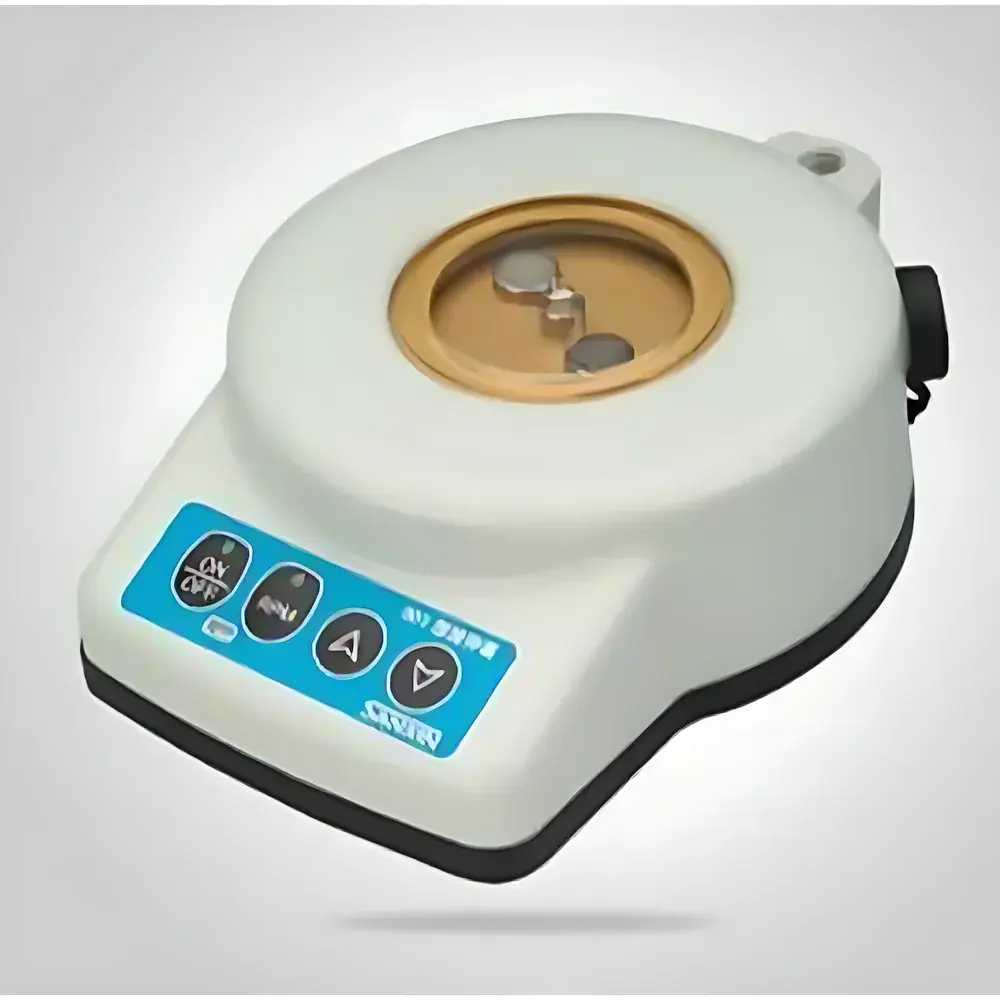
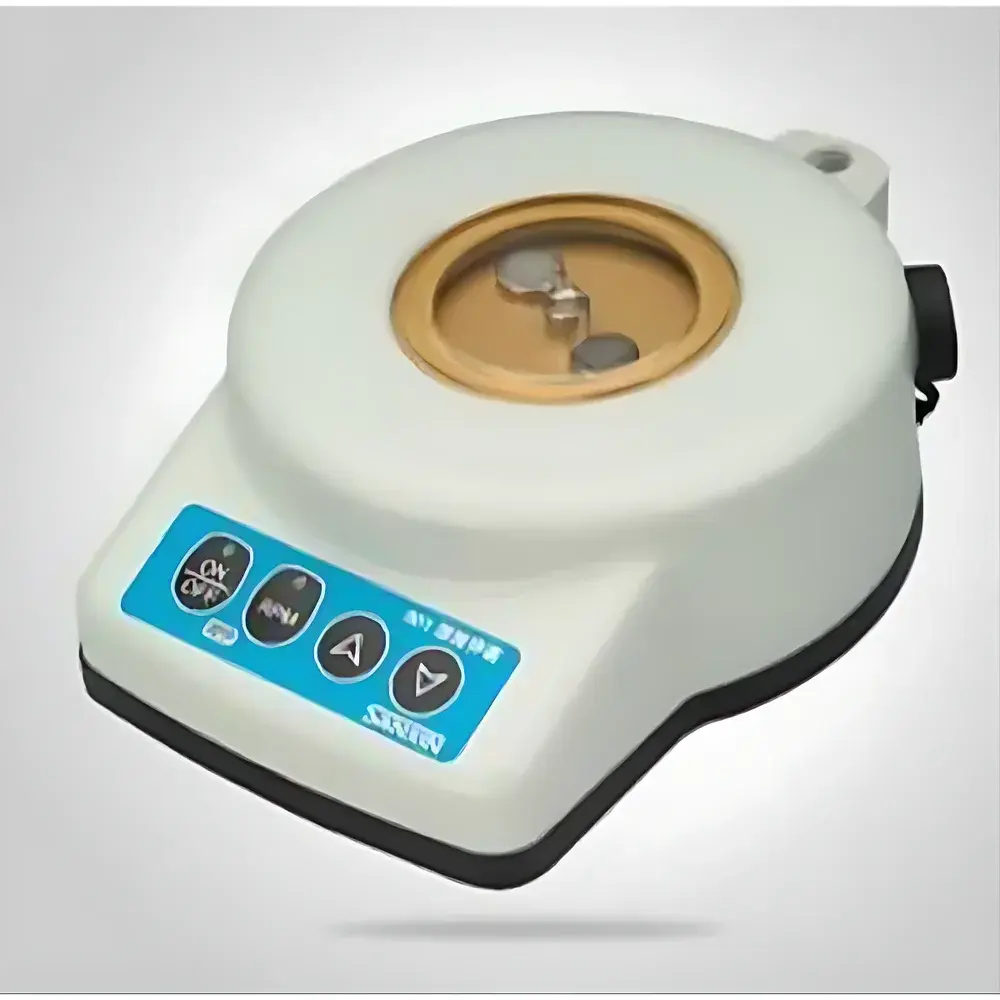
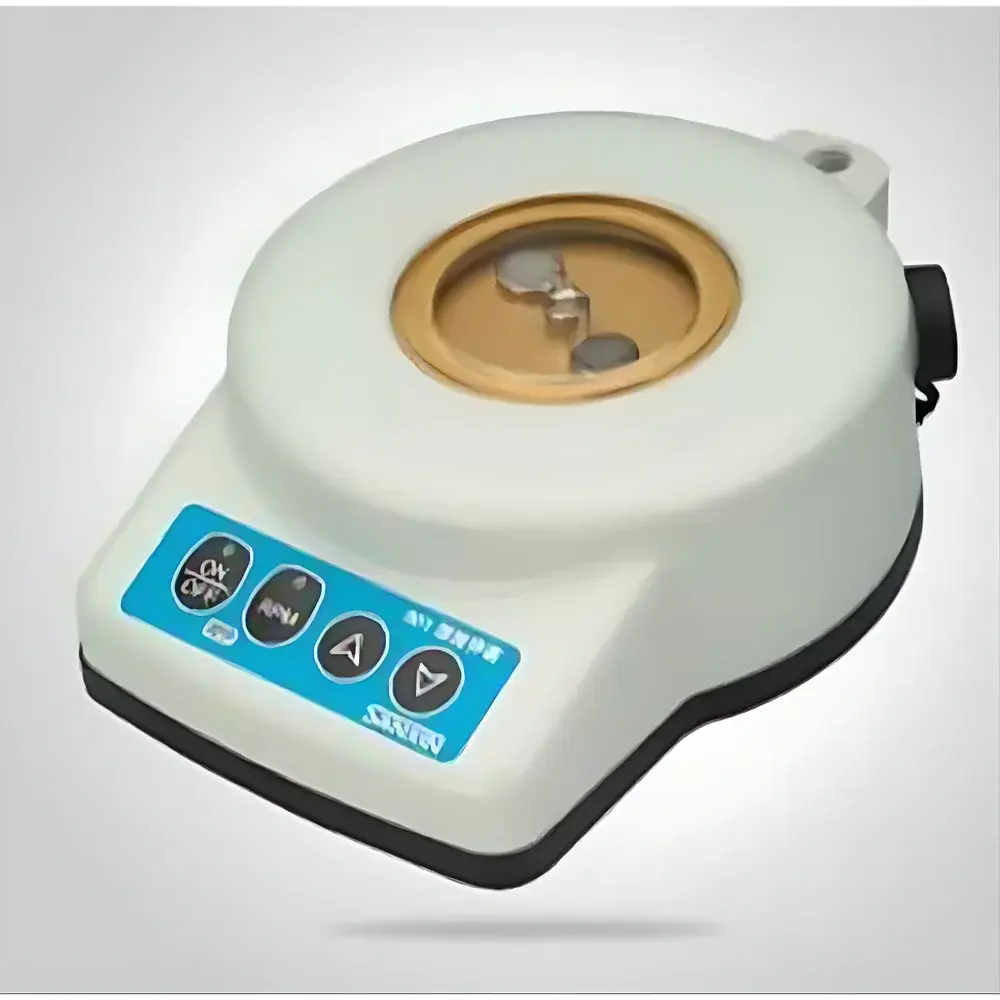
SANXIN 901 Intelligent Portable Magnetic Stirrer
| Brand | SANXIN Peirui |
|---|---|
| Origin | Shanghai, China |
| Model | 901 |
| Stirrer Type | Magnetic Stirrer |
| Max. Stirring Volume | 20 L |
| Speed Range | 100–2000 rpm (infinitely variable) |
| Temperature Control Range | Ambient to 200 °C (for temperature-controlled variant) |
| Power Supply | DC 6 V (4 × AA batteries or AC adapter) |
| Max. Current Draw | 150 mA |
| Max. Power Consumption | 0.9 W |
| Dimensions | 100 × 146 × 48 mm |
| Weight | 340 g |
Overview
The SANXIN 901 Intelligent Portable Magnetic Stirrer is an engineered solution for precise, low-power, and field-deployable liquid mixing in research laboratories, quality control environments, and mobile analytical workflows. Designed around a microprocessor-based control architecture, the device implements closed-loop speed regulation via Hall-effect sensing and pulse-width modulation (PWM) drive circuitry—ensuring stable rotational output across varying load conditions and ambient temperatures. Unlike conventional benchtop stirrers reliant on mains-powered induction motors, the 901 employs a compact, brushless DC motor coupled with a high-coercivity neodymium stirring bar actuation system. Its core operational principle leverages rotating magnetic fields generated by a planar coil array beneath the platform surface, inducing torque on ferromagnetic stir bars immersed in vessels. This non-contact coupling eliminates mechanical wear, reduces heat transfer to samples, and supports operation inside enclosed environments—including CO₂ incubators, glove boxes, and water-immersed setups—without risk of electrical hazard.
Key Features
- Intelligent dual-speed memory function: Users can preset and store two independent RPM values; pressing the “RPM” button toggles between them during operation—ideal for sequential mixing protocols requiring rapid parameter switching.
- IP-rated waterproof housing with transparent polycarbonate top cover: Enables safe use in humid environments, wet benches, and submerged applications (e.g., water baths up to IPX7 depth rating), while allowing real-time visual monitoring of sample homogeneity and stir bar motion.
- True dual-power architecture: Operates seamlessly from either a regulated DC 6 V AC adapter or four standard AA alkaline cells—eliminating dependency on fixed power infrastructure. Battery-level monitoring includes audible and LED-based low-voltage alerting prior to shutdown.
- Ultra-low power profile: Maximum power draw of 0.9 W and peak current of 150 mA enable >48 hours of continuous operation on fresh alkaline batteries under typical 800 rpm loading—critical for extended field deployments or backup operation during grid outages.
- Compact ergonomic form factor: Weighing only 340 g with footprint dimensions of 100 × 146 mm, the unit integrates into confined spaces such as biosafety cabinets, portable analytical kits, and multi-instrument mobile carts without compromising stability or thermal management.
Sample Compatibility & Compliance
The 901 accommodates standard laboratory glassware (including beakers, flasks, and vials) up to 20 L volume when used with appropriately sized stir bars (recommended diameter: 25–40 mm, length: 40–80 mm). Its non-inductive platform design avoids interference with nearby electronic instrumentation—including pH meters, conductivity sensors, and electrochemical workstations. The device complies with IEC 61010-1:2010 for electrical safety in laboratory equipment and meets EN 61326-1:2013 requirements for electromagnetic compatibility (EMC) in industrial and laboratory settings. While not certified for hazardous location use (e.g., Class I Div 1), its sealed construction and absence of sparking components support deployment in general-purpose cleanrooms and GLP-compliant preparation areas where moisture resistance is mandated.
Software & Data Management
As a standalone analog-digital hybrid instrument, the 901 does not feature embedded firmware update capability or USB/Bluetooth connectivity. However, its deterministic speed response and repeatable setpoint recall support integration into validated workflows governed by 21 CFR Part 11 Annex 11 principles—particularly when paired with external data loggers or LIMS interfaces that capture timestamped RPM events via TTL-level trigger outputs (available upon custom configuration). All operational parameters—including stored speeds, battery status, and runtime—are retained through power cycles without volatile memory reliance. Audit trails for usage history may be maintained manually or via external recording per institutional SOPs for equipment qualification (IQ/OQ/PQ).
Applications
- Pre-analytical sample homogenization for environmental water testing (e.g., suspended solids dispersion prior to filtration or ICP-MS digestion).
- In-situ mixing within temperature-controlled enclosures: operation inside 200 °C-capable heating blocks or incubators for enzymatic assays, polymer dissolution, or buffer equilibration.
- Field-based titration support and reagent blending in mobile environmental labs or pharmaceutical cold-chain validation studies.
- Low-heat mixing of thermolabile biological suspensions—including cell cultures, antibody conjugates, and nanoparticle colloids—where mechanical agitation would induce shear damage or localized heating.
- Calibration verification of viscometers and rheometers using standardized Newtonian fluids under controlled rotational conditions.
FAQ
Is the 901 compatible with stainless steel or PTFE-coated stir bars?
Yes—the device generates sufficient magnetic flux density (≥40 mT at surface) to reliably rotate both standard 304 stainless steel and chemically inert PTFE-encapsulated stir bars up to 80 mm in length.
Can it maintain set speed under high-viscosity loads (e.g., >10,000 mPa·s)?
It delivers rated torque up to 15 mN·m at 1000 rpm; performance in viscous media depends on stir bar geometry and vessel aspect ratio—consult application notes for optimized bar-to-volume ratios.
Does the temperature-controlled variant include PID regulation and external probe input?
Yes—the TC model integrates a Pt100 RTD input, digital PID algorithm, and ±0.5 °C accuracy over 25–200 °C range, with programmable ramp/soak profiles accessible via front-panel navigation.
What is the expected service life of the internal motor under continuous duty?
Rated for >20,000 hours MTBF at 25 °C ambient and ≤1500 rpm average load, based on accelerated life testing per ISO 13849-1 Category 3 architecture.
Are replacement batteries and adapters available through authorized distributors?
Original-specification AC adapters (6 V DC, 500 mA, center-negative) and OEM battery trays are stocked globally via SANXIN’s ISO 9001-certified distribution network—part numbers provided in the service manual.



