
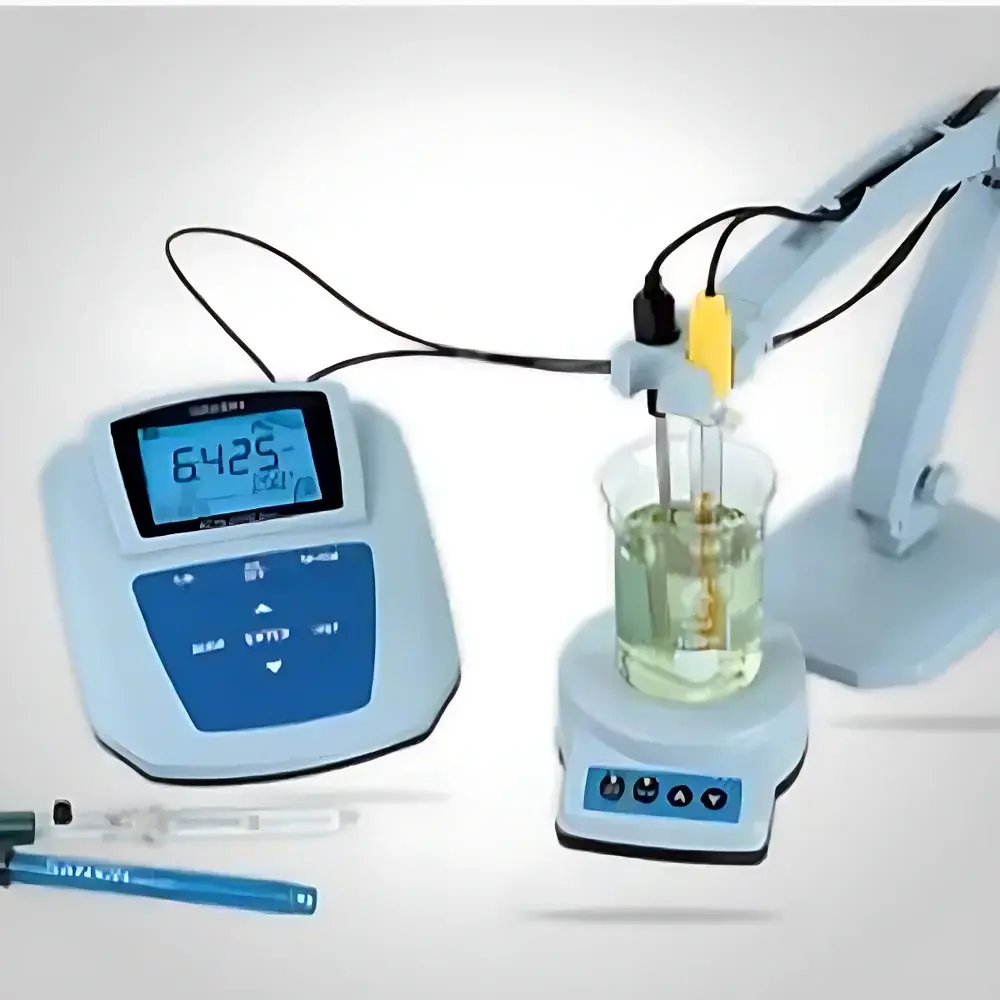
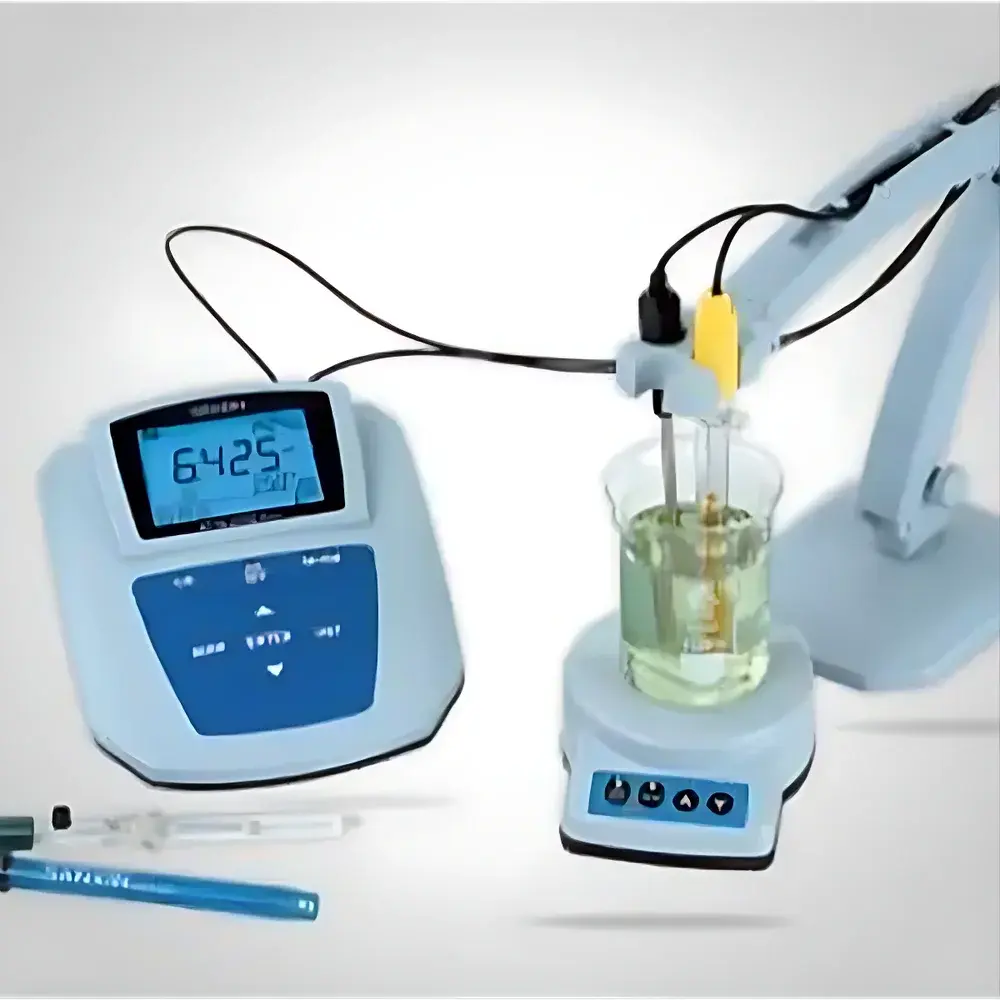
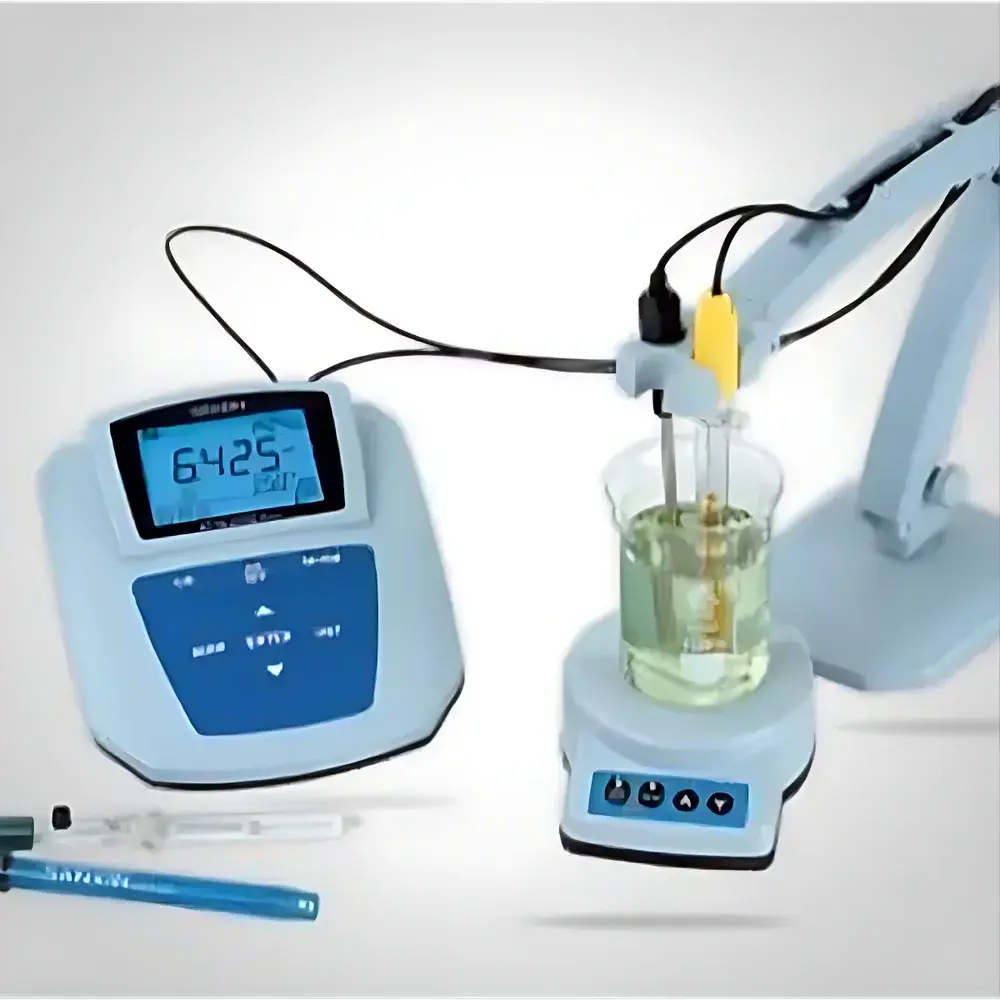
SANXIN MP523-01 Benchtop pH and Ion Concentration Meter
| Brand | SANXIN |
|---|---|
| Origin | Shanghai, China |
| Model | MP523-01 |
| Instrument Type | Benchtop |
| Measurement Range | pH: −2.000–19.999 |
| Ion Concentration | 0.00–14.00 pX (equivalent to 0.01 mg/L–1000 mg/L depending on ion valence and selectivity) |
| Temperature | −10–110 °C |
| Detection Limit | 0.01 mg/L (typical for monovalent ions) |
| Response Time | ≤60 s (for ion concentration stabilization) |
| Accuracy | pH: ±0.002 pH |
| Ion | ±0.5% of reading (monovalent), ±1.0% of reading (divalent) |
| Temperature | ±0.4 °C |
| Temperature Compensation | Automatic, 0–100 °C (pH), 0–60 °C (ion) |
| Data Storage | 900 sets |
| Interface | RS232 |
| Power Supply | DC 9 V / 300 mA |
| Dimensions & Weight | 160 × 190 × 70 mm / 880 g |
| IP Rating | IP54 |
| Compliance | GLP-compliant architecture with audit-trail-capable data logging |
Overview
The SANXIN MP523-01 is a high-precision benchtop pH and ion concentration meter engineered for routine and regulatory-grade water quality analysis in environmental monitoring laboratories, municipal water treatment facilities, and industrial process control environments. It operates on the principle of potentiometric measurement—utilizing ion-selective electrodes (ISEs) and glass pH electrodes to quantify hydrogen ion activity (pH) and the activity or concentration of specific target ions (e.g., Na⁺, Cl⁻, F⁻, NO₃⁻, Ca²⁺) in aqueous samples. The instrument implements Nernst equation-based signal processing with automatic temperature compensation (ATC), ensuring thermodynamic consistency across variable sample temperatures. Its dual-parameter architecture enables concurrent calibration and measurement of pH and ion concentration without hardware reconfiguration, supporting both standard and high-purity water applications—including low-conductivity samples requiring specialized electrode configurations and measurement algorithms.
Key Features
- Triple-mode pH measurement: Standard aqueous, high-purity water (with resistivity correction), and ammonia-doped pure water modes—each optimized for electrode polarization behavior and junction potential stability.
- Flexible ion quantification: Supports four concentration units—pX, mol/L, mg/L, and ppm—with automatic unit conversion during calibration and reporting.
- Comprehensive calibration suite: Auto-recognition of 13 standardized pH buffer solutions across four international series (NIST, DIN/ISO, Chinese GB, and user-defined), plus customizable two-point ISE calibration using user-supplied standards.
- GLP-ready operation: Timestamped data storage (900 entries), RS232 serial output for traceable data export, and built-in compliance with Good Laboratory Practice documentation requirements—including operator ID tagging and calibration history retention.
- Ruggedized design: IP54-rated enclosure with silicone-sealed ports, integrated ATC probe interface, and modular electrode compatibility (including double-junction reference electrodes for complex matrices).
- Extended electrochemical functionality: Integrated ORP (oxidation-reduction potential) measurement mode referenced to the standard hydrogen electrode (SHE), enabling redox process monitoring in disinfection and corrosion studies.
Sample Compatibility & Compliance
The MP523-01 accommodates a broad range of aqueous environmental and process samples—including raw surface water, treated drinking water, wastewater effluents, boiler feedwater, and industrial rinse solutions. Its 2503-C glass pH electrode and optional 2503D-C variant provide stable response in low-ionic-strength media, while the 6213 double-junction reference electrode minimizes contamination in samples containing sulfides, proteins, or heavy metals. The instrument conforms to ISO 7888 (electrochemical pH measurement), ASTM D1293 (pH of water), and USP (pH measurement in pharmaceutical waters). Its data structure supports FDA 21 CFR Part 11 readiness when paired with validated third-party LIMS software via RS232 handshake protocols.
Software & Data Management
Data acquisition and archival are managed through an embedded non-volatile memory system storing up to 900 complete measurement records—including pH, ion concentration, temperature, date/time stamp, electrode ID, calibration parameters, and operator notes. RS232 connectivity enables direct integration with laboratory information management systems (LIMS) or spreadsheet-based QA/QC workflows. Optional communication software provides batch export in CSV format, calibration certificate generation, and trend visualization. All stored data retain full traceability under GLP and ISO/IEC 17025 audit conditions, with no internal data overwriting or deletion capability without administrative authentication.
Applications
- Regulatory compliance testing for drinking water (EPA Method 150.1, ISO 10523)
- Monitoring ion leakage in deionized water loops and ultrapure water systems (ASTM D512, D4192)
- Chloride and nitrate tracking in groundwater and agricultural runoff
- Process control of coagulant dosing (e.g., Al³⁺, Fe³⁺) in wastewater treatment
- Calibration verification and performance qualification of online ion analyzers
- Academic research involving ion exchange kinetics, membrane selectivity, and speciation modeling
FAQ
Does the MP523-01 support automatic calibration verification (ACV) or sensor diagnostics?
No—ACV is not implemented. However, the instrument logs calibration slope, offset, and asymmetry potential for manual diagnostic review per ISO 17025 clause 7.7.
Can it measure polyvalent ions such as SO₄²⁻ or PO₄³⁻ with certified accuracy?
Yes—when paired with appropriate ion-selective electrodes and calibrated against matrix-matched standards; accuracy follows ISO 10304-1 for multivalent anions.
Is the RS232 interface optically isolated?
No—RS232 is electrically coupled; use of an external opto-isolator is recommended in high-noise industrial settings.
What is the minimum sample volume required for reliable measurement?
≥30 mL for standard beaker-mode measurements; ≥10 mL when using micro-volume adapters with compatible electrodes.
Does the instrument meet CE or RoHS directives?
Yes—certified to EN 61326-1 (EMC) and EN 61010-1 (safety), with full RoHS 2011/65/EU compliance documentation available upon request.







