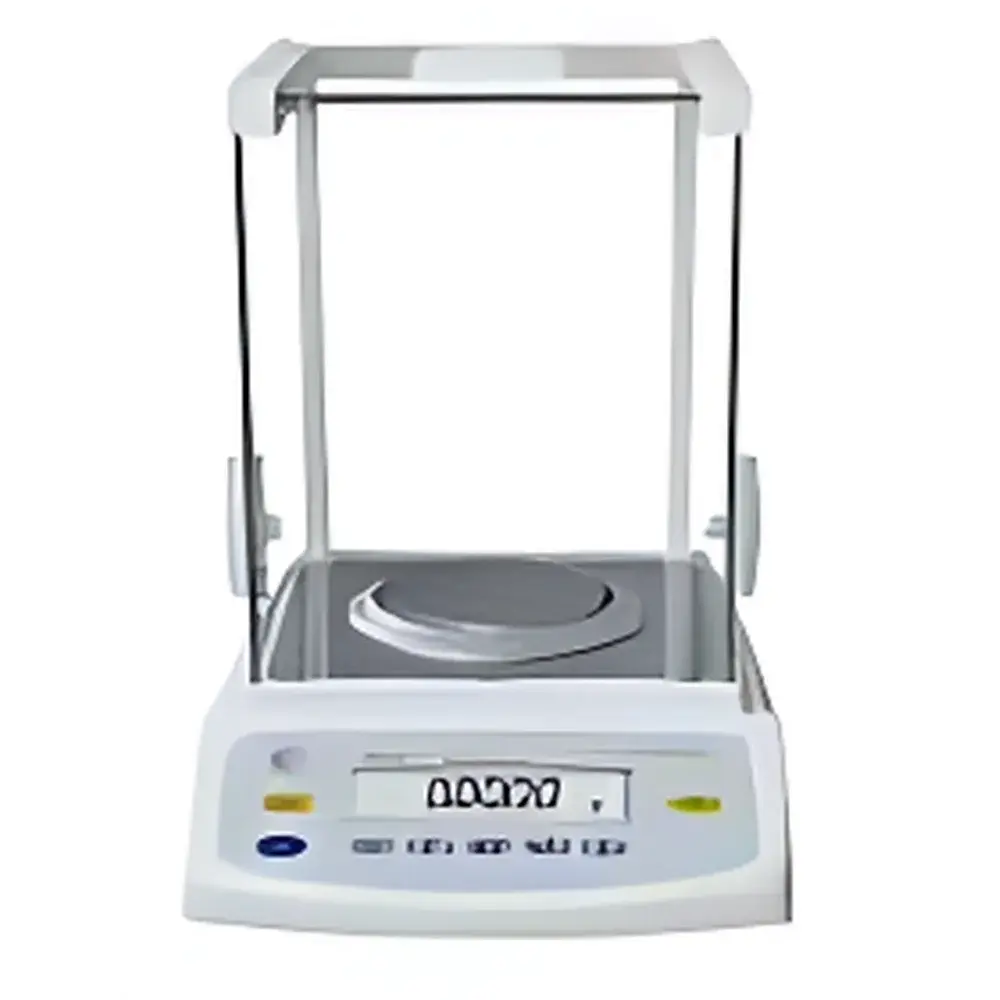
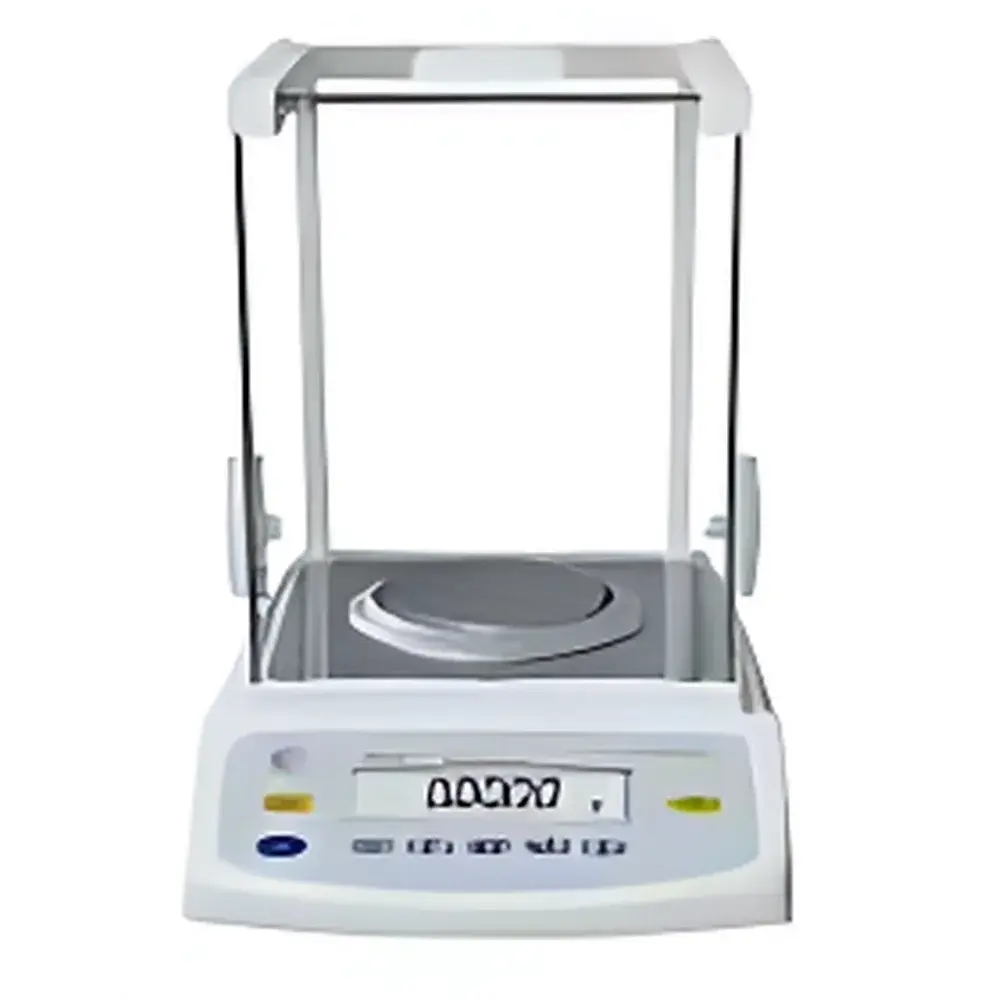
Sartorius BSA124S-CW & BSA224S-CW Advanced Analytical Balances
| Origin | Germany |
|---|---|
| Manufacturer Type | Authorized Distributor |
| Product Origin | Imported |
| Model | BSA124S-CW / BSA224S-CW |
| Instrument Type | Analytical Balance |
| Maximum Capacity | 120 g / 220 g |
| Readability | 0.1 mg |
| Repeatability | 0.1 mg |
| Calibration | Internal motor-driven calibration |
| Display | Backlit LCD (character height: 15 mm) |
| Level Indicator | Integrated adjacent to display |
| Pan Diameter | Ø 90 mm |
| Interface | RS232C bidirectional |
| Compliance | ISO/GLP-compliant data output (with optional YDP03-0CE printer or PC connection) |
| Built-in Applications | Percentage weighing, net weight summation, animal/dynamic weighing, unit conversion, arithmetic functions (×, ÷) |
Overview
The Sartorius BSA124S-CW and BSA224S-CW are high-precision analytical balances engineered for routine and regulated laboratory environments where trace-level mass measurement integrity is non-negotiable. Based on electromagnetic force compensation (EMFC) technology, these balances deliver stable, drift-compensated measurements under variable ambient conditions—including minor air currents, temperature fluctuations, and vibration—through adaptive digital filtering algorithms and real-time environmental compensation. Designed and manufactured in Germany, the BSA series adheres to Sartorius’ long-standing metrological heritage, with each unit traceable to national standards via factory calibration certificates. The “CW” designation indicates integration of a motorized internal calibration system, eliminating manual handling of external weights and reducing operator-induced uncertainty during routine recalibration. These balances meet the foundational requirements for ISO 17025-accredited testing laboratories and support GLP/GMP workflows through audit-ready data generation when paired with compliant peripherals.
Key Features
- Internal motor-driven calibration (CW models): One-touch initiation ensures consistent calibration across time and operator shifts, minimizing systematic error and supporting regulatory compliance.
- Advanced digital signal processing: Adaptive algorithms dynamically compensate for thermal drift, mechanical stress, and electromagnetic interference, delivering high reproducibility (≤0.1 mg repeatability) even in non-climate-controlled lab spaces.
- Ergonomic human-machine interface: Backlit LCD display with 15 mm character height ensures legibility under varied lighting; integrated level indicator adjacent to the screen enables rapid verification of leveling prior to critical measurements.
- Intuitive operation: Context-sensitive English prompts guide users through parameter configuration—including auto-zero tracking, stabilization time, and filter settings—without requiring technical training.
- Robust mechanical architecture: Stainless steel pan (Ø 90 mm), draft shield-compatible design, and reinforced base provide long-term stability and resistance to chemical exposure and mechanical wear.
- Comprehensive built-in applications: Percentage weighing, net weight accumulation, dynamic/animal weighing, unit conversion (g, mg, ct, oz, etc.), and arithmetic operations (multiplication/division) reduce post-processing steps and transcription errors.
Sample Compatibility & Compliance
The BSA124S-CW (120 g capacity) and BSA224S-CW (220 g capacity) accommodate standard laboratory sample containers—including weighing boats, vials, crucibles, and filtration assemblies—within their Ø 90 mm pan geometry. Draft shields (sold separately) are recommended for measurements below 1 mg readability to mitigate convective air disturbances. Both models comply with international metrological requirements for analytical balances per OIML R 76-1 and EN 45501. When connected to the optional YDP03-0CE thermal printer or a validated computer system via RS232C, they generate ISO/GLP-compliant records including date/time stamps, balance ID, calibration status, operator ID (if entered), and raw weight values—enabling full traceability for audits under FDA 21 CFR Part 11 (when paired with appropriate software controls) and EU Annex 11.
Software & Data Management
Data export is supported natively via RS232C serial interface with ASCII protocol, enabling direct integration into LIMS, ELN, or custom QA/QC databases. No proprietary drivers are required. The balance transmits stabilized weight values, tare status, units, and calibration event logs in real time. For paper-based documentation, the YDP03-0CE printer provides tamper-evident, timestamped printouts meeting minimum ALCOA+ principles (Attributable, Legible, Contemporaneous, Original, Accurate). Optional Sartorius LabX Lite software (not included) extends functionality with automated report generation, user access control, and electronic signature capability—facilitating alignment with GxP data integrity expectations.
Applications
These balances serve core functions across pharmaceutical QC labs (e.g., active pharmaceutical ingredient (API) assay, reference standard preparation), academic research (gravimetric analysis, catalyst loading, nanomaterial synthesis), environmental testing (filter weighing for PM2.5/PM10), and food safety labs (moisture content determination, additive quantification). Their 0.1 mg readability and ≤0.1 mg repeatability make them suitable for USP balance verification protocols, ASTM E898-22 gravimetric procedures, and ISO 12746-2 polymer characterization workflows. The internal calibration system supports daily verification per USP without interrupting workflow continuity.
FAQ
What does “CW” signify in the model number?
The “CW” suffix denotes integration of a motorized internal calibration mechanism, which uses a built-in, temperature-compensated calibration mass actuated by a precision stepper motor.
Is external calibration required after internal calibration?
Internal calibration satisfies routine performance verification; however, periodic external calibration using certified weights (e.g., Class E2 or better) is recommended per ISO/IEC 17025 Clause 6.5 and manufacturer guidelines—typically every 3–6 months depending on usage frequency and risk assessment.
Can the balance store calibration history?
No—calibration events are not stored internally, but all calibration actions (date, time, result) are transmitted in real time via RS232C upon request or automatically with printer activation.
Does it support connectivity with modern Windows/macOS systems?
Yes—via RS232-to-USB adapters and terminal emulation software (e.g., PuTTY, Tera Term) or LabX Lite; no native USB port is present on the instrument.
Are draft shields included?
No—draft shields are optional accessories; two configurations (single-door and double-door) are available from Sartorius to match specific application needs and space constraints.