Sartorius BSA2201 Precision Balance
| Key | Brand: Sartorius |
|---|---|
| Origin | Germany |
| Model | BSA2201 |
| Readability | 0.1 g |
| Capacity | 2200 g |
| Calibration | External |
| Display | Backlit LCD with 15 mm digit height |
| Pan Size | 180 × 180 mm |
| Interface | RS-232C (bidirectional) |
| Compliance | ISO/IEC 17025, GLP, GMP-supporting data traceability |
| Built-in Applications | Percentage weighing, net weight summation, animal/dynamic weighing, unit conversion, arithmetic calculation |
Overview
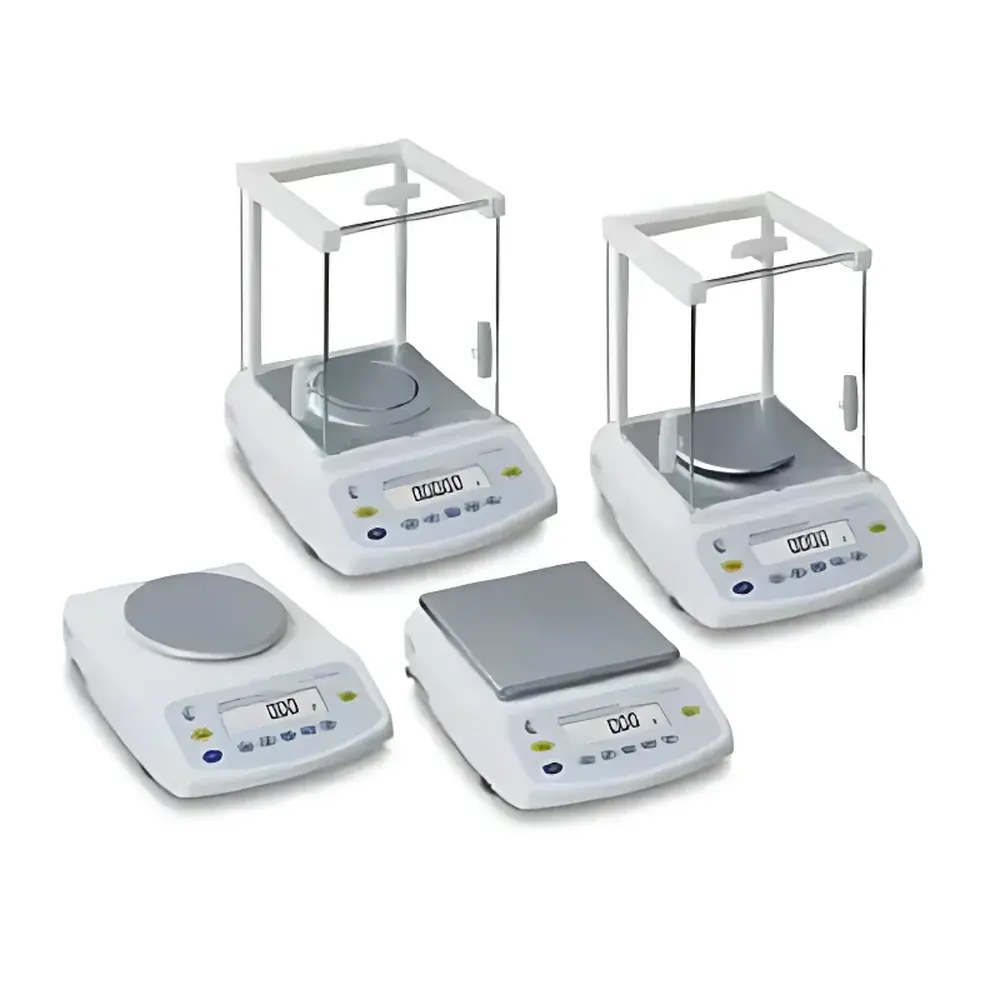
The Sartorius BSA2201 Precision Balance is an entry-level yet rigorously engineered analytical instrument designed for routine laboratory mass measurement tasks requiring high repeatability and operational robustness. Operating on electromagnetic force compensation (EMFC) principle—standard across Sartorius’s precision balance portfolio—the BSA2201 delivers stable, drift-resistant readings even under suboptimal environmental conditions. Its 2200 g capacity and 0.1 g readability position it within the mid-range precision class, suitable for applications where high throughput and consistent accuracy outweigh ultra-micro requirements. Unlike microbalances or analytical balances with sub-milligram resolution, the BSA2201 prioritizes ergonomic workflow integration, thermal stability, and long-term calibration integrity—making it a foundational tool in QC labs, educational institutions, and production support environments where ISO/IEC 17025 traceability and GLP-compliant documentation are routinely required.
Key Features
- External calibration compatibility: Designed for traceable verification using certified external weights; supports periodic recalibration per ISO 9001 and ISO/IEC 17025 requirements.
- Ergonomic human-machine interface: Large backlit LCD display with 15 mm character height ensures legibility under variable ambient lighting; integrated bubble level adjacent to display enables rapid visual confirmation of leveling prior to measurement.
- Intuitive menu navigation: Text-based prompts in five selectable languages (English, German, French, Spanish, Chinese); logical hierarchical structure minimizes training time and reduces operator error during parameter configuration.
- Dedicated application modes: Preloaded functions include percentage weighing, net weight accumulation, dynamic/animal weighing (with damping optimization), unit conversion (g, oz, ct, etc.), and basic arithmetic operations—eliminating manual post-processing for common workflows.
- Robust mechanical architecture: Stainless steel weighing pan (180 × 180 mm) mounted on a rigid damping base; optimized shock absorption for vibration-prone lab benches or shared facility environments.
- Traceable data output: RS-232C bidirectional interface enables direct connection to Sartorius YDP03-0CE printers or PCs running compliant data acquisition software, supporting audit-ready printouts with timestamp, operator ID, and calibration status metadata.
Sample Compatibility & Compliance
The BSA2201 accommodates a broad range of sample types—including powders, granules, liquids in containers, small hardware components, and biological specimens—within its 2200 g load limit. Its open pan geometry and low-profile design facilitate easy placement and removal of vessels without obstruction. While not rated for hazardous or corrosive environments, the balance complies with EN 61326-1 (electromagnetic compatibility) and EN 61010-1 (safety requirements for electrical equipment). For regulated industries, its data output functionality supports alignment with FDA 21 CFR Part 11 principles when paired with validated printer or PC software configurations that enforce user authentication, electronic signatures, and audit trail generation. Routine performance verification can be documented per ASTM E898–22 (“Standard Practice for Calibration of Laboratory Balances”) and internal SOPs referencing EURAMET cg-18 guidelines.
Software & Data Management
The BSA2201 operates as a standalone instrument but integrates seamlessly into digital lab ecosystems via its native RS-232C port. When connected to a Sartorius YDP03-0CE thermal printer, users generate GLP-compliant hardcopy reports containing date/time stamps, gross/net/tare values, calibration due dates, and operator identifiers—critical for batch release documentation in pharmaceutical or food testing labs. For electronic data capture, third-party LIMS or ELN platforms may ingest ASCII-formatted output using standard serial protocols. Though the BSA2201 lacks built-in Ethernet or Wi-Fi, optional USB-to-RS232 adapters (e.g., Sartorius USB-COM-01) enable connectivity to modern Windows/macOS systems without legacy port dependency. All configuration settings—including auto-zero tracking thresholds, stabilization delay, and unit defaults—are retained in non-volatile memory, ensuring continuity after power cycles.
Applications
- Raw material receipt inspection in chemical and pharmaceutical manufacturing
- Formulation preparation in R&D laboratories (e.g., buffer component dosing)
- Quality control of packaged goods (net content verification per EU Directive 76/211/EEC)
- Student experiments in university chemistry and biology teaching labs
- Inventory management and component counting via piece-weight averaging
- Pre-weighing of samples prior to spectroscopic or chromatographic analysis
FAQ
Is internal calibration available on the BSA2201?
No—the BSA2201 requires external calibration using certified reference weights. Models with motorized internal calibration (e.g., BSA2202CW) are designated separately.
Can the BSA2201 be used in a fume hood?
Yes, provided airflow is minimized near the pan and temperature gradients remain stable; avoid placement directly in exhaust streams to prevent buoyancy-induced errors.
Does the balance meet USP <41> requirements for weighing accuracy?
While the BSA2201 satisfies general USP <41> criteria for repeatability (tested at 5% and 100% of capacity), users must perform risk-based suitability testing per their specific application and uncertainty budget.
What is the warm-up time before first use?
Sartorius recommends a minimum 30-minute stabilization period after power-on under constant ambient temperature to ensure thermal equilibrium of internal transducers.
Is the RS-232 interface compatible with modern operating systems?
Yes—when used with a certified USB-to-RS232 adapter and appropriate COM port drivers, the interface functions reliably on Windows 10/11, macOS, and Linux distributions.