
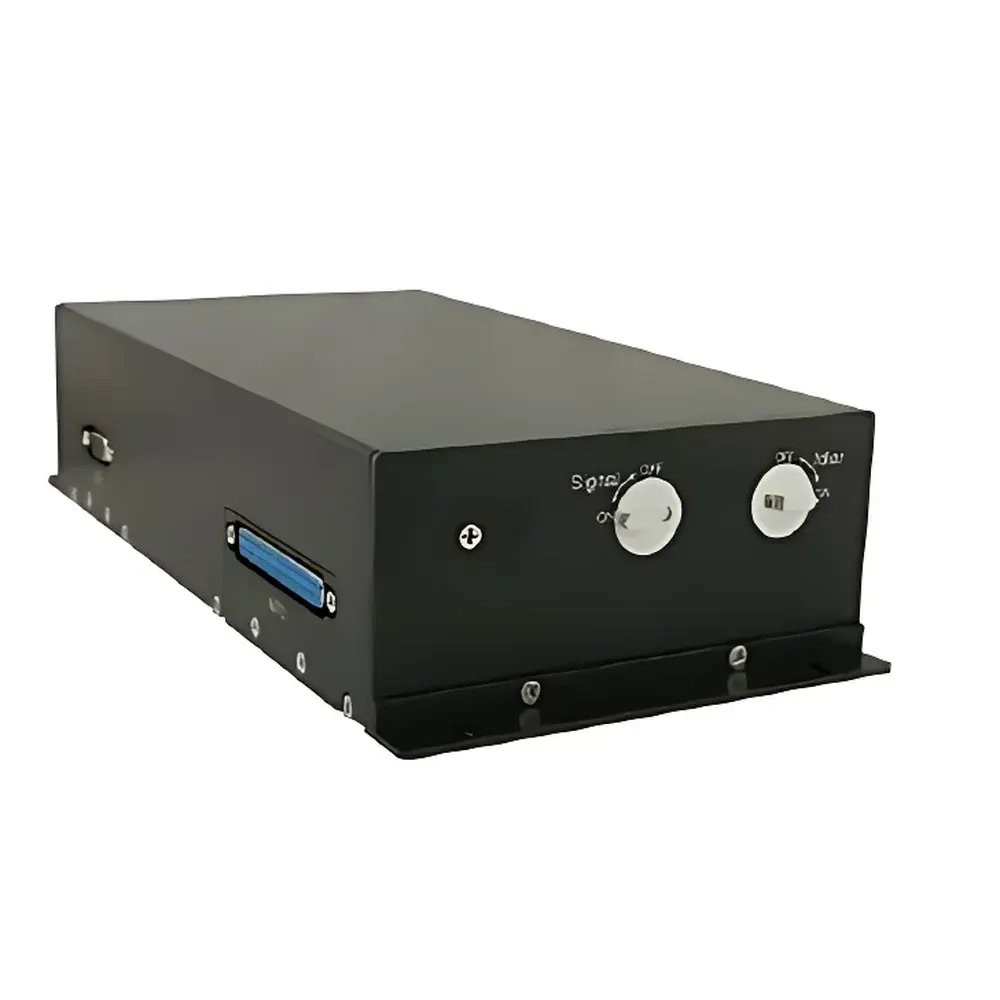
HCP PPLN Cavity Mixer Module – Periodically Poled Lithium Niobate Optical Parametric Oscillator & Sum/Difference Frequency Generation Cavity Platform
| Brand | HCP (Longcai Technology) |
|---|---|
| Origin | Taiwan |
| Manufacturer Type | Authorized Distributor |
| Product Category | Domestic (Taiwan-sourced) |
| Model | PPLN Cavity Mixers |
| Pricing | Available Upon Request |
Overview
The HCP PPLN Cavity Mixer Module is a precision-engineered optical frequency conversion platform based on periodically poled lithium niobate (PPLN) crystals integrated within a stable, low-loss resonant cavity. It leverages quasi-phase-matching (QPM) in conjunction with high-finesse cavity enhancement to significantly improve nonlinear optical conversion efficiency—enabling robust operation at sub-watt pump thresholds. Unlike single-pass configurations, this cavity-based architecture enhances intracavity field intensity by orders of magnitude, thereby lowering oscillation thresholds for optical parametric oscillation (OPO), sum-frequency generation (SFG), difference-frequency generation (DFG), and second-harmonic generation (SHG). Designed for laboratory and industrial laser systems requiring tunable mid-infrared (MIR) or ultraviolet (UV) output, the module supports wavelength generation from ~200 nm (via cascaded SFG/SHG) up to 4.5 µm (via DFG), with primary signal-idler coverage spanning 1.4–2.0 µm and 2.3–4.5 µm respectively. Its modular cavity design permits seamless integration into existing CW or pulsed laser architectures—including fiber, diode-pumped solid-state (DPSS), and ultrafast oscillators—without compromising beam quality or long-term alignment stability.
Key Features
- Cavity-enhanced nonlinear conversion: Achieves >10× higher effective nonlinearity compared to single-pass PPLN setups through resonant build-up of pump and/or signal fields.
- Multi-configuration flexibility: Supports IC-OPO (intracavity OPO), IC-SFG, IC-DFG, IC-SHG, and EP-OPO (external-pump OPO) topologies—each optimized for specific spectral coverage and threshold requirements.
- Thermally stabilized QPM tuning: Integrated thermistor and TEC (thermoelectric cooler) enable precise temperature control (±0.02 °C) over the PPLN crystal, ensuring reproducible phase-matching across broad wavelength bands.
- Optional real-time power monitoring: Built-in photodiode (PD) enables closed-loop automatic power control (APC) or passive power logging for GLP-compliant operation.
- Compact, rigid mechanical packaging: Monolithic aluminum housing with kinematic mounting interfaces ensures vibration resilience and thermal drift mitigation—critical for long-duration spectroscopy or metrology applications.
- Customizable cavity geometry: Input/output coupling ratios, mirror reflectivity profiles, and cavity length are configurable per application, supporting both narrow-linewidth (single longitudinal mode) and broadband (few-nm bandwidth) operation.
Sample Compatibility & Compliance
The module is compatible with standard free-space TEM00 pump beams (M² < 1.2) operating at wavelengths between 532 nm and 1550 nm, with input power ranging from 100 mW to 5 W depending on configuration. All optical coatings meet ISO 10110 surface quality standards; PPLN crystals are fabricated using photolithographic poling with domain uniformity verified via etch-pit analysis. The system complies with IEC 60825-1:2014 Class 3B/4 laser safety requirements when integrated into a fully enclosed OEM system. For regulated environments, optional firmware logging and audit-trail-enabled APC modes support adherence to FDA 21 CFR Part 11 and EU Annex 11 requirements when deployed in GMP/GLP-aligned analytical workflows.
Software & Data Management
While the base module operates as a hardware-only platform, HCP provides optional LabVIEW™ and Python SDKs for remote temperature setpoint control, PD readout acquisition, and cavity lock feedback loop implementation. All digital interfaces use USB-C or RS-485 protocols with ASCII command syntax. Temperature calibration data and coating reflectivity curves are supplied in CSV format for traceable spectral modeling. Firmware updates are delivered via signed binary packages with SHA-256 checksum verification—ensuring integrity during maintenance cycles in validated environments.
Applications
- High-resolution molecular spectroscopy in the 2.5–4.5 µm fingerprint region (e.g., CH, OH, NH stretch vibrations)
- Trace gas sensing for environmental monitoring (CO, NO, CH4, N2O) using direct absorption or photoacoustic detection
- Mid-IR pump-probe experiments in ultrafast science
- UV-visible light generation for fluorescence lifetime imaging (FLIM) and time-resolved spectroscopy
- Frequency comb extension into the MIR via difference-frequency generation with Er:fiber combs
- Quantum optics experiments requiring narrowband, tunable photon pair sources (SPDC in cavity-enhanced geometry)
FAQ
What pump laser specifications are recommended for optimal IC-OPO performance?
CW or quasi-CW lasers with linewidth < 100 kHz and RMS power stability < 0.5% over 1 hour are preferred. Typical pump wavelengths include 1064 nm (Nd:YAG), 780 nm (Ti:Sapphire), or 1550 nm (Erbium fiber); MOPA configurations must maintain spatial coherence across the full cavity mode volume.
Can the cavity be retrofitted for different PPLN grating periods?
Yes—HCP offers field-replaceable crystal cartridges with pre-aligned mounts. Grating periods range from 24.5 µm to 34.0 µm, covering 1.4–2.0 µm signal and 2.3–4.5 µm idler bands under standard temperature tuning (30–200 °C).
Is vacuum-compatible packaging available?
Standard modules operate in ambient air; however, custom vacuum-rated versions (10−6 mbar compatible) with feedthrough-mounted TEC/PD and fused silica viewports are available upon request.
How is wavelength calibration performed?
Each unit ships with a calibrated wavelength vs. temperature lookup table derived from interferometric measurement against a wavemeter traceable to NIST standards. Optional integration with commercial wavemeters enables real-time active stabilization.
Do you provide OEM integration support?
Yes—HCP offers mechanical drawings (STEP/IGES), optical layout files (Zemax .zmx), thermal FEA reports, and full EMC test documentation for seamless integration into medical, aerospace, or defense-grade platforms.



