Sartorius CPA34001P Precision Balance
| Brand | Sartorius |
|---|---|
| Origin | Germany |
| Model | CPA34001P |
| Readability | 0.1 / 0.2 / 0.5 g |
| Capacity | 8,000 / 16,000 / 34,000 g |
| Calibration | Internal, isoCAL |
| Repeatability | ≤ ±0.1 / ±0.2 / ±0.5 g |
| Linearity | ≤ ±0.3 g (all ranges) |
| Pan Dimensions | 400 × 300 mm |
| Display | Backlit LCD (digit height: 16 mm) |
| Interface | RS-232C |
| Compliance | ISO/GLP documentation support |
| Application Modes | Percentage weighing, net/gross summation, animal weighing, piece counting, unit conversion |
| Optional Accessories | YDP03-0CE or YDP20-0CE printers, external calibration weights |
Overview
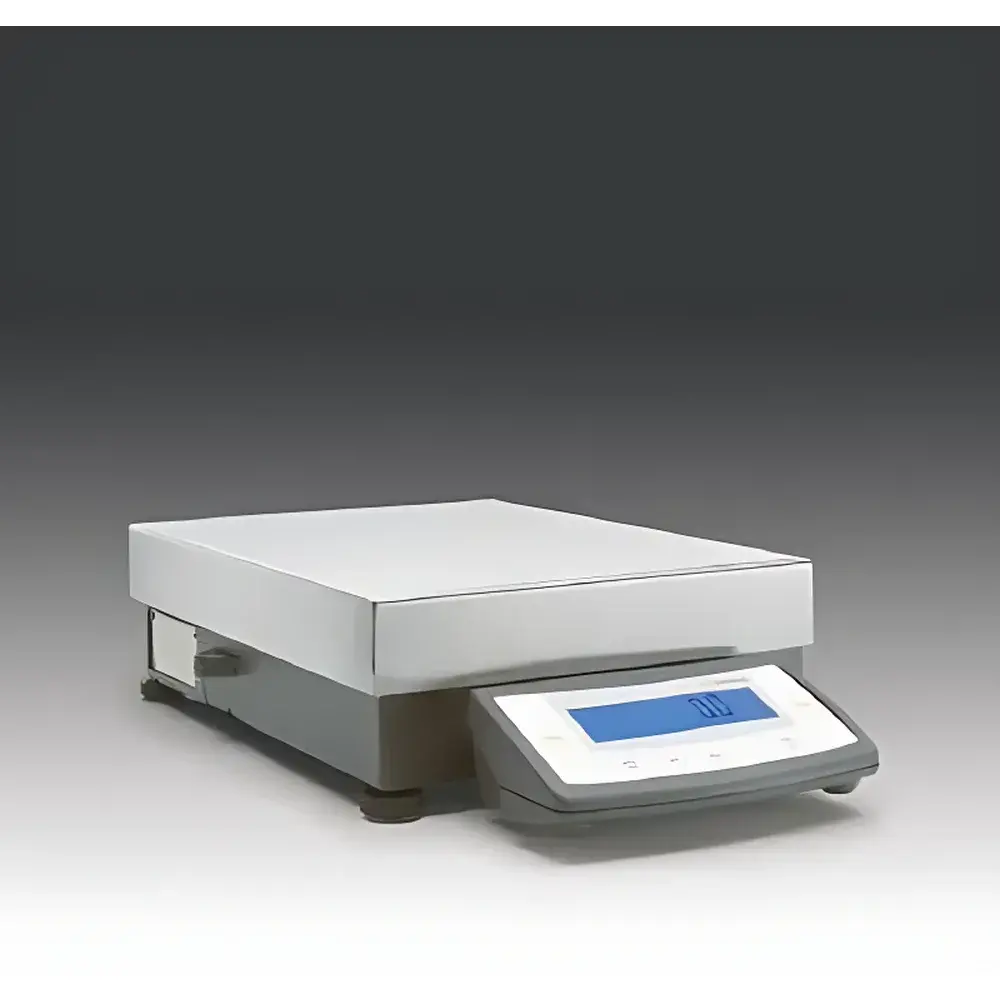
The Sartorius CPA34001P Precision Balance is an industrial-grade laboratory balance engineered for high-throughput, routine weighing tasks in quality control labs, manufacturing environments, and academic research facilities. Built upon Sartorius’ monolithic electromagnetic force compensation sensor architecture, the CPA34001P delivers stable, drift-resistant performance under variable environmental conditions—including minor air currents, temperature fluctuations, and mechanical vibration common in shared lab spaces. Its triple-range design (8 kg / 16 kg / 34 kg) with selectable readability (0.1 g, 0.2 g, or 0.5 g) enables flexible deployment across diverse sample mass profiles without requiring instrument reconfiguration. The balance operates on the principle of electromagnetic force restoration—where the load-induced displacement of the weighing pan is counteracted by a precisely regulated current through a coil within a permanent magnetic field—ensuring long-term linearity and minimal hysteresis.
Key Features
- isoCAL intelligent internal calibration system: Fully automated, motor-driven calibration using built-in reference masses; triggered manually or scheduled at user-defined intervals to maintain traceable accuracy per ISO 9001 and ISO/IEC 17025 requirements.
- Monolithic sensor design: A single-piece, stress-relieved load cell eliminates micro-fracture risks and thermal expansion mismatches—enhancing long-term stability and reducing recalibration frequency.
- Backlit LCD display with 16 mm digit height: Optimized for legibility under low ambient light or overhead fluorescent illumination; contrast and brightness are adjustable via front-panel controls.
- Robust stainless-steel weighing pan (400 × 300 mm): Chemically resistant surface compatible with routine solvent wiping; integrated draft shield compatibility for optional enclosure integration.
- RS-232C bidirectional serial interface: Enables direct data transmission to PCs, LIMS, or ERP systems; supports ASCII and Sartorius-specific protocols for seamless integration into regulated workflows.
- Preloaded application functions: Includes percentage weighing, parts counting, animal (dynamic) weighing, net/gross accumulation, and unit conversion—all accessible without external software.
Sample Compatibility & Compliance
The CPA34001P accommodates bulk solids, packaged goods, irregularly shaped objects, and containers up to 34 kg. Its large pan surface and low-profile design minimize center-of-gravity errors during off-center loading. All firmware and hardware configurations comply with ISO 17025:2017 clause 6.4 (equipment verification), ISO 9001:2015 clause 7.1.5 (monitoring and measuring resources), and GLP principles for raw data integrity. Audit trails—including time-stamped calibration events, zero-point adjustments, and weight recordings—are exportable via RS-232C to external printers (e.g., YDP20-0CE) or compliant laboratory information management systems. While not inherently 21 CFR Part 11–enabled, the balance supports ALCOA+ data governance when paired with validated Sartorius LabX software (sold separately) and appropriate IT infrastructure controls.
Software & Data Management
Data capture follows ISO/GLP-compliant formats: each weighing event includes timestamp, operator ID (if configured), balance ID, net/gross/tare values, and environmental metadata (if connected to optional temperature/humidity sensors). The RS-232C port supports both polling and event-driven transmission modes. When interfaced with Sartorius LabX software, the CPA34001P becomes part of a fully traceable digital workflow—enabling electronic signatures, role-based access control, and automatic report generation aligned with FDA and EMA expectations. For standalone use, the balance stores up to 99 weighing records locally and supports real-time printing to YDP-series thermal printers with configurable header/footer fields.
Applications
This balance serves critical roles in pharmaceutical QC (e.g., excipient dispensing, tablet weight checks), food production (batch ingredient dosing, yield verification), polymer compounding (additive proportioning), metallurgy (sample preparation for ICP-OES), and environmental testing (soil/sediment mass determination prior to digestion). Its dynamic weighing mode supports live animal monitoring in preclinical studies, while parts counting functionality meets ISO 11607-1 requirements for medical device packaging validation. The 0.1 g readability option satisfies USP minimum weight criteria for non-sterile preparations where precision outweighs speed.
FAQ
Does the CPA34001P meet ISO/IEC 17025 calibration traceability requirements?
Yes—isoCAL internal calibration uses factory-certified reference masses with documented uncertainty budgets; full calibration certificates are available upon request from Sartorius service centers.
Can the balance be connected to a networked LIMS without additional hardware?
No—RS-232C requires a serial-to-USB or serial-to-Ethernet converter for modern PC integration; LabX software provides native TCP/IP support for enterprise-level deployment.
Is external calibration supported for audit purposes?
Yes—external calibration using Class M2 or better weights is fully supported and logged; isoCAL does not preclude manual verification per ISO 17025 clause 6.4.6.
What is the warm-up time required before first-use calibration?
Minimum 30 minutes at stable ambient temperature (18–25°C); full metrological stability is achieved after 60 minutes of continuous operation.
Are firmware updates available, and how are they applied?
Firmware updates are distributed via Sartorius Service Portal; installation requires a USB-to-RS-232 adapter and Sartorius Balance Manager utility—no field engineer visit is needed for standard revisions.