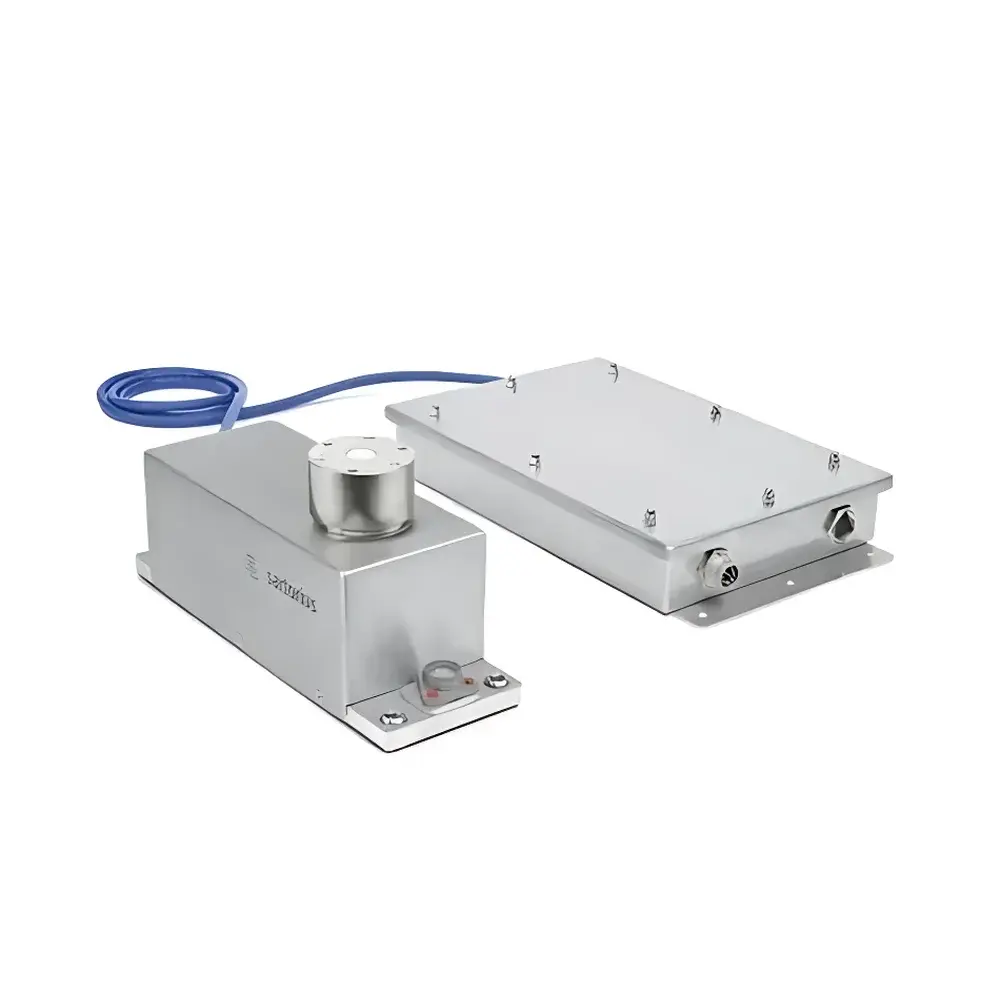
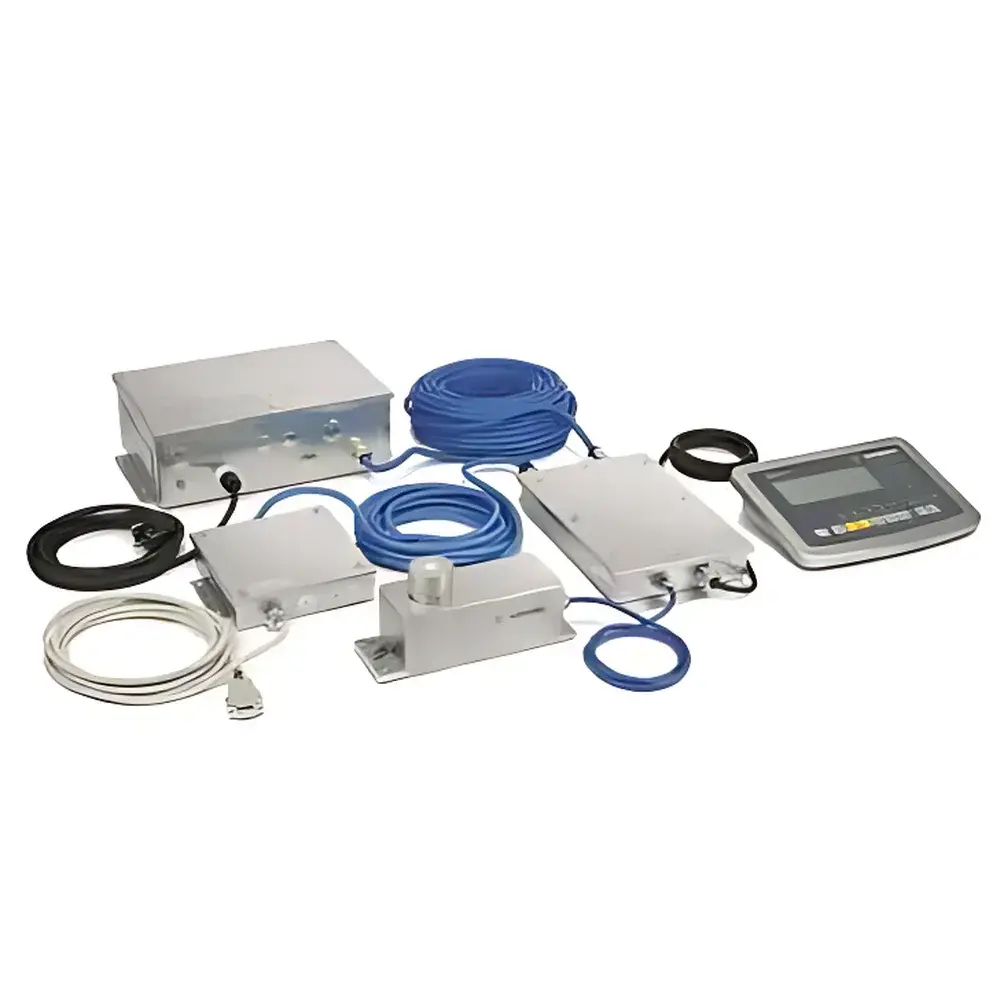
Sartorius Explosion-Proof OEM Load Cell Series NX
| Brand | Sartorius |
|---|---|
| Origin | Beijing, China |
| Manufacturer Type | Authorized Distributor |
| Origin Category | Domestic |
| Model | WZA623-NX |
| Pricing | Upon Request |
| Protection Rating | IP44 |
| Overload Protection | Tensile overload protection (WZA623-NX), Comprehensive overload protection (WZA6202-NX) |
| Hazardous Area Certification | Zone 1 & 2 (gas/vapor), Zone 21 & 22 (dust), Temperature Class T4 (max. surface temp. ≤135°C), Max. Ambient Temp.: 80°C |
| Capacity/Resolution | 620 g / 1 mg (WZA623-NX), 6200 g / 10 mg (WZA6202-NX) |
| Mounting | Bottom-hanging configuration supported |
Overview
The Sartorius Explosion-Proof OEM Load Cell Series NX is a purpose-engineered family of high-integrity weighing sensors designed for seamless integration into industrial automation systems operating in classified hazardous environments. Built upon Sartorius’ proprietary Monolithic Sensor Technology—commonly referred to as the “Super Monolithic Sensor”—these load cells eliminate traditional multi-component strain gauge assemblies in favor of a single-piece, stress-optimized stainless-steel sensing element. This architecture delivers exceptional long-term stability, minimal creep (<0.01% R.O./30 min), and rapid dynamic response (settling time <100 ms to ±0.005% R.O.), making them ideal for real-time mass monitoring in pharmaceutical processing lines, precision dispensing stations, robotic pick-and-place modules, and continuous batch weighing systems. The NX series complies with ATEX Directive 2014/34/EU and IECEx standards for equipment intended for use in explosive atmospheres, covering both gas/vapor (Zone 1/2, Group IIA–IIB, T4) and combustible dust (Zone 21/22, Group IIIA–IIIC) environments.
Key Features
- Monolithic stainless-steel sensor body with integrated Wheatstone bridge—no adhesive bonding or discrete foil gauges, ensuring superior mechanical robustness and thermal symmetry.
- IP44 ingress protection—resistant to splashing water and solid objects ≥1 mm, suitable for washdown-adjacent or semi-controlled industrial enclosures.
- Dual overload protection design: WZA623-NX incorporates tensile pull-up mechanical stop; WZA6202-NX features bidirectional (tension/compression) overload limiting with calibrated yield threshold.
- Bottom-hanging configuration support via threaded lower mounting interface—enables direct suspension of vessels, hoppers, or feed funnels without auxiliary linkages.
- Low-profile, compact footprint optimized for space-constrained OEM integrations—height under 50 mm for WZA623-NX; total mass <350 g.
- Temperature-compensated analog output (±0.005% R.O./°C typical zero shift) over –10 °C to +80 °C ambient range.
Sample Compatibility & Compliance
These load cells are not sample-contact devices but structural force transducers—therefore compatibility is defined by mechanical interface, environmental class, and signal conditioning requirements rather than chemical exposure. All models meet EN 60079-0 (general requirements), EN 60079-1 (flameproof enclosure “d”), EN 60079-7 (increased safety “e”), and EN 60079-31 (dust ignition protection “tD”) for certification in Zones 1, 2, 21, and 22. Electrical interface conforms to intrinsic safety parameters per EN 60079-11 (ia/ib). Calibration traceability follows ISO/IEC 17025-accredited procedures at Sartorius Primary Calibration Laboratories. Documentation includes EU Declaration of Conformity, ATEX Certificate of Conformity (Notified Body 0082), and IECEx Test Report (ExTL 22.0012).
Software & Data Management
As OEM components, the NX series load cells deliver mV/V analog output (2.0 ±0.1 mV/V nominal) compatible with industry-standard signal conditioners—including Sartorius IND570, IND331, and third-party PLC analog input modules (16-bit minimum resolution recommended). While no embedded firmware or onboard software resides within the sensor itself, full integration support includes Sartorius OEM Integration Kit (OIK), comprising mechanical CAD models (STEP/IGES), electrical interface schematics, EMC test reports, and application notes for noise suppression in variable-frequency drive (VFD) proximity installations. For regulatory environments (e.g., FDA 21 CFR Part 11, EU Annex 11), system-level validation documentation—covering installation qualification (IQ), operational qualification (OQ), and performance qualification (PQ)—is available upon request and aligns with GAMP 5 guidance.
Applications
- Pharmaceutical tablet press feed hoppers requiring intrinsically safe mass feedback during high-speed compression cycles.
- Automated liquid dispensing platforms in API synthesis suites where solvent vapors (e.g., acetone, THF, methanol) necessitate Zone 1-rated hardware.
- Robotic end-of-arm tooling for gravimetric filling of sterile vials in isolators with concurrent dust generation from lyophilized powder handling.
- Continuous manufacturing lines compliant with ICH Q8(R2) and Q9 frameworks—leveraging real-time weight data for process analytical technology (PAT) control strategies.
- Food-grade mixing vessels in flour or spice processing plants subject to combustible dust accumulation (EN 1127-1, EN 15358).
FAQ
What hazardous area certifications does the WZA623-NX hold?
It is certified for Zone 1 (gas) and Zone 21 (dust) per ATEX and IECEx, with temperature class T4 (surface temperature ≤135°C) and IP44 enclosure rating.
Can the sensor be used in vacuum or pressurized enclosures?
No—this series is rated for atmospheric operation only; pressure differentials beyond ±10 kPa may compromise sealing integrity and calibration stability.
Is calibration performed before shipment?
Yes—each unit undergoes full-scale calibration at two temperatures (20°C and 40°C) using NIST-traceable deadweight standards; calibration certificate included.
Does Sartorius provide OEM-specific mounting brackets or interface plates?
Custom mechanical interfaces are available under NDA; standard offerings include M6 and M8 threaded mounting options with optional stainless-steel alignment sleeves.
What is the recommended excitation voltage for optimal linearity?
10 V DC ±0.1%, with ripple <10 mVpp; higher excitation increases sensitivity but also thermal drift—10 V represents the optimum balance per EN 62053-21.