
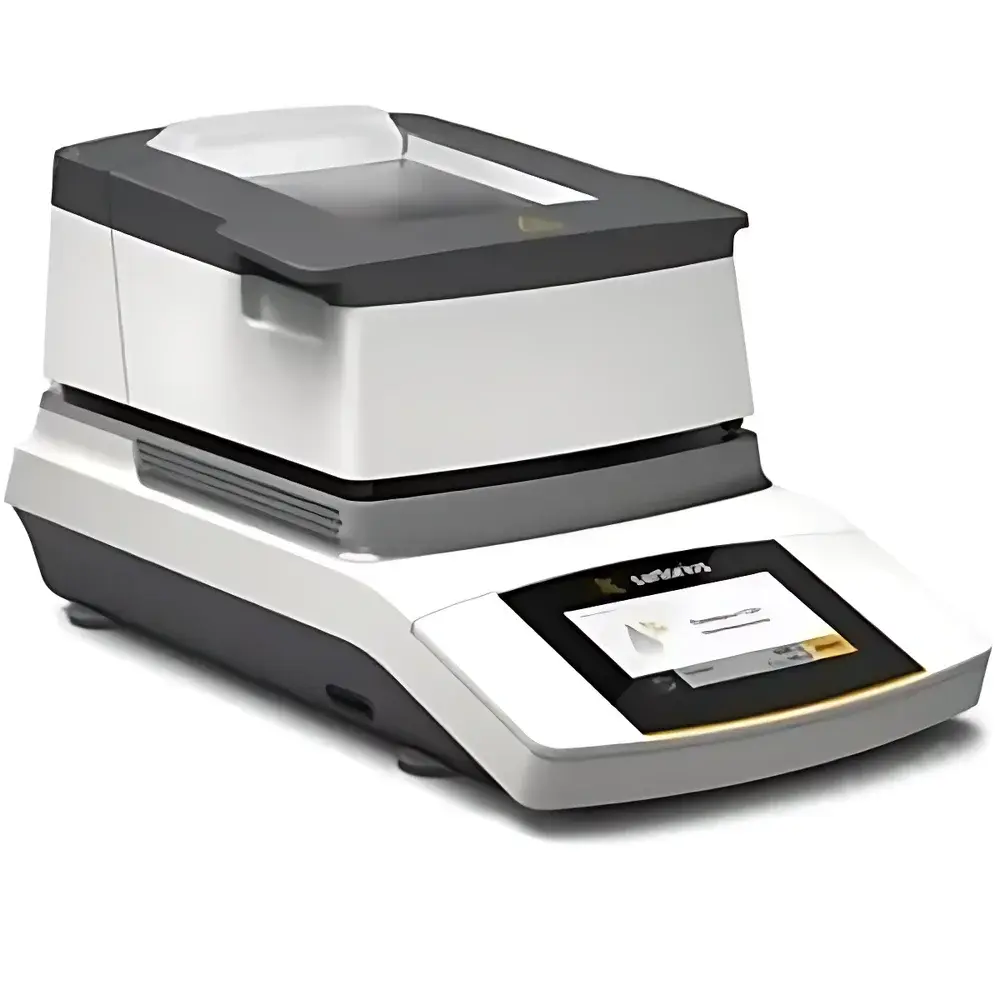
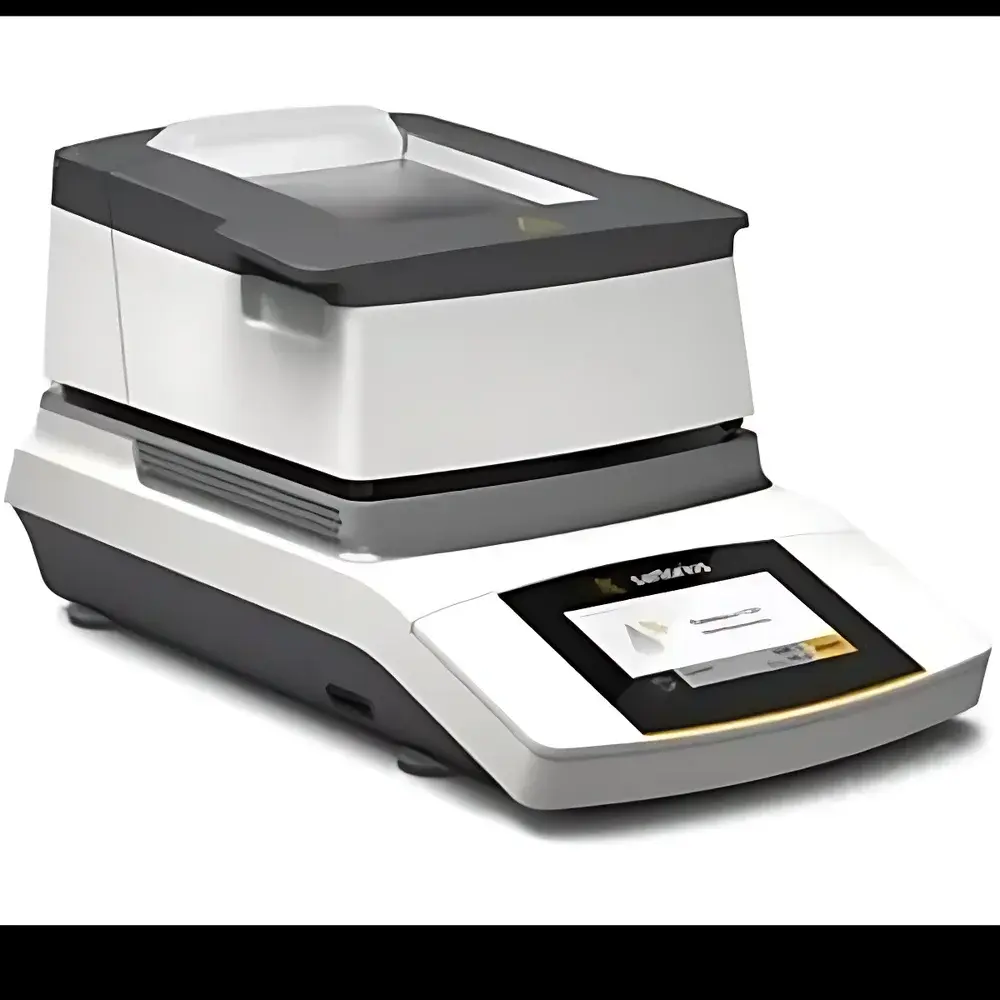
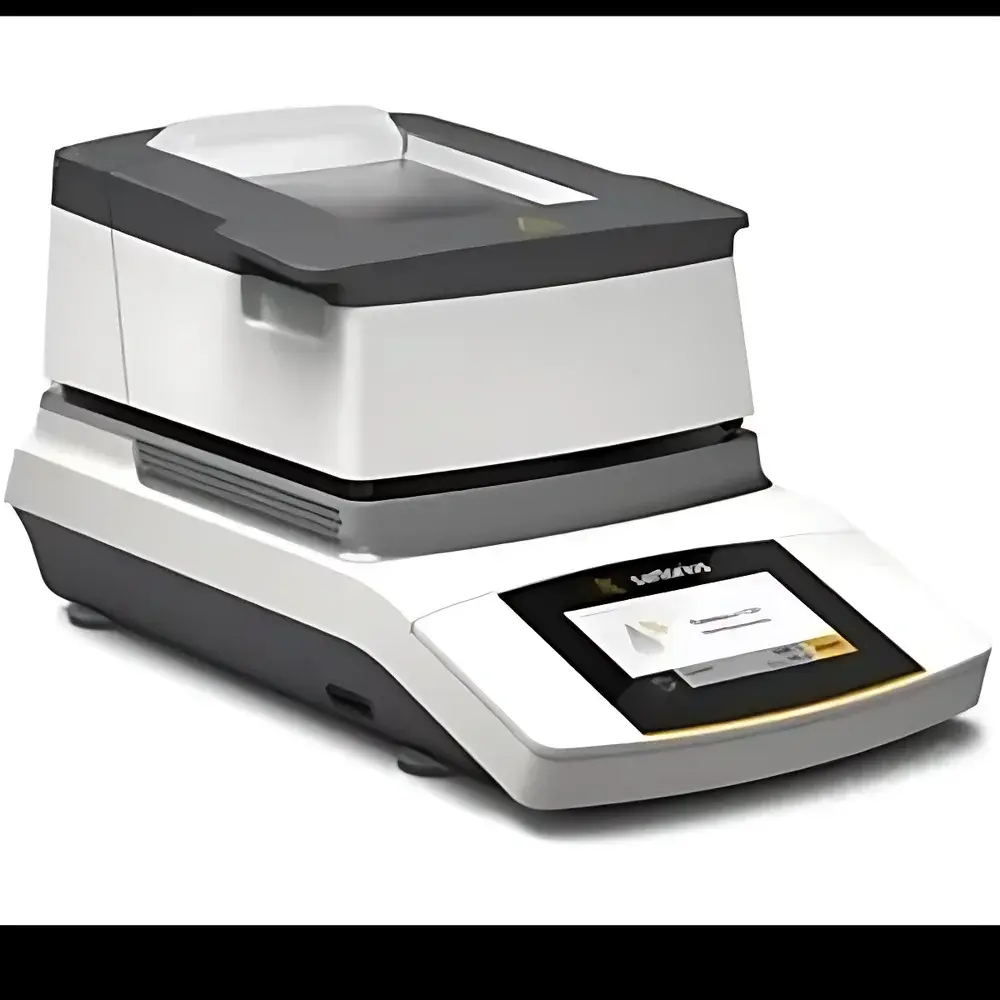
Sartorius MA37-1CN Infrared Moisture Analyzer
| Brand | Sartorius |
|---|---|
| Origin | Shanghai, China |
| Manufacturer Type | Authorized Distributor |
| Country of Origin | China |
| Model | MA37-1CN |
| Price | USD 2,950 (approx.) |
| Heating Method | Infrared Metal Heater |
| Maximum Sample Capacity | 70 g |
| Readability | 1 mg / 0.01% |
| Voltage | 115 V / 230 V AC |
| Moisture Range | 0.01–99.99% |
| Programmable Methods | Yes |
| Compliance | Designed for GLP/GMP environments with audit-ready operation log |
Overview
The Sartorius MA37-1CN is a compact, entry-level infrared moisture analyzer engineered for routine quantitative moisture determination in industrial QC laboratories and production environments. It operates on the principle of thermogravimetric analysis (TGA): a precisely controlled infrared metal heater rapidly and uniformly heats the sample, driving off volatile components—primarily water—while an integrated high-resolution analytical balance continuously monitors mass loss in real time. The instrument calculates moisture content as a percentage of initial mass based on the stabilized endpoint, delivering results typically within 2–8 minutes depending on sample type and moisture volatility. Unlike halogen-based systems, the MA37-1CN employs a robust, long-life metal heating element offering stable thermal output, reduced radiant overshoot, and improved reproducibility for heat-sensitive materials such as pharmaceutical excipients, powdered APIs, or low-melting-point polymers. Its ergonomic footprint (220 × 330 × 160 mm) and intuitive single-button interface minimize benchtop space requirements while supporting unattended operation in high-throughput settings.
Key Features
- Integrated infrared metal heating system with programmable temperature ramping (up to 160 °C) and auto-endpoint detection based on mass stability criteria (e.g., ≤0.1 mg/10 s)
- High-precision monolithic weighing cell with 1 mg readability and internal calibration verification routine
- BetterClean design: seamless stainless-steel sample chamber, removable glass draft shield, and tool-free heater access for rapid residue removal
- Visual status indicator ring with color-coded LED feedback (blue = standby, green = measuring, yellow = drying complete, red = error)
- Predefined method library with editable parameters including drying temperature, hold time, endpoint sensitivity, and desiccant compensation
- Compliance-ready functionality: timestamped measurement logs, user-access level control (operator/admin), and password-protected method editing
Sample Compatibility & Compliance
The MA37-1CN accommodates a broad range of homogeneous solid, semi-solid, and viscous liquid samples—including powders, granules, pastes, slurries, and coated tablets—with maximum load capacity of 70 g. Its gentle yet effective heating profile ensures minimal thermal degradation during analysis of thermolabile matrices such as enzymes, probiotics, herbal extracts, and certain polymer blends. The instrument supports compliance with international quality frameworks: measurement records adhere to ALCOA+ principles (Attributable, Legible, Contemporaneous, Original, Accurate, Complete, Consistent, Enduring, Available); data export via USB supports traceable CSV logging compatible with LIMS integration. While not certified for FDA 21 CFR Part 11 out-of-the-box, its audit trail architecture—including operator ID, method name, start/end timestamps, raw mass curves, and final result—meets baseline requirements for GLP and ISO/IEC 17025-accredited testing labs conducting routine moisture verification per ASTM D4442, ISO 712, or USP .
Software & Data Management
The MA37-1CN operates autonomously without PC dependency, storing up to 99 user-defined methods and retaining the last 200 measurement results internally. All data—including intermediate mass readings at 1-second intervals—are timestamped and exportable via USB flash drive in plain-text CSV format. No proprietary software installation is required; exported files are directly importable into Excel, statistical process control (SPC) platforms, or enterprise QA databases. Optional Sartorius LabX Lite connectivity enables remote monitoring and centralized report generation when paired with compatible network-enabled workstations—though the MA37-1CN itself remains a standalone, non-networked instrument per its hardware specification.
Applications
This analyzer serves as a validated primary tool for moisture content verification across regulated and non-regulated sectors. In food manufacturing, it quantifies moisture in flour, coffee beans, dairy powders, and snack foods to ensure shelf-life stability and compliance with Codex Alimentarius limits. In pharmaceutical production, it verifies residual solvent levels in lyophilized cakes and moisture uptake in blister-packaged tablets per ICH Q5C guidelines. Chemical suppliers use it for QC release testing of silica gels, catalysts, and desiccants. Paper mills employ it to monitor pulp consistency prior to pressing, while environmental labs apply it to soil and sludge samples per EPA Method 9095B adaptations. Its speed, repeatability (RSD < 0.5% for triplicate 1-g sugar samples), and ease of validation make it especially suited for incoming raw material inspection, in-process checks, and finished product release protocols.
FAQ
What standards does the MA37-1CN support for moisture determination?
It is routinely validated against ASTM D4442 (wood), ISO 712 (cereals and oilseeds), and USP (pharmaceuticals), though method adaptation must be performed per sample matrix.
Can the MA37-1CN be calibrated externally?
Yes—internal calibration uses a built-in weight standard; external verification is performed using Class M1 or better certified test weights traceable to national metrology institutes.
Is the heating source replaceable by the user?
The infrared metal heater is a field-replaceable module; Sartorius provides service kits and technical documentation for authorized service personnel.
Does the instrument support automatic sample identification?
No—sample identification is manual via method naming and operator input; barcode or RFID integration is not supported on this model.
How often should the balance be verified?
Daily verification with certified weights is recommended before first use and after any physical relocation or environmental change (e.g., temperature shift >5 °C).







