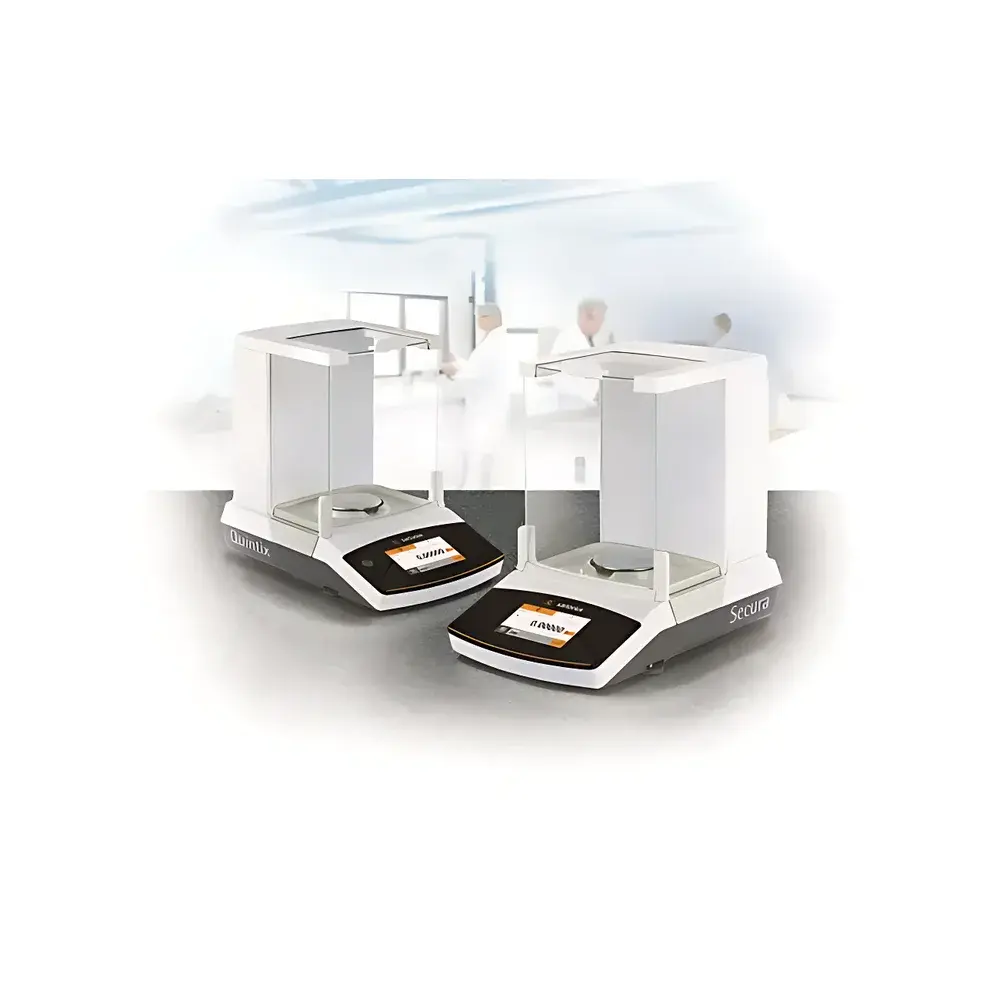
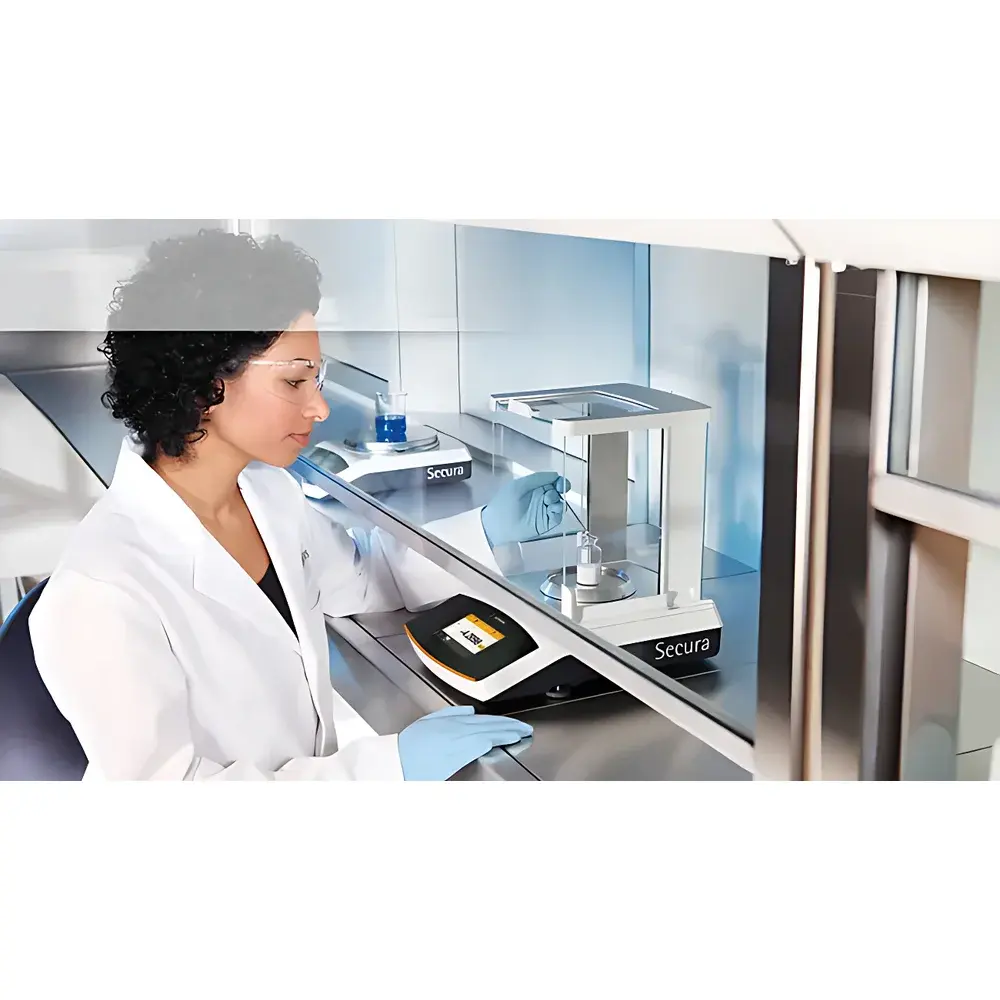
Sartorius Secura® Semi-Micro Balance
| Brand | Sartorius |
|---|---|
| Origin | Germany |
| Type | Precision Balance |
| Model | Secura® |
| Maximum Capacity | 220 g |
| Readability | 0.01 mg |
| Repeatability | 0.02 g |
| Calibration | Fully Automatic Internal Calibration (isoCAL) |
| Leveling System | Real-Time LevelControl with Optical Sensor |
| Compliance | USP Minimum Weight Requirement Support, ISO/IEC 17025 Traceability, FDA 21 CFR Part 11–Ready Audit Trail (Cal Audit Trail) |
| Documentation | Batch- and Sample-ID–Enabled Reporting, Password-Protected Configuration Access |
| Environmental Robustness | Chemically Resistant Housing, Seamless Cleanable Surface Design |
Overview
The Sartorius Secura® Semi-Micro Balance is an ISO/IEC 17025–aligned precision weighing instrument engineered for laboratories requiring traceable, auditable, and regulation-compliant mass measurement at the 0.01 mg readability level. Designed and manufactured in Germany, it operates on electromagnetic force compensation (EMFC) principle—ensuring high reproducibility, minimal drift, and long-term stability under variable ambient conditions. Its core architecture integrates metrological rigor with human-centered ergonomics: real-time leveling verification, automated internal calibration, and intelligent risk mitigation logic ensure that every measured value meets defined uncertainty thresholds before being released to downstream systems. Unlike conventional semi-micro balances, the Secura® embeds regulatory decision logic directly into its firmware—enabling dynamic enforcement of USP Chapter 41 minimum weight requirements and automatic suspension of data output when sample mass falls below validated thresholds.
Key Features
- LevelControl™ Active Leveling System: An integrated optical sensor continuously monitors tilt angle relative to true horizontal. Deviations exceeding ±0.5° trigger immediate visual and acoustic alerts on the capacitive touchscreen, accompanied by step-by-step graphical leveling instructions—eliminating guesswork and posture-related strain during adjustment, especially inside fume hoods or confined workspaces.
- isoCAL Fully Automatic Internal Calibration: Temperature-compensated motor-driven calibration mass deployment ensures accuracy across ambient fluctuations (15–30 °C). Users may configure isoCAL to initiate manually, on time intervals, or automatically upon temperature change >1.5 °C—fully compliant with ISO 9001 and GLP environmental monitoring protocols.
- Cal Audit Trail: A tamper-evident, time-stamped digital log records every calibration event—including date/time, operator ID (if logged in), temperature, internal mass status, and pass/fail outcome. Exportable via RS232, USB, or Ethernet, this audit trail satisfies FDA 21 CFR Part 11 requirements for electronic records and signatures when paired with Sartorius LabX software.
- USP Minimum Weight Enforcement: Configurable minimum sample weight (MSW) values are stored per method or user profile. When a tare-plus-sample reading falls below the defined MSW, the display flashes a warning, and all interface outputs (printer, LIMS, ERP) are suspended until corrective action is taken—preventing nonconforming data propagation.
- Secure Configuration Management: Password protection restricts access to critical parameters including calibration settings, USP thresholds, user permissions, and interface configurations—ensuring only authorized personnel can modify metrological behavior.
- Ergonomic & Hygienic Design: Seamless, chemical-resistant polymer housing with rounded edges and no crevices enables rapid decontamination using common lab disinfectants (e.g., 70% ethanol, 0.5% sodium hypochlorite). The absence of ventilation grilles or recessed seams minimizes particulate accumulation—critical for GMP cleanroom environments and cytotoxic handling applications.
Sample Compatibility & Compliance
The Secura® supports a broad range of sample types—from volatile organic compounds and hygroscopic powders to micro-volume liquid aliquots dispensed onto pre-tared vessels. Its draft shield design (optional full-height or low-profile variants) maintains stable airflow dynamics while minimizing static interference. All models conform to OIML R 76-1 and NIST Handbook 44 accuracy classes for Class I (precision) balances. Regulatory documentation includes factory-issued calibration certificates traceable to PTB (Physikalisch-Technische Bundesanstalt), EU Declaration of Conformity (2014/30/EU EMC Directive, 2014/35/EU Low Voltage Directive), and full compliance with ISO/IEC 17025 clause 6.5 (equipment verification).
Software & Data Management
Data integrity is enforced at the firmware layer: all weighing events—including gross/net/tare, statistics (n=10), and density calculations—are timestamped and tagged with user ID, method name, and sample/batch identifier. Output formats include CSV, XML, and Sartorius-specific .sdb files compatible with LabX, Empower, and custom LIMS integrations. Interface options include RS232 (legacy), USB device mode (mass storage or CDC ACM), and Ethernet (TCP/IP with Modbus TCP support). Optional LabX Direct integration enables remote configuration, real-time monitoring, and centralized audit trail aggregation across multi-instrument networks—facilitating 21 CFR Part 11 compliance through role-based access control and electronic signature workflows.
Applications
- Pharmaceutical QC/QA: Active pharmaceutical ingredient (API) assay, reference standard preparation, and USP Chapter 1251 content uniformity testing.
- Academic & Industrial Research: Nanomaterial dosing, catalyst loading quantification, and gravimetric sorption analysis.
- Clinical Diagnostics: Preparation of calibrators and controls for immunoassays requiring sub-100 µg precision.
- Materials Science: Density determination of thin films and coatings via buoyancy method (ASTM D792).
- Environmental Testing: Weighing of filter media pre- and post-extraction for PM2.5/PM10 analysis (EPA Method 201A).
FAQ
Does the Secura® require external weights for routine calibration?
No. The isoCAL system uses a built-in, motorized calibration mass traceable to national standards. External weights are only required for initial verification or periodic third-party accreditation audits.
Can the USP minimum weight threshold be customized per user or method?
Yes. Up to 10 independent profiles can store unique MSW values, tolerance limits, and associated metadata—enabling method-specific compliance enforcement without reconfiguration.
Is the Cal Audit Trail exportable in a format suitable for regulatory submission?
Yes. Audit logs export as signed PDF or CSV with cryptographic hash integrity verification, supporting ALCOA+ principles (Attributable, Legible, Contemporaneous, Original, Accurate, Complete, Consistent, Enduring, Available) for FDA and EMA inspections.
What maintenance is required to sustain metrological performance?
Daily cleaning with lint-free cloth and approved solvents; quarterly verification using certified test weights; annual preventive maintenance by Sartorius-certified service engineers—including sensitivity check, linearity verification, and environmental stress testing.
How does LevelControl™ improve measurement reliability compared to manual bubble-level methods?
It eliminates subjective interpretation and mechanical hysteresis. The optical sensor detects angular deviations down to 0.05°, triggering recalibration only after successful leveling—ensuring zero-point stability and eliminating systematic bias from undetected tilt-induced error.