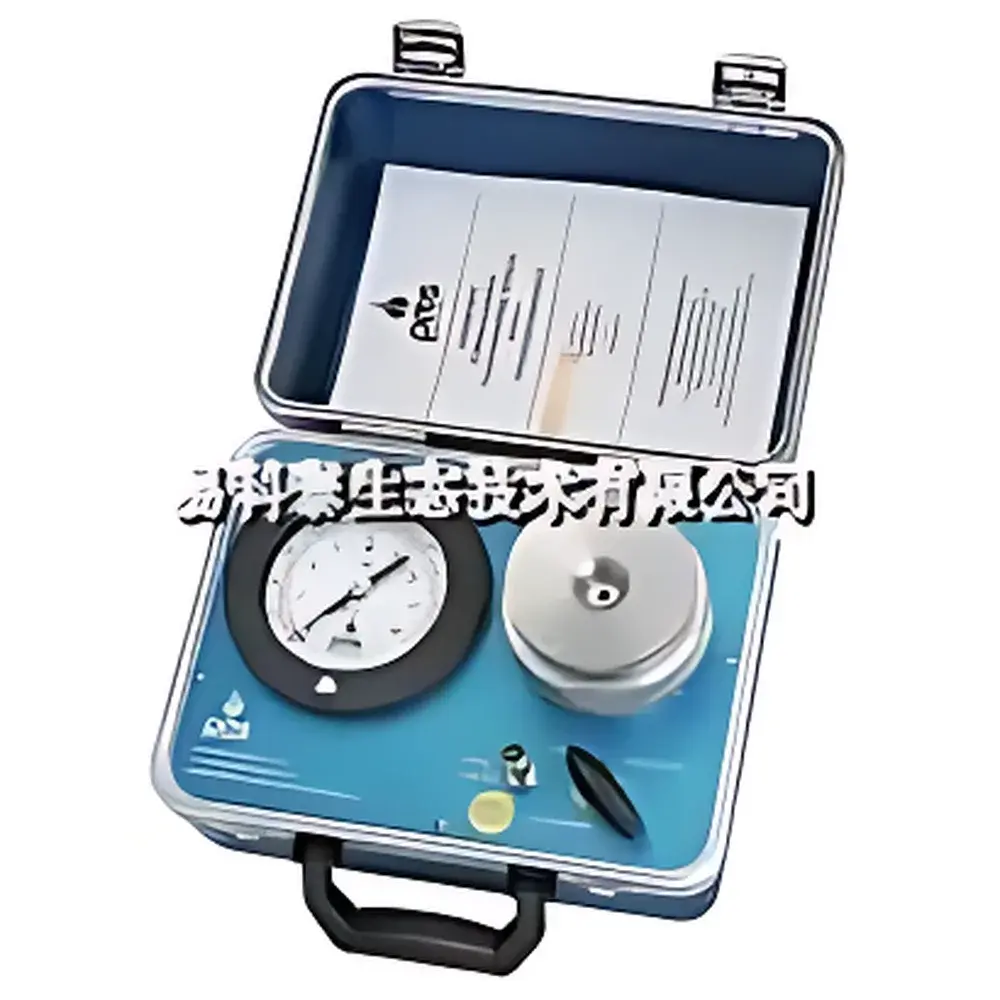
Scholander Model 600 Plant Pressure Chamber
| Key | Origin: USA |
|---|---|
| Manufacturer Type | Authorized Distributor |
| Origin Category | Imported |
| Model | Model 600 |
| Price | Upon Request |
| Max Operating Pressure | 40 bar |
| Sample Chamber | Aluminum, Ø63.5 mm × 127 mm (Ø2.5″ × 5″) |
| Pressure Gauge | Analog dial, 0–40 bar range, ±0.5% FS accuracy, 114 mm (4.5″) dial diameter |
| Dimensions | 33 × 28 × 24 cm |
| Weight | 7 kg |
| Accessories Included | 1/4″ sealing gasket system, five high-pressure tube gaskets, one solid standard rubber seal, O-ring lubricant, 1.8 m inflation hose, technical manual, valve adjustment tool |
Overview
The Scholander Model 600 Plant Pressure Chamber is a field-deployable, precision instrument engineered for direct measurement of plant water potential (Ψleaf or Ψstem) via the pressure-balance technique. Based on the classical Scholander principle—first described in 1965—the device applies controlled nitrogen or compressed air pressure to a sealed sample chamber containing excised leaf tissue or woody stem segments. As pressure increases, xylem sap is forced to the cut surface; the pressure at which the first droplet emerges from the cut end corresponds to the negative water potential of the sample, expressed in megapascals (MPa) or bar (1 MPa ≈ 10 bar). This method provides physiologically relevant, integrative measurements of whole-tissue water status and remains the benchmark for validating non-invasive techniques such as thermal infrared imaging or sap flow monitoring. Designed for robustness in variable environmental conditions, the Model 600 supports both laboratory calibration and routine field use—including early-morning predawn measurements critical for assessing soil-plant hydraulic continuity.
Key Features
- Aluminum alloy sample chamber (Ø63.5 mm × 127 mm) with precision-machined sealing surfaces ensuring repeatable gas-tight integrity across repeated pressurization cycles.
- Analog pressure gauge with 40 bar full-scale range and ±0.5% full-scale accuracy—calibrated traceable to NIST standards and optimized for parallax-free reading under ambient light.
- Integrated 1/4-inch high-pressure sealing tube system with five replaceable silicone gaskets, enabling rapid adaptation to varying stem diameters without cross-contamination.
- Comprehensive accessory kit including O-ring lubricant, valve adjustment tool, 1.8 m reinforced inflation hose, and bilingual technical manual aligned with ASTM D7250 and ISO 13041-2 guidelines for plant water status instrumentation.
- Modular design compatible with optional lightweight aluminum high-pressure cylinder (22 ft³, 4.4 kg), ergonomic backpack frame (1.8 kg), and illuminated handheld magnifier for low-light predawn observation.
Sample Compatibility & Compliance
The Model 600 accommodates intact leaves, petioles, herbaceous stems, and woody twigs up to 127 mm in length and ≤25 mm in diameter. Standard rubber seals (1/16″, 1/8″, 3/16″, solid) and sealing gaskets (3/32″, 1/4″, 3/8″, 1/2″, 1/8″ × 1/2″ strip) permit secure mounting of heterogeneous samples while minimizing air leakage. All wetted components are inert to plant exudates and compatible with nitrogen, dry air, or argon—ensuring compliance with GLP-aligned experimental protocols. The instrument meets mechanical safety requirements per ANSI B56.1 and conforms to ISO 9001-certified distribution practices for life science instrumentation.
Software & Data Management
While the Model 600 operates as a standalone analog instrument, its measurement output is fully compatible with digital data capture workflows. Users may log pressure readings manually into LIMS or Excel-based templates compliant with FAIR (Findable, Accessible, Interoperable, Reusable) data principles. Optional third-party USB pressure transducer kits (e.g., Validyne DP15 series) enable real-time digitization and integration with LabChart or MATLAB environments. All calibration records, maintenance logs, and operator training documentation support audit readiness for USDA ARS, NSF, or EFSA-funded field trials requiring traceable metadata per 21 CFR Part 11 Annex 11 expectations.
Applications
- Irrigation scheduling and deficit irrigation optimization in viticulture, orchard management, and row crops.
- Phenotyping drought tolerance traits in breeding programs (e.g., CIMMYT, IRRI).
- Validation of remote sensing indices (e.g., NDVI, PRI) against ground-truth water potential baselines.
- Ecophysiological studies of stomatal regulation, cavitation resistance, and hydraulic segmentation in native and invasive species.
- Regulatory compliance testing for pesticide registration studies requiring water stress characterization (EPA OPPTS 850.4400).
FAQ
What gases are recommended for operation?
Dry nitrogen or oil-free compressed air is recommended to prevent moisture condensation and seal degradation. Avoid CO₂ or humidified gases.
Can the Model 600 measure root or soil water potential?
No—it is validated exclusively for aboveground plant tissues. Soil or root water potential requires thermocouple psychrometry or tensiometric methods.
Is calibration required before each use?
Zero-point verification is advised daily using atmospheric pressure reference; full recalibration is recommended annually or after impact exposure, per manufacturer’s SOP-PC-003.
How does temperature affect measurement accuracy?
Ambient temperature fluctuations below 10°C or above 40°C may influence seal elasticity and gauge response; measurements should be conducted within 15–35°C unless compensated per ASTM D7250 Annex A3.
Are replacement parts available globally?
Yes—seals, gaskets, O-rings, and pressure gauges are stocked by authorized distributors in North America, EU, Australia, and Latin America with 48-hour dispatch for critical spares.
Related Products