
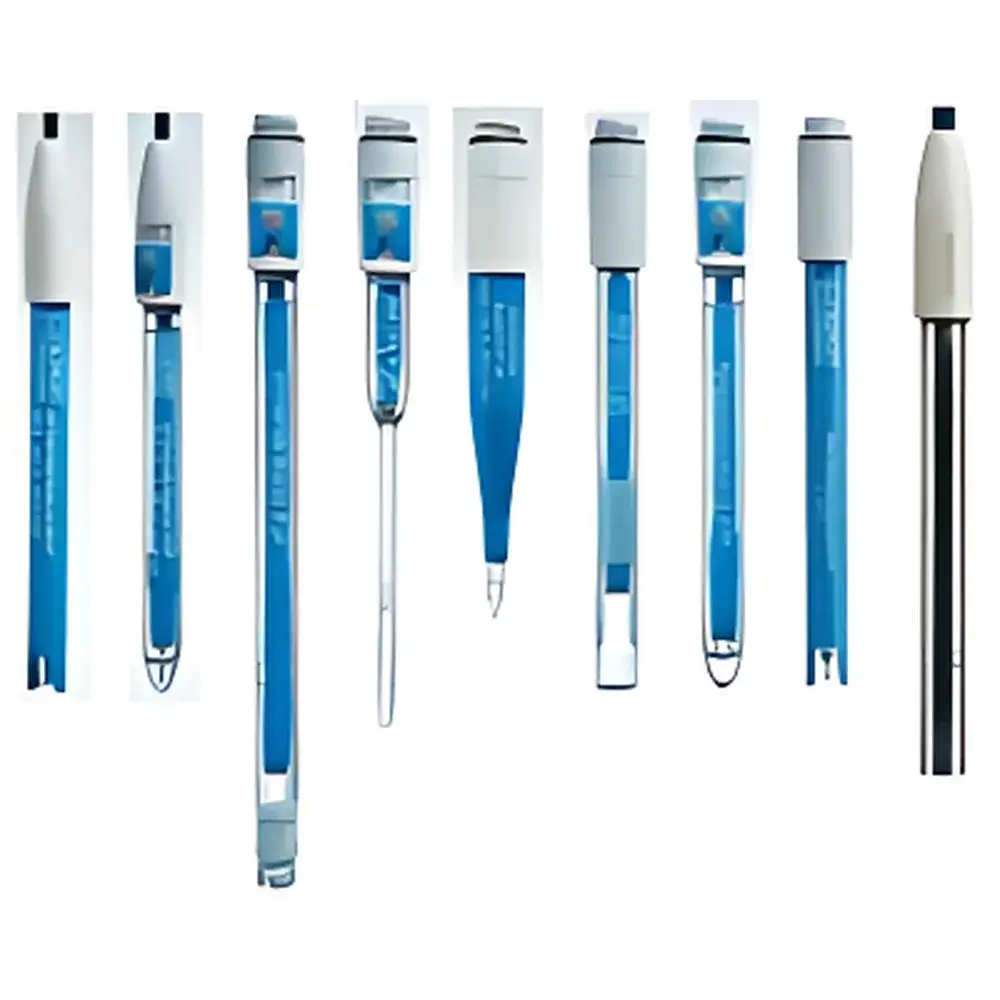
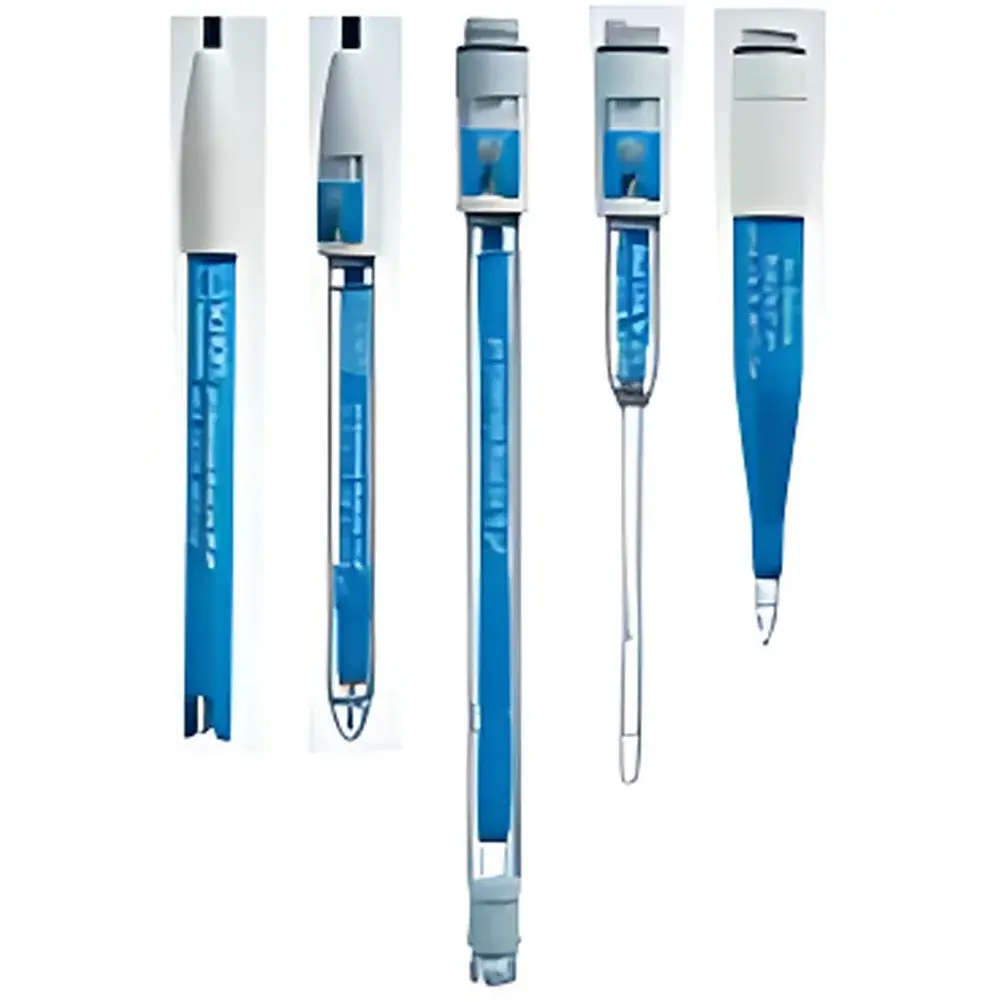
Schott BlueLine pH Electrodes
| Origin | Germany |
|---|---|
| Manufacturer Type | Authorized Distributor |
| Origin Category | Imported |
| Model Series | Schott BlueLine |
| Pricing | Available Upon Request |
Overview
Schott BlueLine pH electrodes are precision-engineered glass electrode systems designed for high-accuracy, long-term stability, and robust performance in demanding laboratory and industrial process environments. Developed by SCHOTT AG—a globally recognized German manufacturer with over 65 years of expertise in pH sensor technology—these electrodes operate on the fundamental principle of potentiometric measurement: the voltage difference generated across a hydrated pH-sensitive glass membrane is directly proportional to the hydrogen ion activity (pH) of the sample solution, per the Nernst equation. Each BlueLine electrode integrates a stable Ag/AgCl reference system with Silamid® electrolyte technology, ensuring low junction potential drift and minimized clogging risk. The series encompasses variants optimized for general-purpose use, high-precision calibration, harsh chemical exposure, elevated temperature operation (up to 100 °C), and micro-volume applications—making them suitable for routine QC, R&D, environmental monitoring, pharmaceutical validation, and food & beverage analysis.
Key Features
- Proprietary Silamid® reference system: Gelified KCl or 3 mol/L aqueous KCl electrolyte with integrated Ag/AgCl element ensures stable liquid junction potential and resistance to contamination from proteins, sulfides, or heavy metals.
- Multiple glass membrane geometries: Spherical (e.g., BlueLine 22pH, 25pH) for fast response in aqueous buffers; conical (e.g., BlueLine 11pH, 14pH) for enhanced mechanical durability and improved performance in viscous or particulate-laden samples.
- Temperature compensation integration: Built-in NTC 30 kΩ or Pt1000 sensors enable automatic temperature correction in compatible meters, complying with ISO 7027 and ASTM D1293 requirements for pH reporting at standardized temperatures.
- Chemically resistant housing: Noryl® polymer bodies (BlueLine 22–29 series) provide excellent impact resistance and compatibility with organic solvents; all-glass variants (e.g., BlueLine 11pH, 19pH) offer superior chemical inertness for aggressive media.
- Flexible connectivity: Standard BNC, DIN, or banana plug interfaces with optional 1–5 m shielded cables; compatible with major benchtop and portable pH meters including those compliant with GLP/GMP data integrity standards.
Sample Compatibility & Compliance
BlueLine electrodes demonstrate broad compatibility across aqueous, semi-aqueous, and low-ionic-strength matrices—including biological buffers, fermentation broths, dairy products, wastewater, and pharmaceutical formulations. Their L-type and A-type glass formulations meet IUPAC-recommended pH response characteristics (slope ≥ 58.0 mV/pH at 25 °C), with zero-point tolerances of pH 7.0 ± 0.3. All models conform to CE marking requirements and are validated under ISO/IEC 17025-accredited test protocols for electrode reproducibility (≤ ±0.02 pH between duplicates) and long-term drift (< 0.01 pH/hour after stabilization). For regulated environments, the series supports audit-ready documentation workflows aligned with FDA 21 CFR Part 11 when used with compliant metering platforms featuring electronic signature and change-tracking capabilities.
Software & Data Management
While BlueLine electrodes are hardware-only components, they are fully interoperable with industry-standard pH meter firmware suites—including Metrohm’s OMNIS, Hach’s SC1000, and Thermo Scientific Orion Star™ software. These platforms support automated calibration verification (ASTM E2064), slope and offset trending, electrode health diagnostics (impedance monitoring), and export of timestamped, user-annotated measurement logs in CSV or PDF formats. When paired with GLP-compliant instruments, full traceability—including operator ID, calibration certificate references, ambient conditions, and electrode serial numbers—is preserved in encrypted audit trails required for ISO 9001, ISO 13485, and USP validation frameworks.
Applications
- Routine quality control in pharmaceutical manufacturing (e.g., buffer preparation, API dissolution testing)
- Environmental water analysis per EPA Method 150.1 and ISO 10523
- Fermentation pH monitoring in bioreactors with integrated temperature feedback
- Food safety testing (e.g., meat pH, dairy titratable acidity, juice stability assessment)
- Academic electrochemistry research requiring high-impedance signal fidelity and minimal thermal hysteresis
- Calibration lab reference electrode deployment supporting ISO/IEC 17025 accreditation
FAQ
What is the recommended storage solution for BlueLine pH electrodes?
Store upright in 3 mol/L KCl solution or dedicated electrode storage fluid. Avoid distilled water, which causes leaching of the internal electrolyte and irreversible membrane dehydration.
How often should a BlueLine electrode be calibrated?
Calibrate before each analytical session using at least two certified NIST-traceable buffer standards (e.g., pH 4.01 and 7.00). For critical GxP applications, perform intermediate checks every 2–4 hours or after sample matrix changes.
Can BlueLine electrodes be used in non-aqueous solvents?
Limited compatibility exists with low-water-content alcohols or acetone; however, specialized electrodes with solvent-resistant membranes (e.g., SCHOTT InLab® Micro) are recommended for prolonged non-aqueous use.
What defines the “Silamid®” reference system?
Silamid® is SCHOTT’s proprietary gel-polymer electrolyte technology that immobilizes KCl within a silica-based matrix, eliminating free liquid junctions while maintaining stable diffusion rates and minimizing silver sulfide formation in sulfur-rich samples.
Are BlueLine electrodes suitable for sterilization or autoclaving?
No. These electrodes are not rated for steam sterilization. For in-line sterilizable applications, consider SCHOTT’s InLab® Pharma series with PEEK housings and autoclavable designs (121 °C, 20 min).





