
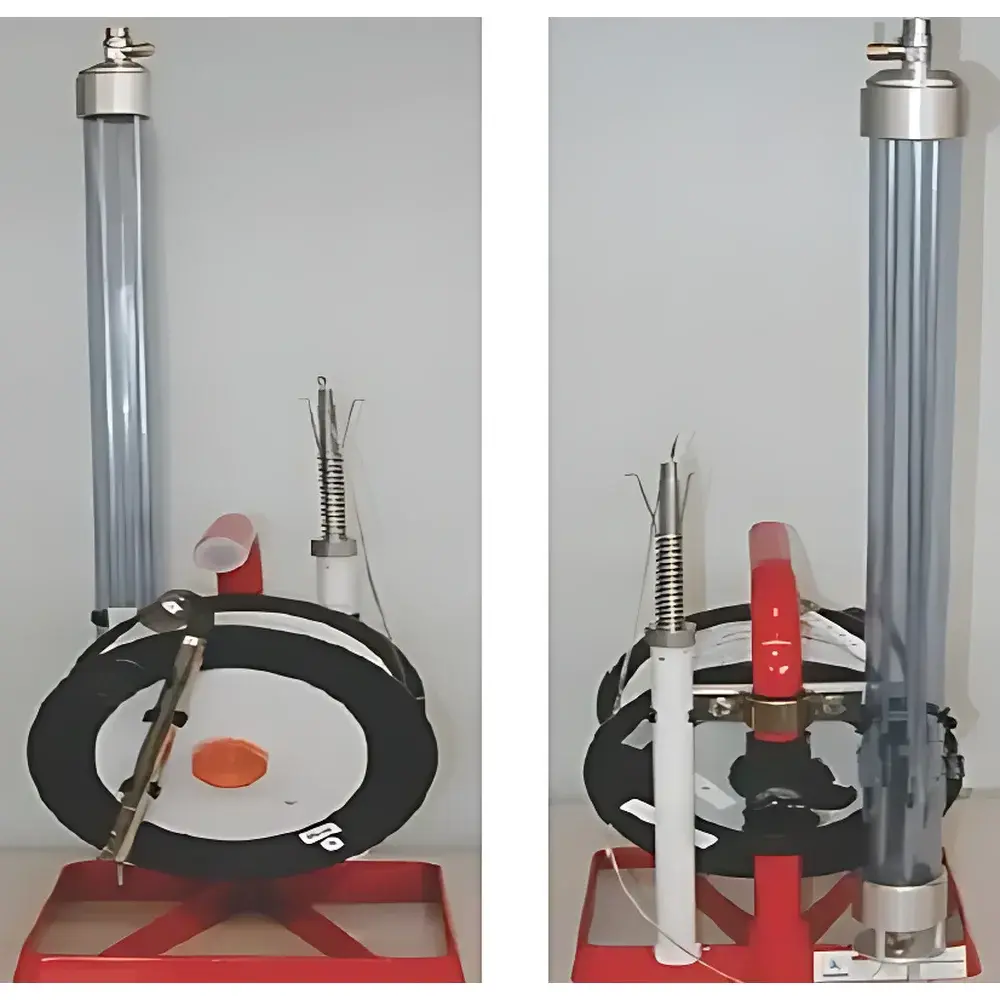
SCI-KLL-S Portable Deep-Well Water Sampler (Imported from Germany)
| Origin | Germany |
|---|---|
| Manufacturer Type | Authorized Distributor |
| Origin Category | Imported |
| Model | SCI-KLL-S |
| Instrument Type | Portable Water Sampler |
| Sample Tube Diameter Compatibility | 2" and 4" monitoring wells |
| Construction Materials | Anodized aluminum, stainless steel, POM, NBR seals (11-70 Shore A) |
| Sample Vessel Options | PVC transparent tube or anodized aluminum tube |
| Nominal Sample Volumes | 500 mL / 1000 mL |
| Outer Diameter | 49 mm / 90 mm |
| Total Length | 1750 mm / 1100 mm |
| Release Trigger Mechanism | Electrical contact probe with depth indication |
| Maximum Suspended Load Capacity | 1000 g / 1800 g |
| Drain Nozzle Diameter | 5 mm / 7.5 mm |
| Upper Sampling Edge Distance from Probe Tip | ~850 mm / ~600 mm |
Overview
The SCI-KLL-S Portable Deep-Well Water Sampler is a precision-engineered, gravity-actuated sampling device designed for stratified groundwater collection in stagnant or low-flow monitoring wells. It operates on the principle of controlled free-fall deployment and mechanical trigger release, enabling discrete depth-specific sampling without cross-contamination between zones. Unlike peristaltic or pump-based systems, the SCI-KLL-S relies on passive hydrostatic sealing and timed mechanical separation—ensuring minimal disturbance to in-situ water column integrity. Its design conforms to standard well construction geometries, supporting reliable operation in both 2-inch (5.08 cm) and 4-inch (10.16 cm) diameter observation wells up to full operational depth. The system is calibrated for use with electrical contact probes that provide real-time depth verification prior to sample capture, making it suitable for regulatory-compliant field investigations under ASTM D5088–22 (Standard Practice for Purging of Wells for Chemical Sampling) and ISO 5667-3:2018 (Water quality — Sampling — Part 3: Guidance on preservation and handling of water samples).
Key Features
- Modular two-component architecture: separable piston assembly and sample tube—enabling rapid cleaning, sterilization, and material-specific configuration.
- Dual-material construction: anodized aluminum housing provides lightweight rigidity and corrosion resistance; optional stainless steel and POM components enhance durability in aggressive geochemical environments.
- NBR 11-70 elastomer seals ensure consistent compression set resistance and chemical compatibility with common groundwater contaminants (e.g., hydrocarbons, chlorinated solvents, low-pH leachates).
- Depth-verified triggering: integrated electrical contact probe interface delivers unambiguous signal confirmation at target depth—critical for layered aquifer characterization and redox zonation studies.
- Two standardized volume configurations: 500 mL and 1000 mL nominal capacities, each with geometrically optimized tube aspect ratios to minimize turbulent entrainment during descent and ascent.
- Field-serviceable drain nozzle (5 mm or 7.5 mm ID) with threaded PTFE-sealed valve—designed for controlled, drip-free discharge into pre-cleaned sample containers under laminar flow conditions.
Sample Compatibility & Compliance
The SCI-KLL-S accommodates both PVC-transparent and anodized aluminum sample tubes, allowing visual inspection of turbidity and phase separation while maintaining trace-metal cleanliness when using metal-free configurations. All wetted surfaces comply with EPA Method 500.0 requirements for low-level metal analysis, provided proper decontamination protocols (e.g., ASTM D6449–21) are followed between deployments. The device meets mechanical safety thresholds defined in IEC 61000-6-2 for electromagnetic immunity during probe-triggered operation. It supports GLP-aligned workflows through documented depth verification logs, serial-number-traceable components, and compatibility with certified calibration records for contact probes.
Software & Data Management
While the SCI-KLL-S is a hardware-only sampling platform with no embedded electronics or firmware, its operational data stream integrates seamlessly into digital field data capture ecosystems. Depth readings from the electrical contact probe are compatible with industry-standard logging interfaces (RS-232/485, analog 4–20 mA) and export directly to LIMS platforms including LabVantage, Thermo Fisher SampleManager, and EQuIS. Each sampling event can be geotagged, time-stamped, and linked to associated QA/QC metadata—including probe calibration certificate numbers, operator ID, well ID, and post-deployment rinse validation records—supporting full auditability under 21 CFR Part 11 compliant environments when paired with validated electronic notebooks.
Applications
- Vertical profiling of dissolved oxygen, nitrate, sulfate, and volatile organic compounds (VOCs) across multi-zone monitoring wells.
- Pre-purge and post-purge sampling for compliance with state-mandated well development protocols (e.g., California Title 22, New York Part 575).
- Source identification and plume delineation in brownfield and landfill leachate migration studies.
- Baseline characterization of bedrock fracture zones and confined aquifer interfaces.
- Method validation support for EPA SW-846 Methods 8015M (GC-FID), 8260D (P&T-GC/MS), and 6020B (ICP-MS).
FAQ
What well diameters is the SCI-KLL-S rated for?
The sampler is mechanically configured for reliable deployment and retrieval in standard 2-inch (5.08 cm) and 4-inch (10.16 cm) PVC or stainless steel monitoring wells.
Does the system require power at the wellhead?
Only the electrical contact probe requires low-voltage DC power (typically 9–24 VDC) for depth sensing; the sampler itself operates passively via gravity and mechanical release.
Can the 500 mL and 1000 mL configurations be interchanged in the field?
Yes—the piston assembly and release mechanism are dimensionally standardized; only the sample tube and associated weight trim are swapped, requiring no tooling.
How is cross-contamination prevented between sampling depths?
Each deployment uses a dedicated, pre-rinsed tube; the sealed piston design prevents upward water migration during ascent, and the NBR seal maintains hydraulic isolation until intentional venting at surface.
Is the SCI-KLL-S compliant with ISO/IEC 17025 accreditation requirements for sampling?
When used within a documented sampling SOP—including probe calibration logs, chain-of-custody forms, and depth-verification records—it satisfies clause 7.3.2 (Sampling) of ISO/IEC 17025:2017 for accredited environmental testing laboratories.
Related Products







