
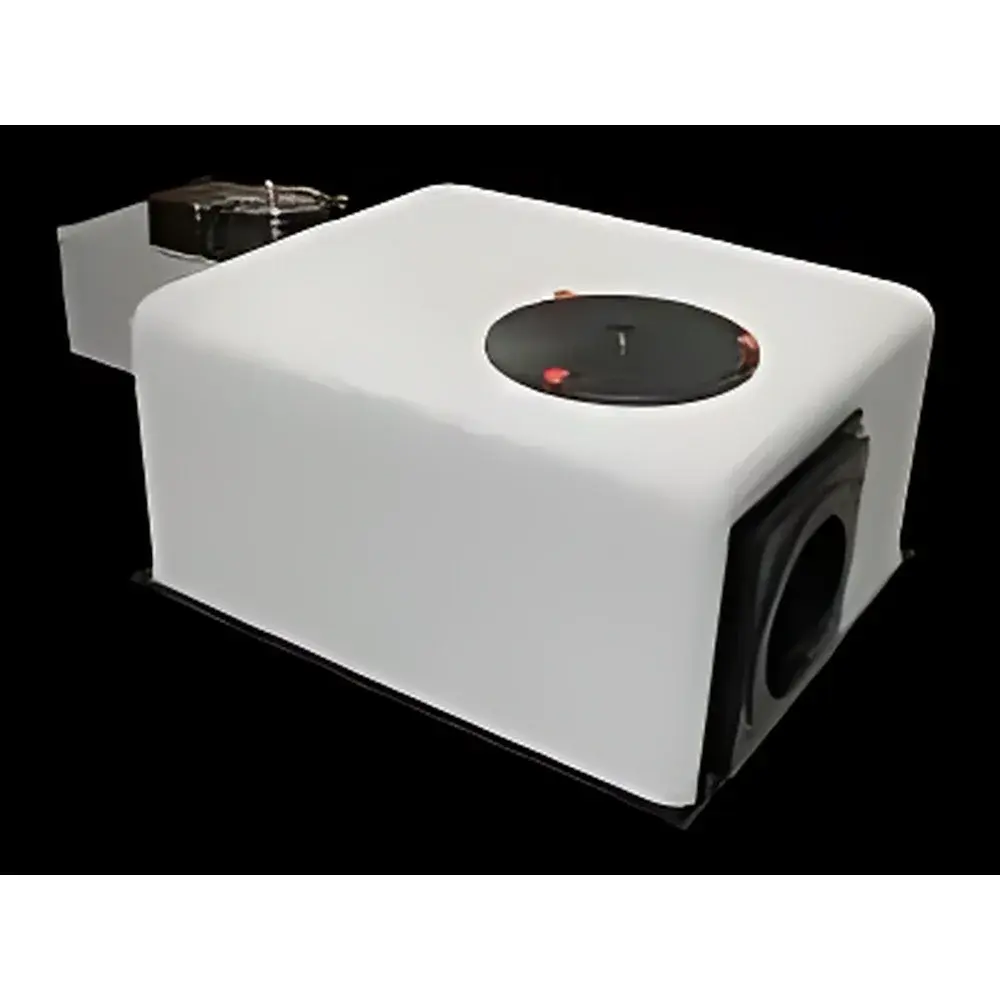
Sciencetech SS150 Full-Reflection Solar Simulator
| Brand | Sciencetech |
|---|---|
| Origin | Canada |
| Manufacturer Type | Authorized Distributor |
| Origin Category | Imported |
| Model | SS150 |
| Price | Upon Request |
Overview
The Sciencetech SS150 Full-Reflection Solar Simulator is an engineered optical instrument designed for high-fidelity solar spectral irradiance simulation in photovoltaic (PV) research, calibration, and materials testing laboratories. Unlike conventional collimated or refractive solar simulators, the SS150 employs a purely reflective optical architecture—eliminating transmissive lenses and diffusers—to deliver superior spatial uniformity, spectral stability, and photon flux efficiency. Its core light source is a 150 W ozone-free xenon arc lamp, operated in air-cooled configuration with integrated igniter and adjustable LED-display power supply. The system conforms to ASTM E927-05 (Standard Specification for Solar Simulation for Photovoltaic Testing) and IEC 60904-9 (Photovoltaic devices — Part 9: Solar simulator performance requirements), meeting Class A criteria for spatial non-uniformity (≤2–3%) across defined test areas. The full-reflection path ensures minimal chromatic aberration and thermal load on optical components, preserving long-term radiometric stability and reducing maintenance frequency.
Key Features
- Full-reflection optical design using precision parabolic and elliptical mirrors—no transmissive optics—to maximize irradiance throughput and minimize spectral distortion
- 150 W ozone-free xenon short-arc lamp with air-cooled lamp tower and integrated high-voltage igniter
- Adjustable LED-display power supply with real-time voltage/current monitoring and soft-start functionality
- Modular filter holder accommodating standard 76 × 76 mm (3″ × 3″) filters; compatible with custom-sized AM filters (e.g., AM1.5G, AM0), UV-enhancing dichroics, water absorption cells, or bandpass reflectors
- Configurable beam orientation: standard horizontal output; optional vertical mounting kit available
- Optimized for PV device testing: delivers ≥1.5 SUN (150 mW/cm²) at 76 mm diameter spot @ 610 mm working distance when equipped with AM1.5G filter
- Target irradiation area adjustable from 50 × 50 mm to 100 × 100 mm (2″ × 2″ to 4″ × 4″), with usable uniform zone defined per ASTM E927-05 Annex A
Sample Compatibility & Compliance
The SS150 is validated for use with silicon, perovskite, CIGS, organic, and multi-junction photovoltaic devices requiring traceable, spectrally matched illumination. Its reflective geometry ensures compatibility with temperature-sensitive samples and eliminates UV-induced degradation of transmissive optics. Spatial uniformity is maintained within ±2% over the central 80% of the defined test plane—fully compliant with ASTM E927-05 Class A (spatial non-uniformity ≤3%) and IEC 60904-9:2020 Class A requirements. Spectral match is rated Class B per both standards when used with certified AM1.5G filters (e.g., Schott KG5 + BG39 + UG11 stack). Optional custom spatial filters—designed via Sciencetech’s proprietary ray-tracing software—enable ≤1% uniformity for high-precision quantum efficiency mapping or tandem cell characterization. The system supports GLP-compliant operation through external data logging interfaces and optional audit-trail-enabled control software.
Software & Data Management
While the SS150 operates as a stand-alone hardware platform, it integrates seamlessly with third-party DAQ systems (e.g., National Instruments, Keysight) via analog voltage outputs (0–10 V) for lamp intensity monitoring and digital I/O for interlock signaling. Sciencetech provides calibration reports traceable to NIST-standard reference detectors (e.g., calibrated Si photodiode + thermopile), including spectral irradiance data (250–2500 nm), spatial uniformity maps, and temporal stability metrics (±0.5% over 30 min). For automated test sequencing, users may implement Python- or LabVIEW-based control scripts leveraging RS-232 or USB-to-serial communication protocols. All calibration documentation complies with ISO/IEC 17025 requirements for accredited laboratories and supports FDA 21 CFR Part 11 readiness when paired with validated electronic lab notebook (ELN) platforms.
Applications
- Calibration and performance validation of reference solar cells and pyranometers
- Current–voltage (I–V) characterization of single-junction and multi-junction PV devices under standardized illumination conditions
- Spectral response (SR) and external quantum efficiency (EQE) measurements with synchronized monochromator coupling
- Accelerated aging studies involving UV-rich spectra (using optional Hg–Xe lamp or UV-pass filters)
- Optical coating and anti-reflective film evaluation under broadband solar-spectrum illumination
- Photoelectrochemical cell testing where thermal management and spectral fidelity are critical
FAQ
What spectral range does the SS150 cover without filters?
The unfiltered output spans 250–2500 nm, encompassing deep UV through near-infrared—ideal for broad-spectrum material response studies.
Can the SS150 achieve Class A spectral match?
Yes—when paired with a certified AM1.5G filter set, it meets IEC 60904-9 Class B spectral match; Class A requires additional spectral shaping (e.g., dichroic reflectors), which Sciencetech offers as a custom option.
Is the lamp replaceable by the end user?
Yes—the 150 W xenon arc lamp is field-replaceable using standard alignment tools; Sciencetech provides detailed lamp replacement and collimation procedures in the operator manual.
Does the system support automated uniformity scanning?
Not natively—but its stable output and mechanical repeatability make it fully compatible with motorized XY stages and calibrated photodiode arrays for in-house uniformity mapping per ASTM E927-05 Annex D.
What safety certifications does the SS150 hold?
It complies with IEC 61000-6-3 (EMC emission) and IEC 61000-6-2 (immunity), and includes interlocked housing, UV-shielded viewport, and emergency stop circuitry meeting CE and CSA general safety requirements.






