
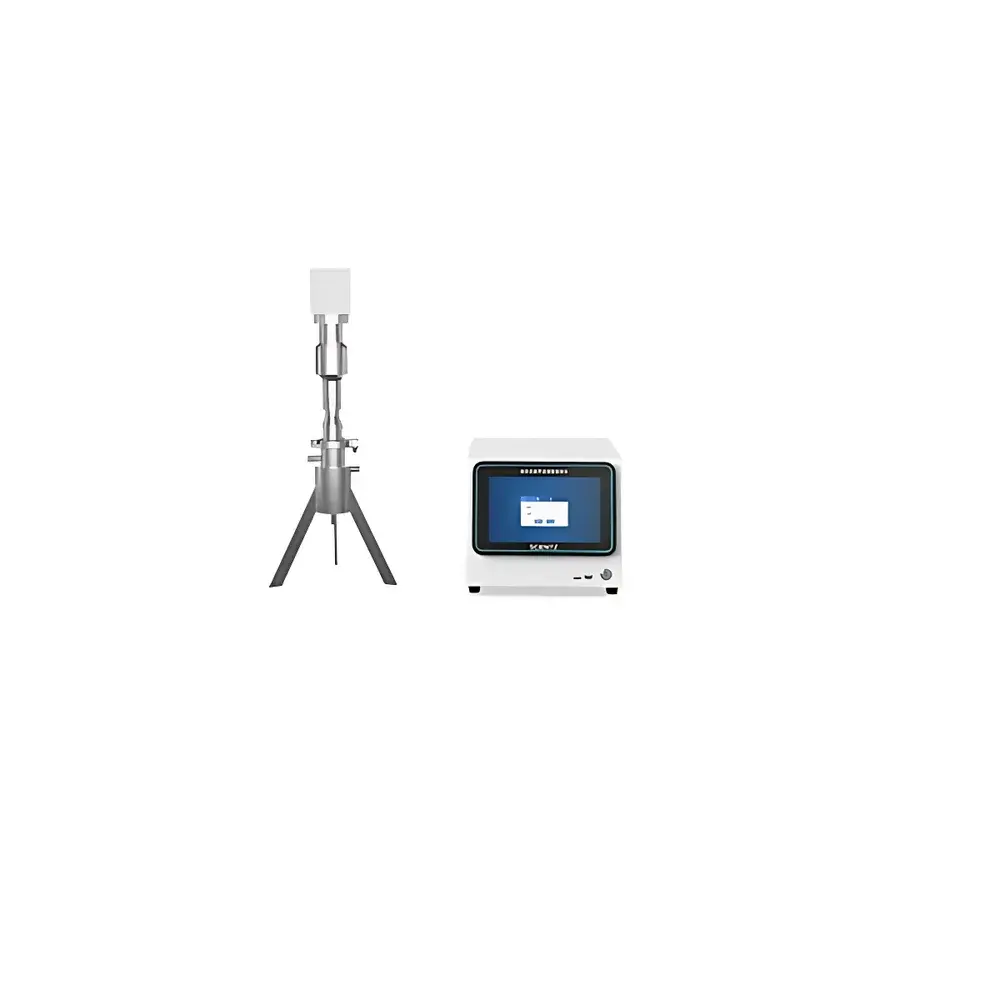
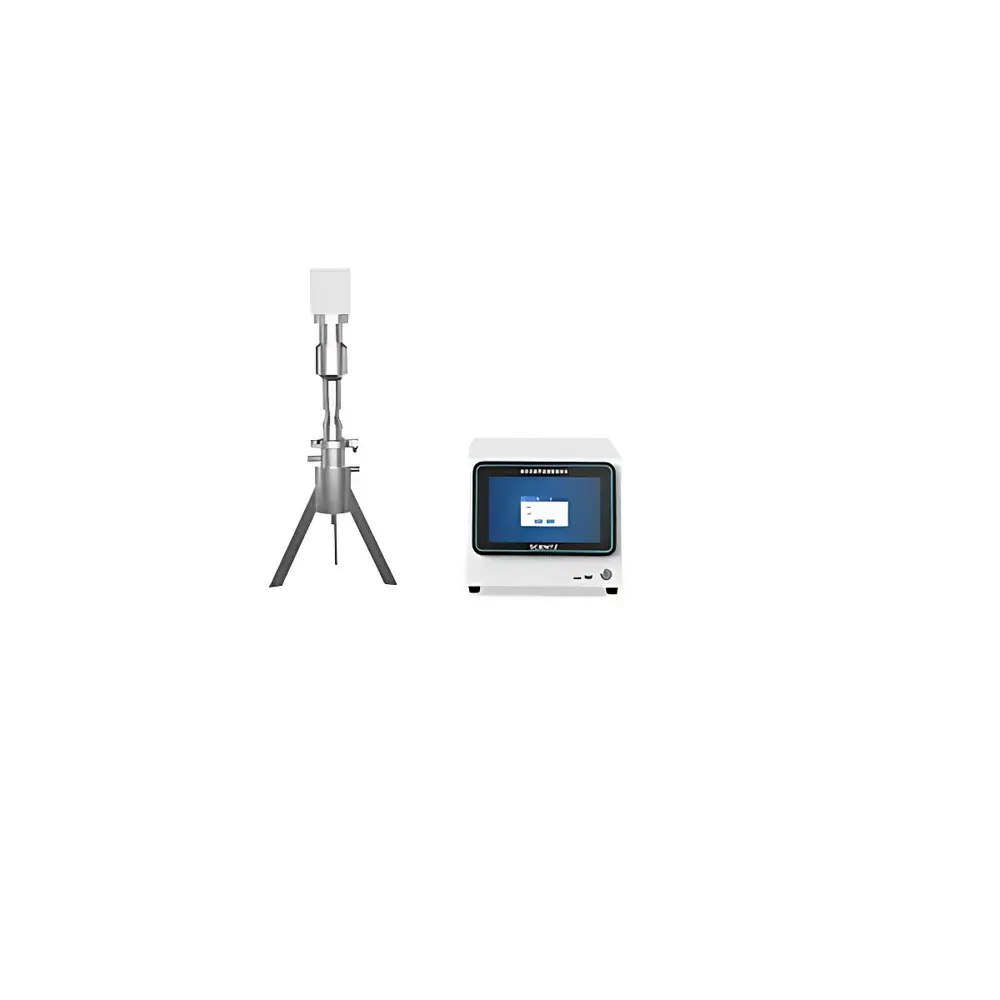
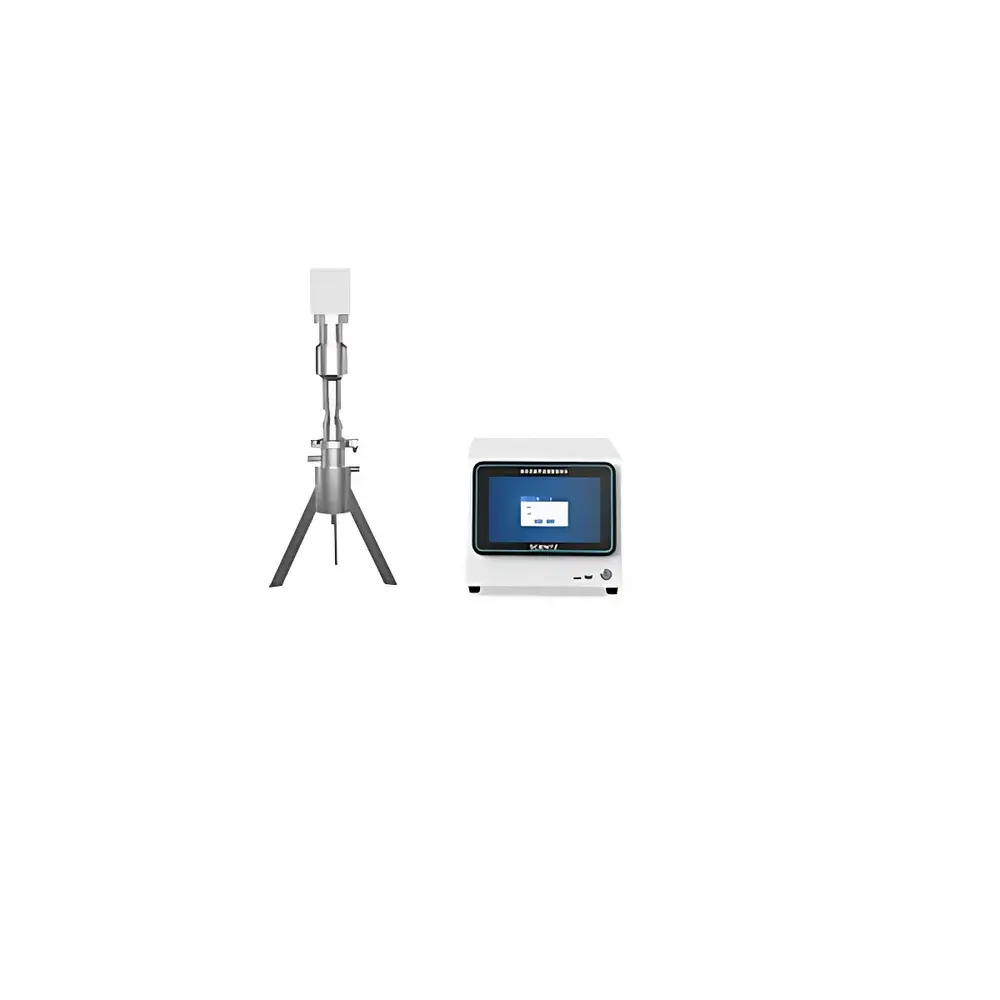
Scientz CFU-750W-M1 Continuous-Flow Ultrasonic Cell Disruptor
| Brand | Scientz |
|---|---|
| Origin | Zhejiang, China |
| Model | CFU-750W-M1 |
| Instrument Type | Ultrasonic Cell Disruptor |
| Operating Frequency | 20 kHz ± 1 kHz |
| Ultrasonic Power Output | 750 W |
| Temperature Control Range | −30 °C to 100 °C |
| Sample Throughput | 1–50 L/h |
| Reactor Material | SUS316 Stainless Steel |
| Transducer & Horn Material | Titanium Alloy (Grade 5) |
| Control Interface | 10-inch Capacitive Touchscreen |
| Data Logging | Internal storage with USB export |
| Communication Protocol | Modbus-TCP over RJ45 Ethernet |
| User Access Control | Three-tier permission system (Admin / Operator / Guest) |
| Sterilization Compatibility | In-situ steam sterilization (SIP) or offline autoclaving (121 °C, 2 bar, 30 min) |
| Cooling Architecture | Double-jacketed reactor with external chiller integration (e.g., DC-3006) |
Overview
The Scientz CFU-750W-M1 is a high-power, continuous-flow ultrasonic cell disruptor engineered for scalable, reproducible, and GMP-aligned bioprocessing. It operates on the principle of acoustic cavitation—where high-intensity ultrasonic waves (20 kHz ± 1 kHz) generate transient microbubbles in liquid media that collapse violently, producing localized shear forces, microstreaming, and thermal gradients sufficient to lyse microbial, mammalian, or plant cells, disperse nanoparticles, emulsify immiscible phases, or accelerate heterogeneous reactions. Unlike batch-mode sonicators, the CFU-750W-M1 enables true continuous processing via an integrated recirculation loop comprising a precision peristaltic or diaphragm pump, a double-jacketed SUS316 reaction chamber, and active temperature regulation (−30 °C to 100 °C). This architecture eliminates dead-volume accumulation, mitigates thermal runaway, and ensures uniform energy delivery across large-volume streams—critical for applications demanding process consistency, scalability, and regulatory traceability.
Key Features
- Continuous-Flow Cavitation Platform: Designed for uninterrupted operation at throughput rates from 1 to 50 L/h, supporting pilot-scale and early-stage manufacturing workflows without manual intervention or batch-to-batch variability.
- Titanium-Alloy Ultrasonic Stack: Features a Grade 5 titanium transducer and horn assembly—resistant to erosion, corrosion, and fatigue under sustained high-power duty cycles (750 W nominal output, adjustable 1–100%).
- GMP-Ready Control System: ARM-based embedded controller with 10-inch industrial touchscreen interface; supports time-stamped audit trails, electronic signatures, and three-tier user permissions (Administrator, Operator, Viewer) compliant with FDA 21 CFR Part 11 Annex 11 expectations.
- Thermally Stable Reactor Design: Double-walled SUS316 reaction chamber with jacketed cooling/heating ports, enabling precise thermal management during exothermic lysis or low-temperature-sensitive protein extraction.
- Interoperable Industrial Connectivity: Equipped with RJ45 Ethernet port and native Modbus-TCP protocol stack for seamless integration into SCADA, MES, or DCS environments—facilitating centralized monitoring, remote diagnostics, and automated batch record generation.
- Validatable Sanitary Construction: Seamless, electropolished interior surfaces; no crevices or gasketed joints in the flow path; compatible with in-place steam sterilization (SIP) or offline autoclaving per ISO 13485 and ASME BPE standards.
Sample Compatibility & Compliance
The CFU-750W-M1 accommodates a broad range of biological and chemical matrices—including bacterial cultures (E. coli, P. pastoris), mammalian cell suspensions (CHO, HEK293), yeast slurries, viral vectors, nanomaterial dispersions (TiO₂, Fe₃O₄), and emulsion precursors (oil-in-water, water-in-oil). Its closed-loop configuration prevents aerosol generation and cross-contamination, satisfying biosafety level 2 (BSL-2) containment requirements. The system meets mechanical safety standards per IEC 61000-6-2/6-4 and carries CE marking for electromagnetic compatibility and low-voltage directive compliance. For pharmaceutical use, it supports validation protocols aligned with USP , ISO 14644-1 (cleanroom integration), and EU GMP Annex 15 (qualification of ancillary equipment).
Software & Data Management
All operational parameters—including power setpoint, duty cycle (0–99 s on/off), total sonication duration (1–999 min), real-time temperature feedback, and pump speed—are logged with millisecond timestamp resolution to internal flash memory. Data exports are generated in CSV format via USB 2.0 interface and retain full metadata (user ID, session start/end, parameter deviations). Audit logs record login attempts, parameter changes, emergency stops, and sterilization cycles—each cryptographically signed and immutable post-execution. Time synchronization occurs automatically over NTP-enabled Ethernet, ensuring alignment across distributed lab networks. Optional firmware updates maintain cybersecurity posture per IEC 62443-3-3 guidelines.
Applications
- Vaccine Manufacturing: Homogenization of adjuvant–antigen complexes (e.g., aluminum hydroxide–recombinant antigen suspensions) to enhance colloidal stability and dose consistency in subunit vaccines.
- Biopharmaceutical Processing: Scalable lysis of high-density E. coli fermentations for inclusion body recovery; reduction of shear-induced aggregation during monoclonal antibody purification feedstock preparation.
- Nanomaterial Synthesis: Deagglomeration and surface functionalization of metal oxides in aqueous or organic solvents—enabling reproducible synthesis of catalytic nanoparticles for green chemistry applications.
- Chemical Process Intensification: Acceleration of Suzuki–Miyaura couplings and other Pd-catalyzed reactions through enhanced mass transfer at solid–liquid interfaces.
- Food & Nutraceutical Emulsification: Production of nanoemulsions (<200 nm droplet size) for improved bioavailability of lipophilic actives (e.g., curcumin, resveratrol) without surfactant overload.
FAQ
What is the maximum allowable inlet pressure for the recirculation pump?
The system is rated for continuous operation at ≤3 bar inlet pressure; higher pressures require upstream pressure regulation to prevent seal deformation or flow instability.
Can the reactor be operated under vacuum or inert gas overlay?
Yes—the SUS316 chamber includes dual 1/4″ VCR ports for vacuum evacuation or nitrogen/argon sparging, supporting oxygen-sensitive reactions or volatile solvent handling.
Is third-party calibration certification available?
Scientz provides optional factory calibration reports traceable to NIST standards for ultrasonic power output (via calorimetric method) and temperature sensors (PT100 Class A), issued with each unit shipment.
How is cleaning-in-place (CIP) validated?
The smooth, crevice-free internal geometry allows validation using conductivity probes and rinse water analysis per ASTM E3061-16; typical CIP cycles employ 0.5 M NaOH at 60 °C for 30 minutes followed by deionized water rinses.
Does the system support programmable multi-step protocols?
Yes—up to 99 sequential steps can be defined, each with independent settings for power, duty cycle, temperature setpoint, pump speed, and duration, enabling complex lysis–extraction–stabilization workflows.




