
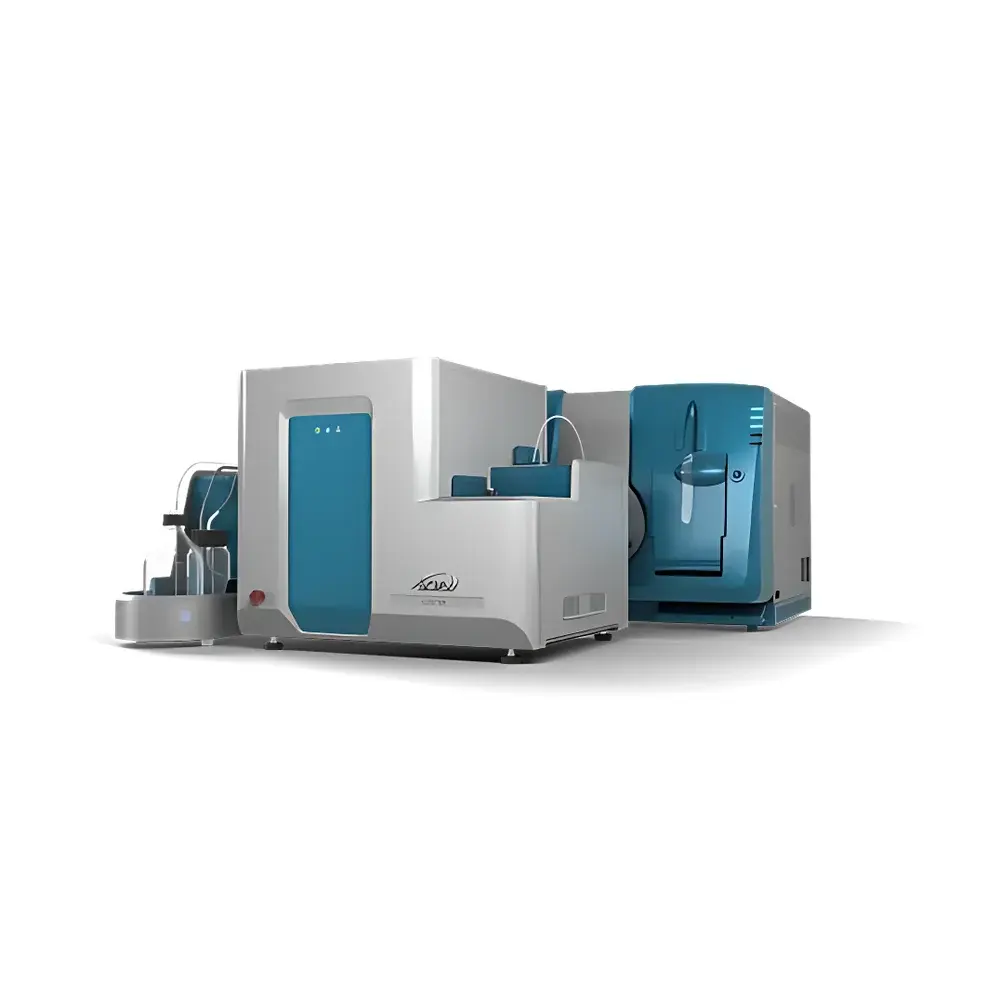
SCIEX Echo MS System – Acoustic Ejection Mass Spectrometry Platform
| Brand | SCIEX |
|---|---|
| Origin | USA |
| Instrument Type | Tandem Quadrupole Mass Spectrometer |
| Configuration | Acoustic Droplet Ejection (ADE) Coupled to Triple Quadrupole MS |
| Regulatory Design | Designed for GLP/GMP-Compliant Quantitative Bioanalysis |
| Software Compliance | Supports 21 CFR Part 11 Audit Trail and Electronic Signatures |
| Throughput | Up to 3 samples per second |
| Workflow Integration | Direct ADE-to-MS Interface Without Chromatographic Separation |
| Application Focus | High-Throughput Quantitative Screening in Drug Discovery, ADME, and Clinical Biomarker Analysis |
Overview
The SCIEX Echo MS System is an integrated Acoustic Ejection Mass Spectrometry (AEMS) platform engineered for ultra-high-throughput quantitative analysis in life sciences laboratories. Unlike conventional liquid chromatography–tandem mass spectrometry (LC-MS/MS), the Echo MS System eliminates chromatographic separation by coupling nanoliter-scale acoustic droplet ejection (ADE) directly to a high-performance triple quadrupole mass spectrometer. This architecture enables contactless, robotic-free sample introduction with sub-second cycle times—achieving up to three discrete analyses per second. The system operates on the principle of precise piezoelectric transducer–driven droplet generation from source plates, followed by immediate electrospray ionization and targeted multiple reaction monitoring (MRM) detection. Its design addresses critical bottlenecks in large-scale compound screening, pharmacokinetic profiling, and clinical assay development where speed, reproducibility, and minimal sample consumption are paramount.
Key Features
- Acoustic Droplet Ejection (ADE) Interface: Non-contact, low-volume (2.5–50 nL) sample transfer from standard microplates without pipetting, clogging, or carryover.
- Tandem Quadrupole Mass Analyzer: Optimized for high-sensitivity MRM quantitation with robust duty cycle performance across complex biological matrices.
- Sub-Second Acquisition Cycle: Full quantitative scan—including calibration, QC, and unknowns—completed in under one second per sample.
- Integrated System Architecture: Unified hardware control and data acquisition via SCIEX OS software; no third-party middleware or custom scripting required.
- Reduced Sample Preparation Burden: Eliminates LC method development, column maintenance, gradient optimization, and solvent consumption associated with traditional LC-MS/MS workflows.
- Scalable Throughput: Enables rapid transition from assay development to production-scale screening—reducing project timelines from weeks to days without compromising data integrity.
Sample Compatibility & Compliance
The Echo MS System supports direct analysis of diverse sample types including plasma, serum, cell lysates, tissue homogenates, and synthetic compound libraries dissolved in DMSO or aqueous buffers. It maintains quantitative accuracy and precision across variable matrix compositions through optimized ion suppression compensation algorithms and internal standard normalization. From a regulatory perspective, the platform is architected to support Good Laboratory Practice (GLP) and Good Manufacturing Practice (GMP) environments. All instrument control parameters, sequence logs, and raw data files are timestamped and cryptographically linked within the audit trail. The system complies with FDA 21 CFR Part 11 requirements for electronic records and signatures when deployed with validated SCIEX OS configurations. It also aligns with ISO/IEC 17025 principles for testing laboratory competence and supports traceability per ASTM D8169 for high-throughput analytical method validation.
Software & Data Management
SCIEX OS serves as the unified software environment for method setup, instrument control, real-time monitoring, and post-run quantitation. The software includes built-in tools for automatic peak integration, batch calibration curve fitting (linear and quadratic), outlier detection, and QC pass/fail reporting based on predefined acceptance criteria. Raw data files adhere to the open mzML standard, ensuring interoperability with third-party informatics platforms such as Watson LIMS, Benchling, and LabArchives. Audit trail functionality records all user actions—including method edits, sequence modifications, and result approvals—with immutable timestamps and operator identification. Data backups are configurable via network-attached storage (NAS) or cloud-based repositories compliant with HIPAA and GDPR data residency policies.
Applications
- Early-Stage Drug Discovery: Rapid PK/PD profiling of hundreds of compounds across multiple species and dose levels.
- ADME Screening: High-volume assessment of metabolic stability, CYP inhibition, and transporter interactions.
- Clinical Biomarker Quantification: Multiplexed measurement of peptides, small-molecule metabolites, and endogenous lipids in biobank-scale cohorts.
- Toxicology Surveillance: High-frequency monitoring of therapeutic drug levels and illicit substances in forensic and clinical toxicology labs.
- Cell-Based Assay Support: Direct readout of intracellular analytes following lysis without extraction or cleanup steps.
FAQ
How does the Echo MS System differ fundamentally from conventional LC-MS/MS?
It replaces chromatographic separation with acoustic droplet ejection, enabling direct injection and detection without retention time alignment or gradient programming.
Can the system be used for qualitative analysis or only quantitative work?
While optimized for MRM-based quantitation, it supports full-scan and enhanced product ion (EPI) modes for structural confirmation when needed.
Is method validation required when transitioning from LC-MS/MS to Echo MS?
Yes—though many validation parameters (e.g., selectivity, accuracy, precision) are retained, new assessments for droplet transfer efficiency, ion suppression across plate positions, and short-term stability must be performed.
What microplate formats are supported?
Standard 384-well and 1536-well plates with compatible bottom geometry and solvent compatibility (DMSO, methanol, acetonitrile, aqueous buffers).
Does the system require specialized training for routine operation?
Operators with foundational LC-MS/MS experience can achieve proficiency within two days of hands-on training; SCIEX provides certified application specialists for on-site implementation support.





