
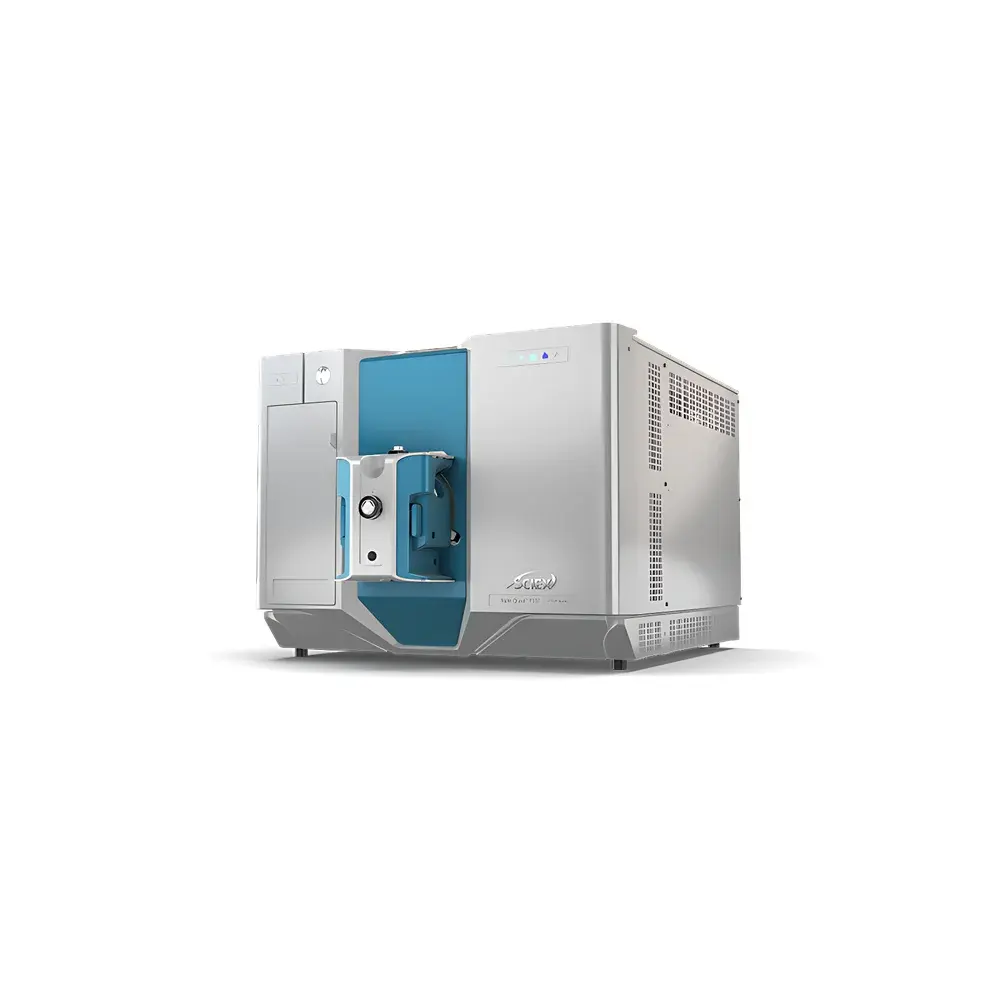
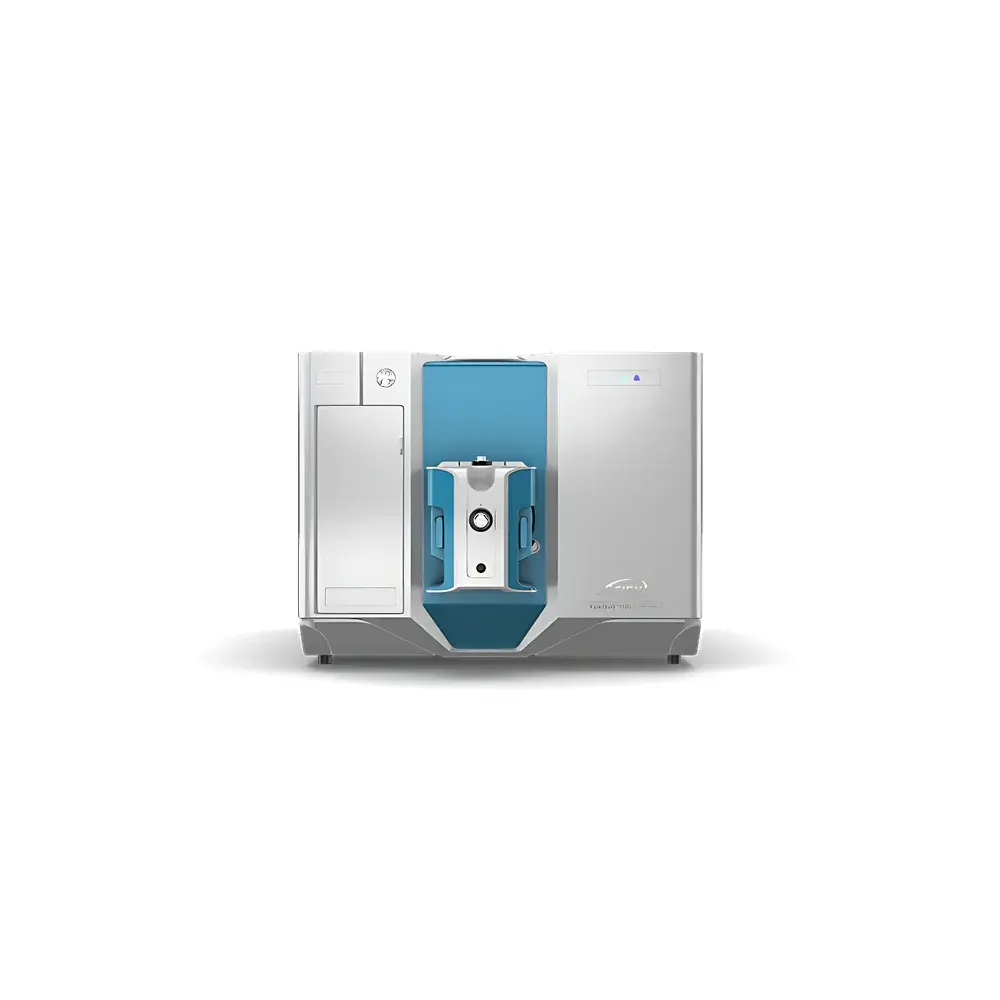
SCIEX Triple Quad™ 7500 LC-MS/MS System – QTRAP® Ready
| Brand | SCIEX |
|---|---|
| Origin | USA |
| Model | 7500 |
| Instrument Type | Tandem Quadrupole (Triple Quad™) |
| Configuration | QTRAP®-Ready |
| Application Scope | Universal Quantitative and Qualitative Analysis |
| Flow Rate Compatibility | 1 µL/min to 3 mL/min |
| Polarity Switching Speed | <5 ms |
| Dynamic Range | 6 decades |
| Software Platform | SCIEX OS |
| Detector | High-Energy Electron Multiplier (HEM) |
| Regulatory Compliance | Designed for GLP/GMP, FDA 21 CFR Part 11–compliant workflows |
Overview
The SCIEX Triple Quad™ 7500 LC-MS/MS System – QTRAP® Ready is a high-performance, tandem quadrupole mass spectrometer engineered for demanding quantitative bioanalysis, environmental monitoring, food safety testing, and pharmaceutical development. Built upon a robust triple quadrupole architecture, the system integrates advanced ion optics, intelligent source design, and hybrid scanning capabilities to deliver exceptional sensitivity, reproducibility, and operational stability across diverse analytical workflows. Its core measurement principle relies on electrospray ionization (ESI) or atmospheric pressure chemical ionization (APCI), coupled with selective reaction monitoring (SRM) or multiple reaction monitoring (MRM) in the first two quadrupoles (Q1 and Q3), while the third quadrupole (Q2) functions as a collision cell. When configured in QTRAP® mode, Q2 transitions into a linear ion trap, enabling simultaneous quantitative MRM acquisition and qualitative MS/MS scanning—without hardware reconfiguration or signal compromise.
Key Features
- OptiFlow™ Pro Ion Source: A pressure- and geometry-optimized electrospray interface supporting flow rates from 1 µL/min (nano-LC) to 3 mL/min (conventional HPLC), eliminating manual probe adjustments and ensuring consistent ionization efficiency across method scales.
- E Lens™ Technology: An electrodynamic lens assembly positioned between the source and entrance to Q1 that enhances ion transmission efficiency—particularly at low-flow conditions—by focusing ions into the mass analyzer path, resulting in improved signal-to-noise ratios compared to standard ESI sources.
- D Jet™ Ion Guide: A dual-stage RF-only ion funnel that increases ion capture efficiency across broad m/z ranges while maintaining mechanical robustness and resistance to contamination buildup, contributing directly to long-term sensitivity retention.
- QTRAP®-Ready Architecture: Native support for hybrid acquisition modes including MRM3, enhanced product ion (EPI) scans, enhanced resolution (ER) scans, and information-dependent acquisition (IDA)—all executed within a single LC run without sacrificing quantitative precision or dynamic range.
- SCIEX OS Software Platform: A unified, workflow-driven software environment compliant with FDA 21 CFR Part 11 requirements, featuring audit trail logging, electronic signatures, customizable reporting templates, and seamless integration with LIMS and enterprise data systems.
- High-Energy Detector (HEM): Enables rapid polarity switching (<5 ms), wide linear dynamic range (6 orders of magnitude), and stable response over extended acquisition periods—critical for multi-analyte quantitation in complex matrices.
Sample Compatibility & Compliance
The Triple Quad™ 7500 accommodates a wide spectrum of sample types—including plasma, serum, urine, tissue homogenates, environmental water extracts, pesticide residues in crops, and small-molecule APIs—when coupled with compatible liquid chromatography systems (e.g., SCIEX ExionLC™ or third-party UHPLC platforms). It meets key regulatory expectations for laboratories operating under Good Laboratory Practice (GLP), Good Manufacturing Practice (GMP), and ISO/IEC 17025 frameworks. The system supports instrument qualification (IQ/OQ/PQ) documentation packages and is routinely validated against ASTM D7622 (for environmental analysis), USP <1225> (method validation), and ICH M10 guidelines (bioanalytical method validation).
Software & Data Management
SCIEX OS serves as the central hub for method development, acquisition control, real-time processing, and secure data archival. Its modular architecture allows users to define custom workflows—from automated calibration and tuning to batch-processed MRM quantitation with internal standard normalization. All raw data files (.wiff) are stored with embedded metadata, including instrument parameters, sequence logs, and user annotations. Audit trails record every action taken during acquisition or reprocessing, satisfying traceability requirements for regulatory submissions. Integration with SCIEX Cloud enables remote monitoring, collaborative review, and centralized backup—while maintaining full local data ownership and encryption standards.
Applications
This platform excels in applications requiring both high-sensitivity quantification and structural confirmation: pharmacokinetic (PK) and toxicokinetic (TK) studies in preclinical and clinical trials; residue screening in food and feed commodities per EU Commission Regulation (EC) No. 37/2010; endocrine disruptor profiling in wastewater effluents; impurity identification in drug substance batches; and targeted metabolomics in biomedical research. Its ability to perform concurrent MRM and EPI scanning makes it especially valuable for retrospective data mining—where unanticipated analytes can be interrogated post-acquisition without re-injecting samples.
FAQ
What distinguishes the Triple Quad™ 7500 from previous-generation triple quadrupoles?
It introduces three major innovations: OptiFlow™ Pro for universal flow compatibility, D Jet™ for sustained ion transmission, and native QTRAP® readiness—enabling trap-based scanning modes without compromising MRM performance.
Can the system operate in full-scan mode with meaningful sensitivity?
Yes—the Enhanced Full Scan (EFS) mode delivers sub-picomolar detection limits for many small molecules, making it suitable for untargeted screening alongside targeted quantitation.
Is SCIEX OS compatible with legacy Analyst™ methods?
SCIEX OS includes backward-compatible import tools for Analyst™ v1.6.2 and later, allowing migration of existing MRM methods with minimal revalidation.
Does the system support 21 CFR Part 11 compliance out-of-the-box?
Yes—SCIEX OS includes built-in features for electronic signatures, role-based access control, and immutable audit trails, configurable to meet site-specific validation requirements.
What maintenance intervals are recommended for routine operation?
Source cleaning is advised every 2–4 weeks depending on matrix complexity; vacuum system inspection every 6 months; and annual recalibration using certified reference standards per ISO/IEC 17025 recommendations.



