
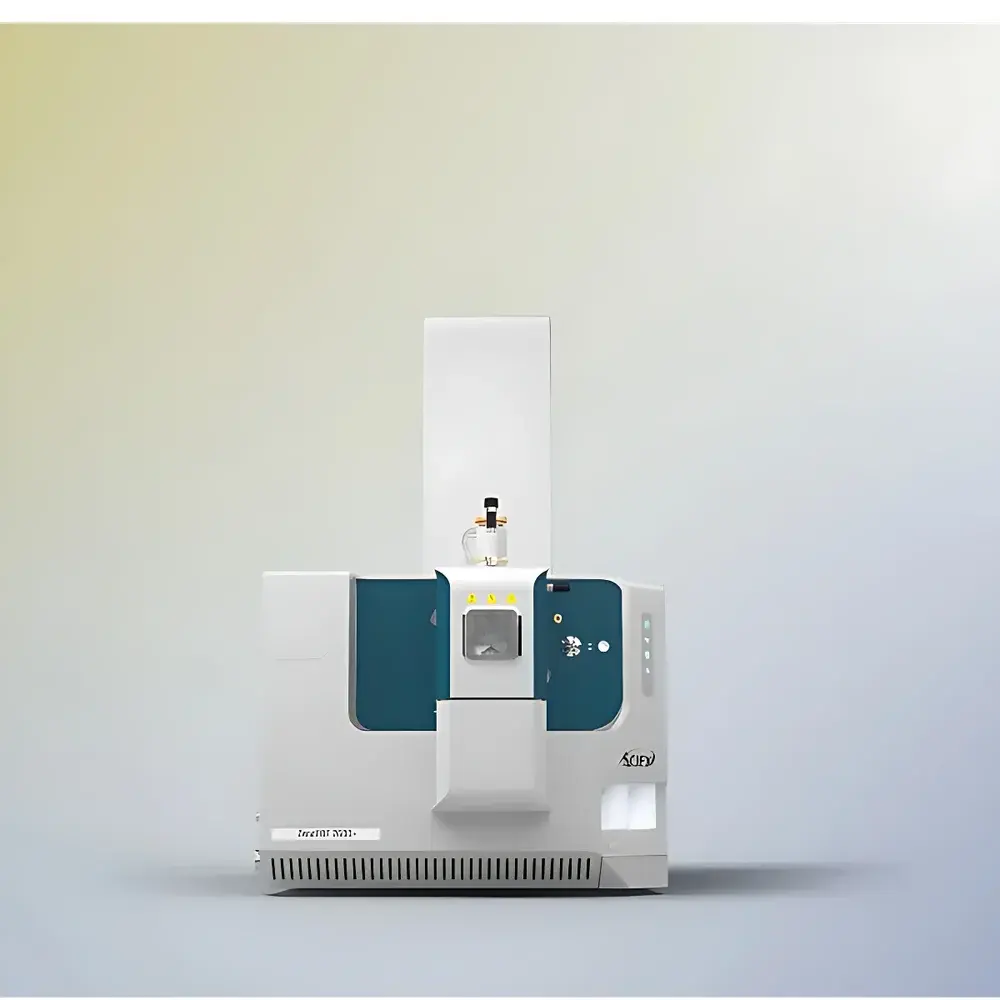
SCIEX ZenoTOF 7600+ System
| Brand | SCIEX |
|---|---|
| Origin | USA |
| Manufacturer Type | Authorized Distributor |
| Origin Category | Imported |
| Model | SCIEX ZenoTOF 7600+ System |
| Instrument Type | Hybrid Quadrupole-Time-of-Flight (Q-TOF) Mass Spectrometer |
| Application Scope | Broad-spectrum Proteomics, Biomarker Discovery, Translational Research, Clinical Assay Development |
| Acquisition Mode | ZT Scan DIA (Data-Independent Acquisition with Quadrupole Dimensionality), DDA, Targeted MS/MS |
| Scan Speed | Up to 640 Hz |
| Fragmentation Technology | Electron-Activated Dissociation (EAD) |
| Mass Accuracy | < 2 ppm (internal calibration), < 3 ppm (external calibration) |
| Mass Resolution | > 35,000 FWHM (at m/z 200) |
| Dynamic Range | > 4 orders of magnitude |
Overview
The SCIEX ZenoTOF 7600+ System is a high-performance hybrid quadrupole-time-of-flight (Q-TOF) mass spectrometer engineered for deep, reproducible, and quantitative proteomics across discovery, translational, and clinical research workflows. At its core lies the Zeno™ trap technology—integrated into a novel acquisition paradigm called ZT Scan DIA—which fundamentally redefines how data-independent acquisition (DIA) is implemented in bottom-up proteomics. Unlike conventional window-based DIA methods that segment the m/z range into fixed isolation windows, ZT Scan DIA dynamically couples Q1 quadrupole scanning with high-speed TOF acquisition and intelligent ion trapping in the Zeno cell, enabling simultaneous retention of precursor ions and generation of rich, fragment-ion spectra without duty cycle loss. This architecture delivers enhanced sensitivity—particularly critical at sub-nanogram sample loads—and improves quantitative precision by reducing stochastic undersampling effects common in traditional DIA. The system operates on electrospray ionization (ESI) sources compatible with nanoLC and microLC platforms, and supports both positive- and negative-ion modes with full mass range coverage (m/z 50–2,000).
Key Features
- ZT Scan DIA: A unified acquisition strategy integrating data-dependent (DDA), data-independent (DIA), and targeted MS/MS modes within a single LC-MS run—eliminating method switching and maximizing data completeness.
- Zeno Trap Ion Accumulation: Increases effective duty cycle and signal-to-noise ratio by trapping and accumulating fragment ions prior to TOF analysis, especially beneficial for low-abundance peptides and post-translational modifications (PTMs).
- Electron-Activated Dissociation (EAD): Provides tunable, non-ergodic fragmentation across diverse analyte classes—including peptides, glycans, lipids, and oligonucleotides—preserving labile PTMs (e.g., phosphorylation, glycosylation) and enabling confident site localization.
- 640 Hz High-Speed Scanning: Enables up to 100+ MS/MS spectra per second with high mass accuracy ( 35,000 FWHM), supporting deep proteome coverage in complex biological matrices.
- Quadrupole-Dimensional Mapping: Correlates Q1 precursor selection with TOF-derived fragment spectra, adding a fourth dimension (Q1 m/z) to traditional retention time–m/z–intensity space—enhancing specificity for isomeric peptides and PTM isoforms.
- Robust Q-TOF Architecture: Features dual-stage collision cell design, active beam gating, and temperature-stabilized optics for long-term mass stability and inter-day reproducibility required in regulated environments.
Sample Compatibility & Compliance
The ZenoTOF 7600+ System accommodates a wide range of sample types—from purified proteins and immunoprecipitated complexes to tissue lysates, plasma digests, and single-cell proteomic extracts. It interfaces seamlessly with nano-electrospray sources (e.g., Nanospray III, Chip-Based ESI) and supports offline fractionation (SCX, high-pH RP) and online 2D-LC configurations. From a regulatory standpoint, the system supports audit-trail-enabled operation under 21 CFR Part 11-compliant software (SCIEX OS v2.4+), including electronic signatures, secure user roles, and immutable raw data archiving. Method validation workflows align with ICH M10 and ISO/IEC 17025 principles; instrument qualification documentation meets GLP and GMP expectations for biomarker assay transfer and clinical assay development.
Software & Data Management
SCIEX OS serves as the unified acquisition and processing platform, offering real-time spectrum visualization, automated calibration, and integrated peak detection. For proteomics, the system natively supports SWATH® Acquisition MicroApp and ProteinPilot™ 6.0+, enabling library-free quantification, PTM-specific search algorithms (e.g., phospho-, acetyl-, ubiquitin-remnant motifs), and cross-platform data alignment. Raw files are stored in industry-standard .wiff format and exportable to open formats (mzML) for third-party tools (MaxQuant, DIA-NN, Spectronaut). All processing steps—including peak integration, normalization, statistical testing (ANOVA, limma), and false discovery rate (FDR) control—are traceable and scriptable via Python API integration.
Applications
- Deep plasma proteome profiling for candidate biomarker prioritization and verification
- Single-cell and spatial proteomics with nanogram-scale input requirements
- Comprehensive PTM mapping—including combinatorial modifications and stoichiometry estimation
- Host cell protein (HCP) identification and quantification in biopharmaceutical process development
- Multi-omic integration studies linking proteome dynamics with transcriptomic or metabolomic datasets
- Regulatory submission–ready assay development for LDTs (Laboratory Developed Tests) and companion diagnostics
FAQ
What distinguishes ZT Scan DIA from conventional DIA methods?
ZT Scan DIA eliminates fixed isolation windows by synchronizing Q1 scanning with Zeno trap accumulation and high-speed TOF acquisition—resulting in continuous, unbiased precursor coverage and significantly improved quantitative reproducibility.
Is EAD compatible with standard proteomics databases and search engines?
Yes—EAD spectra are fully supported in ProteinPilot, Mascot, and Byonic, with optimized spectral libraries and fragmentation models for phosphopeptides, glycopeptides, and acidic residues.
Can the ZenoTOF 7600+ be used in a GxP-compliant laboratory environment?
Absolutely—the system supports 21 CFR Part 11 compliance through SCIEX OS, including role-based access control, electronic signatures, and full audit trail logging for all acquisition and processing events.
What LC systems are validated for use with this instrument?
SCIEX certifies compatibility with Thermo Scientific UltiMate 3000 RSLCnano, Eksigent nanoLC 425, and Bruker nanoACQUITY UPLC systems—each configured with low-nL/min flow rates and integrated column switching valves.
Does the system support real-time data processing during acquisition?
Yes—SCIEX OS enables on-the-fly peak detection, quality metric reporting (e.g., chromatographic peak width, mass error drift), and adaptive method adjustment via feedback loops for retention time alignment and dynamic exclusion optimization.




