
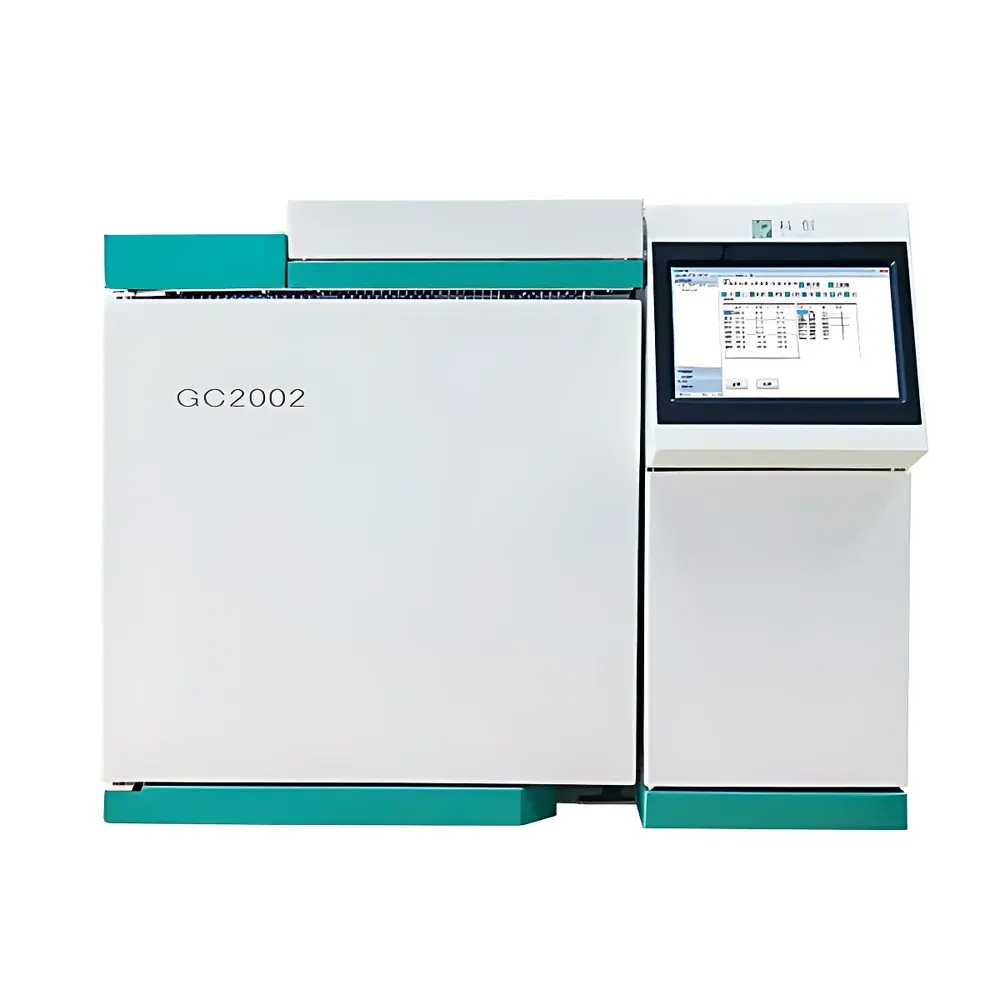
SciMed PDHID Helium Ionization Gas Chromatograph GC9800-N/PDHID
| Brand | SciMed |
|---|---|
| Origin | Shanghai, China |
| Manufacturer Type | OEM Manufacturer |
| Regional Classification | Domestic (China) |
| Model | GC9800-N/PDHID with Pulsed Discharge Helium Ionization Detector (PDHID) |
| Instrument Category | Laboratory Gas Chromatograph |
| Application Domain | Ultra-High-Purity (UHP) Gas Analysis |
| Oven Temperature Range | 5–400 °C |
| Maximum Ramp Rate | 40 °C/min |
| Cool-Down Time (from 400 °C to 50 °C) | ≤4 min |
| Carrier Gas Flow Control Range | 0–1000 mL/min |
| Carrier Gas Pressure Control Range | 0–100 psi |
| Injector Maximum Operating Temperature | 5–400 °C |
| Injector Pressure Setting Range | 0–0.04 MPa |
| Injector Total Flow Setting Range | 0–1000 mL/min |
Overview
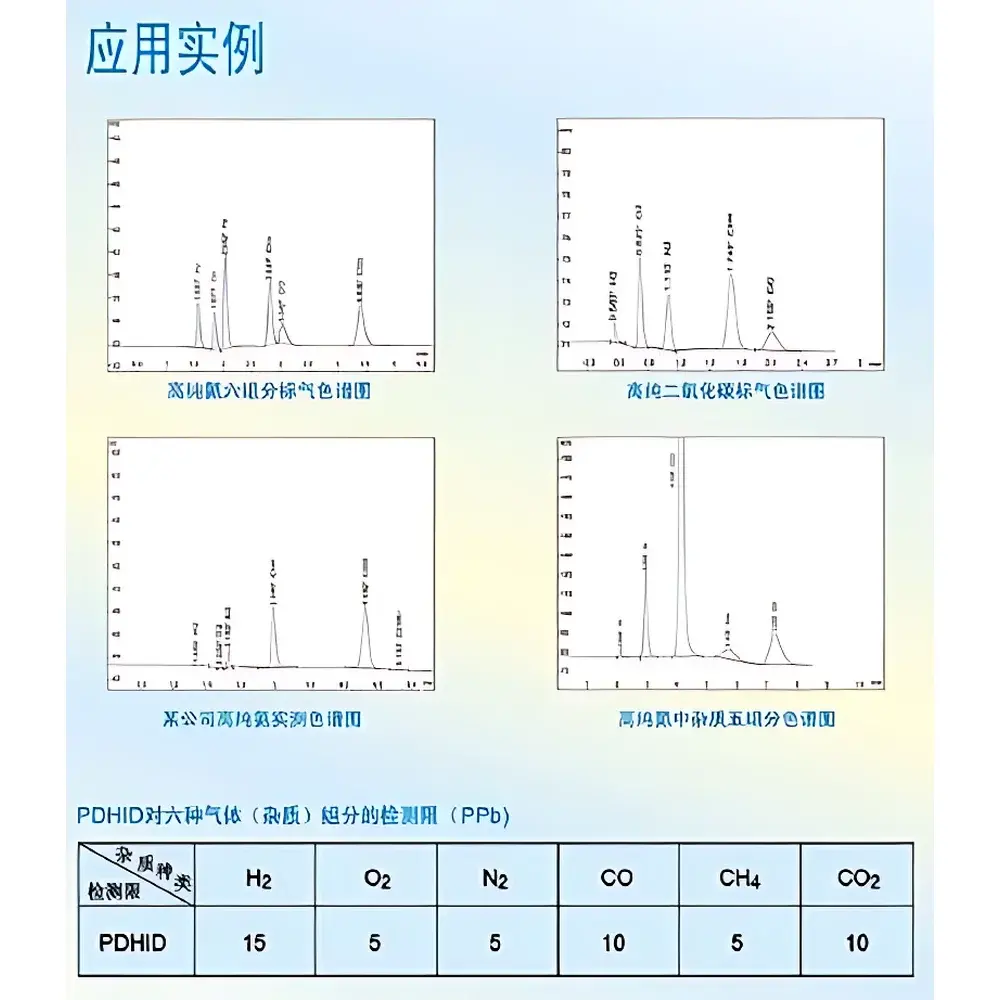
The SciMed GC9800-N/PDHID is a dedicated laboratory-grade gas chromatograph engineered for ultra-trace impurity analysis in ultra-high-purity (UHP) industrial gases—including hydrogen, nitrogen, oxygen, argon, helium, neon, krypton, xenon, and specialty semiconductor process gases. At its analytical core lies the pulsed discharge helium ionization detector (PDHID), a non-radioactive, high-sensitivity detection technology based on controlled electron impact ionization in a helium plasma matrix. Unlike traditional radioactive ³H-based HID detectors, the PDHID employs a precisely timed high-voltage pulse generator to sustain a metastable helium plasma, enabling selective ionization of virtually all permanent gases and volatile inorganic compounds—with detection limits routinely reaching sub-ppb (≤50 ppt) levels for key impurities such as H₂O, O₂, N₂, CO, CO₂, CH₄, and hydrocarbons. The system integrates a four-valve, multi-column switching architecture with carrier-gas purge protection, allowing programmable heart-cutting, pre-cutting, and post-cutting operations to isolate target analytes from complex UHP gas matrices while eliminating column overloading and baseline drift.
Key Features
- Factory-integrated PDHID module with proprietary pulsed high-voltage power supply and integrated helium purifier (≤0.1 ppb O₂/H₂O residual), ensuring long-term baseline stability and detector response reproducibility.
- Four-valve multi-column configuration (including 10-port, 6-port, and 4-port gas-tight valves) with independent oven-zone temperature control—enabling simultaneous pre-column conditioning and analytical column optimization.
- Carrier-gas purge-protected valve manifold with active thermal management (5–400 °C), minimizing memory effects and adsorption artifacts during sequential UHP gas injections.
- Dual-zone independently programmable oven: main column oven (5–400 °C, ±0.01 °C stability) and dedicated injector/pre-column zone (5–400 °C), facilitating method development for challenging separations such as He/Ne/H₂ or Ar/Kr/Xe.
- Integrated sample introduction system with automated pre-flush cycle: reduces dead volume, minimizes ambient air intrusion (O₂/N₂), and ensures quantitative transfer of ≤1 mL sample volumes—critical for low-concentration calibration and limited sample availability.
- Full electronic pneumatic control (EPC) for carrier gas flow (0–1000 mL/min) and pressure (0–100 psi), with injector total flow regulation (0–1000 mL/min) and pressure setpoint range (0–0.04 MPa).
Sample Compatibility & Compliance
The GC9800-N/PDHID is validated for analysis of Class 5.0–6.0 (ISO 8573-1) and SEMI F57-grade ultra-pure gases. Its multi-column switching strategy supports ASTM D7607 (trace impurities in helium), ISO 8573-5 (oil-free compressed air), and IEC 60376 (SF₆ purity) methodologies. All fluidic pathways employ electropolished stainless-steel tubing and metal-sealed VCR fittings to prevent surface adsorption and outgassing. The instrument meets electromagnetic compatibility (EMC) requirements per IEC 61326-1 and operates within safety standards IEC 61010-1 for laboratory equipment. Data integrity features align with FDA 21 CFR Part 11 expectations—including audit trail logging, user access controls, and electronic signature support via the embedded workstation.
Software & Data Management
Control and data acquisition are managed through SciMed ChromoLink™ v4.x, a Windows-based chromatography data system (CDS) supporting full bidirectional GC–PC communication via 10/100 M Ethernet. The software provides method-driven valve sequencing, real-time EPC parameter monitoring, and automated integration of multi-dimensional chromatograms (e.g., heart-cut peaks across parallel columns). Raw data files comply with ANDI/NetCDF format for third-party spectral library matching and LIMS integration. Audit trail records capture all method edits, sequence changes, and detector parameter adjustments with timestamp, operator ID, and reason-for-change fields—supporting GLP/GMP-compliant validation protocols.
Applications
- PPb-level quantification of O₂, N₂, H₂O, CO, CO₂, CH₄, and C₂H₆ in electronic-grade helium, argon, and nitrogen used in semiconductor CVD and etch processes.
- Residual air component profiling in high-purity hydrogen fuel cell feedstocks per ISO 14687-2 Annex B.
- Trace hydrocarbon speciation (C₁–C₄) in medical oxygen and anesthetic gas mixtures (ISO 8573-1:2010 Class 1).
- Verification of cryogenic distillation column performance in air separation units via continuous monitoring of neon/krypton/xenon stream purity.
- Method transfer and routine QC testing in ISO/IEC 17025-accredited gas testing laboratories performing certified reference material (CRM) verification.
FAQ
What makes the PDHID superior to conventional HID or TCD for UHP gas analysis?
The PDHID eliminates radioactive source licensing and disposal concerns while delivering 10–100× higher sensitivity than TCD for permanent gases—and comparable or better selectivity than ³H-HID for electronegative species, without quenching effects from high He flow rates.
Can the GC9800-N/PDHID be configured for unattended multi-day operation?
Yes—equipped with autosampler compatibility (optional 162-position gas-tight vial carousel), scheduled shutdown/restart, and remote diagnostic capability via Ethernet, it supports fully automated batch analysis under validated SOPs.
Is helium purity critical for PDHID performance?
Absolutely—helium must be ≥99.9999% pure with O₂ and H₂O <0.1 ppb; the integrated helium purifier serves as a final guard bed but does not replace high-specification bulk supply.
How is detector response calibrated for ppb-level quantitation?
Using certified gas standards traceable to NIST SRMs, with multi-point external calibration curves and internal standard correction (e.g., deuterated methane for hydrocarbons) to compensate for matrix-induced signal suppression.
Does the system support regulatory audit readiness?
Yes—the embedded ChromoLink™ CDS includes 21 CFR Part 11-compliant security settings, electronic signatures, and immutable audit trails required for pharmaceutical, semiconductor, and environmental compliance reporting.




