
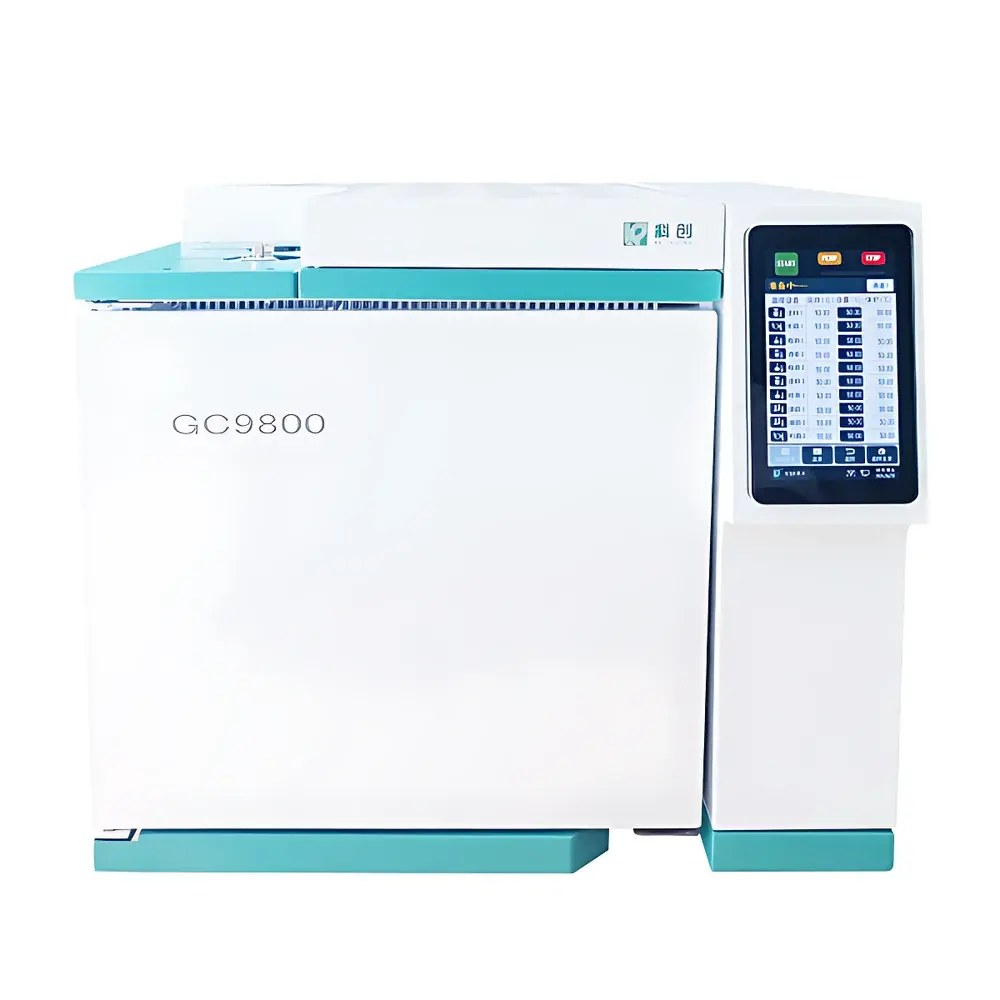
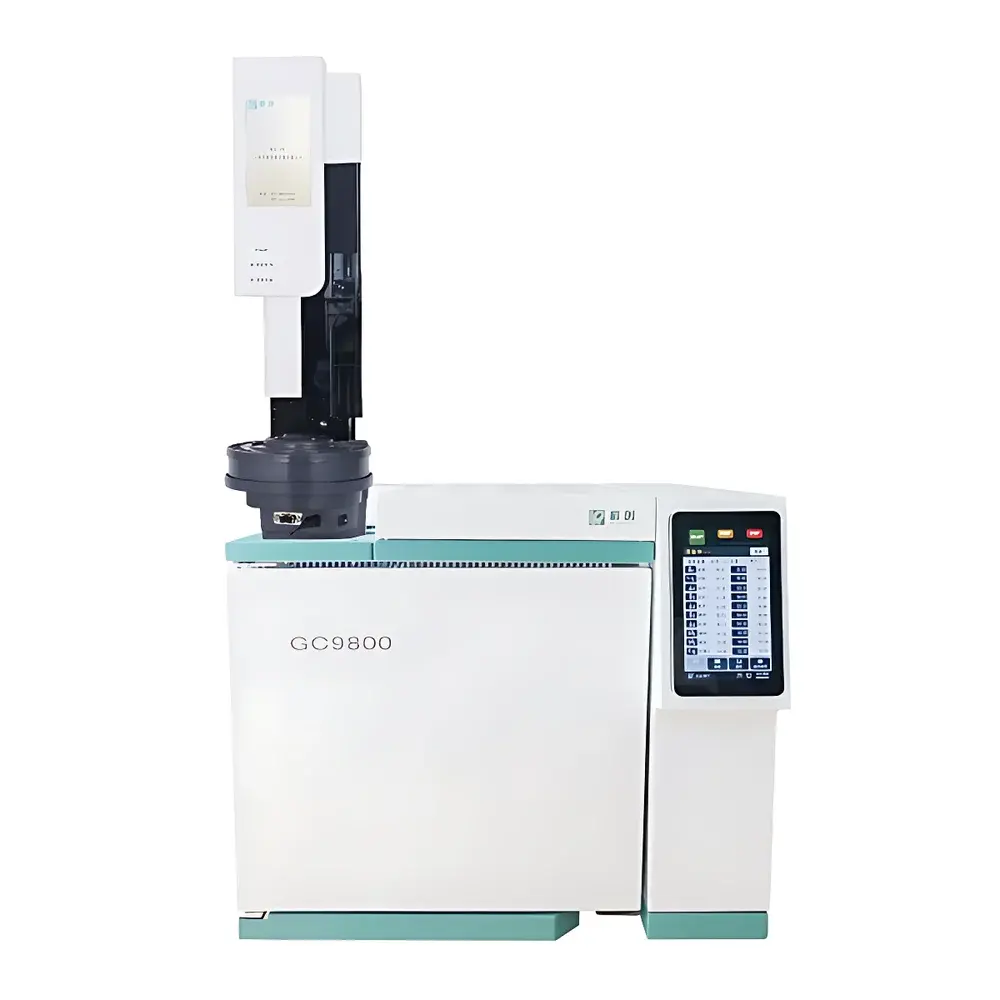
SciTec GC9800N/RB Environmental Benzene Series Analysis Gas Chromatograph
| [Brand | SciTec |
|---|---|
| Origin | Shanghai, China |
| Manufacturer Type | OEM Manufacturer |
| Instrument Type | Laboratory Gas Chromatograph |
| Application | Environmental Air Monitoring |
| Oven Temperature Range | Ambient + 5°C to 400°C |
| Oven Ramp Rate | 0.1–39.9°C/min |
| Oven Cool-Down | 300°C to 50°C in <9 min |
| Carrier Gas Flow Control Range | 0–1200 mL/min |
| Carrier Gas Pressure Control Range | 0–0.4 MPa |
| Injector Max Temp | 400°C |
| Injector Pressure Setpoint Range | 0–0.4 MPa |
| Injector Total Flow Setpoint Range | 0–1200 mL/min |
| Temperature Control Precision | ±0.01°C |
| EPC/EFC Pressure Accuracy | 0.001 psi |
| EPC/EFC Flow Accuracy | 0.001 mL/min |
| Retention Time RSD | <0.008% |
| Peak Area RSD | <1.0% |
| Detector Options | TCD, FID, ECD, FPD |
| Max Oven Cooling Rate | >120°C/min (with motorized door) |
| Programmable Temperature Steps | Up to 16 standard steps (expandable) |
| Data Interface | RJ45 Ethernet (TCP/IP), native support for multi-instrument network control] |
Overview
The SciTec GC9800N/RB is a dedicated laboratory gas chromatograph engineered for precise, regulatory-compliant analysis of benzene, toluene, ethylbenzene, and xylenes (BTEX) in ambient air matrices. It operates on the fundamental principle of gas-phase separation—where volatile organic compounds (VOCs) are partitioned between a mobile carrier gas phase and a stationary phase coated inside a fused-silica capillary column. Separated analytes elute at characteristic retention times and are quantified using high-sensitivity, selectable detectors—including flame ionization (FID), electron capture (ECD), thermal conductivity (TCD), or flame photometric (FPD) detection. Designed specifically for environmental monitoring laboratories, the system meets method requirements aligned with EPA TO-17, ISO 16017-1, and HJ 583–2010 (China’s standard for ambient air BTEX analysis). Its robust architecture supports unattended operation over extended campaigns, with dual-column oven capability enabling parallel method development or backflush configurations.
Key Features
- 10-channel independent temperature control system, including dual programmable ovens—each supporting up to 16 ramp steps (expandable to unlimited via firmware update)
- Integrated electronic pressure and flow control (EPC/EFC) across all gas lines, delivering pressure accuracy of ±0.001 psi and flow resolution of ±0.001 mL/min
- RJ45 Ethernet interface with native TCP/IP stack; enables centralized remote operation, real-time data streaming, and audit-ready instrument supervision across up to 253 units on one network
- 7-inch industrial-grade capacitive touchscreen with embedded baseline visualization, real-time chromatogram display, and direct instrument parameter editing
- Motorized column oven door with rapid cooling (<5 min from 350°C to 50°C), optimized for high-throughput environmental sampling cycles
- Modular detector architecture supporting simultaneous dual-detector signal acquisition and time-programmable channel switching within a single data processing stream
- Self-diagnostic firmware with continuous hardware health monitoring, automatic thermal cutoff on any temperature excursion beyond user-defined limits
Sample Compatibility & Compliance
The GC9800N/RB is validated for use with sorbent tube-based air sampling (e.g., Tenax TA, Carbopack B/C), followed by thermal desorption (optional TD interface compatibility) or direct injection via heated gas-tight syringe. It accommodates standard 0.25–0.53 mm ID capillary columns (e.g., DB-5, HP-PONA, or equivalent polar/non-polar phases) and supports both split/splitless and PTV injection modes. The system complies with GLP and GMP documentation requirements through built-in event logging, electronic signatures (21 CFR Part 11 ready when paired with compliant LIMS), and full traceability of method parameters, calibration records, and run sequences. All temperature and pressure control modules undergo factory calibration against NIST-traceable standards, with documented uncertainty budgets available upon request.
Software & Data Management
The instrument embeds a Linux-based real-time control kernel with SciTec ChromaView™ workstation software—a CE-marked, FDA 21 CFR Part 11-compatible application offering full instrument reverse control, automated calibration curve generation, peak integration with customizable baselines, and compliance reporting templates (e.g., EPA Form 3000 series). Data files conform to ASTM E1947 and AIA/ANDI formats, ensuring interoperability with third-party chemometric tools (e.g., MATLAB, SIMCA) and enterprise LIMS platforms. Audit trails record every parameter change, user login/logout, method modification, and detector signal acquisition—retained for ≥10 years with configurable backup to NAS or cloud storage. Remote access is secured via TLS 1.2 encryption and role-based authentication.
Applications
- Quantification of BTEX compounds in ambient, indoor, and workplace air per ISO 16017-1 and HJ 583–2010
- Method validation and routine QC/QA for environmental testing laboratories accredited to ISO/IEC 17025
- Stack emission monitoring of aromatic hydrocarbons in industrial exhaust streams
- Soil vapor intrusion assessment and landfill perimeter air screening
- Calibration verification of portable PID/FID analyzers using reference gas standards
- Research-grade VOC profiling in urban atmospheric chemistry studies
FAQ
Is the GC9800N/RB compatible with thermal desorption systems?
Yes—the instrument features standardized GC inlet interfaces and timing trigger I/O ports for seamless synchronization with commercially available thermal desorbers (e.g., Markes UNITY, Gerstel CIS). Optional hardware kits include cryo-focusing and cold trap integration.
Can the system operate under 21 CFR Part 11-compliant conditions?
When deployed with ChromaView™ v3.2+ and configured with LDAP/Active Directory authentication, digital certificate signing, and encrypted database logging, the platform satisfies electronic record and signature requirements for regulated environments.
What carrier gases are supported, and how is gas purity managed?
The EPC/EFC module supports N₂, H₂, He, and Ar with automatic gas-type compensation. We recommend ≥99.999% purity grade with integrated oxygen/moisture traps upstream of the inlet manifold.
Does the instrument support ASTM D5504 or ISO 22157-compliant sulfur analysis?
Yes—when equipped with FPD or Pulsed Flame Photometric Detection (PFPD), the system achieves sub-pg/s detection limits for sulfur and phosphorus compounds, fulfilling requirements for natural gas and refinery gas testing.
How is column bleed minimized during high-temperature BTEX analysis?
The dual-oven design allows independent optimization: the analytical column resides in the primary oven (max 400°C), while guard columns or retention gaps may be housed in the secondary oven at lower setpoints—reducing baseline drift and extending column lifetime.
Related Products




