
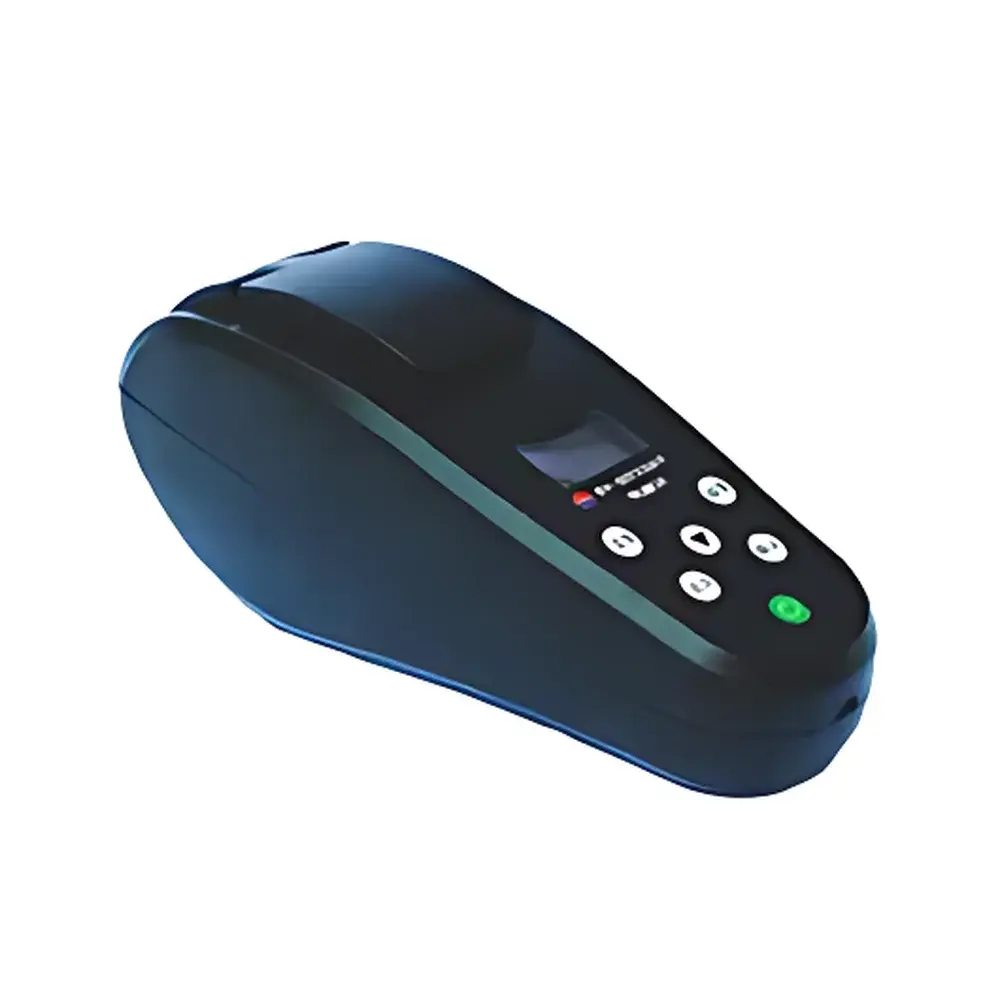
BY-SD1500 Portable Platinum-Cobalt Colorimeter
| Brand | BJBY (Beijing Baoyun) |
|---|---|
| Origin | Beijing, China |
| Model | BY-SD1500 |
| Instrument Type | Handheld Water Quality Analyzer |
| Measurement Method | Platinum-Cobalt Standard Colorimetric Method |
| Range | 0–500 degrees |
| Resolution | 0.1 degree |
| Accuracy | ≤1% ± 0.01 degree |
| Measurement Time | <60 s |
| Display | OLED with backlight |
| Light Source | Pulsed LED (≥100,000 h lifetime) |
| Environmental Operating Conditions | 0–50 °C, 0–90% RH (non-condensing) |
| IP Rating | IP54 |
| Power Management | Built-in battery with low-power diagnostic alert |
| Optical Design | Integrated solid-state light source / monochromator / cuvette chamber / photodetector |
| Sample Compartment | Flip-type integrated light-shield cover |
| Curve Handling | On-device standard curve creation, built-in reference curves, auto-fitting and concentration calculation |
| Calibration | Zero-point calibration only required |
Overview
The BY-SD1500 Portable Platinum-Cobalt Colorimeter is a field-deployable, solid-state optical instrument engineered for rapid, trace-level color assessment of water samples in accordance with the ASTM D1209 and ISO 7887 standards for platinum-cobalt (Pt-Co) colorimetry. Unlike conventional spectrophotometric systems relying on mechanical grating or filter wheels, the BY-SD1500 employs an integrated LED-based optical architecture where the same solid-state emitter functions simultaneously as both broadband light source and narrowband monochromator—eliminating spectral drift, alignment sensitivity, and mechanical wear. This monolithic optical design enables stable photometric performance across temperature gradients and mechanical shock, making it suitable for routine monitoring in municipal water treatment plants, environmental field surveys, wastewater discharge verification, and regulatory compliance sampling. The device operates exclusively on the Pt-Co scale (Hazen units), providing direct readout in degrees without computational conversion, thereby reducing operator error and supporting GLP-aligned documentation workflows.
Key Features
- Monolithic optical path: LED source, monochromator, sample chamber, and photodetector are co-integrated into a single rigid module—no moving parts, no alignment drift, and immunity to vibration-induced misregistration.
- Pulsed LED illumination with thermal management: Extends effective operational lifetime to ≥100,000 hours while minimizing thermal noise and baseline drift during repeated measurements.
- OLED display with adaptive backlight: Delivers high contrast under low ambient light conditions while maintaining ultra-low power consumption—critical for extended battery operation in remote locations.
- Integrated flip-style light shield: Mechanically blocks stray ambient light during measurement without requiring external enclosures or manual positioning—ensures repeatability in outdoor or uncontrolled lighting environments.
- Zero-point calibration only: Eliminates the need for multi-point standardization; factory-traceable Pt-Co reference solutions (e.g., 5, 10, 30, 100, 300, 500 Hazen) can be used optionally for verification, but routine use requires only air or deionized water blanking.
- IP54-rated enclosure: Dust-resistant and protected against water splashes from any direction—validated for operation in humid field conditions, rain-exposed sampling points, and high-humidity laboratory environments.
Sample Compatibility & Compliance
The BY-SD1500 is optimized for aqueous samples meeting standard clarity requirements for Pt-Co colorimetry: turbidity <5 NTU (per ASTM D1209), free of suspended solids that scatter incident light, and non-fluorescent under 455 nm excitation. It accepts standard 10 mm pathlength cuvettes (glass or disposable plastic) and accommodates samples at ambient temperature (0–50 °C). The instrument conforms to the metrological framework of ISO/IEC 17025 for field instruments used in accredited testing laboratories. Its measurement protocol aligns with EPA Method 180.1 (Color, Platinum-Cobalt Scale), APHA Standard Method 2120B, and China’s HJ 506-2009 standard for water quality—color determination. Data output supports audit-ready traceability when paired with laboratory information management systems (LIMS) via optional USB data export.
Software & Data Management
While the BY-SD1500 operates as a standalone field instrument with no embedded operating system, it features non-volatile memory capable of storing up to 500 measurement records—including date/time stamp, measured value (degrees Pt-Co), calibration status flag, and user-defined sample ID. All stored data are accessible via USB-C interface using vendor-provided PC utility software (Windows/macOS compatible), which exports CSV-formatted logs compliant with 21 CFR Part 11 requirements for electronic records (time-stamped, user-authenticated, immutable audit trail enabled). The utility also supports firmware updates, custom curve import/export (in .csv format), and batch report generation aligned with ISO 17025 documentation templates.
Applications
- Regulatory compliance monitoring of drinking water color at intake, treatment stages, and distribution points per national drinking water standards.
- Routine effluent screening at industrial discharge points—especially textile, pharmaceutical, pulp & paper, and food processing facilities.
- Field validation of activated carbon or ozonation efficacy in color removal processes.
- Research-grade comparative analysis of natural organic matter (NOM) content across surface water sources using color as a surrogate parameter.
- Education and training labs requiring rugged, low-maintenance instrumentation for teaching standardized colorimetric methods.
FAQ
Does the BY-SD1500 require annual recalibration by an accredited service provider?
No—its solid-state optical architecture exhibits long-term stability. Annual verification using NIST-traceable Pt-Co standards is recommended for ISO 17025 compliance, but full recalibration is not required unless physical damage occurs.
Can the instrument measure samples with turbidity above 5 NTU?
Not reliably. High turbidity introduces scattering artifacts that violate the assumptions of Pt-Co colorimetry. Pre-filtration through 0.45 µm membrane filters is mandatory for such samples.
Is the OLED display readable in direct sunlight?
Yes—the display uses high-brightness OLED technology with adjustable backlight intensity, ensuring legibility even under full solar irradiance (up to 100,000 lux).
What battery life can be expected under typical field use?
With average usage (20 measurements/day, backlight enabled 30% of time), the rechargeable Li-ion battery delivers ≥120 hours of operational runtime between charges.
Does the device support Bluetooth or Wi-Fi connectivity?
No—wireless interfaces are intentionally omitted to preserve electromagnetic compatibility in industrial environments and ensure uninterrupted operation near variable-frequency drives or RF-emitting equipment.







