
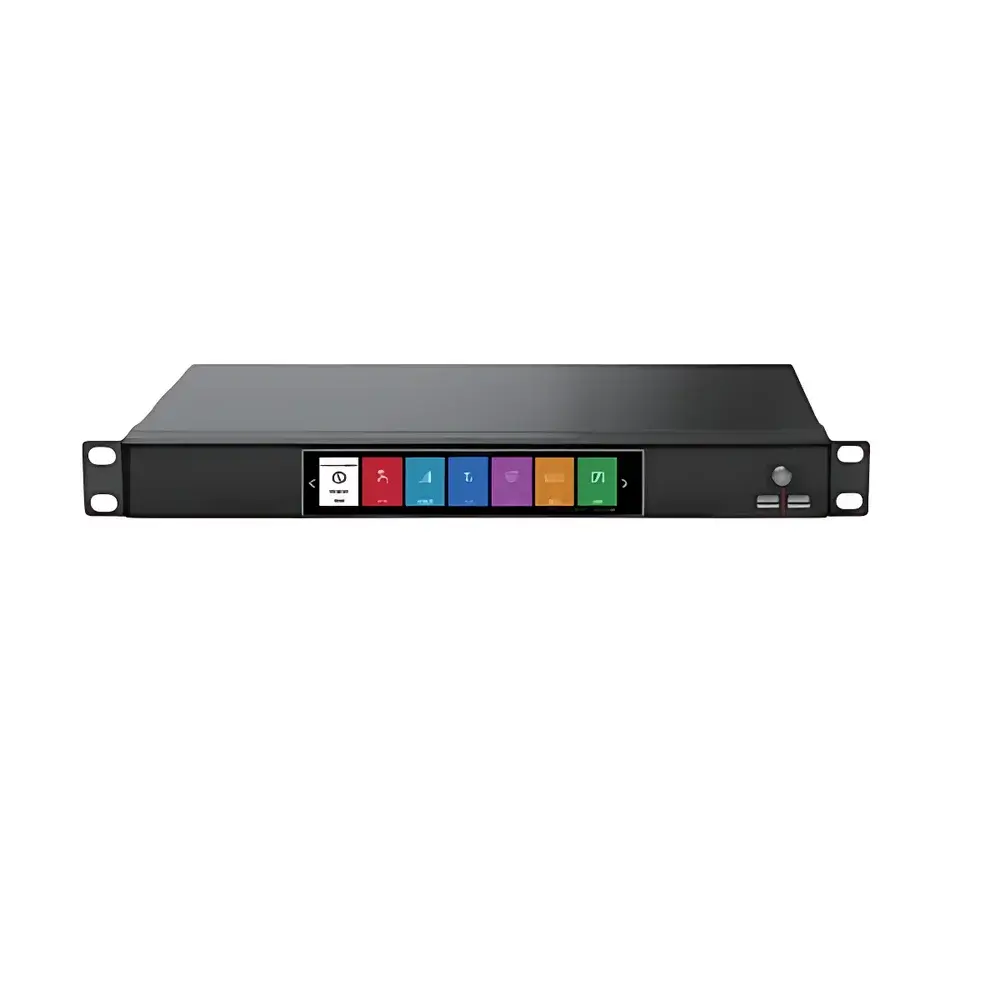
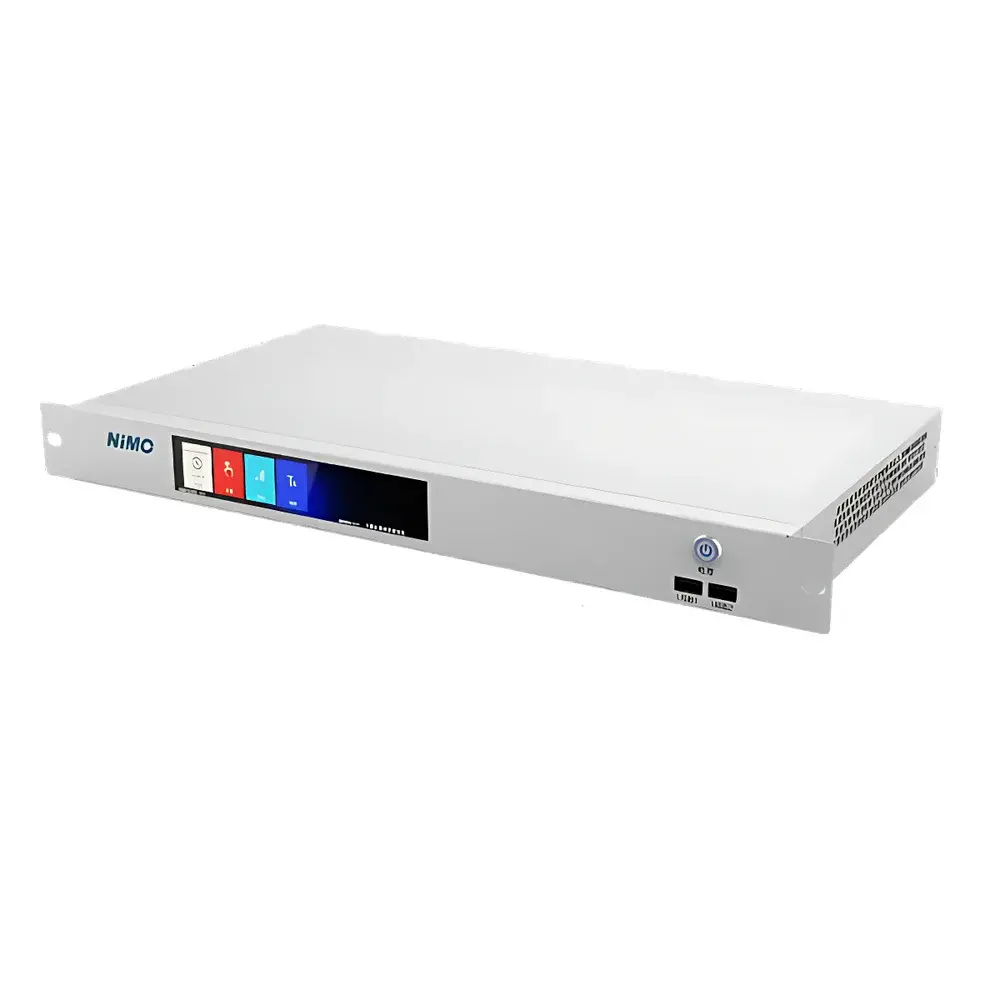
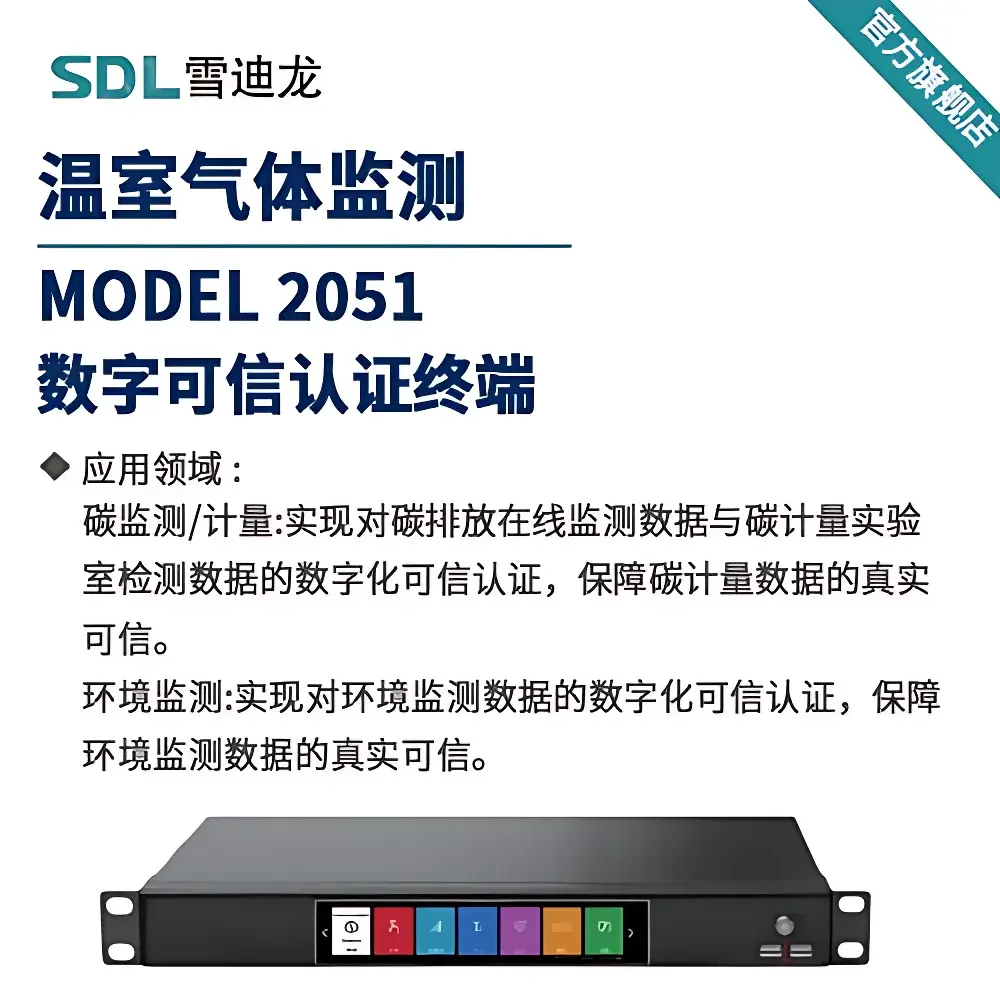
SDL MODEL 2051 Carbon Emission Digital Trust Certification Terminal
| Brand | SDL |
|---|---|
| Origin | Beijing, China |
| Manufacturer Type | Original Equipment Manufacturer (OEM) |
| Country of Origin | China |
| Model | MODEL 2051 |
| Unit Weight | 5 kg |
| Operating Temperature | 20 °C (ambient) |
| Operating Voltage | 220 V AC |
| Data Integrity Assurance | Cryptographic Hashing (SHA-256 & SM3) |
| Time Source | NTP-synchronized RTC with UTC traceability |
| Identity Authentication | Integrated National Cryptography SM2 Hardware Security Module (HSM) |
| Interface Types | RS-485, RS-232, Ethernet (10/100BASE-TX), USB 2.0, DI/DO terminals |
| Compliance | GB/T 35273–2020 (Personal Information Security Specification), GM/T 0015–2012 (Digital Certificate Format), ISO/IEC 17025:2017 (applicable to data integrity workflows), aligned with China’s “Carbon Accounting and Verification Guidelines” (NDRC Notice No. 892 [2022]) |
Overview
The SDL MODEL 2051 Carbon Emission Digital Trust Certification Terminal is a purpose-built hardware security appliance engineered for cryptographic assurance of environmental monitoring and carbon accounting data. It operates on the principle of decentralized trust anchoring—leveraging embedded cryptographic modules to generate immutable, time-stamped digital fingerprints (cryptographic hashes) of raw measurement data at the point of acquisition. Unlike conventional data loggers or edge gateways, the MODEL 2051 does not process or interpret sensor signals; instead, it performs deterministic one-way hashing (using both SHA-256 and national standard SM3 algorithms) on structured data payloads received from connected analyzers, flow meters, CEMS systems, or laboratory instruments. Each hash is cryptographically bound to a trusted timestamp (synchronized via NTP to UTC-traceable stratum-1 servers) and digitally signed using an integrated SM2-based Hardware Security Module (HSM), satisfying Chinese national cryptography requirements (GM/T 0015–2012) and enabling non-repudiation under judicially admissible electronic evidence frameworks (per GB/T 25069–2022). The terminal functions as a zero-knowledge integrity anchor—ensuring data origin authenticity, temporal integrity, and transmission immutability without exposing raw measurement values to external systems.
Key Features
- Integrated SM2-certified Hardware Security Module (HSM) compliant with GM/T 0028–2014, providing FIPS 140-2 Level 3 equivalent physical tamper resistance
- Dual-algorithm cryptographic hashing engine supporting SHA-256 (ISO/IEC 27001-aligned) and SM3 (GB/T 32905–2016) for cross-jurisdictional evidentiary compatibility
- Hardware-enforced time stamping via onboard real-time clock (RTC) synchronized to NTP servers with ≤50 ms UTC deviation under nominal network conditions
- Multi-protocol interface support: RS-485 (Modbus RTU/ASCII), RS-232 (ASCII framing), 10/100BASE-TX Ethernet (TCP/IP stack with TLS 1.2), USB 2.0 host/device mode, and isolated digital I/O for event-triggered hashing
- Immutable audit trail storage: On-device flash memory retains ≥100,000 certified hash records with write-cycle endurance exceeding 100,000 cycles (JEDEC JESD22-A117)
- Zero-trust architecture: No plaintext data storage; no remote configuration interface exposed by default; all firmware updates require dual-signature verification (HSM + vendor root key)
Sample Compatibility & Compliance
The MODEL 2051 is protocol-agnostic and interoperable with any emission monitoring system (EMS), continuous emissions monitoring system (CEMS), gas chromatograph (GC), infrared CO₂ analyzer, or mass flow meter that outputs structured telemetry via serial or TCP/IP. It has been validated for integration with major domestic CEMS platforms (e.g., SDL’s own CEMS-3000 series, EnviSys EMS-7000) and international laboratory instruments (e.g., Thermo Fisher Scientific 48i CO Analyzer, Siemens Ultramat 23). From a regulatory standpoint, the terminal supports compliance workflows required under China’s “Management Measures for Carbon Emission Trading” (MOEE Order No. 19 [2021]), the “Technical Guidelines for Verification of Greenhouse Gas Emissions from Key Emitters” (HJ 1247–2022), and aligns with ISO 14064-3:2019 clause 7.3.2 regarding data integrity verification. Its cryptographic implementation satisfies evidentiary admissibility criteria defined in the Supreme People’s Court’s “Provisions on Evidence in Civil Litigation” (2019) and enables GLP/GMP-aligned audit trails when deployed in accredited calibration laboratories.
Software & Data Management
The terminal operates headlessly and requires no local operating system. Certified hash records are exported via secure SFTP or HTTPS POST to designated blockchain-anchored or centralized evidence repositories (e.g., China’s National Carbon Registration Platform, provincial environmental data centers). A vendor-provided CLI utility (Windows/macOS/Linux) enables batch verification of hash-timestamp-signature triples against original data files using public SM2 verification keys. All export operations generate machine-readable JSON-LD manifests conforming to W3C Verifiable Credentials Data Model v1.1, enabling interoperability with emerging carbon data trust infrastructures. Audit logs include full cryptographic metadata (hash algorithm ID, signature OID, certificate serial number, NTP sync status flag) and are exportable in CSV or XML for third-party forensic review. The device supports 21 CFR Part 11-compliant electronic signatures when integrated into FDA-regulated environmental QA/QC workflows involving greenhouse gas reference standards.
Applications
- Carbon emission verification: Binding real-time CEMS output (e.g., CO₂ concentration, flue gas flow rate, O₂ content) to cryptographically verifiable records for MRV (Monitoring, Reporting, Verification) submissions to provincial ecological environment departments
- Laboratory metrology assurance: Securing analytical results from gravimetric, titrimetric, or GC-based carbon content assays performed per GB/T 30735–2014 or ISO 14067:2018 Annex B
- Environmental data chain-of-custody: Providing timestamped, non-repudiable evidence for ambient air quality monitoring networks (PM₂.₅, SO₂, NOₓ) where data integrity impacts regulatory enforcement decisions
- Green finance due diligence: Generating auditable digital evidence packages for ESG reporting, green bond issuance, and carbon credit certification under the China Certified Emission Reduction (CCER) framework
- Smart grid integration: Anchoring methane leakage detection data from laser-based natural gas monitoring systems deployed across power generation and transmission infrastructure
FAQ
Does the MODEL 2051 modify or interpret incoming sensor data?
No. It performs only cryptographic hashing and digital signing—no signal conditioning, scaling, or unit conversion is applied.
Can the device operate offline for extended periods?
Yes. Internal RTC maintains time accuracy within ±2 seconds per month without network connectivity; hashing and signing remain fully functional. NTP sync resumes automatically upon reconnection.
Is firmware update capability available remotely?
Firmware updates require physical access or authenticated out-of-band delivery via USB. All updates are cryptographically verified using dual-key HSM signature validation.
What evidence standards does the generated hash record satisfy?
Records comply with GB/T 25069–2022 (“Information Security Technology — Terminology for Electronic Evidence”) and meet the technical criteria for “electronic data with integrity guarantee” under Article 104 of the PRC Civil Procedure Law.
How is long-term archival of certified records ensured?
Hashes are stored in wear-levelled industrial-grade NAND flash with ECC protection. Exported records may be anchored to permissioned blockchain ledgers or ingested into ISO/IEC 27040-certified archival storage systems.
Related Products







