
SDL MODEL 9002 Online Chlorophyll-a and Cyanobacteria Density Analyzer
| Brand | SDL |
|---|---|
| Origin | Beijing, China |
| Manufacturer Type | Original Equipment Manufacturer (OEM) |
| Model | MODEL 9002 |
| Output Interfaces | 4–20 mA analog, RS485 digital, relay switch outputs |
| Sensor Communication | RS485 (Modbus RTU protocol) |
| Operating Temperature Range | 0–50 °C with built-in thermistor compensation |
| Excitation Source | High-stability blue LED (λ ≈ 470 nm) |
| Detection Method | In-situ fluorescence spectroscopy |
| Sample Compatibility | Freshwater bodies (lakes, reservoirs, rivers) |
| Cleaning Mechanism | Motor-driven brush auto-cleaning system |
| Compliance | Designed to support ISO 10264, ASTM D5059-20, and China’s HJ 925–2017 for algal biomass monitoring |
Overview
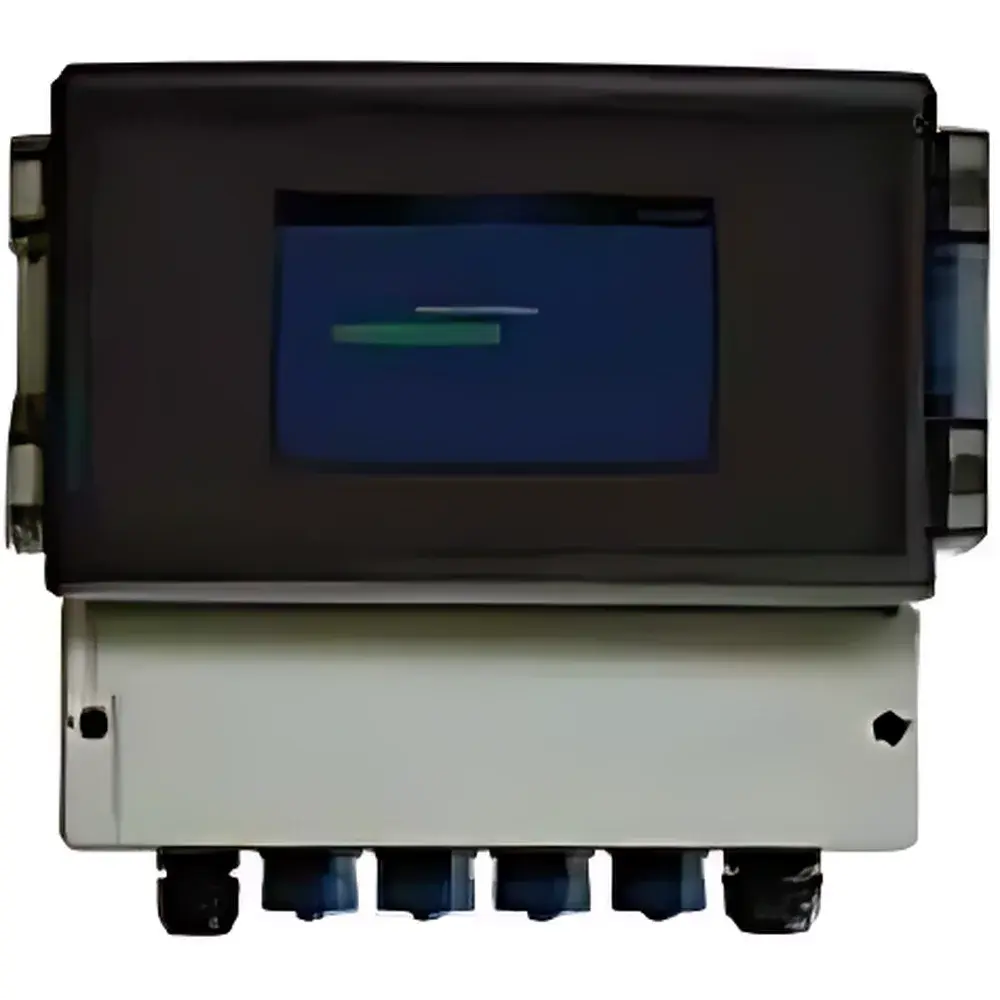
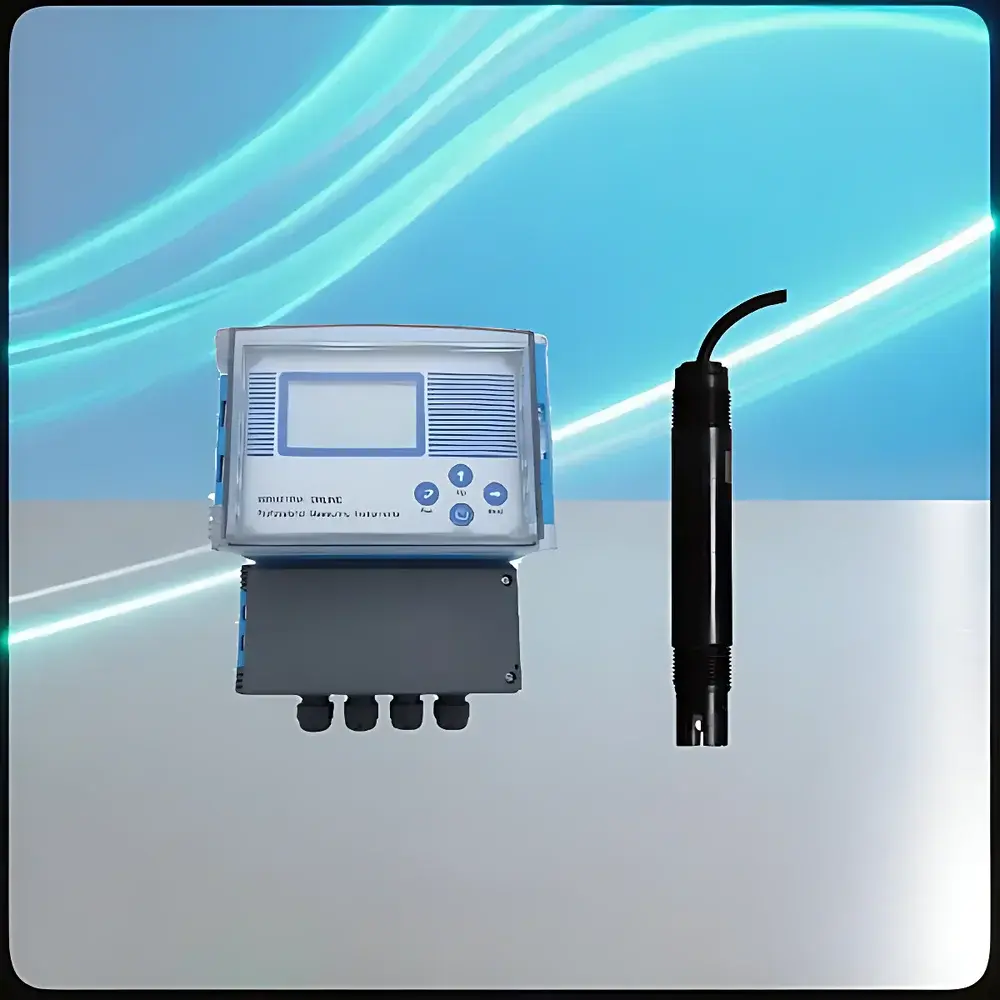
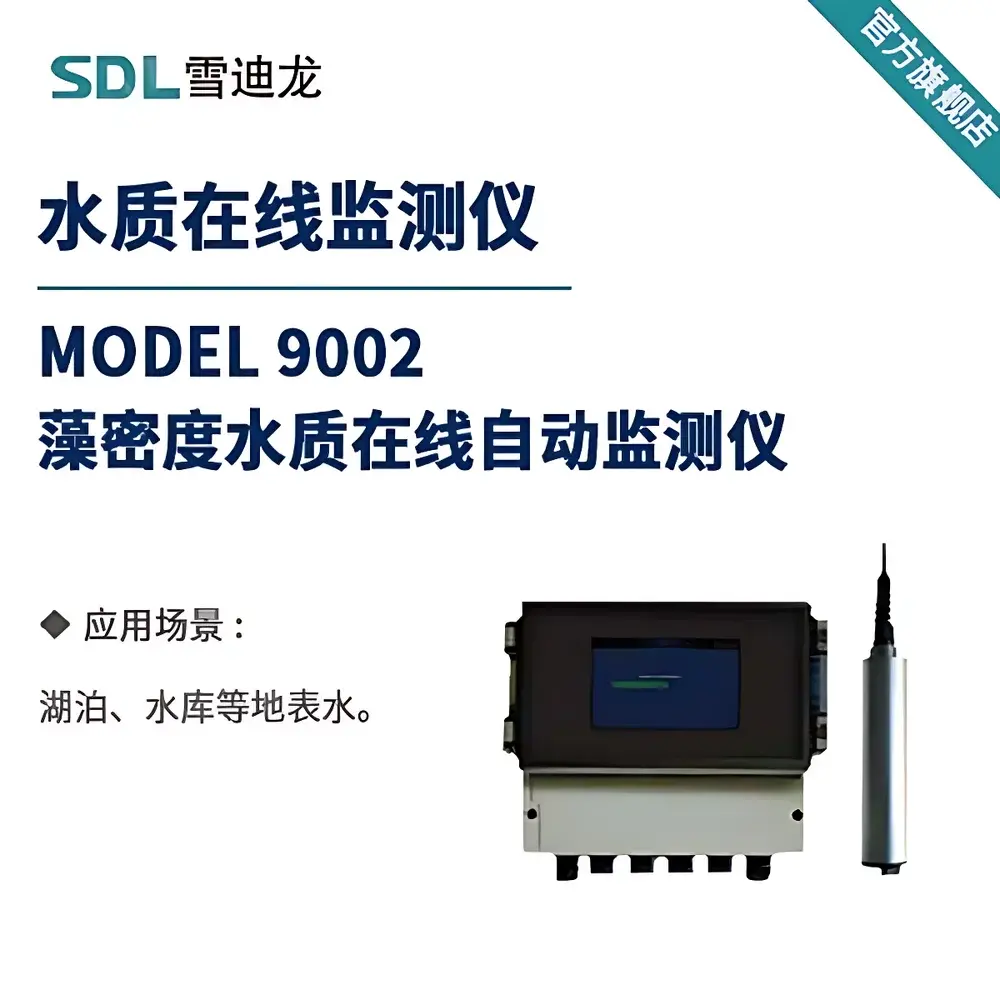
The SDL MODEL 9002 Online Chlorophyll-a and Cyanobacteria Density Analyzer is an in-situ fluorometric instrument engineered for continuous, real-time quantification of phytoplankton biomass—specifically chlorophyll-a concentration and cyanobacterial cell density—in freshwater environments. It operates on the principle of selective excitation and emission fluorescence detection: a high-stability blue LED (peak wavelength ~470 nm) excites chlorophyll-a molecules within intact algal cells, inducing characteristic red fluorescence emission (~680–720 nm). Simultaneously, phycocyanin—a pigment specific to cyanobacteria—is excited at the same wavelength and emits at ~650 nm, enabling dual-parameter discrimination. Optical bandpass filtering and electronic signal processing suppress interference from ambient light, dissolved organic matter fluorescence, and turbidity-induced scattering. The system comprises a ruggedized submersible sensor probe and a field-deployable controller unit capable of managing up to two sensor channels concurrently.
Key Features
- Integrated dual-wavelength fluorescence detection optimized for chlorophyll-a and phycocyanin, supporting early warning of cyanobacterial blooms
- High-intensity, temperature-stabilized blue LED excitation source ensuring long-term photometric consistency (>10,000 hours MTBF)
- Digital RS485 Modbus RTU output with galvanic isolation—enabling noise-immune data transmission over distances up to 1,200 meters
- Onboard PT1000 thermistor with real-time thermal compensation across 0–50 °C, correcting for temperature-dependent fluorescence quenching
- Motor-driven mechanical brush cleaning system activated on user-defined intervals or via remote command, minimizing biofouling impact on optical path integrity
- Controller supports 4–20 mA analog outputs (user-configurable range), dry-contact relay alarms, and timestamped digital logging
- Open communication protocol architecture compliant with Modbus RTU and compatible with SCADA, PLC, and cloud-based telemetry platforms (e.g., MQTT, OPC UA gateways)
Sample Compatibility & Compliance
The MODEL 9002 is validated for deployment in low-to-moderate conductivity freshwater systems—including lakes, reservoirs, intake canals, and slow-moving rivers—with suspended solids concentrations ≤ 100 mg/L and salinity < 0.5 ppt. It is not intended for marine, wastewater effluent, or highly turbid industrial discharge applications. The sensor housing meets IP68 ingress protection rating and is constructed from marine-grade 316 stainless steel and optical-grade fused silica windows. Design and performance align with technical requirements outlined in ISO 10264 (Water quality — Determination of chlorophyll-a by fluorescence), ASTM D5059-20 (Standard Test Method for Fluorometric Determination of Chlorophyll-a in Water), and China’s HJ 925–2017 (Technical Specification for Automatic Monitoring of Algal Toxins and Biomass in Surface Water). Data integrity features—including non-volatile memory storage and configurable audit log retention—support GLP-aligned operational documentation.
Software & Data Management
The controller firmware supports remote configuration and diagnostics via USB-C or Ethernet interface using SDL’s proprietary PC-based Configuration Utility (Windows/Linux compatible). All measurement data—including raw fluorescence intensity counts, compensated chlorophyll-a (µg/L), cyanobacteria density (cells/mL), temperature, and cleaning event timestamps—are stored locally in circular buffer memory (≥30 days at 15-minute intervals). Export formats include CSV and XML; optional integration with SDL Cloud Connect enables encrypted HTTPS-based data forwarding to centralized environmental data management systems. Firmware updates are performed over-the-air (OTA) with SHA-256 signature verification to ensure code authenticity and traceability—meeting baseline cybersecurity expectations for field-deployed environmental instrumentation.
Applications
- Early detection and trend analysis of cyanobacterial harmful algal blooms (cyanoHABs) in drinking water source reservoirs
- Real-time validation of coagulant dosing efficacy in pre-treatment processes at water treatment plants
- Long-term ecological monitoring programs tracking seasonal phytoplankton dynamics under climate variability
- Regulatory compliance reporting for national surface water quality assessment frameworks (e.g., China’s “Blue Sky and Clear Water” initiative)
- Integration into automated river basin management dashboards with multi-parameter sensor networks (turbidity, DO, pH, conductivity)
FAQ
What calibration protocols does the MODEL 9002 require?
Field calibration is performed using certified chlorophyll-a standard solutions traceable to NIST SRM 1952; zero-point verification employs particle-free deionized water. Factory calibration certificates include uncertainty budgets per ISO/IEC 17025 guidelines.
Can the sensor be deployed in ice-covered water bodies?
Yes—provided the sensor is mounted below the maximum expected ice thickness and the housing is rated for static load pressure up to 10 bar; however, brush cleaning function must be disabled during frozen conditions to prevent motor stall.
Is the system compliant with FDA 21 CFR Part 11 for regulated water utilities?
While the MODEL 9002 itself is not a pharmaceutical-grade device, its data logging architecture—including user access controls, electronic signatures, and immutable audit trails—can be configured to meet foundational Part 11 requirements when deployed within validated utility IT infrastructure.
How frequently should the optical window be manually inspected?
Under typical eutrophic lake conditions, visual inspection is recommended every 90 days; the auto-cleaning cycle reduces manual intervention frequency by ≥70% compared to non-cleaned probes.
Does the controller support redundant power input?
Yes—the controller accepts dual 12–24 VDC inputs with automatic failover, enabling seamless operation during solar-charged battery backup transitions.







