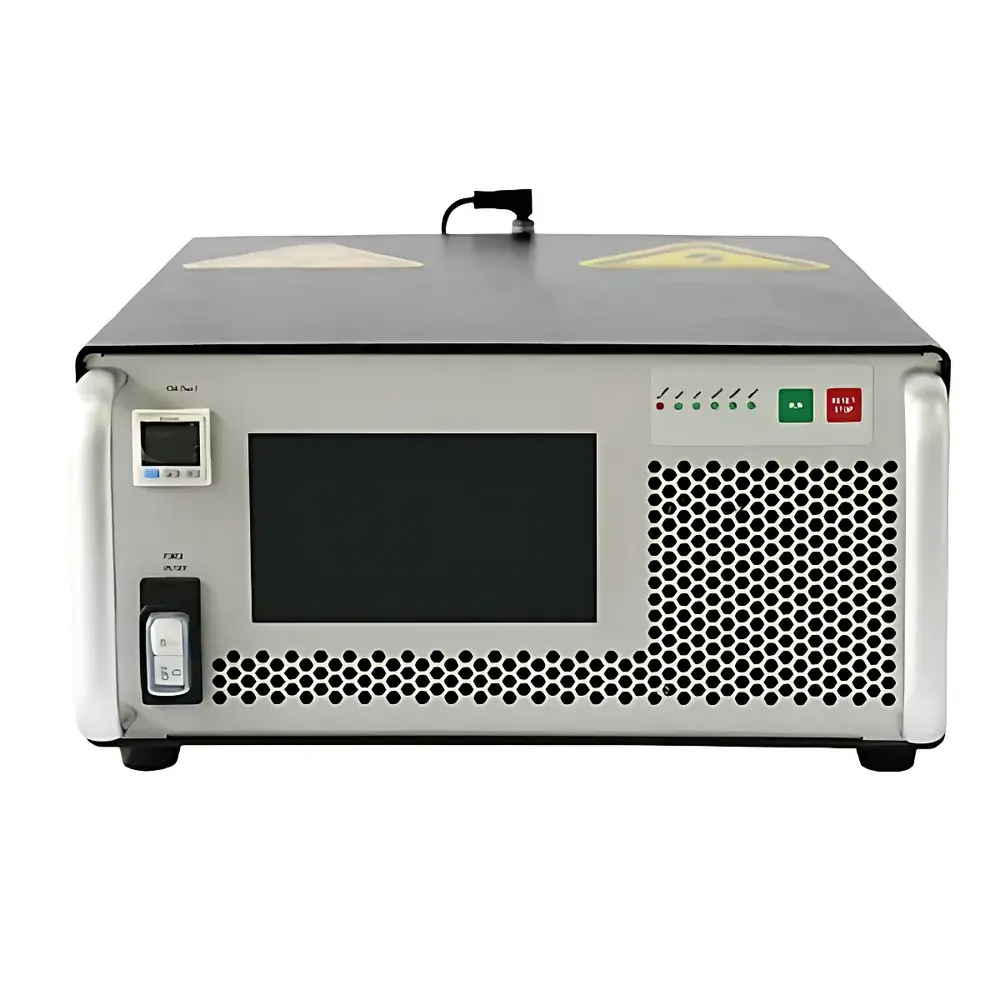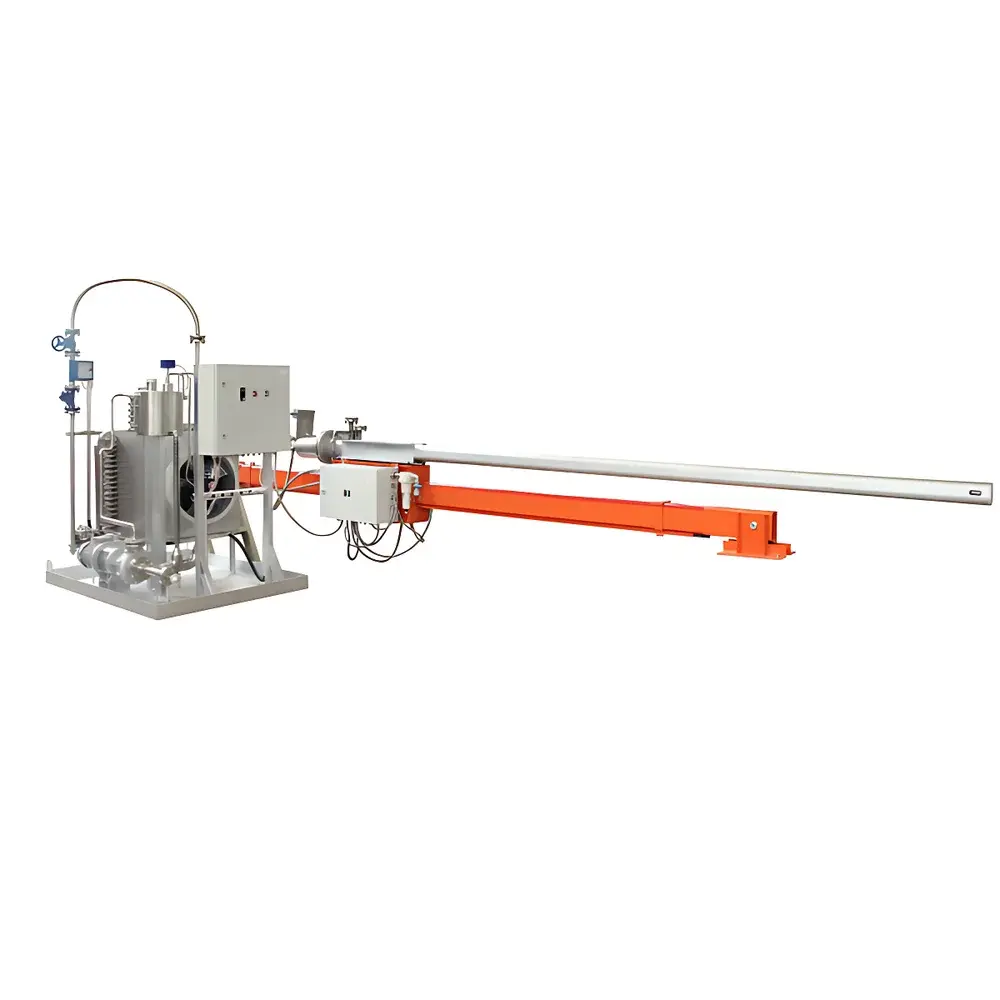
SDL SCS-900A Fixed High-Temperature Gas Analysis System for Environmental Monitoring
| Brand | SDL |
|---|---|
| Origin | Beijing, China |
| Manufacturer | SDL Environmental Technology Co., Ltd. |
| Type | Domestic Industrial Analyzer |
| Model | SCS-900A |
| Pricing | Upon Request |
Overview
The SDL SCS-900A Fixed High-Temperature Gas Analysis System is an engineered solution for continuous in-situ monitoring of combustion gases directly from cement kiln precalciner and rotary kiln decomposition zones. Unlike conventional extractive systems requiring gas cooling, dilution, or condensate removal, the SCS-900A employs a direct-insertion, high-temperature probe operating continuously at up to 1200 °C. Its measurement principle relies on tunable diode laser absorption spectroscopy (TDLAS) combined with paramagnetic O₂ sensing and electrochemical CO detection—configured to deliver real-time, interference-resistant quantification of CO, NOx (NO + NO₂), and O₂ under harsh thermal and particulate-laden process conditions. Designed specifically for compliance-grade monitoring in cement manufacturing, the system meets the functional requirements of EN 15267-3 (QAL1 certified analyzers), EPA Method 320, and China’s HJ 75–2017 and HJ 76–2017 standards for continuous emission monitoring systems (CEMS).
Key Features
- Direct-insertion probe fabricated from sintered silicon carbide (SiC) and Inconel 625 alloy—rated for continuous exposure to 1200 °C flue gas without active cooling or quenching;
- Integrated multi-gas sensor module with TDLAS-based NOx measurement (dual-wavelength, 1.8–2.0 µm range), paramagnetic O₂ detection (±0.1% O₂ full scale), and high-stability electrochemical CO cell (0–1000 ppm range);
- No external chiller, water trap, or heated sample line required—reducing system footprint, power consumption, and failure points;
- Self-cleaning optical path via pulsed purge air and vibration-dampened probe mounting to mitigate ash deposition and thermal shock;
- IP66-rated field enclosure with redundant temperature-controlled electronics compartment (operating range: −20 °C to +60 °C ambient);
- Modular architecture supporting hot-swappable sensor cartridges and field-upgradable firmware compliant with IEC 61508 SIL2 functional safety requirements.
Sample Compatibility & Compliance
The SCS-900A is validated for use in cement clinker production environments where flue gas contains high concentrations of alkali vapors (K, Na), SO₂ (≤2000 ppm), dust loading up to 10 g/Nm³, and rapid thermal transients (±50 °C/min). It complies with China’s mandatory CEMS certification framework (HJ 75–2017 for performance acceptance, HJ 76–2017 for technical specifications) and supports data traceability per GB/T 19001–2016 (ISO 9001) and GB/T 24001–2016 (ISO 14001). The system generates audit-ready logs—including zero/span verification timestamps, calibration gas lot numbers, and sensor diagnostic codes—enabling GLP-aligned record retention and regulatory reporting.
Software & Data Management
The embedded analyzer controller runs SDL’s proprietary CEMS-OS v4.2 firmware, featuring dual-channel analog outputs (4–20 mA), Modbus TCP/RTU, and optional OPC UA interface. Data acquisition includes automatic drift correction using internal reference cells and adaptive baseline compensation for particulate-induced signal attenuation. All measurements are time-stamped with NTP-synchronized UTC and stored locally on encrypted SD card (≥1 year of 1-second resolution data). Remote access is supported via TLS 1.2-secured web interface, enabling configuration, diagnostics, and historical trend review without local PC dependency. Audit trail functionality satisfies FDA 21 CFR Part 11 requirements for electronic records and signatures when deployed in regulated environmental QA/QC workflows.
Applications
- Real-time optimization of calciner air staging to minimize thermal NOx formation while maintaining fuel efficiency;
- Dynamic control of SNCR urea injection based on localized NOx concentration gradients;
- O₂ feedback loop integration with kiln ID fan speed and coal mill output for combustion stoichiometry management;
- Compliance reporting for provincial ecological environment bureaus under China’s “Blue Sky Defense Campaign” emission caps;
- Troubleshooting refractory wear and burner misalignment through longitudinal CO/O₂ ratio trending.
FAQ
Does the SCS-900A require periodic calibration with span gases?
Yes—daily automated zero/span checks are recommended using certified NIST-traceable calibration gases (CO in N₂, NO in N₂, and synthetic air). Manual full-range calibration is required every 90 days or after sensor replacement.
Can the system operate in high-humidity or acidic gas environments?
The probe and optical module are corrosion-resistant to HCl (<50 ppm) and SO₂ (<2000 ppm) at operating temperature; however, condensation below 150 °C must be avoided upstream of the analyzer housing.
Is third-party QAL1 certification available for this model?
The SCS-900A has undergone independent verification per EN 15267-3 by China National Environmental Monitoring Centre (CNEMC) and holds QAL1 certification under certificate No. CNEMC-CEMS-QAL1-2023-0892.
What is the typical installation lead time and commissioning scope?
Standard installation includes probe welding, flange sealing, cable routing, and site-specific validation per HJ 75–2017 Annex D; full commissioning (including 7-day stability test and data integration with DCS) typically requires 5–7 working days.
How is sensor lifetime managed in continuous high-temperature service?
Electrochemical CO sensors have a nominal lifespan of 24 months at ≤800 °C average exposure; TDLAS lasers and paramagnetic O₂ cells are rated for ≥5 years MTBF with scheduled optical alignment verification every 6 months.