
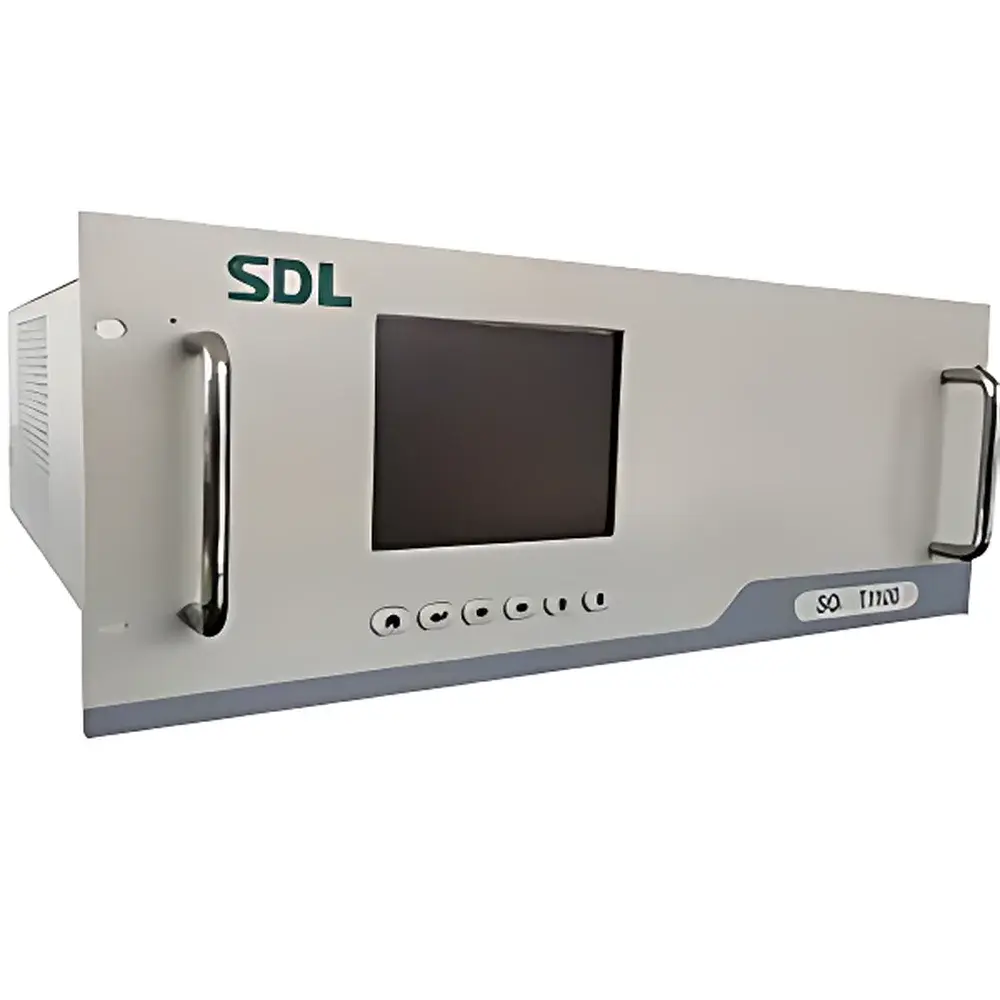
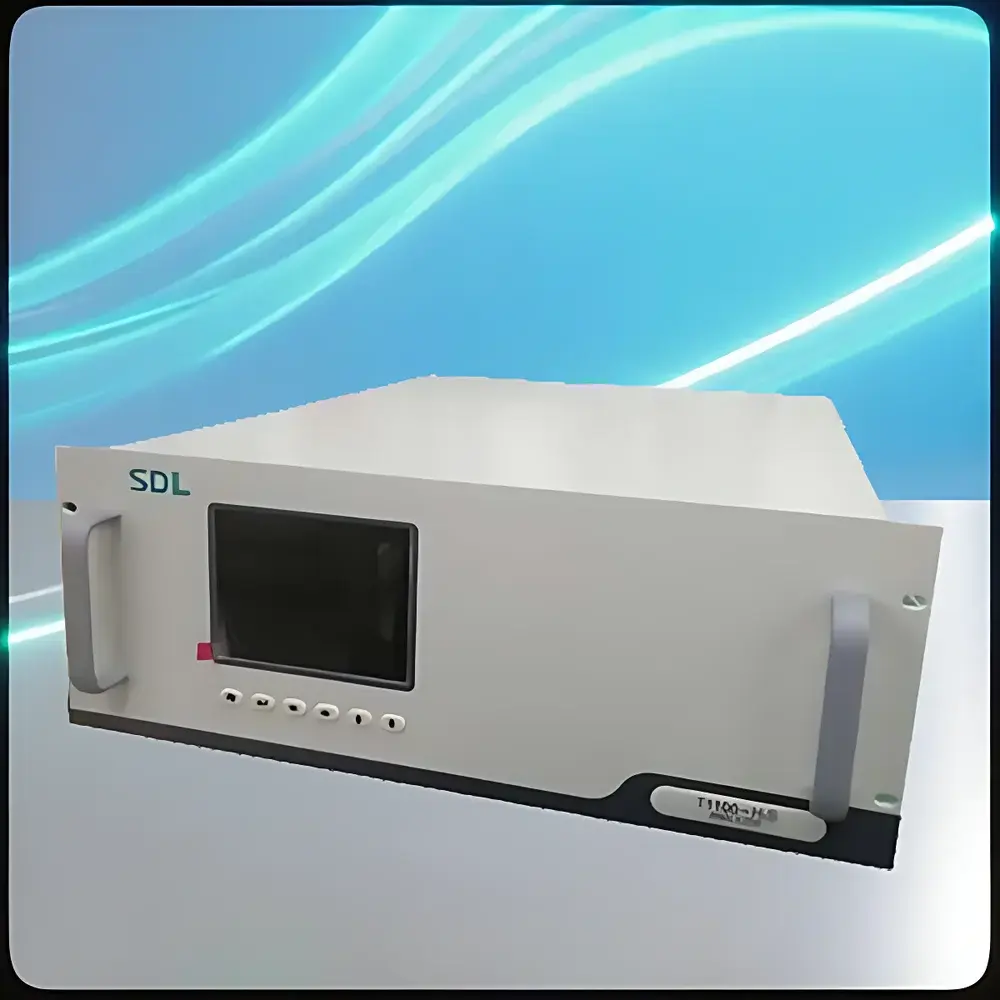
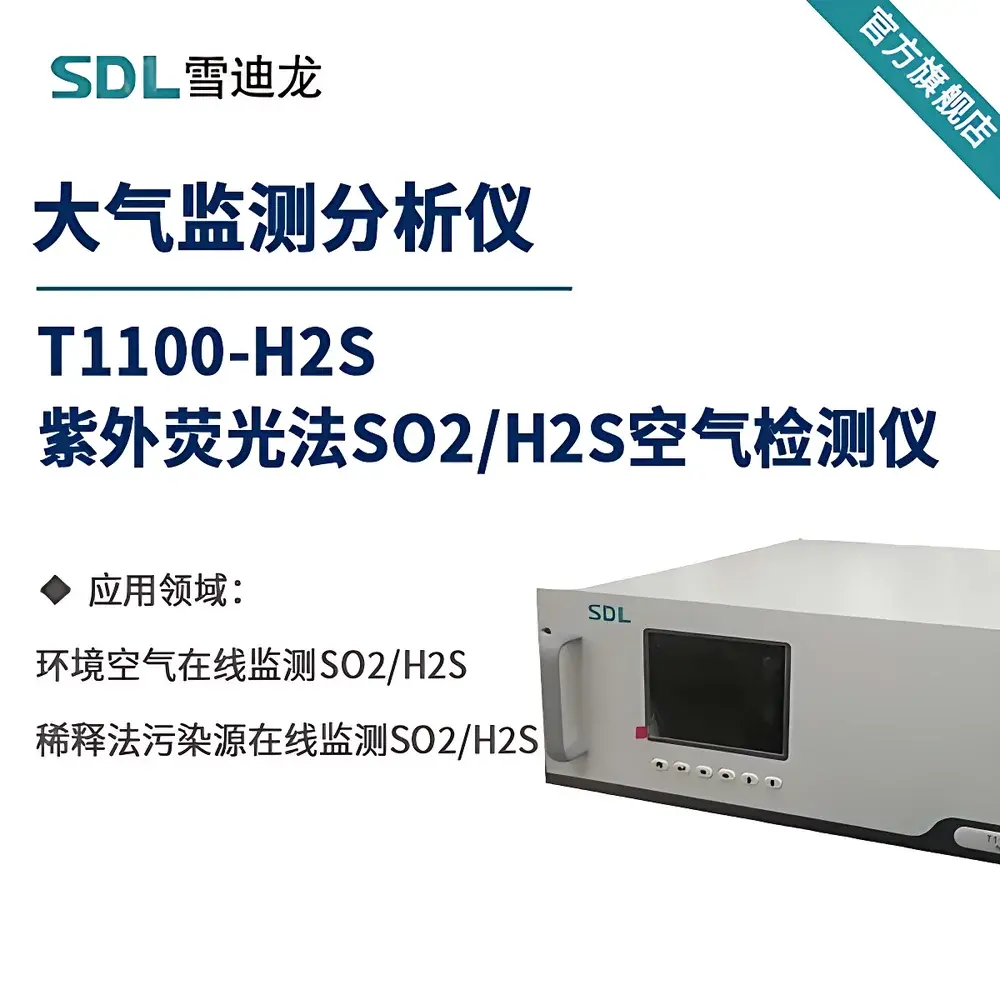
SDL T1100-H2S UV Fluorescence Ambient Air H₂S Analyzer
| Brand | SDL |
|---|---|
| Origin | Beijing, China |
| Manufacturer Type | Direct Manufacturer |
| Product Origin | Domestic (China) |
| Model | T1100-H2S |
| Instrument Type | Online Fixed-Position Gas Analyzer |
| Target Analyte | Hydrogen Sulfide (H₂S) |
| Measurement Principle | Ultraviolet Fluorescence (UVF) |
| Calibration Mode | Internal Auto-Zero Capability |
| Data Processing | Configurable Filtering & Averaging Interval |
| Operational Status Monitoring | Real-time Internal Parameter Display & Remote Diagnostics |
| Maintenance Architecture | Modular Component Design |
| Regulatory Context | Compliant with Chinese EPA HJ 670–2013 for H₂S Monitoring |
Overview
The SDL T1100-H2S is an online ambient air quality monitor engineered for continuous, selective quantification of hydrogen sulfide (H₂S) in outdoor and industrial boundary air environments. It employs ultraviolet fluorescence (UVF) detection—a well-established optical spectroscopic method in trace gas analysis—where H₂S molecules are excited by short-wavelength UV radiation (typically 190–220 nm), inducing characteristic fluorescence emission in the near-UV range (280–350 nm). The intensity of this emitted signal is linearly proportional to H₂S concentration under controlled photolysis conditions, enabling high specificity and minimal cross-sensitivity to common interferents such as SO₂, NOₓ, hydrocarbons, or particulate matter. Unlike electrochemical or metal-oxide semiconductor sensors, UVF provides inherent stability over extended deployment cycles and eliminates drift-related recalibration frequency. The analyzer is designed for unattended operation in fixed-site monitoring networks—including municipal air quality stations, refinery perimeters, wastewater treatment plant fence lines, and landfill off-gas corridors—where regulatory compliance and long-term data integrity are mission-critical.
Key Features
- Modular hardware architecture enables field-replaceable optical modules, detector assemblies, and gas-handling subunits—reducing mean time to repair (MTTR) and supporting lifecycle maintenance without full instrument replacement.
- Adaptive gain control dynamically adjusts photomultiplier tube (PMT) amplification based on real-time fluorescence signal amplitude, preserving measurement linearity across wide dynamic ranges and mitigating saturation during transient concentration spikes.
- Embedded operational diagnostics continuously log internal parameters—including lamp intensity, detector temperature, flow rate, pressure, and optical path cleanliness—enabling predictive maintenance and remote health assessment via standard Modbus TCP or RS-485 interfaces.
- Configurable data processing engine supports user-defined moving-average windows (1–3600 seconds), median filtering, and outlier rejection algorithms to meet site-specific data smoothing requirements aligned with national reporting protocols (e.g., China’s HJ 655–2013).
- Internal auto-zero functionality eliminates dependency on external zero-air generators; utilizes catalytic scrubbing and thermal desorption pathways to establish baseline reference without consumables or auxiliary gas supplies.
- Zero and span calibration scheduling is programmable at user-defined intervals (e.g., daily, weekly), with audit-trail logging compliant with GLP-aligned data governance frameworks.
Sample Compatibility & Compliance
The T1100-H2S is validated for use with ambient air samples drawn through heated sample lines (optional) to prevent condensation-induced adsorption losses. It accommodates inlet flow rates of 0.5–2.0 L/min and operates within ambient temperature ranges of −20 °C to +50 °C and relative humidity up to 95% non-condensing. Sample conditioning includes particulate filtration (≤2.5 µm), moisture removal via Nafion® membrane dryers (optional), and optional ozone scrubbing to suppress photochemical interference. The analyzer conforms to China’s Ministry of Ecology and Environment (MEE) technical specification HJ 670–2013 for H₂S continuous emission monitoring systems and meets electromagnetic compatibility (EMC) requirements per GB/T 18268.1–2010. While not certified to EU MCERTS or U.S. EPA PS-15 equivalency, its UVF methodology aligns with the fundamental performance criteria outlined in ISO 19700:2018 for optical gas analyzers.
Software & Data Management
The embedded firmware supports dual communication protocols: Modbus RTU/ASCII over RS-485 and Modbus TCP over Ethernet, facilitating integration into SCADA, DCS, or centralized environmental data acquisition platforms. Local HMI displays real-time concentration (ppb/v), status flags, alarm events (e.g., flow fault, lamp timeout, calibration overdue), and diagnostic histograms. All configuration changes, calibration logs, and alarm records are timestamped and stored internally for ≥30 days. Optional cloud-connectivity kits enable secure TLS 1.2–encrypted data transmission to web-based dashboards with role-based access control. Audit trails comply with basic ALCOA+ principles (Attributable, Legible, Contemporaneous, Original, Accurate), though full 21 CFR Part 11 compliance requires supplemental validation documentation and third-party electronic signature implementation.
Applications
- Continuous fence-line monitoring at petrochemical facilities and natural gas processing plants where H₂S fugitive emissions must be reported per local environmental permits.
- Urban and regional ambient air quality networks tracking background H₂S levels near industrial corridors or sewage infrastructure.
- Odor impact assessment studies requiring high-temporal-resolution H₂S data correlated with meteorological parameters.
- Compliance verification for landfill gas collection systems and biogas upgrading facilities subject to VOC/H₂S co-emission limits.
- Research-grade atmospheric chemistry investigations involving sulfur-cycle dynamics in semi-rural or coastal environments.
FAQ
Does the T1100-H2S require external zero-air supply for calibration?
No—it features an integrated auto-zero system that chemically purifies sample air in situ using a proprietary catalytic converter and thermal desorption stage, eliminating the need for bottled zero air or membrane-based generators.
Can the instrument measure both SO₂ and H₂S simultaneously?
The T1100-H2S variant is optimized exclusively for H₂S detection. Although the underlying UVF platform shares architectural similarities with SDL’s SO₂-dedicated models (e.g., T1100-SO₂), spectral overlap and quenching effects preclude reliable dual-analyte quantification in a single optical cell without hardware modification.
What is the typical detection limit under field conditions?
While formal specifications are application-dependent and installation-specific, field deployments consistently achieve sub-ppb detection limits (e.g., 0.3 ppb @ 1σ, 1-minute average) when configured with optimal optical alignment, stable lamp output, and low-noise PMT biasing.
Is remote firmware update supported?
Yes—via secure FTP or HTTP(S) upload through the Ethernet interface, provided network policies permit inbound connections to the device’s management port. Updates retain all user configurations and historical logs.
How is data integrity ensured during power interruptions?
Non-volatile flash memory preserves active configuration, calibration coefficients, and the most recent 72 hours of 1-second resolution raw data. Upon reboot, the system resumes normal operation without manual reinitialization.







