
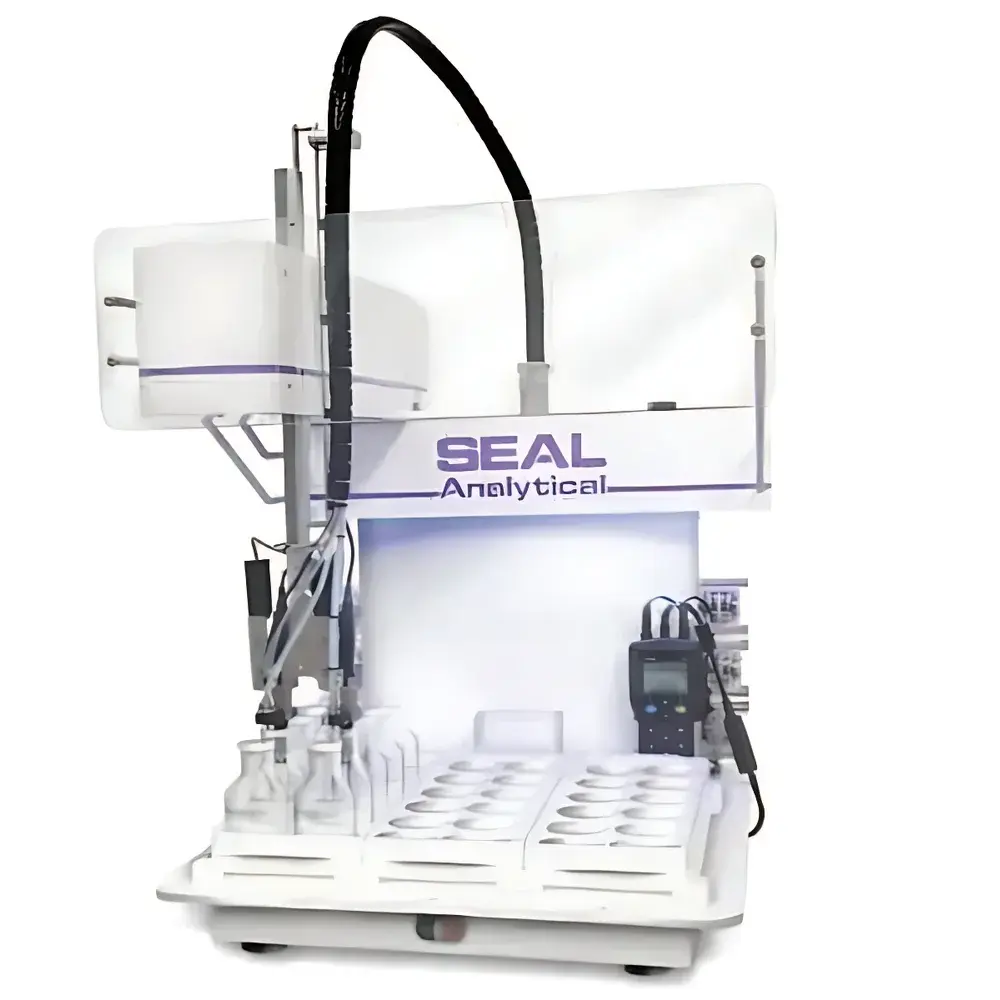
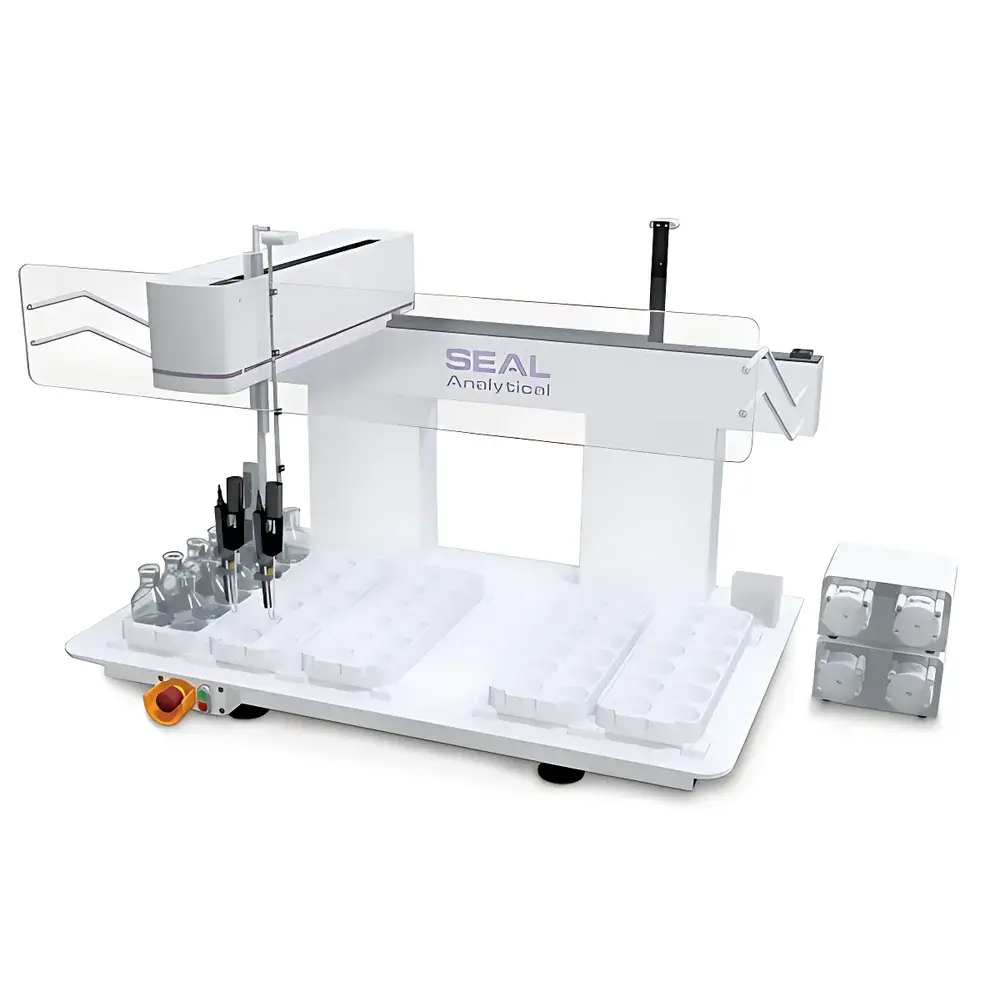
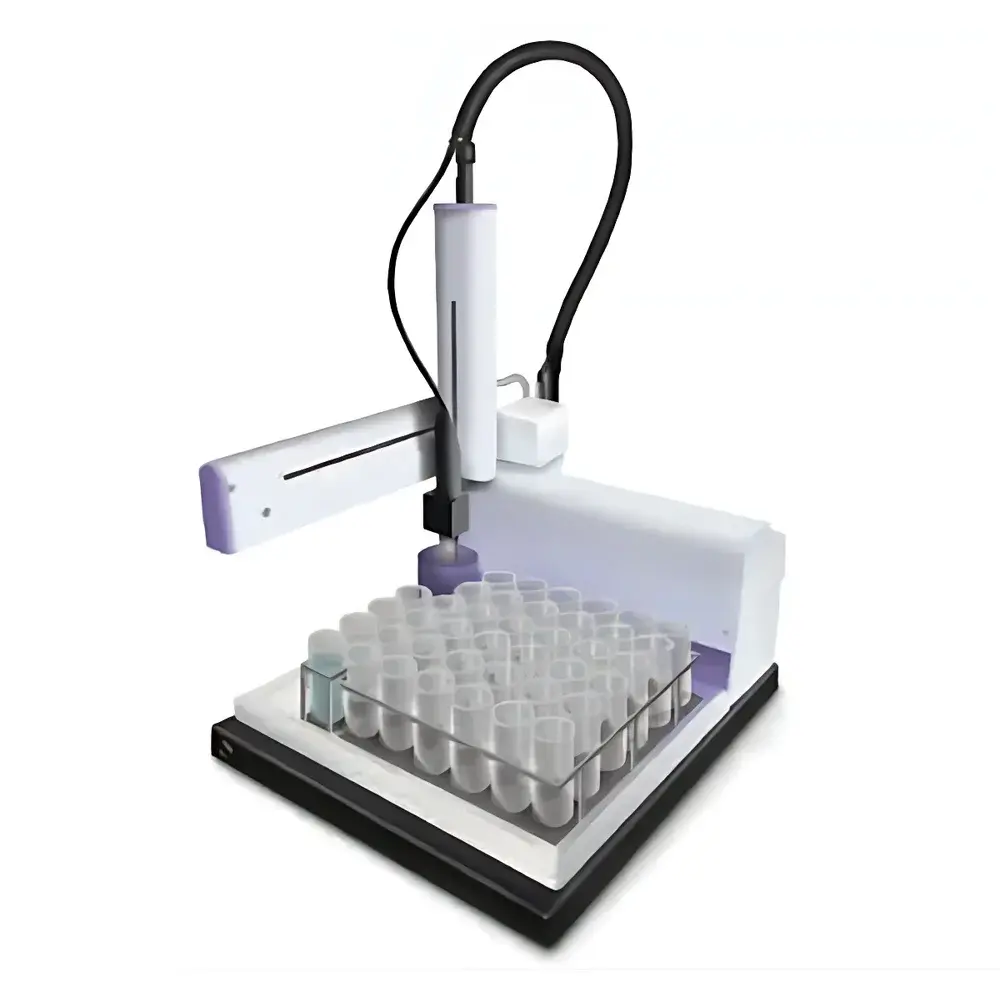
SEAL MiniLab Robotic Analytical System
| Brand | SEAL |
|---|---|
| Origin | Netherlands |
| Manufacturer Type | Authorized Distributor |
| Origin Category | Imported |
| Model | MiniLab |
| Pricing | Upon Request |
Overview
The SEAL MiniLab Robotic Analytical System is a modular, benchtop-scale laboratory automation platform engineered for precision, reproducibility, and regulatory compliance in routine wet-chemistry analysis. Built on a robust Cartesian robotic architecture with integrated dual-arm manipulation, the system executes end-to-end sample preparation and analytical workflows without manual intervention. Its core operational principle relies on programmable motion control coupled with sensor-guided liquid handling, gravimetric dispensing, barcode-driven sample tracking, and real-time environmental monitoring (e.g., pH, DO, temperature). Designed specifically for high-throughput environmental and water quality testing, the MiniLab conforms to internationally recognized standard methods—including EPA 405.1, ISO 5815-1, EN 1899-1/2, ISO 6060, ISO 15705, and Standard Methods 5210 B—ensuring method traceability and audit readiness for GLP and ISO/IEC 17025-accredited laboratories.
Key Features
- Dual high-precision robotic arms enabling concurrent operations (e.g., simultaneous pipetting and bottle capping)
- Modular configuration supporting multiple assay formats: BOD5/BOD7, COD (open-reflux and sealed-tube), pH, conductivity, turbidity, alkalinity, ISE, and colorimetry
- Full sample lifecycle automation: barcode scanning, cap removal/sealing, gravimetric weighing, liquid dispensing (reagents & diluents), homogenization, filtration, air purging, incubation, and endpoint measurement
- 24/7 unattended operation with built-in fault detection, error logging, and automatic recovery protocols
- CE-compliant enclosure with front/side panel locking mechanisms and integrated safety interlocks
- Onboard peristaltic pumps and reagent delivery modules fully synchronized with analytical instrumentation
- Tool-changing capability for adaptive workflow execution across diverse chemistries and vessel types (e.g., 36–144 sample positions; 50–100 mL beakers or BOD bottles)
Sample Compatibility & Compliance
The MiniLab accommodates heterogeneous sample matrices—including wastewater, surface water, soil extracts, and digested sludge—without cross-contamination risk, thanks to dedicated wash stations, disposable tips, and validated decontamination cycles. All automated BOD and COD procedures comply with statutory regulatory frameworks: EPA 405.1 (BOD), ISO 5815-1 (BOD), ISO 6060 (COD), ISO 15705 (ST-COD), and DIN 38409. The system supports full method validation documentation packages and maintains complete electronic records aligned with FDA 21 CFR Part 11 requirements—including user authentication, audit trails, electronic signatures, and immutable data archiving. Instrument qualification (IQ/OQ/PQ) documentation is available upon request to support GxP implementation.
Software & Data Management
Controlled via SEAL’s proprietary Windows-based software, the MiniLab interface provides intuitive drag-and-drop protocol builder functionality, preconfigured method templates (BOD, COD, pH, etc.), and real-time status dashboards. Multi-language support (English, German, French, Spanish, Dutch) ensures global usability. Native LIMS integration is achieved through ASTM E1384-compliant HL7 and CSV import/export, enabling bidirectional transfer of sample IDs, test requests, instrument parameters, and final results. Raw data—including timestamps, robot position logs, weight readings, pH/DO values, and titration curves—are stored in structured SQLite databases with optional encryption and scheduled backup to network drives or cloud repositories. Software updates are delivered via secure HTTPS channels with version-controlled release notes and change management documentation.
Applications
- Automated BOD5/BOD7 analysis per ISO 5815-1 and EPA 405.1, including sample dilution, ATU addition, nitrification inhibition, incubation control, and dissolved oxygen measurement
- COD determination using both open-reflux (ISO 6060) and sealed-tube (ISO 15705) methodologies, with automated sulfuric acid and potassium dichromate dosing, digestion heating, and back-titration
- pH and conductivity analysis across up to 144 samples per run, with automatic electrode calibration, rinsing, and temperature compensation
- Custom assay development for alkalinity, turbidity, colorimetric nitrogen/phosphorus, and ion-selective electrode measurements
- Soil leachate and extract analysis requiring filtration, pH adjustment, and matrix-matched dilution prior to instrumental analysis
FAQ
Does the MiniLab support remote monitoring and diagnostics?
Yes—via secure VPN or local network access, users can monitor live run status, view error logs, receive email/SMS alerts for critical events, and initiate diagnostic routines remotely.
Can the MiniLab be integrated with third-party titrators or spectrophotometers?
Yes—the system features standardized RS-232, USB, and Ethernet interfaces compatible with major OEM analyzers (e.g., Metrohm, Hach, Thermo Fisher); custom drivers are available under NDA.
What maintenance intervals are recommended for the robotic arms and fluidics?
Robotic arm lubrication and belt tension verification are recommended every 6 months; fluidic lines and valves require quarterly inspection and cleaning per the maintenance logbook.
Is method validation assistance provided by SEAL?
SEAL offers on-site or virtual IQ/OQ/PQ support, including protocol development, performance qualification runs, and regulatory documentation review aligned with ISO/IEC 17025 and GLP standards.
How does the MiniLab ensure traceability during multi-day BOD incubations?
Each BOD bottle is assigned a unique ID linked to its barcode; the system logs all manipulations—including time-stamped cap actions, DO readings, and incubation chamber conditions—generating a complete digital chain-of-custody record.






