
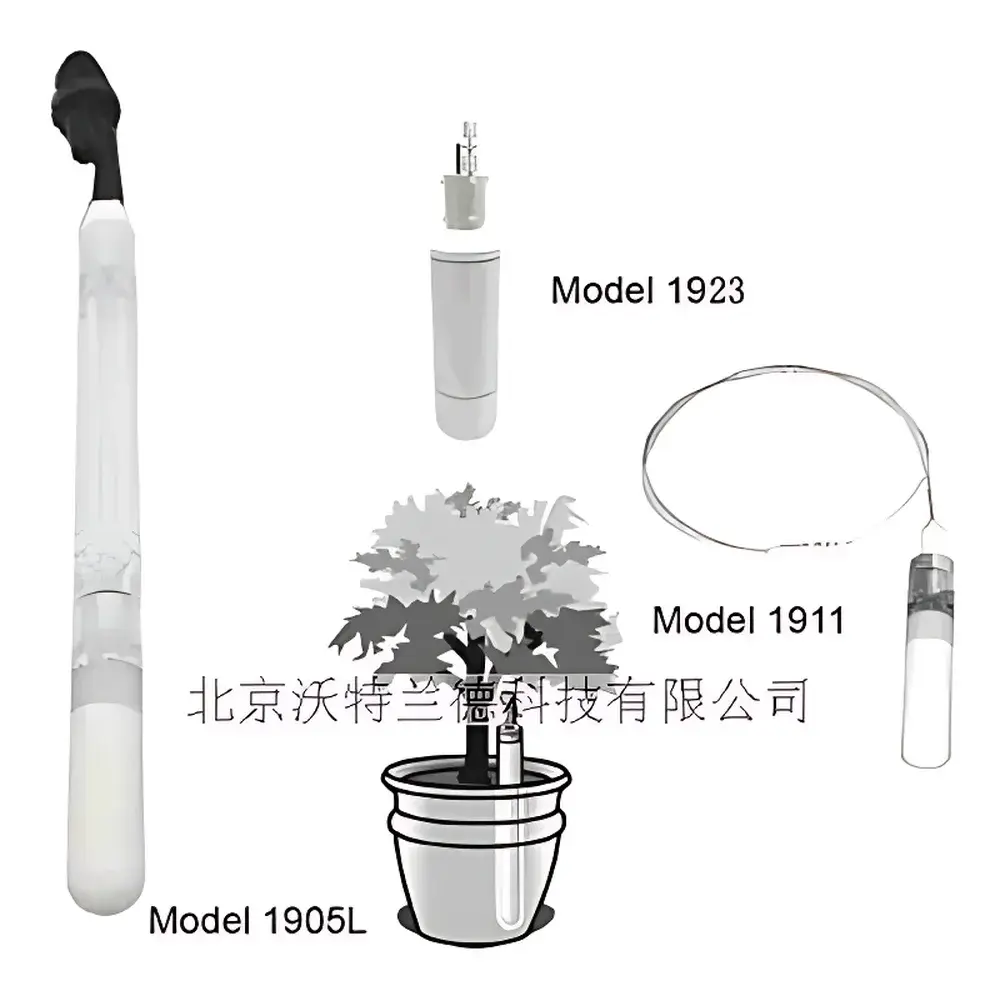
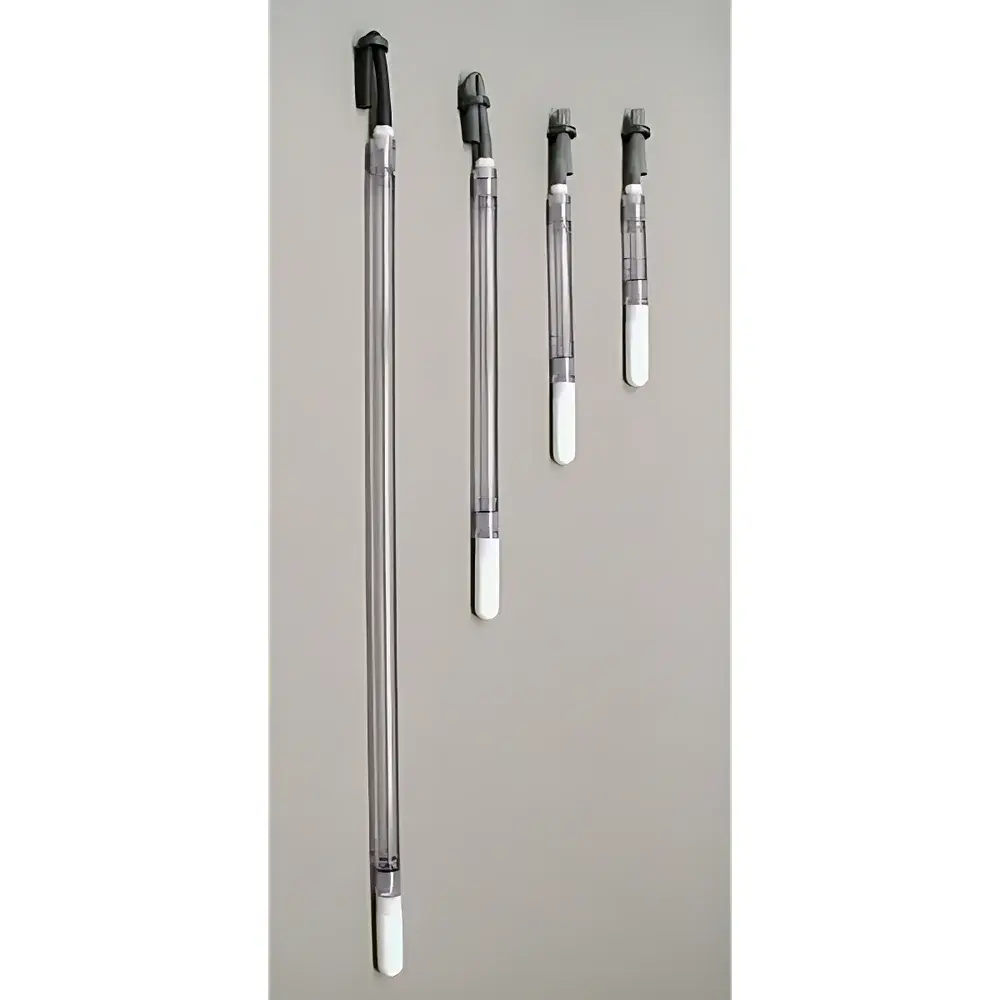
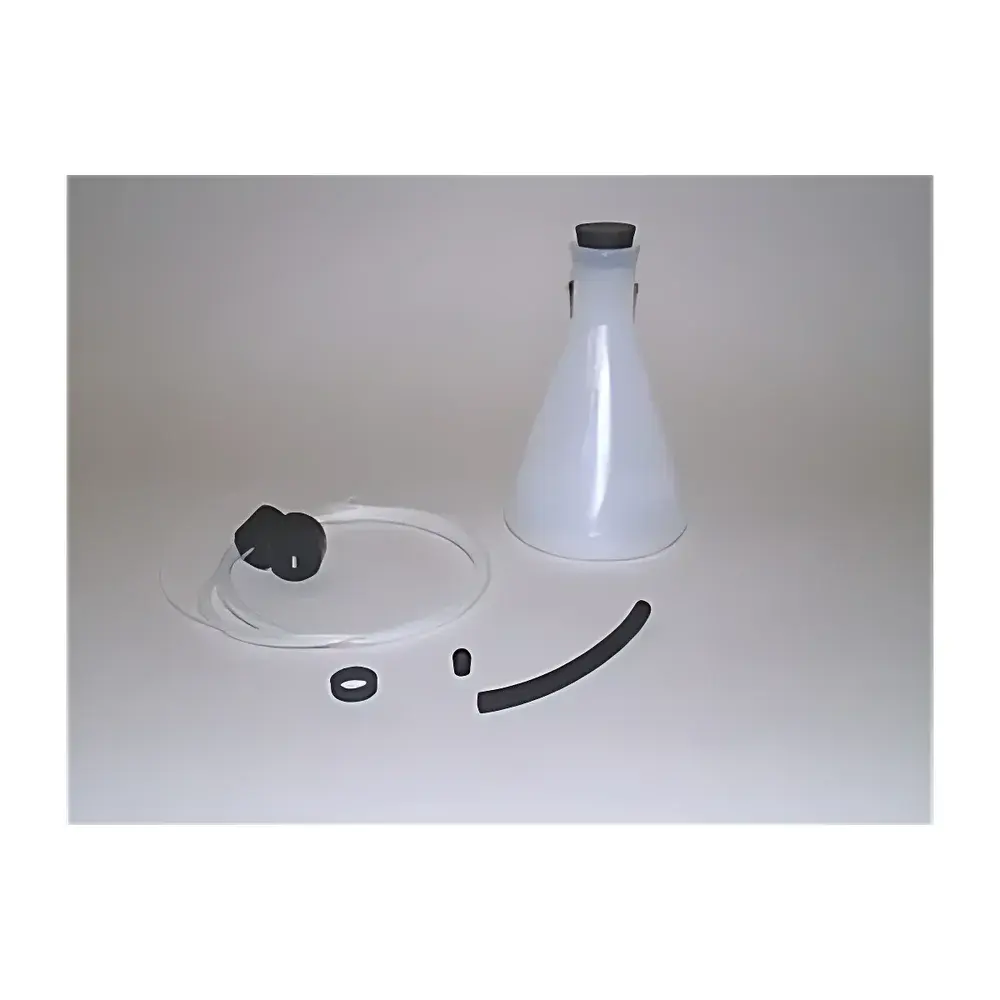
SEC 1905 Soil Solution Sampler
| Brand | SEC |
|---|---|
| Origin | USA |
| Model | 1905 |
| Outer Diameter | 2.2 cm |
| Ceramic Tip Porosity | High-flow, 1-bar (100 kPa) rated |
| Sampling Mechanism | Threaded cap extraction with compression ring |
| Extension Capability | Compatible with extendable sampling tubes |
Overview
The SEC 1905 Soil Solution Sampler is a precision-engineered passive porewater extraction device designed for in situ collection of soil solution from unsaturated and saturated zones in field and laboratory settings. It operates on the principle of equilibrium-based suction sampling, utilizing a high-permeability, sintered ceramic tip rated at 100 kPa (1 bar) to establish hydraulic contact with the surrounding soil matrix. Unlike vacuum-driven or centrifugation-based methods, the 1905 relies on controlled negative pressure applied externally—typically via a regulated vacuum manifold or syringe pump—to induce equilibrated porewater migration into the sampler body without disturbing native soil water potential gradients. Its compact 2.2 cm outer diameter enables deployment in confined boreholes, densely instrumented plots, or shallow-root-zone profiling where spatial constraints preclude use of conventional samplers (e.g., Rhizon or Prenart types). The device is constructed from chemically inert, UV-stabilized polyetheretherketone (PEEK) and stainless-steel components, ensuring long-term integrity in acidic, alkaline, and redox-variable soils.
Key Features
- Ultra-slim profile (22 mm OD) optimized for minimal soil disturbance and high-density installation arrays
- High-flow sintered ceramic tip engineered for rapid equilibration at 100 kPa tension, validated per ASTM D4546–21 (Standard Test Methods for One-Dimensional Consolidation Properties of Soils)
- Threaded cap extraction mechanism with integrated compression ring ensures leak-tight seal and reproducible removal force across repeated cycles
- Modular design supports field-deployable extension tubing (standard 6 mm ID polyethylene or fluorinated ethylene propylene [FEP] tubing), enabling depth-specific sampling down to 2 m without re-drilling
- Non-metallic wetted path eliminates leaching risks for trace metal, anion, or isotopic analyses (e.g., δ15N–NO3−, 87Sr/86Sr)
- Compatible with standard vacuum manifolds, digital pressure controllers, and automated sequential extractors meeting ISO 10381-5:2022 (Soil quality — Sampling — Part 5: Guidance on monitoring of soil contamination)
Sample Compatibility & Compliance
The SEC 1905 is validated for extraction of aqueous-phase analytes including major cations (Ca2+, Mg2+, K+, Na+), anions (NO3−, SO42−, Cl−), dissolved organic carbon (DOC), nutrients (NH4+, PO43−), and select micropollutants (e.g., glyphosate, atrazine) under field-moist conditions. It complies with U.S. EPA Method 9060A (Dissolved Organic Carbon) and supports GLP-compliant workflows when paired with audit-trail-enabled vacuum control systems. All materials meet USP Class VI biocompatibility requirements and exhibit no detectable interference in ICP-MS, IC, or HPLC-UV analyses following standard acid-wash protocols (per EPA SW-846 Method 3050B).
Software & Data Management
While the 1905 is a hardware-only passive sampler, it integrates seamlessly with third-party data acquisition platforms including Campbell Scientific CR1000X loggers (via analog pressure transducer inputs), LabVIEW-based vacuum sequencing modules, and cloud-connected environmental monitoring suites (e.g., EnviroDIY Mayfly). When used with programmable vacuum controllers (e.g., VACUUBRAND PC 3001), extraction events can be timestamped, pressure-profiled, and exported as CSV/NetCDF for correlation with soil moisture (TDR), temperature, and redox potential sensors. Full chain-of-custody metadata—including installation depth, ceramic batch ID, and extraction duration—is retained in accordance with FDA 21 CFR Part 11 requirements when deployed within regulated agricultural or remediation monitoring programs.
Applications
- Long-term nitrate leaching studies in agricultural vadose zones
- Root-zone nutrient dynamics monitoring in controlled-environment agriculture and lysimeter trials
- Contaminant plume tracking in landfill leachate impact assessments
- Geochemical weathering studies requiring low-volume, high-temporal-resolution porewater time series
- Calibration and validation of hydrological models (e.g., HYDRUS-1D, PFLOTRAN) using measured solute concentrations
- Isotopic tracer experiments (e.g., 18O-H2O, 15N–NH4+) where sample volume minimization is critical
FAQ
What is the maximum recommended sampling depth for the SEC 1905?
The standard configuration supports depths up to 1.2 m; with certified FEP extension tubing and reinforced coupling sleeves, operational depth extends to 2.0 m under stable soil structure conditions.
Can the ceramic tip be regenerated after clogging?
Yes—reversible clogging from colloidal clay or Fe/Mn oxides may be cleared by soaking in 10% HCl for 2 hours followed by deionized water rinsing and 100 kPa pressure testing per ISO 4022:2019.
Is the 1905 compatible with automated sequential extraction systems?
Yes—its standardized 1/4″-28 UNF threaded port interfaces directly with most commercial multi-port vacuum selector valves and robotic fluid handlers.
Does SEC provide calibration certificates for individual units?
Each 1905 unit ships with a factory-verified ceramic tip permeability report and dimensional inspection certificate traceable to NIST standards.







