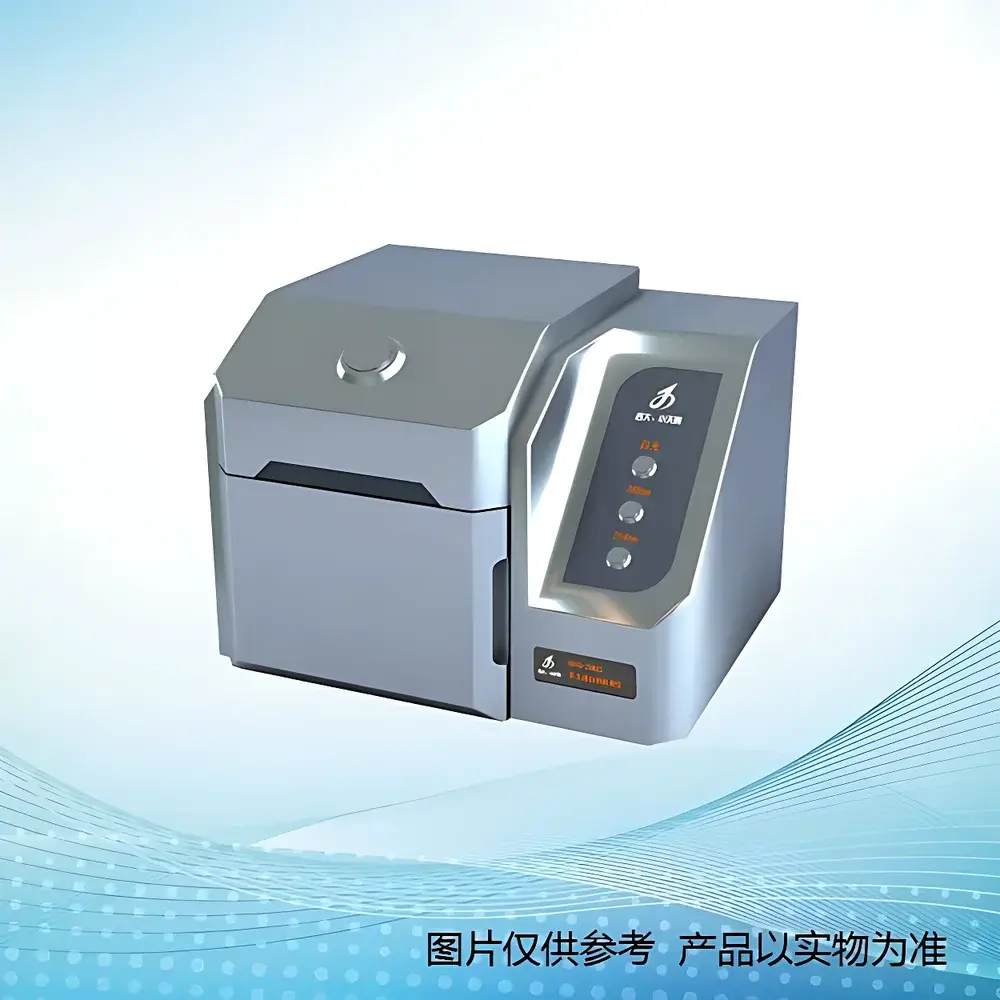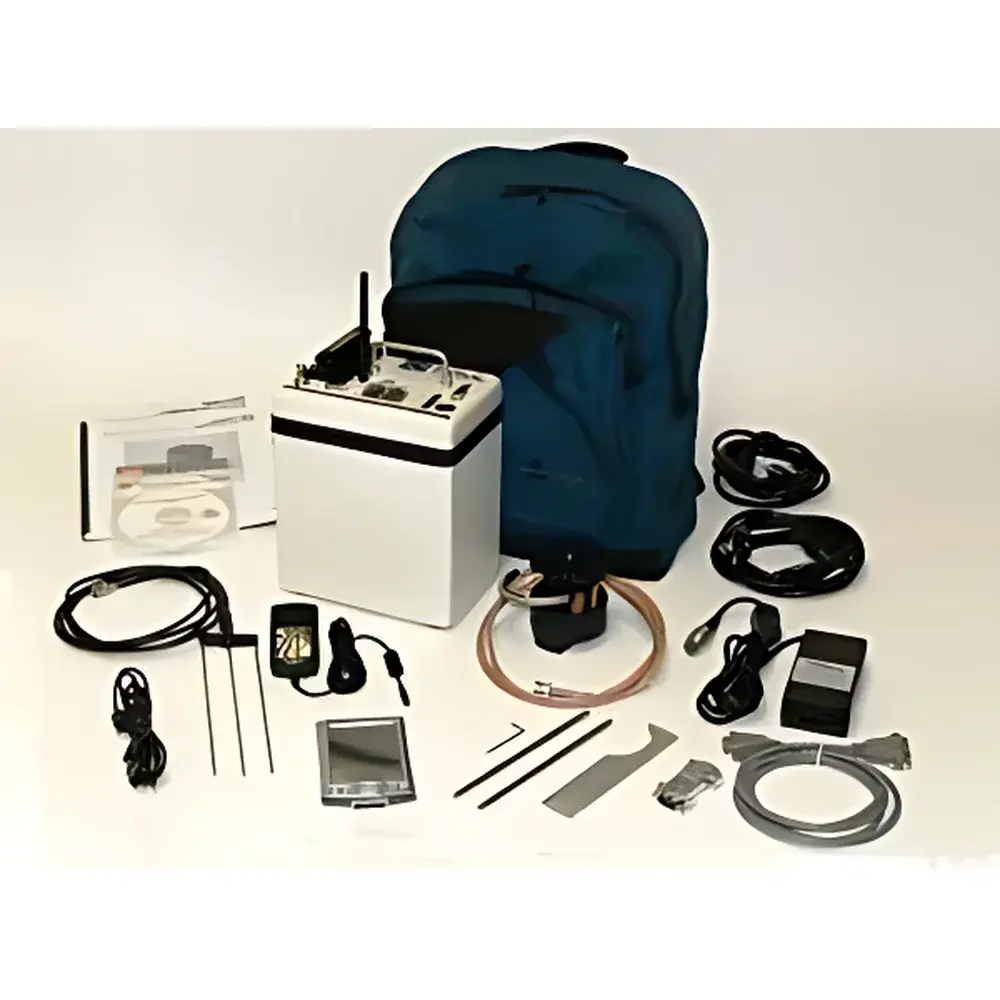
SEC MiniTrase TDR Soil Moisture Measurement System
| Brand | SEC (USA) |
|---|---|
| Origin | USA |
| Model | MiniTrase |
| Measurement Principle | Time-Domain Reflectometry (TDR) |
| Volumetric Water Content Range | 0–100% |
| Accuracy | ±2% of reading |
| Operating Temperature | 0 to +45 °C |
| Power Supply | Rechargeable NiCd battery (1.2 Ah, 30–45 min charge time) |
| Optional External Power | 18 V DC/AC adapter (2.2 A) or 12 V DC input |
| Connectivity | BNC port for TDR waveguides |
| Memory | Standard 256 KB (≥5,610 readings or ≥180 waveform traces) |
| Multi-channel Capability | Up to 256 waveguides via multiplexer |
| Data Transmission | Bluetooth module optional |
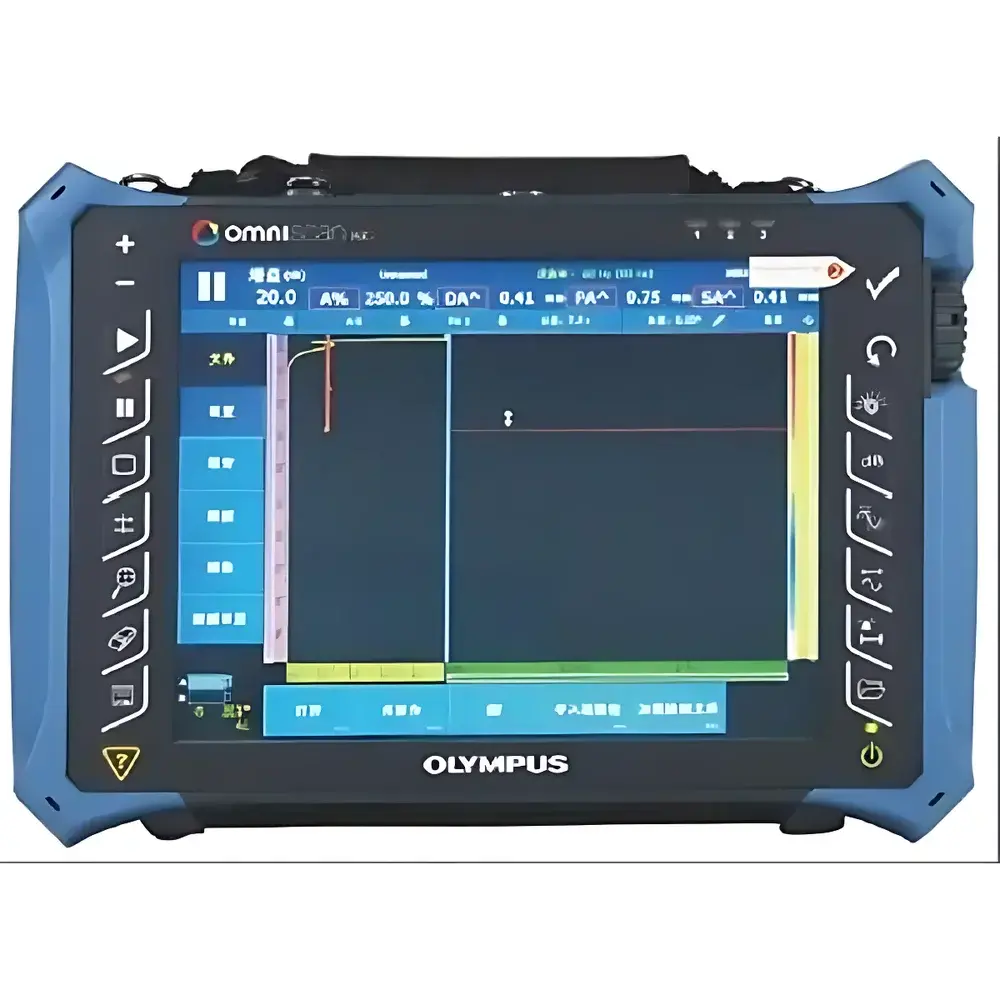
| Portability | Handheld, field-deployable design |
Overview
The SEC MiniTrase TDR Soil Moisture Measurement System is a field-portable, high-reliability instrument engineered for precise volumetric water content (θv) determination in diverse soil matrices using Time-Domain Reflectometry (TDR) — a well-established, physics-based method grounded in electromagnetic pulse propagation and dielectric permittivity calibration. When a fast-rise-time voltage pulse is launched into a pair of parallel metallic waveguides inserted into the soil, the travel time of the reflected signal correlates directly with the bulk dielectric constant (εb) of the surrounding medium. Since εb exhibits strong, empirically validated dependence on θv — particularly in the range of 3–80 — the MiniTrase converts measured transit time into volumetric water content via factory-calibrated, temperature-compensated algorithms. Validated across tropical, arid, saline, and sodic soils, the system delivers consistent performance under real-world environmental stressors including high electrical conductivity (EC), variable temperature gradients, and heterogeneous texture profiles — making it suitable for long-term ecological monitoring, irrigation scheduling, and vadose zone hydrology studies.
Key Features
- True TDR-based measurement architecture compliant with ASTM D5778 and ISO 11277 standards for soil water content determination
- Single-measurement cycle completed in ≤15 seconds, with immediate on-device display and internal storage capability
- Robust handheld enclosure rated IP54 for dust and splash resistance, optimized for outdoor deployment without external housing
- Multi-channel expandability via industry-standard TDR multiplexers — supports up to 256 waveguide probes in unattended, time-synchronized configurations
- Integrated Bluetooth 4.0 module (optional) enables wireless data telemetry to iOS/Android tablets or Windows laptops running SEC’s proprietary acquisition software
- Dual-power operation: rechargeable NiCd battery (1.2 Ah) for >8 hours continuous use, plus auxiliary 12 V DC or 18 V AC/DC input for base-station or solar-powered deployments
- Onboard waveform capture and storage — retains full TDR trace data for post-acquisition reprocessing and validation
Sample Compatibility & Compliance
The MiniTrase demonstrates proven compatibility with mineral soils (sand, loam, clay), organic-rich substrates (peat, compost), and challenging media including saline-sodic soils (EC up to 12 dS/m) and volcanic ash deposits. Its step-pulse excitation method minimizes signal distortion caused by high-conductivity environments, enabling accurate θv quantification where conventional capacitance or FDR sensors exhibit significant salinity-induced drift. The system conforms to GLP-compliant data integrity requirements: all measurements include timestamp, probe ID, ambient temperature, battery voltage, and raw waveform checksums. Firmware supports audit-trail logging per FDA 21 CFR Part 11 when used in regulated agricultural research or environmental remediation reporting.
Software & Data Management
SEC provides the MiniTrase Data Manager v3.x — a Windows-based desktop application supporting automated download, spectral visualization, multi-probe synchronization, and batch calibration curve adjustment. Raw .TRC files preserve full 500-point waveform datasets for advanced analysis (e.g., reflection coefficient modeling, impedance matching diagnostics). Export formats include CSV (for Excel, R, Python pandas), XML (for LTER networks), and NetCDF (for hydrological modeling integration). Memory management tools allow selective deletion, firmware updates, and configuration backup. Optional cloud-sync modules enable secure AWS S3 upload with TLS 1.2 encryption and role-based access control.
Applications
- Real-time soil moisture profiling for precision agriculture and deficit irrigation management
- Long-term vadose zone monitoring in watershed-scale hydrological models (e.g., HYDRUS, SWAP)
- Infiltration and evaporation flux quantification in lysimeter and micro-plot experiments
- Salinity impact assessment on root-zone water availability in coastal or irrigated agroecosystems
- Calibration and validation of satellite-based soil moisture products (e.g., SMAP, Sentinel-1)
- Soil hydraulic property estimation via inverse modeling of transient TDR response
- Field validation of soil moisture sensor networks deployed in USDA ARS or USGS monitoring programs
FAQ
What calibration standards are supported for the MiniTrase?
The instrument ships with a two-point factory calibration traceable to NIST-certified reference soils (dry sand and saturated kaolinite). Users may perform custom calibrations using gravimetrically determined θv samples from their target soil series.
Can the MiniTrase operate autonomously for unattended logging?
Yes — when paired with an external 12 V power source and a compatible multiplexer (e.g., SEC MUX-256), the MiniTrase supports programmable interval logging (1 min to 24 h) with automatic file rotation and low-battery alerts.
Is waveform data accessible for third-party analysis?
Yes — all raw .TRC files contain full time-domain reflectograms sampled at 100 ps resolution, exported without compression or interpolation.
Does the system meet CE or FCC regulatory requirements?
The MiniTrase complies with FCC Part 15 Class B and EU Directive 2014/53/EU (Radio Equipment Directive) for its Bluetooth variant; non-wireless units meet IEC 61326-1 for EMC in industrial environments.
How is temperature compensation implemented?
An integrated thermistor (±0.5 °C accuracy) adjacent to the BNC connector provides real-time thermal correction of dielectric dispersion effects, applied prior to θv calculation per Topp et al. (1980) polynomial inversion.