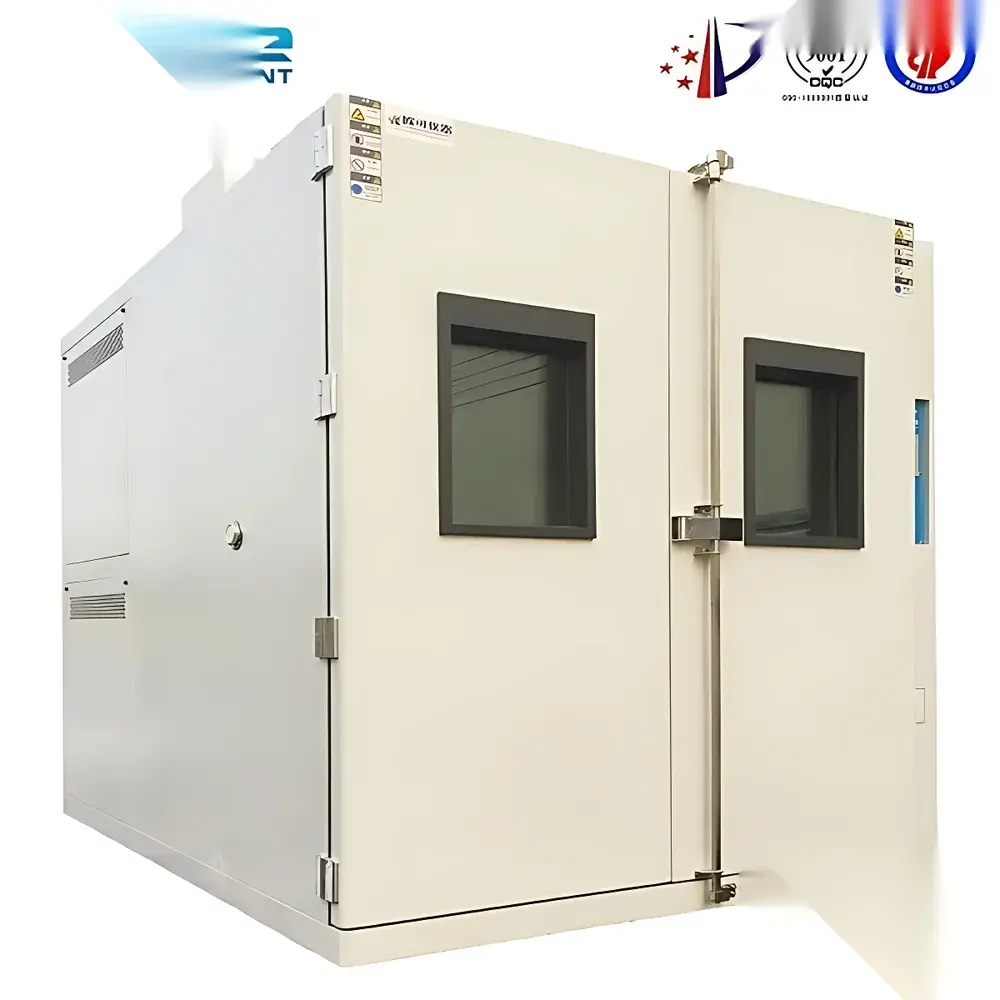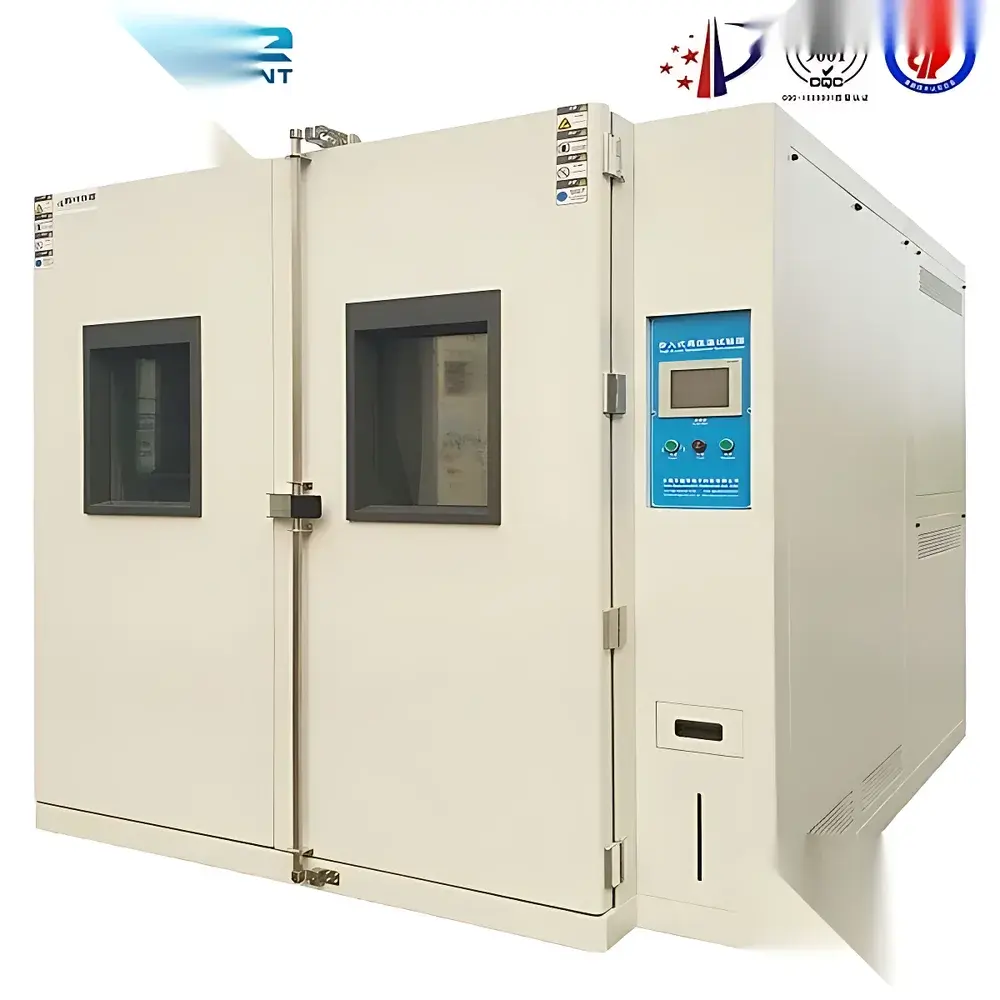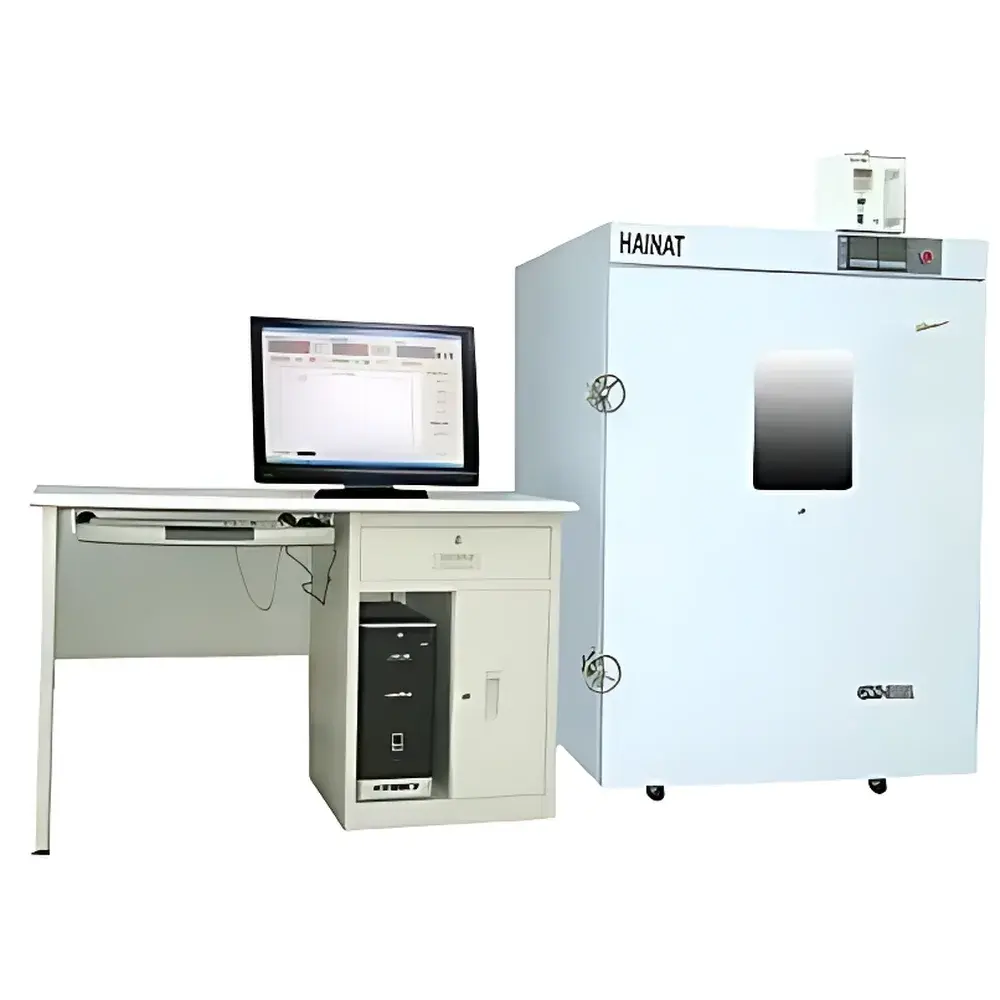
Senbe VWH-1000 Environmental Test Chamber
| Brand | Senbe |
|---|---|
| Model | VWH-1000 |
| Chamber Volume | (1.00 ± 0.02) m³ |
| Temperature Range | 15–40 °C (up to 250 °C for thermal desorption) |
| Temp. Control Accuracy | ±0.5 °C |
| RH Range | 30–80 %RH |
| RH Control Accuracy | ±3 %RH |
| Air Exchange Rate | 0.2–2.0 m³/h (0.2–2.0 air changes/h) |
| Flow Rate Accuracy | ±1 % |
| Horizontal Air Velocity | 0.1–0.3 m/s (precision ≤ 0.05 m/s) |
| Static Leakage Rate | ≤1×10⁻³ m³/min at 1 kPa differential pressure |
| Formaldehyde Background | <0.006 mg/m³ |
| TVOC Background | <0.05 mg/m³ |
| Individual VOC Background | <0.005 mg/m³ |
| Remote Control | PC & mobile web interface |
| Power Consumption | 1.5 kW (operational), 3.0 kW (rated) |
| Dimensions (W×H×D) | 1170 × 1660 × 2100 mm |
Overview
The Senbe VWH-1000 Environmental Test Chamber is a precision-engineered climate-controlled emission testing chamber designed for standardized determination of volatile organic compounds (VOCs), formaldehyde, and carbonyl compounds released from indoor materials and consumer products. It operates on the principle of dynamic environmental chamber testing—where test specimens are conditioned under tightly controlled temperature, relative humidity, and air exchange conditions, enabling quantitative collection and analysis of airborne emissions over defined exposure periods. The chamber complies with internationally recognized protocols including ASTM D6007-02 (small-scale chamber method for formaldehyde), EN 717-1 (formaldehyde emission from wood-based panels), and Chinese national standards GB 31107-2014, GB 18580–2017, GB 18584 (draft), GB 18587-2001, and LY/T 1980-2011. Its 1.00 m³ internal volume meets the geometric and airflow requirements specified for regulatory-grade emission testing in furniture, flooring, carpets, upholstered seating, footwear, and architectural finishing materials.
Key Features
- Stable climatic control: Independent regulation of temperature (15–40 °C, extendable to 250 °C for thermal desorption cycles) and relative humidity (30–80 %RH), both maintained within tight tolerances (±0.5 °C and ±3 %RH respectively) using PID-controlled heating, cooling, and humidification/dehumidification subsystems.
- Precision airflow management: Adjustable air exchange rate (0.2–2.0 m³/h) with volumetric accuracy better than ±1 %; horizontal air velocity uniformly maintained between 0.1–0.3 m/s across the specimen zone (≤0.05 m/s deviation).
- Ultra-low background performance: Pre-conditioned stainless-steel interior and high-efficiency filtration ensure formaldehyde background ≤0.006 mg/m³, TVOC background ≤0.05 mg/m³, and individual VOC backgrounds ≤0.005 mg/m³—meeting ISO 16000-9 and ASTM D6007 validation criteria.
- Structural integrity: Welded stainless-steel chamber body with double-layer insulation and validated static leakage rate ≤1×10⁻³ m³/min at 1 kPa differential pressure—ensuring long-term stability during extended emission tests (e.g., 28-day protocols per GB 18580).
- Remote operation capability: Integrated Ethernet and Wi-Fi connectivity supports real-time monitoring and parameter adjustment via browser-based interface accessible from desktop or mobile devices—enabling unattended operation and audit-ready session logging.
Sample Compatibility & Compliance
The VWH-1000 accommodates flat-panel and three-dimensional samples up to 1.0 m² surface area (e.g., particleboard, MDF, laminate flooring, textile-backed carpet, polyurethane foam cushions, leather upholstery, and composite shoe components). Specimen loading follows standardized placement guidelines per ISO 16000-9 and GB 31107-2014 to minimize edge effects and ensure representative emission sampling. All operational parameters—including chamber conditioning time, equilibration duration, sampling intervals, and purge cycles—are configurable to align with test methods required by GLP-compliant laboratories, third-party certification bodies (e.g., CNAS, CMA), and regulatory submissions to China’s MIIT or EU CE marking authorities. The system architecture supports traceability in accordance with ISO/IEC 17025:2017 and facilitates integration into LIMS environments.
Software & Data Management
The embedded control software provides synchronized logging of temperature, RH, airflow, pressure differential, and runtime events at 1-second resolution. Data export is supported in CSV and Excel-compatible formats with UTC timestamps and user-defined metadata fields (e.g., sample ID, operator, test standard reference). Audit trails record all parameter modifications, user logins, and system alarms—fully compliant with FDA 21 CFR Part 11 requirements when deployed with optional electronic signature modules. Optional API integration enables direct data ingestion into chromatographic data systems (CDS) such as Thermo Chromeleon or Agilent OpenLab for automated peak integration and report generation.
Applications
- Regulatory compliance testing for formaldehyde and VOC emissions from engineered wood products (plywood, OSB, HDF) per GB 18580–2017 and EN 717-1.
- Carbonyl compound profiling (e.g., acetaldehyde, acetone, butyraldehyde) in adhesives, coatings, and laminates using DNPH cartridge sampling followed by HPLC-UV analysis.
- Long-term emission kinetics studies (7–28 days) to model indoor air quality impact of building materials under simulated occupancy conditions.
- Method validation and inter-laboratory comparison exercises coordinated under ISO/TC 146/SC 3 working groups.
- Pre-certification screening for GREENGUARD, Indoor Advantage, and CE-marked eco-labeling programs.
FAQ
What is the maximum allowable sample surface area for testing in the VWH-1000 chamber?
The chamber is calibrated and validated for specimens with total exposed surface area up to 1.0 m², consistent with GB 31107-2014 and ISO 16000-9 requirements.
Does the system support automated sampling interface with GC-MS or HPLC instruments?
Yes—the chamber features a standardized 6-mm stainless-steel sampling port with Swagelok fitting, compatible with sorbent tubes, impingers, and direct coupling to online analyzers via heated transfer lines.
Is the VWH-1000 suitable for testing under elevated temperature conditions beyond 40 °C?
While standard emission testing occurs at 23 °C or 25 °C, the chamber’s thermal desorption mode supports sustained operation up to 250 °C for accelerated aging or residual solvent analysis—subject to material compatibility verification.
How is chamber calibration verified for regulatory audits?
Calibration certificates for temperature, RH, airflow, and pressure sensors are issued annually by accredited metrology labs; full validation reports—including background testing, leakage verification, and uniformity mapping—are provided upon commissioning.
Can multiple chambers be networked and centrally managed?
Yes—via Senbe’s ChamberLink™ protocol, up to 16 VWH-1000 units can be monitored and controlled through a single dashboard, with aggregated reporting and alarm escalation to designated email/SMS endpoints.