
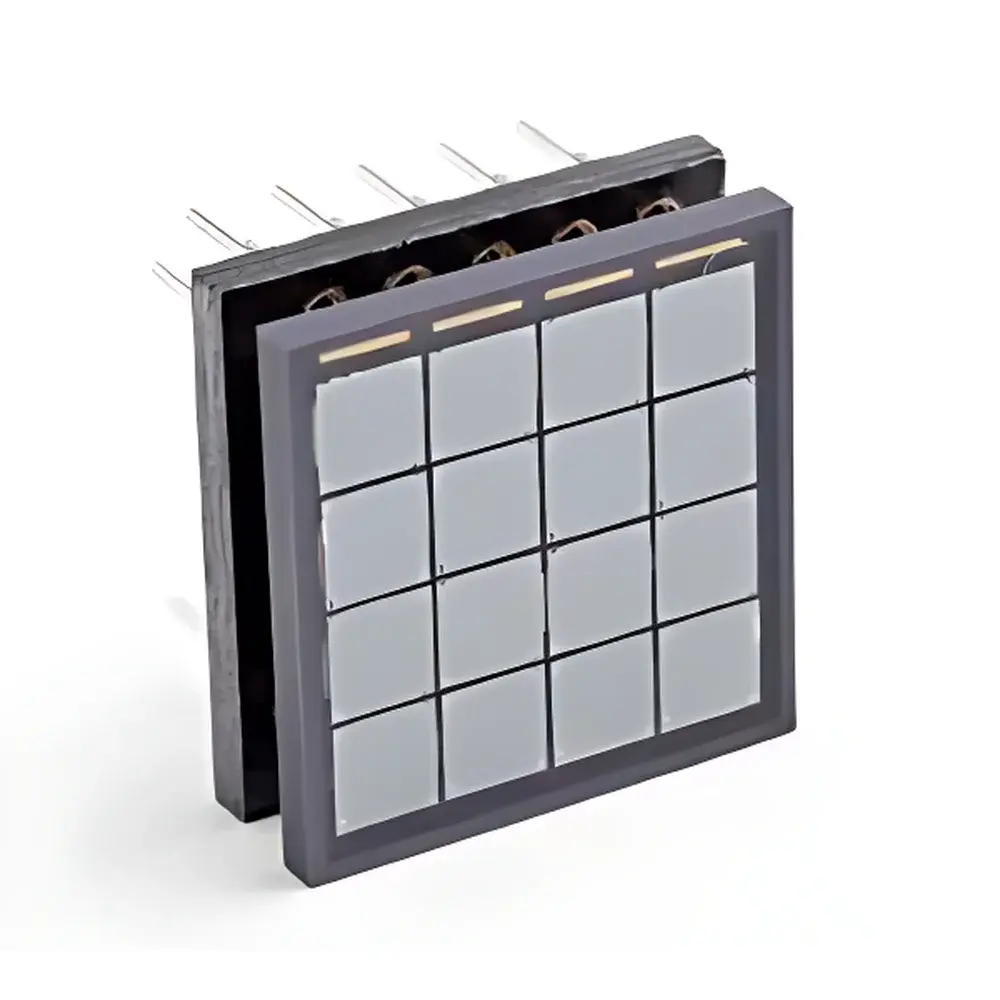
SensL SPM Series Silicon Photomultiplier (SiPM) Modules
| Origin | UK |
|---|---|
| Manufacturer Type | Authorized Distributor |
| Origin Category | Imported |
| Model | SPM Series (MicroSPM, MiniSPM, Array4SPM, MatrixSPM) |
| Pricing | Available Upon Request |
Overview
The SensL SPM Series Silicon Photomultiplier (SiPM) modules are solid-state photodetectors engineered for high-sensitivity, single-photon-level detection across a broad spectral range (400–1100 nm). Unlike traditional photomultiplier tubes (PMTs), SiPMs operate on the principle of Geiger-mode avalanche photodiode (GM-APD) arrays, where thousands of microcells function in parallel to deliver analog or digital photon-counting output with gain exceeding 1 × 10⁶. This architecture enables exceptional timing resolution, magnetic field immunity, and robustness under ambient illumination—making the SPM Series particularly suited for integration into compact, field-deployable, and multi-modal instrumentation where space, power, and electromagnetic compatibility are critical constraints.
Key Features
- High intrinsic gain (>1 × 10⁶) with stable operation at low bias voltages (29.5–30 V), eliminating need for hazardous high-voltage supplies
- Complete magnetic field immunity—enabling seamless deployment in PET/MRI hybrid systems without signal distortion or calibration drift
- Single-photon sensitivity with sub-nanosecond timing jitter (e.g., <200 ps for PCDMini; 27 ps timing resolution in HRMTime module)
- Four scalable form factors: MicroSPM (single-pixel), MiniSPM (single-pixel, optimized for OEM integration), Array4SPM (4 × 4 pixel array), and MatrixSPM (16 × 16 pixel matrix)
- Integrated quenching resistors and on-chip protection circuitry—preventing permanent damage even during prolonged exposure to ambient or saturated light conditions
- Thermoelectric cooler (TEC) support in PCDMini configuration to suppress dark count rate below 100 Hz at −20 °C
- Standard C-mount and 100 µm fiber-optic coupling compatibility for direct integration with spectrographs, scintillation crystals, and time-of-flight optical assemblies
Sample Compatibility & Compliance
The SPM Series is compatible with a wide range of scintillating materials—including LYSO, BGO, NaI(Tl), and LaBr₃—enabling high-energy gamma-ray spectroscopy, positron emission tomography (PET), and radiation monitoring applications. Its linear response over six orders of magnitude supports both pulse-height analysis and time-correlated single-photon counting (TCSPC). All modules comply with IEC 61000-4-2 (ESD immunity) and IEC 61000-4-3 (radiated RF immunity) standards. The HRMTime and PCDMini systems support audit-ready data logging and are designed to meet GLP/GMP-aligned workflows when integrated with validated LabVIEW-based acquisition software and DLL interfaces. While not certified as medical devices per se, the modules conform to essential safety and EMC requirements referenced in ISO 13485-compliant system integrations for diagnostic imaging and analytical instrumentation.
Software & Data Management
SensL provides comprehensive, vendor-neutral software toolkits for real-time control and post-processing. The HRMTime module supports multi-channel TCSPC via USB 2.0 interface, with native drivers for LabVIEW, Python (PyVISA), and C/C++ environments. Timestamped photon events are streamed into configurable FIFO buffers with hardware-based timestamp tagging. The PCDMini platform includes embedded firmware for TTL pulse output synchronization, adjustable threshold triggering, and TEC temperature setpoint control—all accessible through intuitive GUI or headless command-line protocols. All software packages generate timestamped binary data files compliant with HDF5 format, supporting traceability, metadata embedding (e.g., bias voltage, temperature, integration time), and interoperability with third-party analysis suites such as MATLAB, OriginLab, and custom Python pipelines.
Applications
- Nuclear Medicine: Time-of-flight PET detector front-ends, SPECT collimator-coupled readout, gamma camera pixelation
- Analytical Instrumentation: Raman spectrometer detectors, atomic emission spectroscopy (AES), flow cytometry fluorescence burst detection
- Industrial QA/QC: LED spectral binning, semiconductor wafer defect mapping, pharmaceutical tablet coating uniformity assessment
- Radiation Monitoring: Portable gamma spectrometers, neutron-gamma discrimination using pulse-shape analysis, environmental radionuclide screening
- Optical Sensing: LiDAR receiver modules (especially flash and scanning architectures), 3D time-of-flight cameras, UAV-based terrain mapping
- Quantum Technologies: Quantum key distribution (QKD) receivers, entanglement verification setups, quantum random number generation (QRNG)
- Life Sciences: Fluorescence lifetime imaging (FLIM), DNA sequencing by synthesis, single-molecule FRET, water quality monitoring via UV-induced fluorescence
FAQ
What is the typical dark count rate (DCR) for the MiniSPM at room temperature?
At 25 °C and nominal bias voltage (30 V), the MiniSPM exhibits a DCR of ≤500 kHz/mm²—reducible to <100 Hz/mm² with active TEC cooling to −20 °C.
Can the Array4SPM be used with standard NIM or CAMAC digitizers?
Yes—each 4 × 4 channel outputs fast negative-going TTL-compatible pulses (rise time <1 ns), fully compatible with commercial NIM discriminators and multi-channel scalar/timer modules.
Is firmware update capability supported in the HRMTime module?
Yes—field-upgradable firmware is delivered via USB using SensL’s SecureBoot protocol, ensuring version control and cryptographic integrity for regulated environments.
Does the SPM Series support photon arrival time stamping with picosecond precision?
The HRMTime module achieves 27 ps RMS timing resolution per channel using constant-fraction discrimination and time-to-digital conversion (TDC) with interpolation; absolute timestamp accuracy depends on system-level clock synchronization and jitter management.
Are mechanical drawings and thermal interface specifications available for OEM integration?
Yes—detailed STEP files, thermal resistance curves (junction-to-case), and recommended heatsink mounting torque values are provided under NDA for qualified system integrators.
Related Products



