
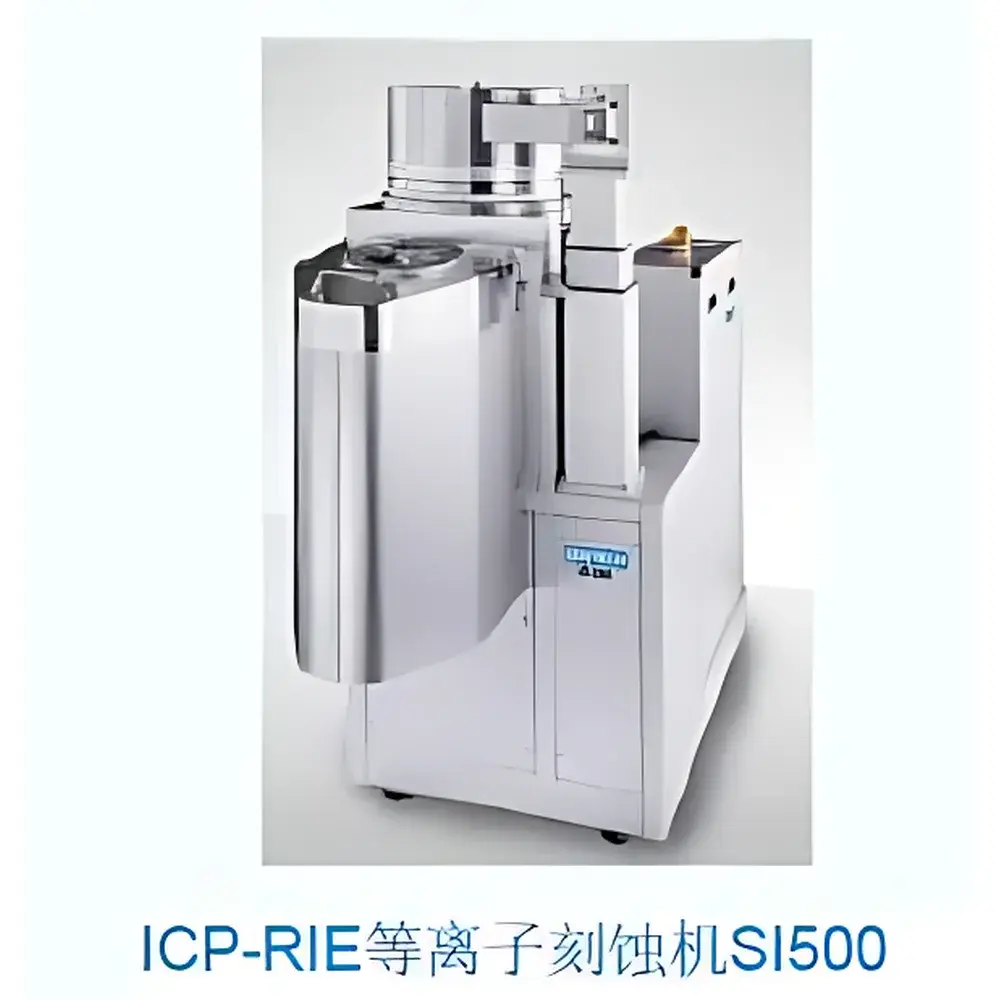
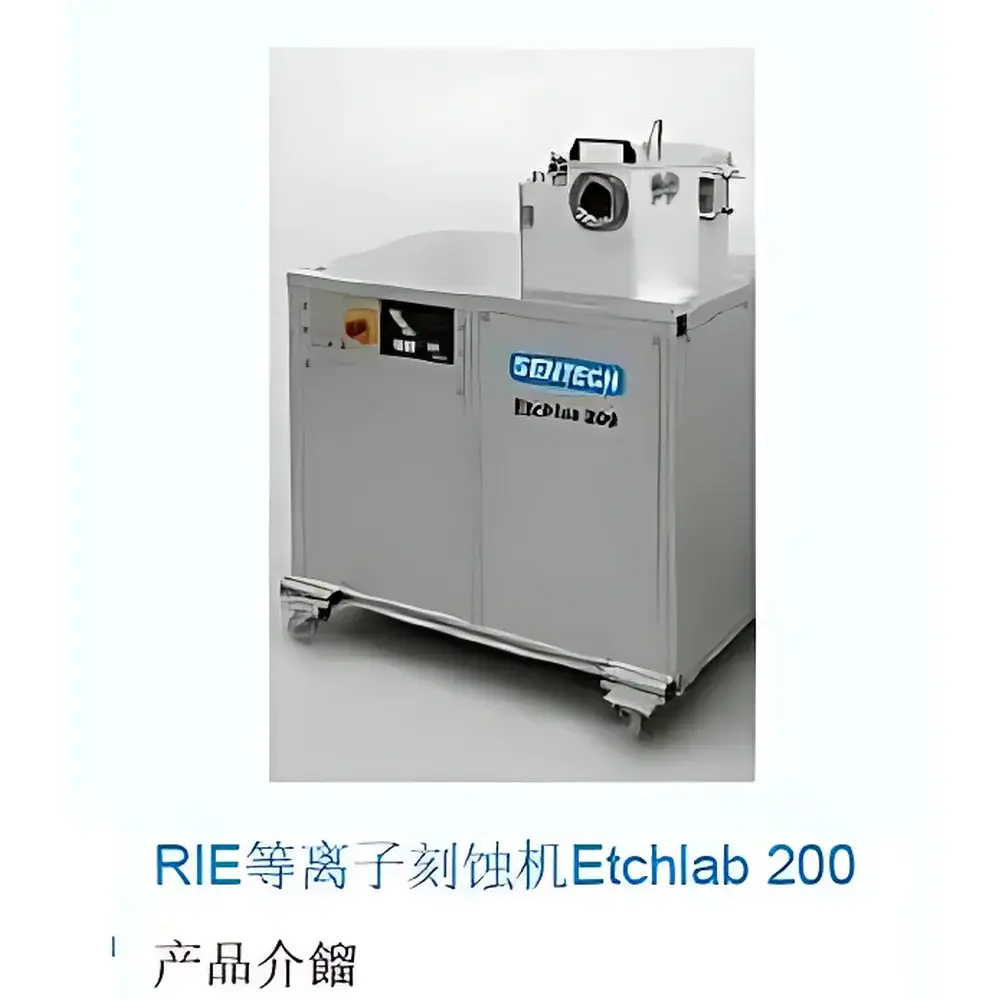
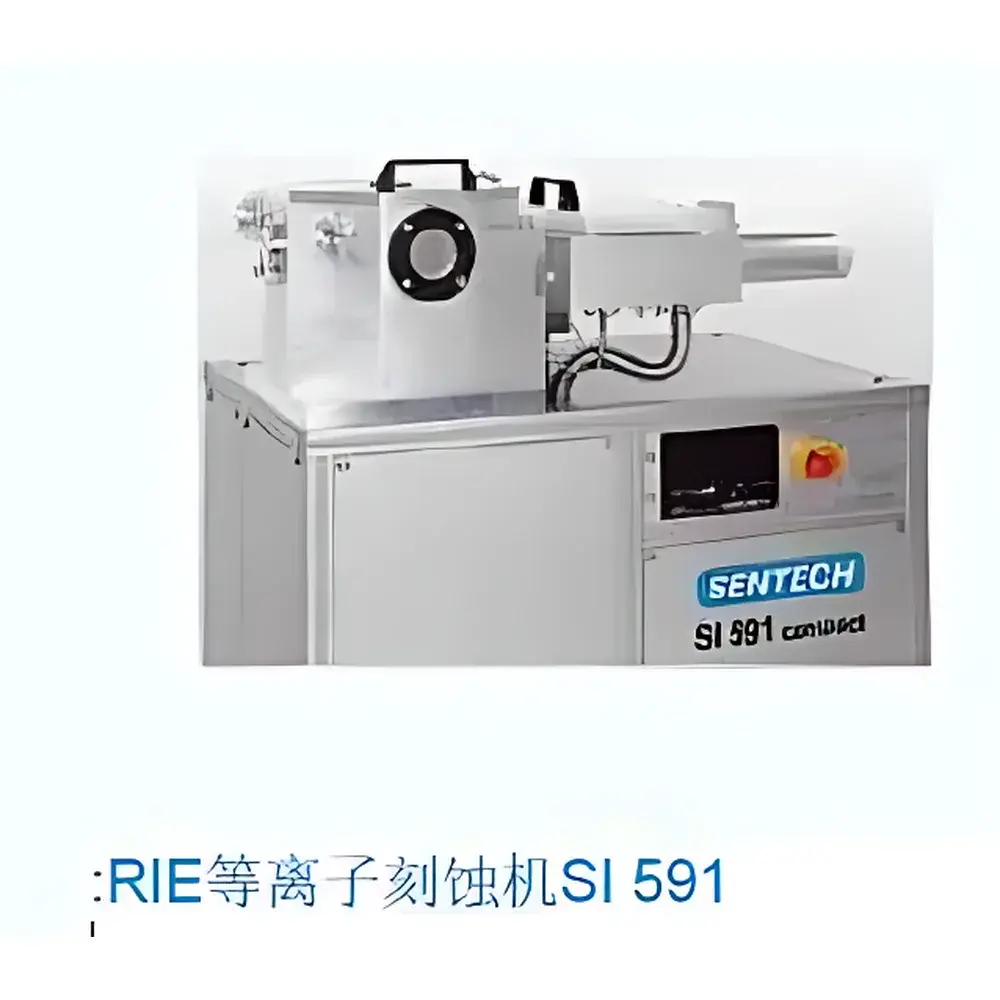
Sentech SI500 ICP-RIE Plasma Etching System
| Origin | Germany |
|---|---|
| Manufacturer Type | Authorized Distributor |
| Origin Category | Imported |
| Model | SI500 ICP-RIE Plasma Etching System |
| Price Range | USD 68,000 – 136,000 (FOB Hamburg) |
| Temperature Control Range | −120 °C to +150 °C |
| Plasma Source | Inductively Coupled Plasma (ICP) with Separate Bias RF (13.56 MHz) |
| Etch Chemistry Compatibility | Fluorine-based (SF₆, CF₄, CHF₃), Chlorine-based (Cl₂, BCl₃), Oxygen, Argon, and mixed gas chemistries |
| Chamber Material | Anodized aluminum with quartz or ceramic liner options |
| Maximum Wafer Size | 200 mm (8-inch) |
| Vacuum System | Turbo-molecular pump with backing pump (base pressure <5×10⁻⁷ mbar) |
| Process Control | Fully computerized via SENTECH EtchControl™ v4.x with recipe management, real-time parameter logging, and audit trail support |
Overview
The Sentech SI500 ICP-RIE Plasma Etching System is a high-precision, dual-frequency plasma processing tool engineered for nanoscale fabrication in semiconductor R&D, MEMS development, and advanced microarray substrate preparation. It employs a decoupled inductively coupled plasma (ICP) source for high-density, low-energy ion generation, combined with independent bias RF control (13.56 MHz) to precisely tune ion energy at the substrate surface. This architecture enables highly anisotropic etching with minimal lattice damage—critical for preserving crystalline integrity in silicon, III–V compound semiconductors (e.g., GaAs, InP), and piezoelectric thin films used in biosensor platforms. The system operates under ultra-high vacuum conditions (<5×10⁻⁷ mbar), ensuring reproducible plasma ignition and contamination-free process environments. Its integrated cryogenic temperature control (−120 °C to +150 °C) allows dynamic thermal stabilization during deep reactive ion etching (DRIE), mitigating sidewall passivation drift and enabling sub-50 nm feature definition with aspect ratios exceeding 30:1.
Key Features
- Decoupled ICP source delivering >10¹¹ cm⁻³ plasma density at low electron temperature (<2 eV), minimizing UV-induced surface modification and defect generation
- Independent bias RF power supply (up to 600 W) with real-time impedance matching for precise ion energy control (1–200 eV range)
- Active electrostatic chuck (ESC) with helium backside cooling and programmable temperature ramping (±0.5 °C stability)
- Modular gas delivery system supporting up to six MFC-controlled process gases, including corrosive chemistries (Cl₂, BCl₃, SF₆) with VCR-certified stainless-steel lines
- SEMI S2/S8-compliant interlock architecture with emergency venting, RF shielding, and residual gas analyzer (RGA) interface option
- Full compliance with ISO 9001:2015 manufacturing protocols and CE/EMC Directive 2014/30/EU certification
Sample Compatibility & Compliance
The SI500 accommodates wafers up to 200 mm diameter, as well as diced chips, glass substrates, quartz masks, and polymer-based microfluidic molds. It supports standard cassette loading and manual load-lock operation with optional automated wafer handler integration. All wet-processed or metal-coated samples—including Au/Ti, Cr/Ni, and TiN hard masks—are compatible with optimized endpoint detection routines using optical emission spectroscopy (OES) at selectable wavelengths (200–800 nm). The system meets GLP and GMP documentation requirements per FDA 21 CFR Part 11 when configured with SENTECH EtchControl™ audit trail modules, including electronic signatures, version-controlled recipes, and immutable log export (CSV/XML). Process validation packages are available per ASTM F2627-20 (Standard Guide for Plasma Etch Process Characterization) and ISO/IEC 17025:2017 calibration traceability.
Software & Data Management
Sentech EtchControl™ v4.x provides a deterministic, deterministic real-time operating environment built on Windows 10 IoT Enterprise LTSB. It features hierarchical user access levels (Operator, Engineer, Administrator), full recipe parameterization (pressure, power, gas flow ratios, temperature setpoints, step timing), and synchronized data acquisition at 100 Hz sampling rate. Process logs include timestamped RF forward/reflected power, chamber pressure, ESC temperature, and OES intensity traces—all stored in encrypted SQLite databases with SHA-256 hash verification. Export functions support ASTM E1482-22-compliant data interchange format (DIF) and direct integration with LabArchives ELN and Thermo Fisher SampleManager LIMS via RESTful API.
Applications
- Deep silicon etching for microelectrode arrays (MEAs) and neural probe fabrication
- Anisotropic patterning of AlN and ScAlN piezoelectric layers in MEMS resonators and biosensors
- Low-damage removal of photoresist and hard masks post-lithography in microarray substrate conditioning
- Surface functionalization of PDMS and cyclic olefin copolymer (COC) chips for enhanced protein binding uniformity
- Pre-etch cleaning and native oxide removal prior to ALD seed layer deposition on III–V heterostructures
- Development of nanostructured anti-reflective surfaces on silicon photodiodes used in fluorescence detection systems
FAQ
What vacuum level does the SI500 achieve, and how is base pressure verified?
The system achieves a base pressure of <5×10⁻⁷ mbar using a 700 L/s turbo-molecular pump and dry scroll backing pump; pressure calibration is traceable to NIST-standard capacitance manometers.
Can the SI500 be integrated into a cluster tool configuration?
Yes—the SI500 is designed with SEMI E157-compliant flange interfaces and supports both atmospheric and UHV transfer modules for integration into multi-chamber platforms.
Is endpoint detection supported, and what methods are available?
Optical emission spectroscopy (OES) endpoint detection is standard; mass spectrometry (RGA) and interferometric reflectance monitoring (IRM) are optional add-ons.
Does the system comply with FDA 21 CFR Part 11 for regulated life science applications?
When equipped with EtchControl™ Audit Trail License and digital signature module, the SI500 satisfies electronic record and signature requirements for QC/QA workflows in ISO 13485-certified facilities.
What maintenance intervals are recommended for the ICP source and RF matching network?
Source inspection is recommended every 500 operational hours; RF match tuning and ceramic window cleaning are scheduled at 200-hour intervals per preventive maintenance checklist (P/N MAINT-SI500-Rev.3).
Related Products



