
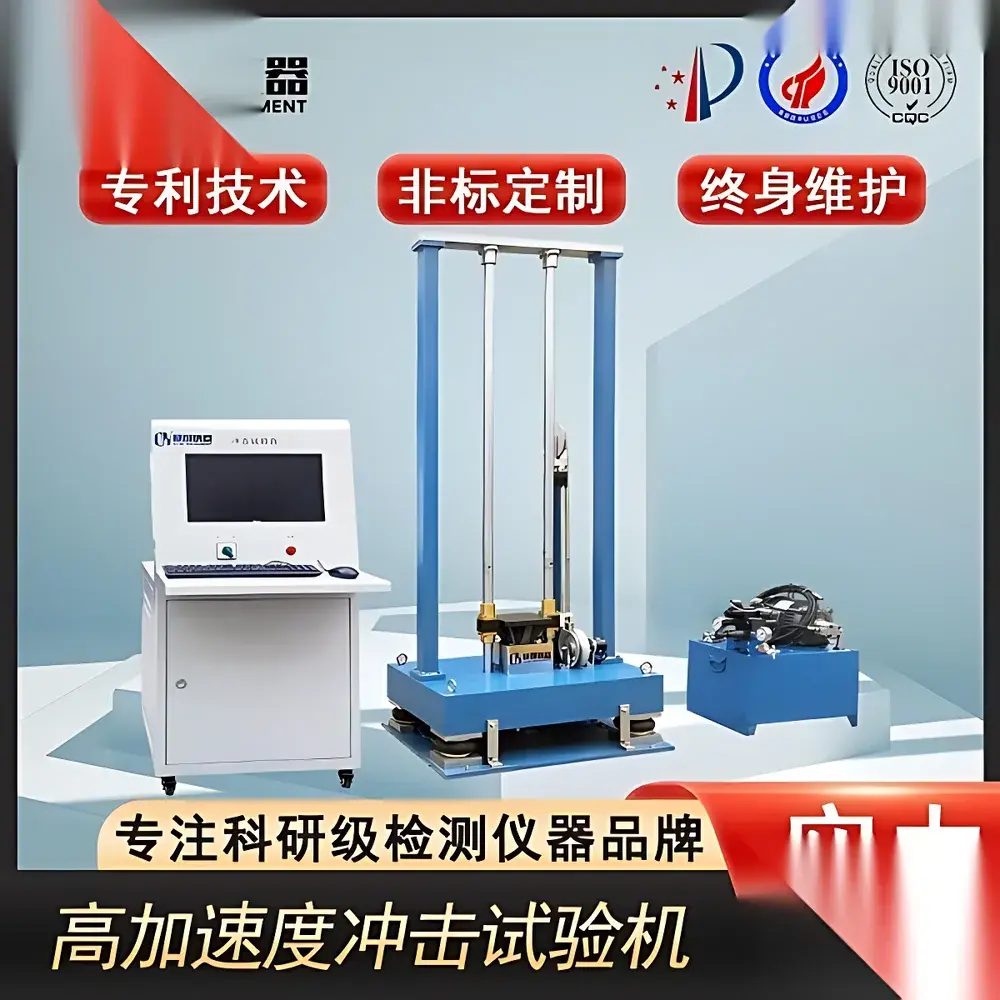
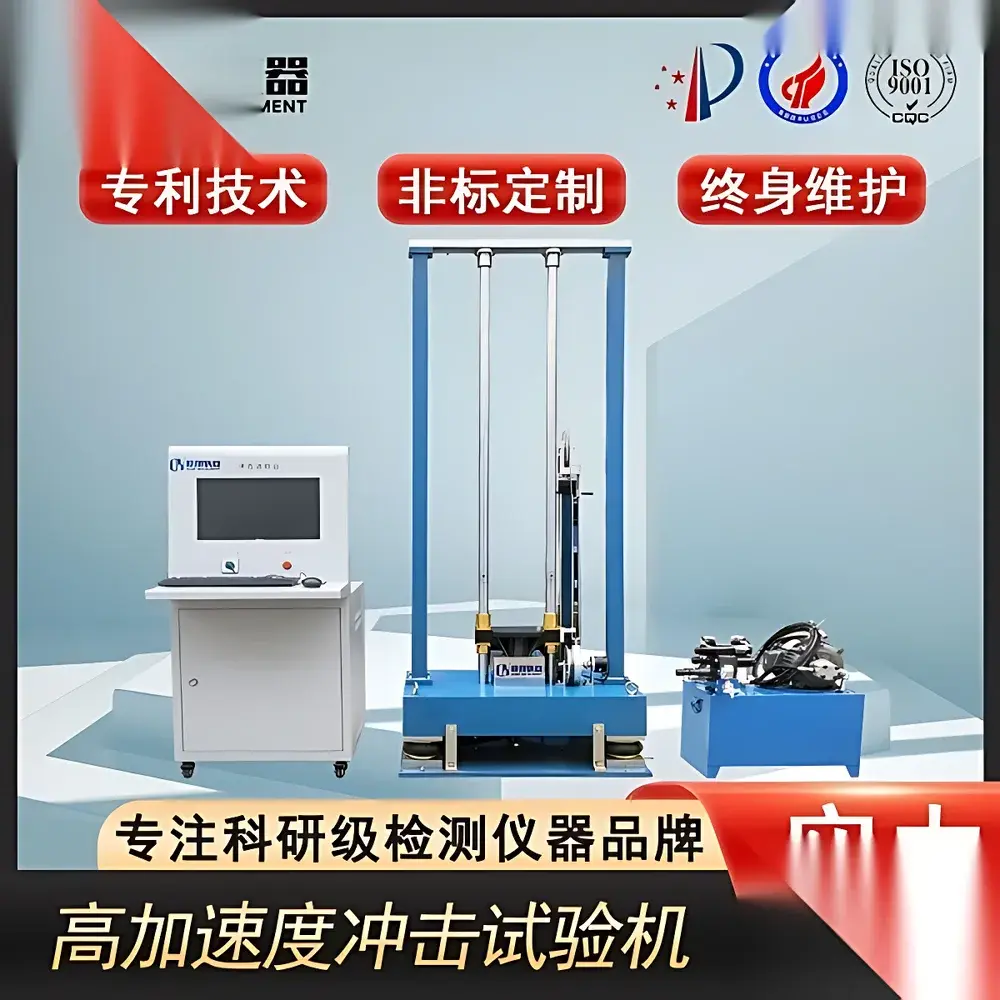
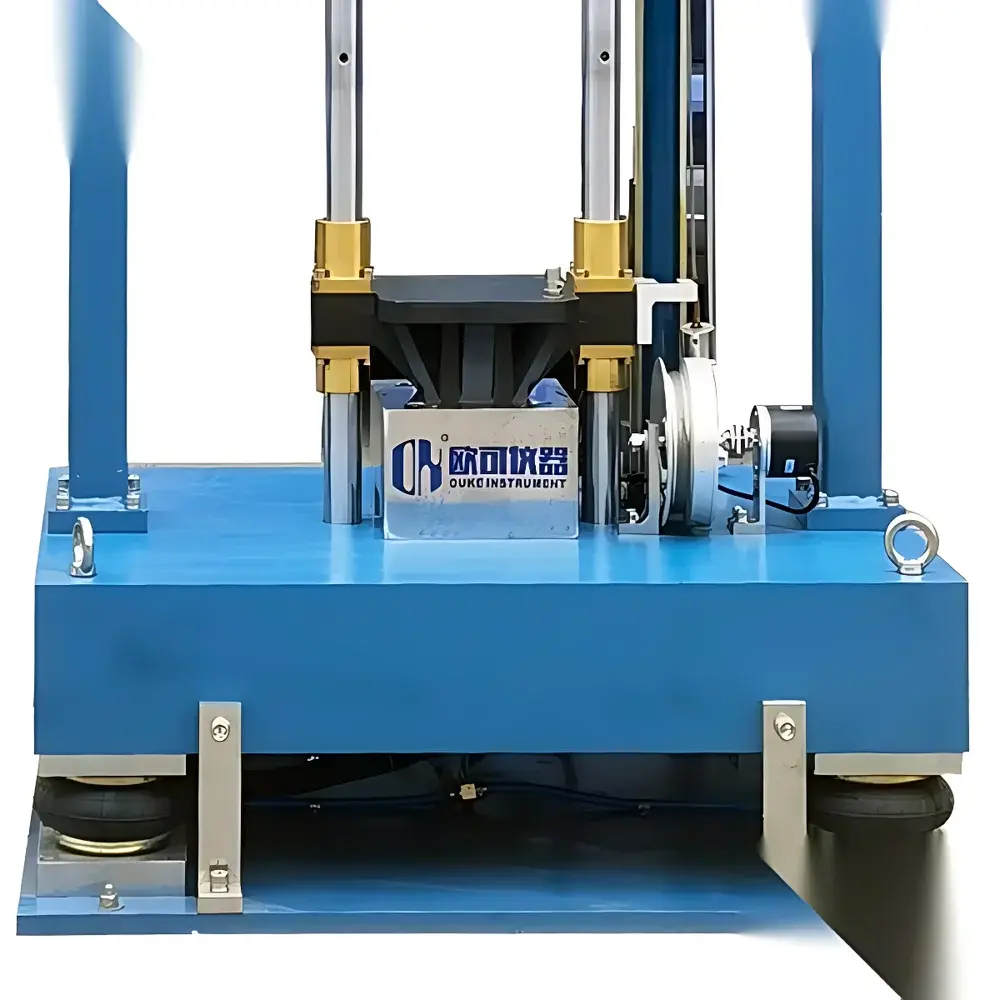
OK-S Series Mechanical Shock Testing System
| Brand | Other brands |
|---|---|
| Origin | Imported |
| Manufacturer Type | General distributor |
| Price | USD 14,000 (approx.) |
| Models | OK-S-50, OK-S-100, OK-S-200, OK-S-300, OK-S-500, OK-S-1000 |
| Table Dimensions (cm) | 50×50 to 120×120 |
| Maximum Load Capacity (kg) | 50 to 1000 |
| Acceleration Range (half-sine pulse) | 150–6000 m/s² |
| Pulse Duration (half-sine) | 0.8–30 ms |
| High-Acceleration Mode (for specimens <200×200 mm) | 5000–50000 m/s², 0.2–1 ms |
| Waveform Options | Half-sine, rear-peak sawtooth, trapezoidal |
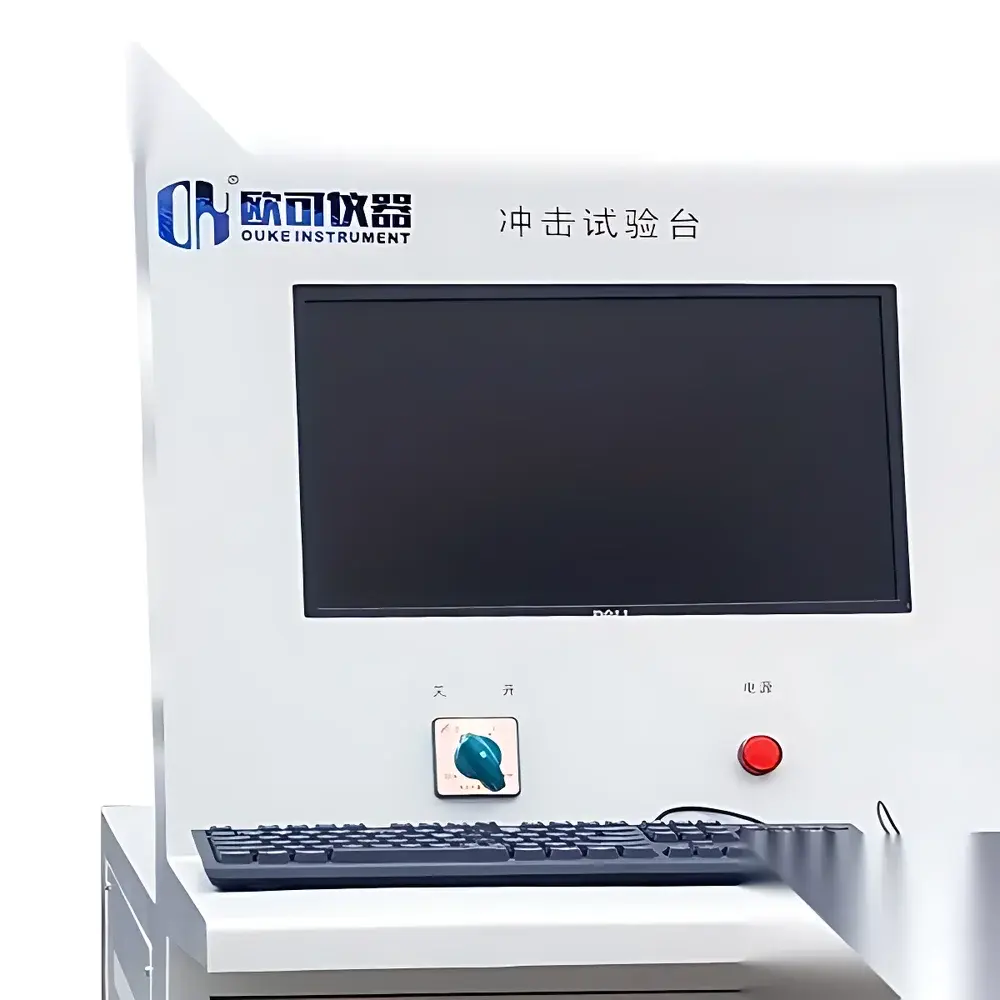
| Data Acquisition | Single-channel acceleration measurement with storage, reporting, recall, and database management |
Overview
The OK-S Series Mechanical Shock Testing System is a precision-engineered drop-weight shock tester designed for rigorous evaluation of product resilience under transient mechanical impact conditions. Operating on the principle of controlled free-fall impact—where a test specimen mounted on a rigid table is accelerated downward and abruptly decelerated upon contact with a calibrated energy-absorbing anvil—the system generates repeatable, traceable shock pulses conforming to international standards including ISO 13370, IEC 60068-2-27, MIL-STD-810H Method 516.8, and ASTM D999. It is widely deployed in aerospace component qualification, automotive electronics validation, defense system ruggedization, railway signaling equipment certification, and consumer electronics reliability screening. The system supports both standard low-to-moderate acceleration testing and high-acceleration mode via optional auxiliary acceleration amplifiers—enabling simulation of extreme launch, pyroshock, or crash-induced transient loads without requiring full-scale structural replication.
Key Features
- High-rigidity carbon steel test table engineered for elevated first-mode resonance frequency (>1.2 kHz), minimizing modal interference and ensuring clean pulse fidelity.
- Digital height feedback control system with ±0.1 mm repeatability across full stroke range, enabling precise pulse amplitude calibration per test specification.
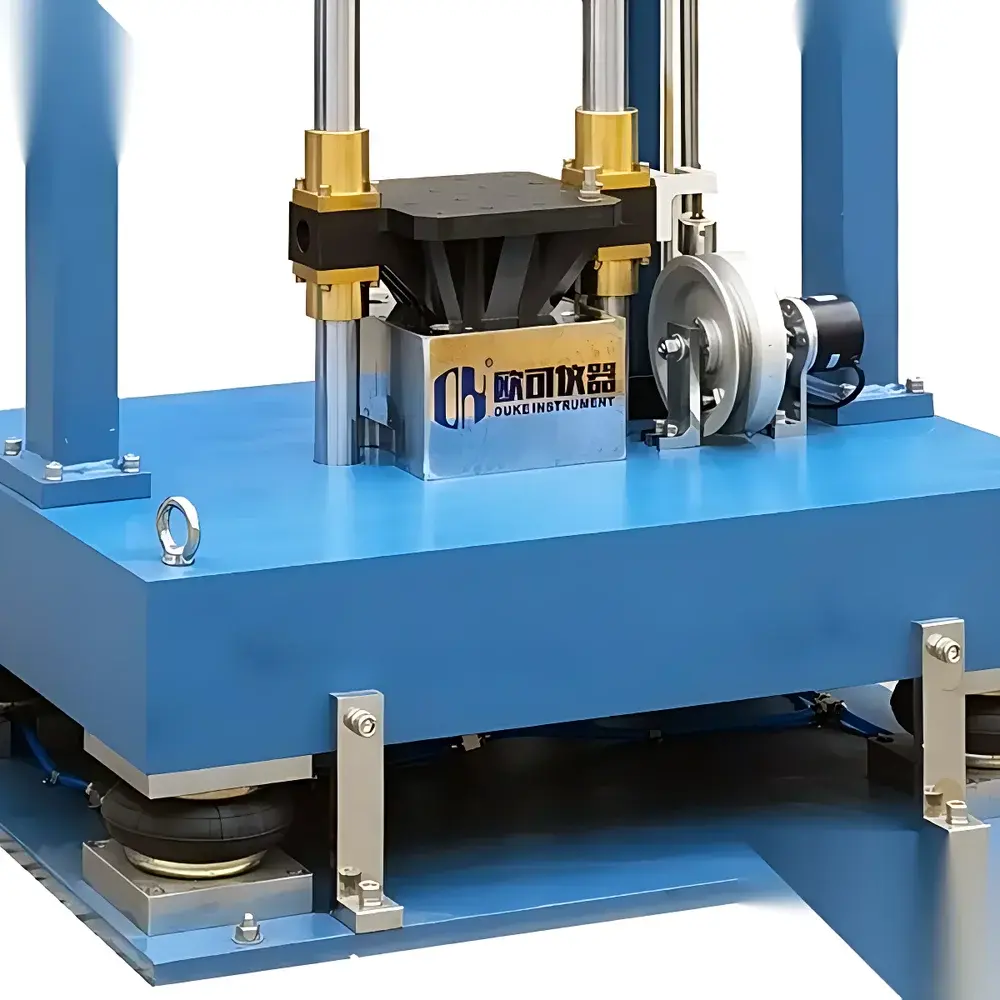
- Integrated hydraulic braking mechanism with dual-stage damping, eliminating secondary rebound and guaranteeing stable post-impact table positioning.
- Interchangeable waveform generators allow rapid reconfiguration between half-sine, rear-peak sawtooth, and trapezoidal pulse profiles—each validated per ISO 20722 Annex B.
- Mass-optimized base structure incorporating tuned mass dampers and constrained-layer damping layers to suppress floor-coupled vibrations and prevent structural resonance propagation.
- Fail-safe protection suite including over-height limit switches, emergency stop circuitry, pneumatic pressure monitoring, and real-time acceleration overspeed cutoff.
- Precision lead-screw lifting mechanism driven by servo motor and guided by dual hardened stainless-steel linear columns—ensuring parallelism tolerance <5 µm over full travel.
- Isolation base featuring air-spring suspension combined with viscous shear dampers, reducing transmitted force to supporting floors to <5% of peak input load (per EN 1998-1).
- Non-resonant frame architecture verified via operational modal analysis (OMA) to maintain modal separation >25% between excitation bandwidth and nearest structural mode.
- Pneumatically actuated friction brake with regulated accumulator tank ensures consistent clamping force across ambient temperature variations (10–40 °C), critical for data reproducibility.
Sample Compatibility & Compliance
The OK-S Series accommodates specimens ranging from micro-electromechanical systems (MEMS sensors) to large avionics enclosures, with maximum footprint up to 120 × 120 cm and mass up to 1000 kg. Mounting interfaces comply with ISO 5344 and MIL-STD-1377 for standardized fixture integration. All shock pulse parameters—including peak acceleration, duration, and velocity change—are fully traceable to NIST-traceable accelerometers (e.g., PCB Piezotronics Model 352C33). The system meets requirements for GLP-compliant test environments when configured with audit-trail-enabled software (see Software & Data Management). Calibration certificates are issued per ISO/IEC 17025:2017 by accredited third-party laboratories, covering static load verification, drop-height linearity, and pulse shape fidelity assessment.
Software & Data Management
The integrated single-channel acquisition module captures acceleration time-history at up to 1 MHz sampling rate with 16-bit resolution. Data is timestamped, stored in IEEE-compliant .tdms format, and linked to test metadata (operator ID, specimen ID, pulse type, height, environmental conditions). Reporting complies with FDA 21 CFR Part 11 requirements when paired with optional electronic signature and audit trail modules. Export options include CSV, PDF test reports with annotated waveforms, and SQL-compatible database schema for enterprise LIMS integration. Raw data retains full traceability through embedded checksums and digital signatures to prevent tampering.
Applications
- Qualification of inertial navigation units (INUs) and flight control computers per DO-160 Section 8.
- Validation of automotive ADAS sensors (radar, LiDAR housings) against ECE R100 shock requirements.
- Ruggedness verification of naval communication terminals per MIL-STD-901D underwater shock protocols.
- Reliability screening of smartphone camera modules subjected to drop-induced shock (JEDEC JESD22-B110).
- Pyroshock simulation for satellite separation mechanisms using high-acceleration mode with auxiliary amplifiers.
- Transportation vibration and shock testing of rail-mounted signaling hardware per EN 50121-3-2.
FAQ
What shock pulse shapes does the OK-S Series support?
Half-sine, rear-peak sawtooth, and trapezoidal waveforms—each configurable via mechanical anvil exchange and validated per ISO 20722 Annex B.
Can the system be used for high-G testing of small components?
Yes—optional high-acceleration amplifier kits enable 5,000–50,000 m/s² pulses with durations of 0.2–1 ms for specimens ≤200 × 200 mm.
Is the system compliant with FDA 21 CFR Part 11 for regulated industries?
When equipped with the optional audit-trail and electronic signature package, full Part 11 compliance is achieved—including role-based access control and immutable record retention.
How is calibration maintained across operating conditions?
Calibration includes thermal drift compensation algorithms and quarterly verification using NIST-traceable reference accelerometers and laser interferometry.
Does the system require structural reinforcement of the installation floor?
No—its active isolation base reduces dynamic floor reaction forces to <5% of peak load, permitting installation on standard industrial concrete slabs (≥25 cm thickness, C30/37 grade).



