

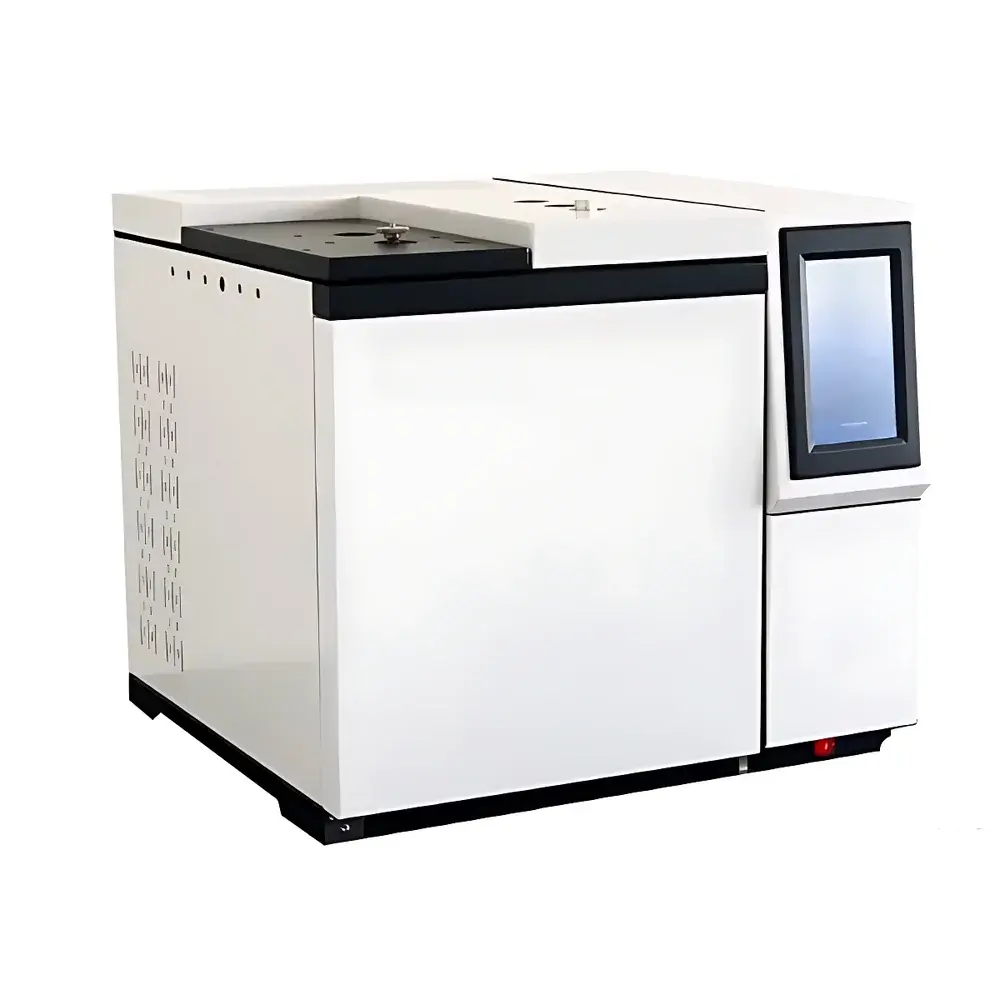
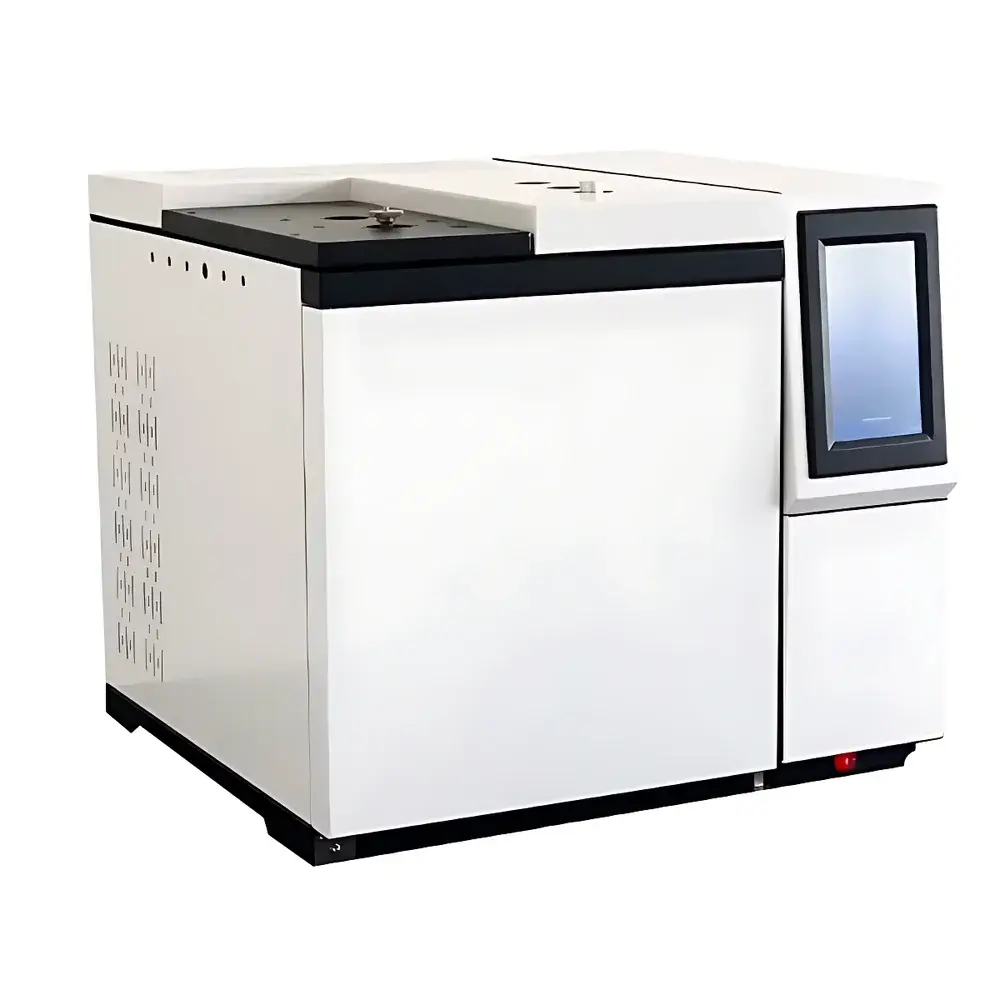
Shandong Luchuang GC-9870Plus Ethylene Oxide Residue Gas Chromatograph
| Brand | Shandong Luchuang |
|---|---|
| Origin | Shandong, China |
| Manufacturer Type | Direct Manufacturer |
| Instrument Type | Laboratory Gas Chromatograph |
| Model | GC-9870Plus |
| Temperature Control Range | 25–450 °C |
| Maximum Ramp Rate | 60 °C/min |
| Cooling Rate | 1 °C/min |
| Carrier Gas Flow Range & Control | 0–1200 mL/min |
| Carrier Gas Pressure Range & Control | 0–1000 psi |
| Injector Maximum Operating Temperature | 450 °C |
| Injector Pressure Setting Range | 0–1000 psi |
| Injector Total Flow Setting Range | 0–1200 mL/min |
| Column Oven Temperature Stability | ±0.02 °C |
| Programmable Temperature Ramps | Up to 20 steps |
| Number of Independent Temperature Zones | 8 |
| FID Sensitivity (n-hexadecane) | ≤1×10⁻¹² g/s |
| FID Baseline Noise | ≤2×10⁻¹⁴ A/30 min |
| FID Drift | ≤2×10⁻¹³ A/30 min |
| TCD Filament Current | Up to 220 mA |
| Supported Detectors | FID, TCD, FPD, ECD, NPD |
| MS Interface | Standard预留 (MS-ready interface) |
Overview
The Shandong Luchuang GC-9870Plus Ethylene Oxide Residue Gas Chromatograph is a purpose-engineered laboratory gas chromatograph designed for precise quantification of residual ethylene oxide (EO) in sterilized medical devices, pharmaceutical packaging, and polymeric materials—applications governed by ISO 10993-7, USP , and ASTM F1980. Built upon a robust dual-channel architecture with independent temperature zoning, the system implements advanced column oven thermal management based on Peltier-assisted heating and forced-air cooling, enabling rapid equilibration and high reproducibility across wide thermal gradients. Its column compartment supports up to two capillary columns or mixed configurations (e.g., one capillary + two packed columns), accommodating method flexibility required for multi-analyte EO residue profiling—including ethylene chlorohydrin (ECH) and ethylene glycol (EG) co-elution validation. The instrument operates on the fundamental principle of gas-phase separation via differential partitioning in a temperature-programmed capillary column, followed by selective detection using flame ionization (FID), thermal conductivity (TCD), or electron capture (ECD) mechanisms—each calibrated per ICH Q2(R2) guidelines for specificity, linearity, and limit of quantitation (LOQ) verification.
Key Features
- Column oven with dynamic temperature range from ambient +4 °C to 450 °C and stability of ±0.02 °C, certified per ISO/IEC 17025 calibration protocols
- Programmable 20-step temperature ramping (0.1–50 °C/min increments), supporting complex multi-segment methods for trace EO elution resolution
- Eight independently controlled temperature zones—including dual injectors, three detectors, and auxiliary modules—enabling simultaneous optimization of inlet vaporization, column retention, and detector response
- Fully electronic pressure and flow control (EPC/EFC) for carrier gas (0–1200 mL/min, 0–1000 psi), ensuring retention time precision <0.05% RSD over 24 h
- FID with logarithmic amplifier and auto-ignition circuitry; includes flame-out detection, automatic re-ignition, and real-time H₂/air/tail-gas flow regulation (H₂: 0–100 mL/min; air: 0–500 mL/min)
- TCD with constant-current mode (up to 220 mA) and digital signal processing, delivering enhanced sensitivity for non-ionizing analytes such as CO₂ and O₂ in EO sterilization validation
- MS-ready interface compliant with standard GC-MS coupling dimensions and vacuum compatibility requirements (optional upgrade path to GC-MS configuration)
Sample Compatibility & Compliance
The GC-9870Plus accommodates headspace vials (10–22 mL), liquid syringe injection (1–100 μL), and optional thermal desorption units for solid-phase EO extraction. It complies with regulatory frameworks essential for quality-controlled environments: data integrity features align with FDA 21 CFR Part 11 requirements (audit trail, electronic signatures, user access levels); thermal programming and detector response logs meet GLP/GMP documentation standards; and hardware design conforms to IEC 61010-1 safety specifications. All detector calibrations are traceable to NIST-certified standards, and system suitability testing (SST) parameters—including tailing factor, resolution, and %RSD of replicate injections—are programmable within the embedded workstation software.
Software & Data Management
The integrated GC workstation provides bidirectional communication via USB/Ethernet, supporting method-driven acquisition, real-time chromatogram visualization, peak integration using tangent skim or valley-to-valley algorithms, and customizable reporting templates compliant with ISO/IEC 17025 Annex A. The software architecture implements role-based access control (RBAC), full audit trail logging (user actions, parameter changes, data exports), and automated backup to network drives or cloud storage endpoints. Raw data files (.cdf or .axd format) retain full acquisition metadata—including column ID, oven program history, and detector voltage traces—for retrospective analysis and regulatory review. Optional 21 CFR Part 11 compliance package includes electronic signature workflows, sealed audit logs, and password-protected method locking.
Applications
- Quantitative determination of residual ethylene oxide in Class I–III medical devices per ISO 10993-7:2023
- Stability-indicating assay of EO residuals in lyophilized drug product stoppers and blister packaging
- Method development and validation for simultaneous detection of EO, ECH, and EG in single-run analyses
- Environmental monitoring of EO emissions from sterilization facilities (EPA Method TO-17 compatible with thermal desorption)
- Quality control of ethylene oxide sterilant concentration in gas mixtures used in industrial sterilization cycles
- Support for extractables and leachables (E&L) studies under USP and
FAQ
Does the GC-9870Plus support GLP-compliant data archiving?
Yes—the embedded workstation generates timestamped, immutable audit trails with user attribution and stores raw data in vendor-neutral formats compliant with ALCOA+ principles.
Can the instrument be validated per IQ/OQ/PQ protocols?
Yes—factory-provided qualification documents include installation checklists, operational test scripts (e.g., temperature uniformity mapping, retention time repeatability), and performance verification reports aligned with ASTM E2655 and USP .
Is remote monitoring supported?
Yes—via secure HTTPS-enabled web interface or third-party SCADA integration using Modbus TCP or OPC UA protocols.
What maintenance intervals are recommended for FID and TCD detectors?
FID jet cleaning every 200 injections; TCD filament inspection and baseline recalibration every 6 months or after 1000 runtime hours—both tracked automatically in the maintenance log module.
Does the system support unattended overnight operation?
Yes—equipped with power-fail recovery, auto-shutdown on abnormal pressure/temperature excursions, and scheduled sequence execution with email/SNMP alerting.





