
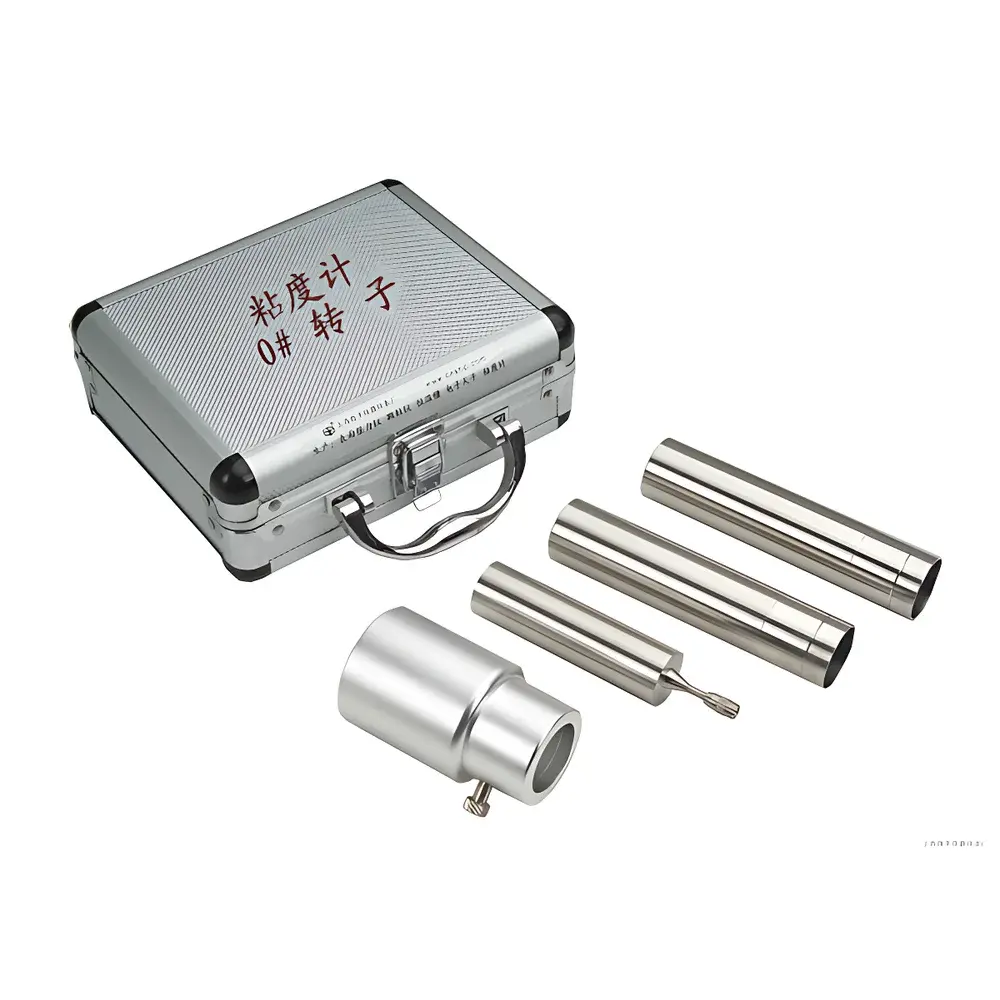
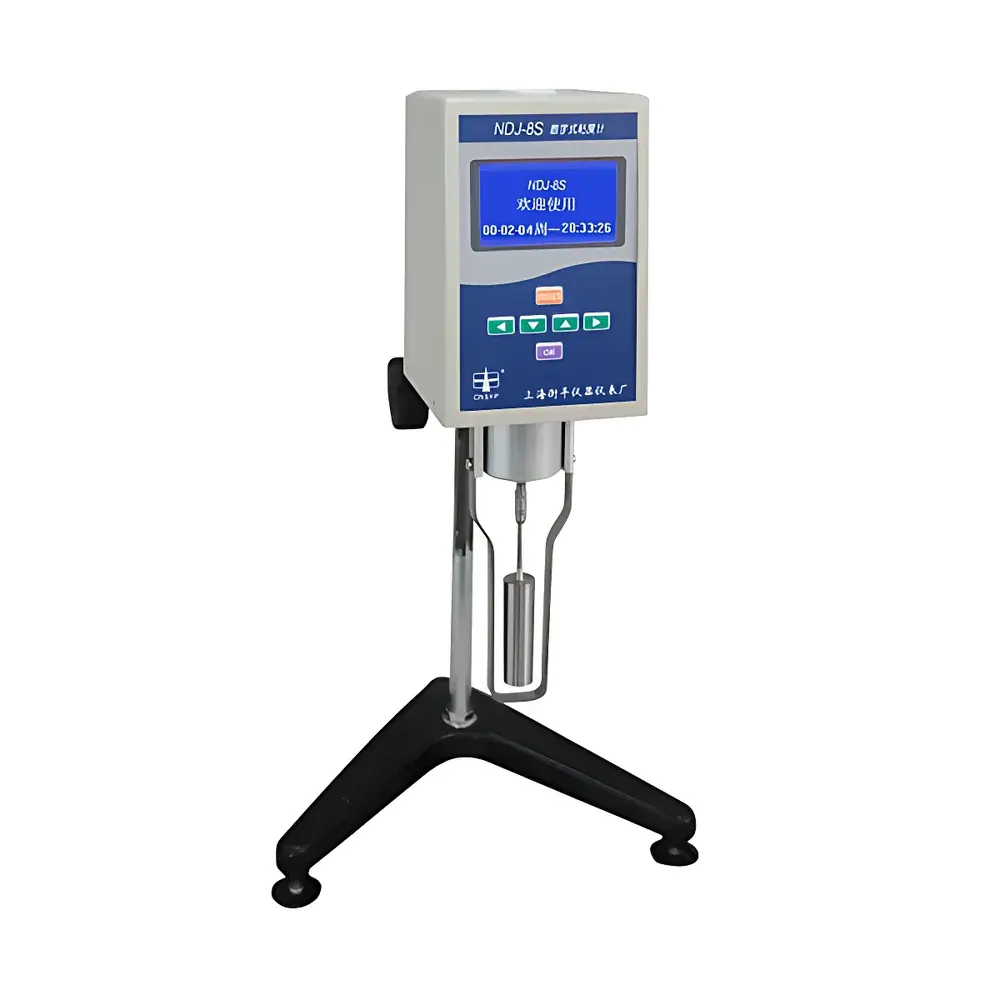
Shanghai Hengping 0# Spindle Accessory for Rotational Viscometers
| Brand | Hengping |
|---|---|
| Origin | Shanghai, China |
| Manufacturer Type | Authorized Distributor |
| Product Category | Domestic |
| Model | 0# Spindle |
| Price Range | USD 140–1,400 (est.) |
| Instrument Type | Rotational Viscometer Accessory |
| Form Factor | Portable |
| Operating Environment | Ambient Temperature |
| Viscosity Range (with 0# spindle) | 0.1–10 mPa·s |
| Compatible Base Instruments | Hengping DV-series rotational viscometers |
| Sample Volume Requirement | 20–25 mL |
| Shear Rate Calculability | Yes (cylindrical geometry enables shear rate estimation per ASTM D2196 and ISO 2555) |
Overview
The Shanghai Hengping 0# Spindle is a precision-engineered cylindrical spindle accessory designed exclusively for use with Hengping’s series of rotational viscometers—particularly the DV-1, DV-2, and DV-3 models. It extends the low-end viscosity measurement capability of standard rotational viscometers by enabling accurate, reproducible characterization of Newtonian and near-Newtonian fluids in the ultra-low viscosity range of 0.1 to 10 mPa·s. Unlike conventional spindles (e.g., #1–#4), the 0# spindle features a slender, high-aspect-ratio cylindrical geometry optimized for Couette flow conditions under controlled rotational speed. Its design conforms to the fundamental rheological principle that shear rate (γ̇) in a concentric cylinder system can be approximated as γ̇ = 2πN(Ro²)/(Ro² − Ri²), where N is rotational speed (rps), and Ro/Ri denote outer and inner cylinder radii—allowing users to derive shear-dependent viscosity data without requiring dedicated rheometer hardware. This makes it especially valuable for QC labs validating thin solvents, aqueous polymer dispersions, ink carriers, pharmaceutical suspensions, and low-viscosity lubricants where regulatory compliance (e.g., USP , ISO 16520-1) mandates traceable, geometry-defined measurements.
Key Features
- Ultra-low viscosity coverage: Validated measurement range of 0.1–10 mPa·s—filling the critical gap below standard #1 spindle limits (~15 mPa·s minimum)
- Minimal sample consumption: Requires only 20–25 mL of test fluid, reducing material cost and waste—ideal for expensive or limited-availability samples
- Cylindrical geometry: Enables analytical estimation of shear rate and shear stress, supporting basic rheological modeling per ISO 3219 and ASTM D2196
- Direct mechanical compatibility: Installs via standard left-hand (counter-clockwise) thread onto Hengping viscometer drive shafts; no adapter kit required
- Dual-cup configuration support: Fully compatible with both bottom-sealed and open-bottom outer cylinders—fluid level referenced to engraved annular groove on cup wall
- Thermal stability interface: Designed for integration with optional Peltier-controlled bath systems (not included), ensuring temperature regulation within ±0.1°C during testing
Sample Compatibility & Compliance
The 0# spindle is validated for homogeneous, low-sedimentation liquids including water, ethanol, acetone, mineral spirits, silicone oils (cSt < 10), dilute surfactant solutions, and low-concentration polymer solutions (e.g., 5 vol%. The accessory supports compliance workflows aligned with ISO/IEC 17025-accredited laboratories: its geometry is documented in Hengping’s calibration certificate (traceable to NIM, China), and measurement uncertainty budgets include contributions from spindle dimensional tolerance (±0.02 mm radius), rotational speed accuracy (±0.2% FS), and temperature drift (< 0.05°C/min). When used with Hengping’s GLP-compliant software (v3.2+), audit trails, electronic signatures, and instrument parameter locking meet FDA 21 CFR Part 11 requirements.
Software & Data Management
The 0# spindle operates seamlessly with Hengping’s proprietary DVLink™ PC software (Windows 10/11), which auto-detects spindle ID upon connection and applies preloaded calibration constants (K-factor = 0.000128 Pa·s·s/rpm). Software features include real-time viscosity vs. shear rate plotting, automatic temperature compensation (using optional Pt100 probe input), CSV export with ISO 8601 timestamps, and batch report generation compliant with internal SOP templates. All raw torque and speed data are stored with metadata (operator ID, ambient RH, calibration due date), and version-controlled method files can be exported for cross-lab harmonization. For enterprise deployment, DVLink™ supports LDAP authentication and integrates with LIMS via HL7 v2.5 or RESTful API endpoints.
Applications
- Pharmaceutical: Viscosity verification of ophthalmic solutions, nasal sprays, and injectable carriers per USP
- Coatings & Inks: Quality control of solvent-borne gravure inks, UV-curable monomers, and pigment dispersion stability screening
- Food & Beverage: Consistency testing of vinegar, fruit juices, light syrups, and dairy-based flavor emulsions
- Chemical Manufacturing: Batch release testing of catalyst slurries, monomer purity assessment, and solvent recovery stream monitoring
- Academic Research: Teaching labs introducing fundamental rheology concepts—shear rate dependence, Newtonian validation, and instrument calibration principles
FAQ
Can the 0# spindle be used with non-Hengping viscometers?
No—it is mechanically and electronically optimized for Hengping DV-series instruments. Thread pitch, torque coupling, and K-factor calibration are not interoperable with Brookfield, Anton Paar, or Thermo Fisher platforms.
Is temperature control mandatory for accurate results?
While ambient-temperature operation is permissible per ISO 2555, viscosity of sub-10 mPa·s fluids exhibits high thermal sensitivity (e.g., water: −2.2%/°C at 25°C); we recommend ±0.2°C control for reporting data in regulatory submissions.
What is the recalibration interval for the 0# spindle?
Hengping recommends annual recalibration against NIM-traceable standards; dimensional inspection (radius, length, concentricity) should be performed quarterly in GMP environments.
Does the 0# spindle require a protective guard?
No—unlike higher-numbered spindles, the 0# spindle operates without a guard to minimize wall effects and ensure laminar flow integrity in the narrow annular gap.
How is the meniscus position verified during setup?
When using the open-bottom cup, the liquid surface must align precisely with the engraved circumferential groove—visible through the side port window—to maintain consistent effective measurement volume and shear field geometry.



